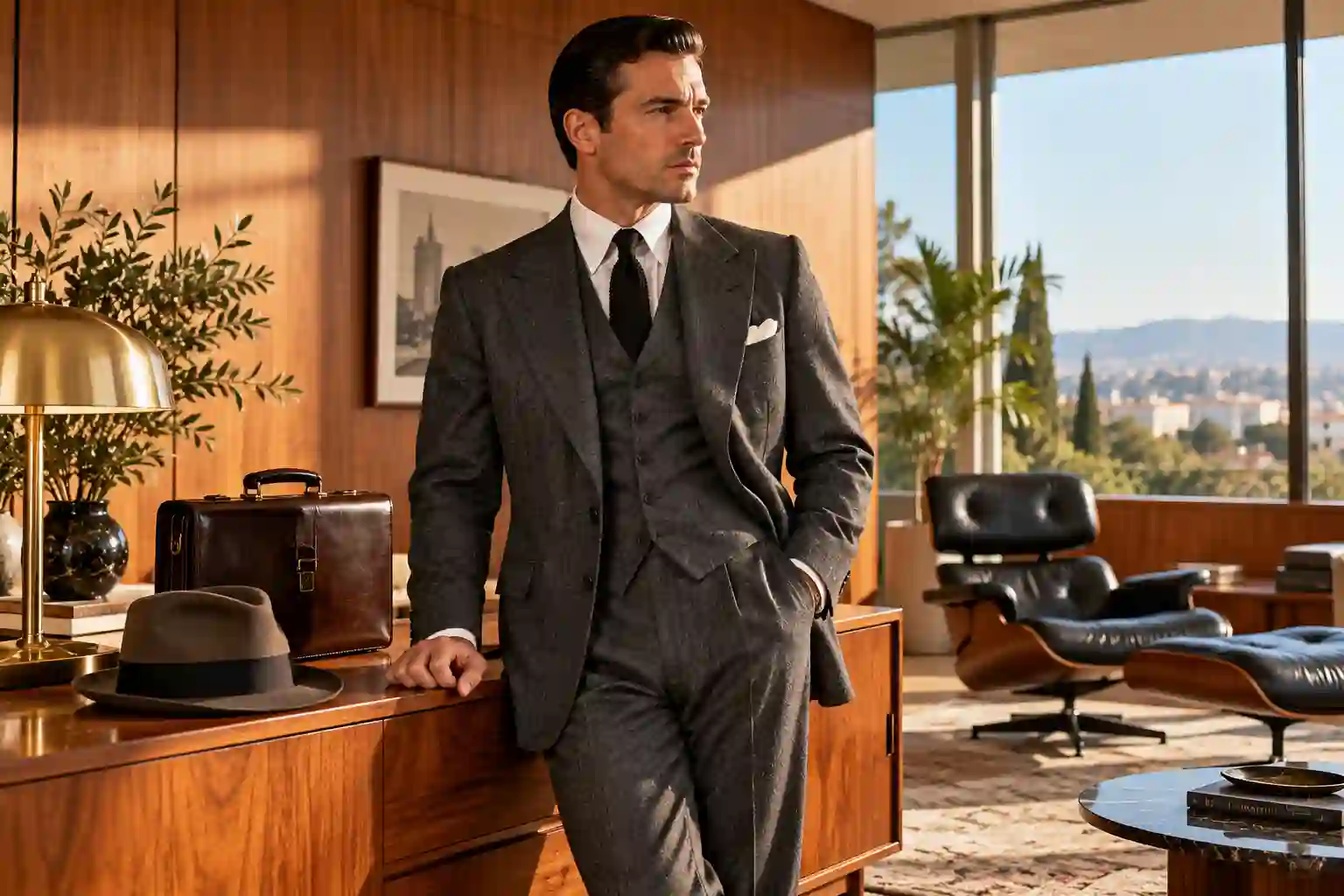
Few eras in modern menswear history match the enduring sophistication and masculine charm of mid-century tailoring. Therefore, exploring 1950s Men’s Fashion Suits: The Ultimate Style Guide to Iconic Elegance offers valuable insight into the roots of modern gentleman style. The 1950s marked a pivotal turning point in menswear. Following the material shortages and fabric restrictions of the wartime 1940s, the postwar economic boom unleashed a golden age of sartorial craftsmanship. Consequently, men embraced luxurious woolen textiles, relaxed silhouettes, and sharp styling that defined corporate boardrooms and elegant evenings alike.
Historically, men wore suits as mandatory everyday attire rather than occasional formalwear. Whether heading to a Madison Avenue advertising agency, boarding a commuter train, or dining at an upscale steakhouse, a well-tailored suit remained non-negotiable. Furthermore, the decade witnessed a fascinating design evolution. Menswear moved from the broad-shouldered “Bold Look” of 1950 to the slim, streamlined Madison Avenue sack suit by 1959. For discerning readers seeking curated perspectives across heritage fashion, mindful living, and cultural arts, visit the WordGlowUp homepage. Examining the core silhouettes, iconic fabrics, and modern styling techniques of 1950s tailoring reveals how classic elegance continues to shape contemporary menswear.
The Evolution of Postwar Tailoring: From Excess to Refinement
World War II required strict fabric rationing under governmental utility schemes like the British CC41 and American War Production Board mandates. Tailors were forbidden from adding cuffs to trousers, creating double-breasted jackets, or using excess wool for waistcoats. However, when these restrictions lifted in the late 1940s, designers celebrated their newfound freedom.
In the early 1950s, menswear magazines introduced the “Bold Look.” This dramatic silhouette celebrated prosperity with wide shoulders, broad notched lapels, and roomy double-pleated trousers. Furthermore, men celebrated peace by embracing colorful patterned ties, vibrant pocket squares, and bold cuff links. As a result, the early 1950s suit became an unmistakable symbol of postwar celebration and confidence.
Key historical milestones that defined 1950s tailoring include:
- The Post-Rationing Rebound: The return of premium heavy woolens, generous cuts, and full canvas construction.
- The Gray Flannel Revolution: The rise of understated charcoal and slate-gray suits as the universal corporate uniform.
- The Ivy League Influence: Natural shoulder cuts, unpadded lines, and single-breasted three-button jackets popularized by university campuses.
- The Emergence of Casual Suiting: The introduction of lighter tropical wools, linen blends, and sport coat separations for weekend leisure.
To explore more in-depth perspectives on heritage craftsmanship, personal grooming, and contemporary style, browse our curated Lifestyle category archive for practical guides on modern aesthetics.
The Three Core Suit Silhouettes of the 1950s
Throughout the decade, three primary suit profiles dominated men’s wardrobes. Understanding these distinct silhouettes helps collectors and modern dressers appreciate mid-century tailoring.
1. The Bold Look (Early 1950s)
Popularized by Esquire magazine at the start of the decade, the Bold Look was expansive and commanding. Jackets featured broad, padded shoulders that exaggerated the masculine chest. In addition, wide lapels balanced wide-collared shirts and oversized Windsor-knot neckties. Trousers sat high on the natural waistline, featuring deep double reverse pleats and wide two-inch turn-up cuffs. This commanding silhouette projected strength, success, and prosperity.
2. The “Man in the Gray Flannel Suit” (Mid-1950s)
By the mid-1950s, corporate America demanded an understated, disciplined aesthetic. Memorialized by Sloan Wilson’s 1955 novel and Gregory Peck’s cinematic portrayal, the charcoal gray flannel suit became the quintessential uniform of the rising suburban executive. The cut became more restrained than the Bold Look. Shoulders softened, lapels narrowed, and color palettes shifted toward charcoal, midnight navy, and deep graphite. This uniform conveyed professional reliability, emotional stability, and refined conformity.
3. The Ivy League Sack Suit (Late 1950s)
Originating on elite Northeastern university campuses and perfected by Brooks Brothers and J. Press, the “sack suit” revolutionized American tailoring. The jacket featured a distinctive “dartless” front, meaning tailors cut the front panels without waist darts for a relaxed, natural drape. It featured an unpadded natural shoulder, a three-button front with a classic “roll to the second button” (3-roll-2), and a single center hook vent. Trousers shed their pleats, adopting flat fronts and narrow, tapered legs that anticipated the slim-fit revolution of the early 1960s.
Comparative Analysis: Early 1950s vs. Late 1950s Tailoring
To understand the rapid shift in men’s fashion throughout the decade, review this side-by-side design comparison:
| Design Element | Early 1950s (“The Bold Look”) | Late 1950s (“The Ivy League / Madison Ave”) |
|---|---|---|
| Shoulder Construction | Broad, heavily padded structure. | Soft, unpadded “natural” shoulder line. |
| Lapel Width | Wide (4.0 to 4.5 inches) notched or peaked. | Narrow (2.5 to 3.0 inches) slim notch. |
| Waist Suppression | Moderate hourglass waist shape. | Dartless, straight sack coat silhouette. |
| Trouser Waist & Front | Ultra-high rise with deep double pleats. | Mid-to-high rise with flat, clean front panels. |
| Trouser Leg Opening | Wide, straight cut (10+ inches across). | Tapered leg ending with a narrow 8-inch opening. |
| Necktie Proportions | Wide kipper-style ties with abstract prints. | Slim knit or rep-stripe ties (2.5 to 3 inches). |
This comparative overview makes clear that the 1950s was not a static fashion era. Instead, it was a dynamic decade that transitioned from postwar extravagance to streamlined minimalism.
Iconic Fabrics, Textures, and Color Palettes
The tactile beauty of 1950s suiting relied on heavy, natural textile fibers. Unlike modern synthetic blends, vintage mid-century suits utilized substantial fabrics that draped flawlessly under their own weight.
Essential textiles of the decade included:
- Worsted Wool Flannel: The undisputed champion of the era. Flannel provided a soft, brushed matte finish that absorbed light, offering timeless elegance for autumn and winter business wear.
- Sharkskin (Pick-and-Pick): A two-tone twill weave created by weaving alternating light and dark threads. Sharkskin possessed a subtle metallic luster that looked crisp under office lighting.
- Heavy Tweed and Donegal: Popular for sport coats and country weekends. Rough, flecked wools delivered rugged warmth for collegiate professors and weekend motorists.
- Tropical Wool and Mohair: As air-conditioned office buildings spread across America, lightweight wools and crisp mohair blends allowed men to stay sharp during sweltering summer months.
- Classic Patterns: Subdued patterns reigned supreme, including subtle chalk stripes, micro-houndstooth, glen plaids, and tonal herringbone.
The Essential Accessories of the 1950s Gentleman
A mid-century suit was never worn in isolation. In reality, a gentleman’s overall presentation depended on carefully coordinated accessories that completed the ensemble.
1. The Ubiquitous Fedora Hat
No 1950s businessman left home without a hat. The felt fedora remained standard, featuring a pinched crown, a grosgrain ribbon band, and a medium brim with a slight upward curve at the back. Colors matched the seasonal suit, with dark grays, rich browns, and deep olive felts dominating the city streets.
2. Collared Shirts and Tie Bars
Dress shirts featured crisp white or pale sky-blue broadcloth. Collars ranged from pointed point collars to refined tab collars held together with a brass collar pin beneath the tie knot. Furthermore, gentlemen secured their ties with polished silver or gold tie bars, keeping the blade neatly anchored to the shirt placket.
3. The Flat-Folded White Linen Pocket Square
The “TV fold” pocket square became famous during the 1950s. Men took a clean, pressed white Irish linen handkerchief and folded it into a crisp rectangle, leaving roughly one-quarter inch of clean white fabric peeking straight across the jacket breast pocket.
4. Polished Leather Footwear
Footwear remained traditional and impeccably shined. Classic choices included black cap-toe oxford balmorals for formal business, burgundy wingtip brogues for daily office wear, and penny loafers for casual Ivy League weekends.
Incorporating 1950s Elegance into Your Modern Wardrobe
You do not need to look like an extra on a period television set to enjoy mid-century elegance. In fact, modern sartorialists regularly incorporate 1950s design elements into contemporary wardrobes for an elevated, refined appearance.
For example, choosing a three-button jacket cut with a soft natural shoulder and a 3-roll-2 lapel creates a sophisticated look that flatters most body types. Pairing classic woolen trousers with luxury tailored knitwear reflects the refined collections available at the avanti lifestyle shop elevate your everyday with luxury style. Combining vintage-inspired craftsmanship with modern fabrics gives you timeless poise without feeling theatrical.
Furthermore, taking pride in your daily presentation aligns with the intentional domestic principles celebrated in american lifestyle magazine your ultimate guide to modern living. Taking the time to care for tailored clothing, polish quality shoes, and select a crisp pocket square brings mindfulness and quiet confidence to everyday life.
In addition, investing in durable, high-weight woolen garments supports ethical wardrobe consumption. Aligning personal fashion purchases with a sustainable business architecture triple bottom line ensures that you invest in heirloom-quality clothing that lasts for decades rather than contributing to disposable fast fashion.
Experiencing Mid-Century Architectural Sanctuaries
Wearing a classic tailored suit feels most natural when immersed in environments that share mid-century aesthetic sensibilities. Vintage dressers naturally appreciate clean lines, organic walnut woodwork, and warm, minimalist hospitality.
Travelers discover serene courtyards, timeless architectural lines, and refined living when they discover the ultimate stay at comma boutique hotel your gateway to unmatched luxury. Relaxing in an inspiring boutique retreat while dressed in timeless tailored pieces enhances the romantic charm of travel.
Moreover, embracing thoughtful travel and classic dressing reflects the adventurous spirit of modern individuals who unlock unforgettable moments with lifestyle xperiences 365 live fully across world capitals. Dressing with intention enriches life experiences, turning an ordinary dinner or business trip into a memorable cultural moment.
Actionable 5-Step Blueprint: Assembling a 1950s-Inspired Look
If you want to introduce mid-century sophistication into your wardrobe, follow this practical five-step styling roadmap:
- Invest in a Classic Charcoal Flannel Suit: Choose a mid-weight (300–350g) charcoal or medium-gray wool flannel. Request a soft natural shoulder and moderate notch lapels from your tailor.
- Raise Your Trouser Rise: Avoid modern ultra-low-rise trousers. Ask for trousers that sit at your natural waist, allowing your jacket and trousers to meet cleanly without showing shirt fabric.
- Opt for a 3-Roll-2 Button Stance: Choose a jacket pressed so the top button rolls open softly, fastening only at the middle button. This classic Ivy League detail creates an effortless, relaxed drape.
- Adopt the TV-Fold Pocket Square: Keep a pressed white linen pocket square folded flat in your jacket breast pocket. This small detail immediately conveys vintage polish.
- Complete the Outfit with Classic Leather Oxfords: Invest in a pair of Goodyear-welted black or dark brown leather cap-toe shoes. Maintain them with regular cream polishes to preserve their lustrous shine.
Frequently Asked Questions About 1950s Men’s Suits
What is meant by the phrase “The Man in the Gray Flannel Suit”?
The phrase originates from Sloan Wilson’s 1955 bestselling novel. It refers to the mid-century corporate professional who wore a charcoal gray flannel suit as a daily uniform, symbolizing corporate loyalty, suburban success, and quiet conformity.
What makes an Ivy League “sack suit” unique?
A sack suit features a dartless front panel, an unpadded natural shoulder, a three-button jacket front pressed to roll to the middle button, and flat-front trousers. It creates a comfortable, straight silhouette without an exaggerated hourglass waist.
Did men in the 1950s always wear fedoras with their suits?
Yes. Throughout the 1950s, wearing a felt fedora outdoors was considered standard social etiquette. Going hatless in business districts only became mainstream during the 1960s.
Can modern men wear 1950s style suits today without looking like a costume?
Absolutely. By choosing moderate lapels, balanced trousers, and modern lightweight wools, you capture the iconic elegance of the 1950s while looking sharp, contemporary, and effortlessly stylish.
To learn more about our menswear history research, lifestyle guides, and editorial contributors, explore our About Us page. If you have questions regarding vintage tailoring, bespoke suiting advice, or general editorial feedback, please connect with our team through our Contact Us page.