
A stocked supermarket shelf looks like the simplest thing in the world. Yet every item on it has travelled farther than most people ever will. Coffee, shoes, phone chargers, and frozen peas all arrive through the same hidden choreography. So how supply chains work is really a story about handoffs. One shipment rarely stays with one company, one building, or one vehicle. Instead, it passes through a chain of specialists, and each specialist owns one stage of the trip.
This explainer follows a single pallet of goods across the United States. First, the journey starts on a factory dock with paperwork. Then the load passes through warehouses, terminals, trains, and regional depots. Along the way, a coordinator keeps the stages connected when plans change. By the final stage, a local driver completes the last-mile delivery at a shop or a front door. The same pattern also scales upward, because the choreography behind global supply chains follows identical logic across borders.
Stage one: a shipment begins as paperwork, not motion
Every shipment starts life as information long before it becomes movement. A factory or seller first confirms what is ready, how it is packed, and where it must go. Workers then count cartons, check weights, and record dimensions for each pallet. In fact, those humble measurements decide almost everything that happens later. Carriers price and plan around space, weight, and handling difficulty, so sloppy numbers create real problems downstream.
The key document is the bill of lading, the contract and receipt for the load. It names the shipper, the receiver, the goods, and the agreed destination. Labels on each pallet mirror that document, therefore a dock worker can match freight to paperwork in seconds. When the paperwork is wrong, however, the freight may still travel perfectly and still end up refused. For example, a wrong delivery address can strand a flawless load at the wrong dock. A freight broker often enters the story at exactly this point. Brokers match loads with available trucks, because they track capacity across many carriers at once.
Stage two: the warehouse turns goods into inventory
Many shipments pause inside a warehouse before they travel any farther. That pause is not storage for its own sake, because timing rarely matches neatly. Factories produce in batches, while shops and customers order in smaller, uneven waves. Warehousing absorbs that mismatch, so goods wait safely until the next stage calls them forward. Staff receive the pallets, inspect them for damage, and log every case into stock.
A warehouse management system gives each pallet a digital identity and a physical address. Scanners record where the goods sit, how many units remain, and which orders claim them. As a result, pickers can walk a planned route instead of hunting through aisles. Good records also prevent the classic warehouse tragedy: stock that exists on paper but hides in the wrong bay. In other words, the warehouse converts anonymous freight into known, countable, promise-ready inventory.
When freight barely touches the floor: cross-docking
Some loads never settle into a rack at all. Cross-docking moves freight straight from an inbound truck to an outbound truck across the dock. Workers break down the incoming pallets, sort the cartons by destination, and rebuild outbound loads. Meanwhile, the goods may spend only hours inside the building. Retail chains love this pattern, because store-ready cartons keep moving instead of waiting in storage. Still, cross-docking demands precise timing, since a late inbound truck leaves the outbound truck waiting empty.
Stage three: the load meets its carrier
Once the freight is ready, the network must choose how it will actually travel. That choice shapes cost, speed, and risk more than any other decision in the chain. Three patterns dominate American trucking, and most shipments use at least one of them. In fact, shippers comparing freight solutions that stress reliability and security still start from these same three building blocks.
The carriers themselves: fleets, owner-operators, and private trucks
The word carrier hides several very different businesses. Large asset-based carriers own their tractors, trailers, and terminals outright. Owner-operators own a single truck and sell their capacity through carriers or brokers. Some manufacturers and retailers also run private fleets for their own goods. Each model spreads cost and risk differently, so the same lane can be served in several ways. In fact, one shipment may ride with two or three carrier types before it arrives.
Full truckload shipping: one shipper, one trailer, one direct run
Full truckload shipping reserves an entire trailer for a single shipper. The driver loads once, drives directly to the destination, and unloads once. Because the trailer never opens at intermediate terminals, handling stays minimal and damage risk stays low. Transit is therefore predictable, since the route has no built-in detours for other freight. The trade-off is blunt: you pay for the whole trailer even when your goods fill only half of it. Consequently, full truckload suits large, urgent, fragile, or high-value loads best.
Less than truckload shipping: many shippers, one shared network
Less than truckload shipping works on the opposite principle. Your pallets share trailer space with freight from many other shippers. You therefore pay for the space and weight you use, not for an entire truck. The principle echoes the shared seats coordinated by a carpool logistics app, because strangers split one vehicle so each pays for a fraction of the trip. Freight consolidation makes that sharing possible at national scale.
A local truck first collects several small shipments and brings them to a nearby terminal. Dock crews then sort the freight by destination and build a full trailer for the long haul. At the far end, another terminal breaks that trailer down again for local delivery. Each transfer adds handling, so less than truckload freight trades speed and gentleness for a much lower price. Pricing also follows freight class, a rating based on density, value, and handling difficulty.
Intermodal transportation: the container changes vehicles, not contents
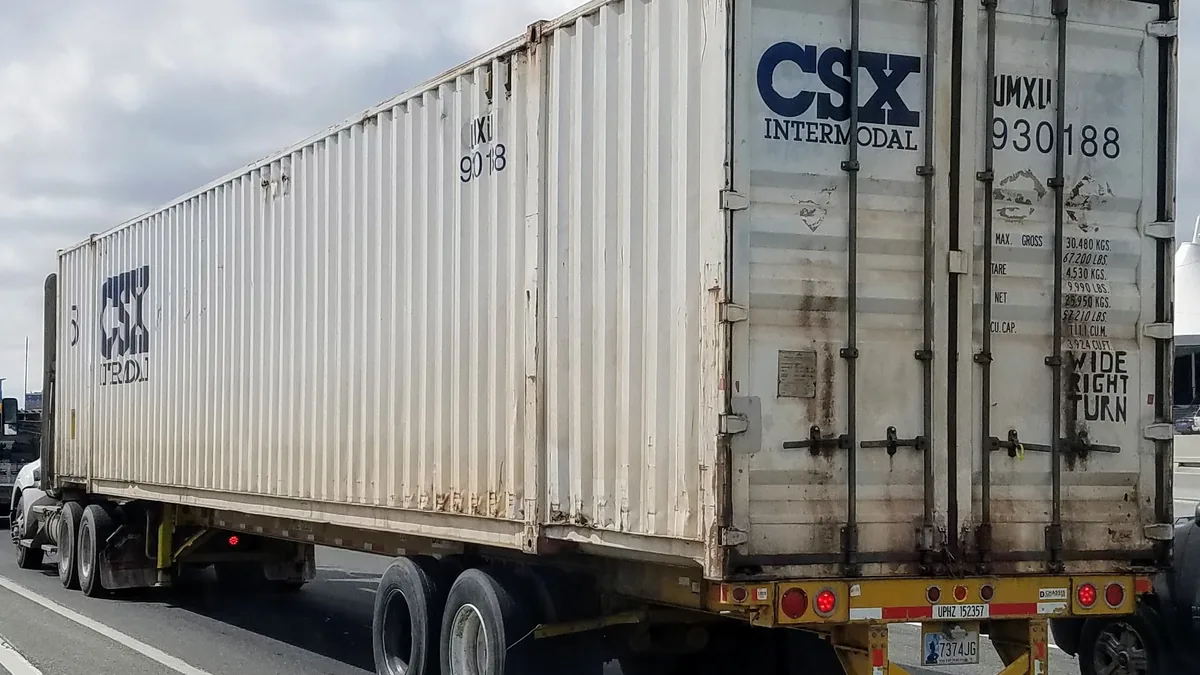
Intermodal transportation adds a second vehicle family to the journey. The goods travel inside a standard steel container that moves between truck and train. A local truck, called a drayage move, carries the container to a rail terminal. Cranes then lift the sealed box onto a train for the long cross-country leg. At the destination terminal, another truck collects the container for its final road leg.
The container itself is the clever part, because handlers move the box rather than the goods inside it. Freight therefore stays sealed, packed, and untouched between origin and destination. Rail legs also suit very long distances, since one train hauls many containers along a single fixed path. Speed is the sacrifice, however, because terminal transfers and rail schedules add waiting time.
The coordinator in the middle: the real job of a 3PL
By now the cast is large: warehouses, brokers, terminals, rail ramps, and several carriers. Someone must coordinate that cast, and that someone is often a third-party logistics provider. So what is a 3PL in plain terms? A 3PL is a specialist company that runs logistics stages on behalf of the shipper. Instead of owning shops or factories, the shipper rents the 3PL’s warehouses, systems, and carrier relationships.
A typical 3PL receives stock, stores it, picks and packs orders, and books the transport. Many also handle returns, labelling, and light assembly such as gift sets or bundles. The distinction from a freight broker matters here: a broker arranges transport, while a 3PL manages broader operations. In fact, a single 3PL may hire brokers and carriers itself, then answer to the shipper for the whole result. That is why operator profiles in this field, such as this look at one logistics brand built on precision and speed, tend to sell coordination rather than trucks. The shipper keeps one contract and one point of accountability, even though dozens of firms touch the freight.
Stage four: the long middle, where the miles accumulate
Between pickup and the destination region, a shipment enters its longest and quietest stage. Linehaul trucks run mostly at night, because highways are clearer and delivery windows cluster in the morning. Drivers work inside legal hours-of-service limits, so rest stops are built into the schedule rather than treated as delays. Fuel stops, weigh stations, and inspections punctuate the run at predictable points. Meanwhile, dispatchers watch weather, roadworks, and congestion along the planned corridor.
Long routes rarely belong to one driver from end to end. Relay networks swap trailers between drivers at set points, therefore the freight keeps moving while each driver stays near home. Trailer swaps also explain a tracking puzzle: the load moves steadily even as the driver name keeps changing. Nothing about this stage is glamorous, yet it is where most of the distance, and most of the fuel, is spent.
Seeing the invisible: tracking and visibility in practice
Customers experience this whole system through one small thing: a tracking page. Shipment tracking looks simple, but each update on that page comes from a physical event. A scan at pickup creates the first record, and a scan at each terminal creates the next one. Trucks also report position through GPS and electronic logging devices, so dispatch sees movement between scans. Supply chain visibility is the wider version of that idea. It means every partner can see the same status, the same exceptions, and the same estimated arrival.
Modern visibility works through shared systems rather than endless phone calls. A transportation management system plans routes and tenders loads to carriers. The warehouse system then feeds it dispatch and inventory events in real time. When a scan goes missing, however, the freight has usually not vanished; one handoff simply failed to report. Good teams therefore treat a silent tracking page as a data problem first and a lost load second.
Where delays really come from
Delays feel mysterious from outside, yet most of them start in ordinary places. Dwell time is the quietest culprit. Trucks wait at docks because loads are not ready, paperwork is wrong, or every bay is busy. A missed appointment then pushes the load to the back of a very unforgiving queue.
Capacity crunches create the second family of delays. When freight volumes surge, carriers run out of trucks and drivers on popular lanes first. Weather adds a third family, because storms, ice, and floods close corridors rather than slowing them politely. Terminal congestion compounds all three, since one late inbound trailer can starve several outbound departures.
Empty running hides inside many of these problems. A truck that travels empty to its next pickup burns fuel, hours, and road space for nobody’s goods. That waste carries an environmental cost too, a theme at the heart of sustainable business architecture and the triple bottom line. In short, freight rarely moves slowly because drivers dawdle; it waits because handoffs, queues, and documents fail to line up.
Stage five: the distribution center breaks the bulk
Near the destination, the shipment reaches a distribution center built for one job: breaking bulk. Full trailers arrive from factories and ports, but local demand wants smaller, mixed loads. Crews therefore split the big shipment into store-sized or route-sized pieces. Each piece gains new labels, new paperwork, and a place in the next day’s delivery plan. This break-bulk moment is where factory logic hands over to shopping logic.
From here, the journey starts to resemble the world of parcels and doorsteps. Readers following the retail thread can see how e-commerce distribution masters this same handoff at parcel scale. Regional stock also sits in these buildings, so popular items start their final leg close to buyers. Placement is a quiet superpower: a product stored near its customers needs only a short, cheap final journey. Conversely, a product stored on the wrong coast must repeat the long middle all over again.
Stage six: last-mile delivery and the signature at the door
Last-mile delivery is the shortest stage and, paradoxically, the fiddliest. A local driver now carries many small stops instead of one big one. Each stop adds parking, walking, doorbells, gate codes, and the risk that nobody is home. Route software sequences the stops, yet local knowledge still rescues routes that software misjudges. Delivery windows also tighten here, because shops need stock before opening and households expect narrow time slots.
The journey formally ends with proof of delivery. A signature, a photo, or a scan confirms that custody has passed to the receiver. That record closes the bill of lading and triggers payment through the chain. Finally, the empty shelf space at the start has become a stocked shelf at the end.
After the door closes: reverse logistics
Some goods immediately start the journey backwards. Reverse logistics handles returns, damaged items, empty pallets, and packaging that travels back for reuse or disposal. Warehouses inspect returned goods, then route them to resale, repair, recycling, or the bin. Each route has a different cost and a different paperwork trail. Damaged goods and excess packaging also meet environmental rules at this stage, the working territory of the environmental protection department and its local equivalents. In other words, the chain does not end at the door; it loops.
Frequently asked questions
What is a 3PL in simple terms?
A 3PL is a company that runs logistics work for other businesses. It can store goods, pick and pack orders, and arrange transport. The shipper therefore outsources warehouses and carrier relationships instead of building them alone.
What is the difference between FTL and LTL?
FTL reserves a whole trailer for one shipper and drives it directly to the destination. LTL shares trailer space among many shippers and routes freight through terminals. FTL is therefore faster and gentler, while LTL is usually cheaper for small loads.
Why does LTL freight change trucks so often?
Each change happens at a terminal where crews sort freight by destination. Local trucks collect small loads, linehaul trucks carry full trailers between cities, and local trucks deliver at the far end. Consolidation keeps prices low, but every handoff adds handling and time.
What does cross-docking mean?
Cross-docking means freight moves directly from an inbound truck to an outbound truck. Workers sort cartons by destination on the dock instead of storing them in racks. The goods therefore leave within hours, which suits fast-moving retail stock.
How does shipment tracking actually work?
Tracking updates come from real events, not from a truck reporting every minute. Scans at pickup, terminals, and delivery create the milestones on the page. GPS fills the gaps between scans, so the map moves even when nobody handles the freight.
Why do deliveries slip even when a truck leaves on time?
Most slippage happens at handoffs rather than on the open road. Late paperwork, busy docks, missed appointments, and congested terminals all consume the schedule quietly. Weather then removes the remaining slack, because a closed corridor cannot be driven at any speed.



