
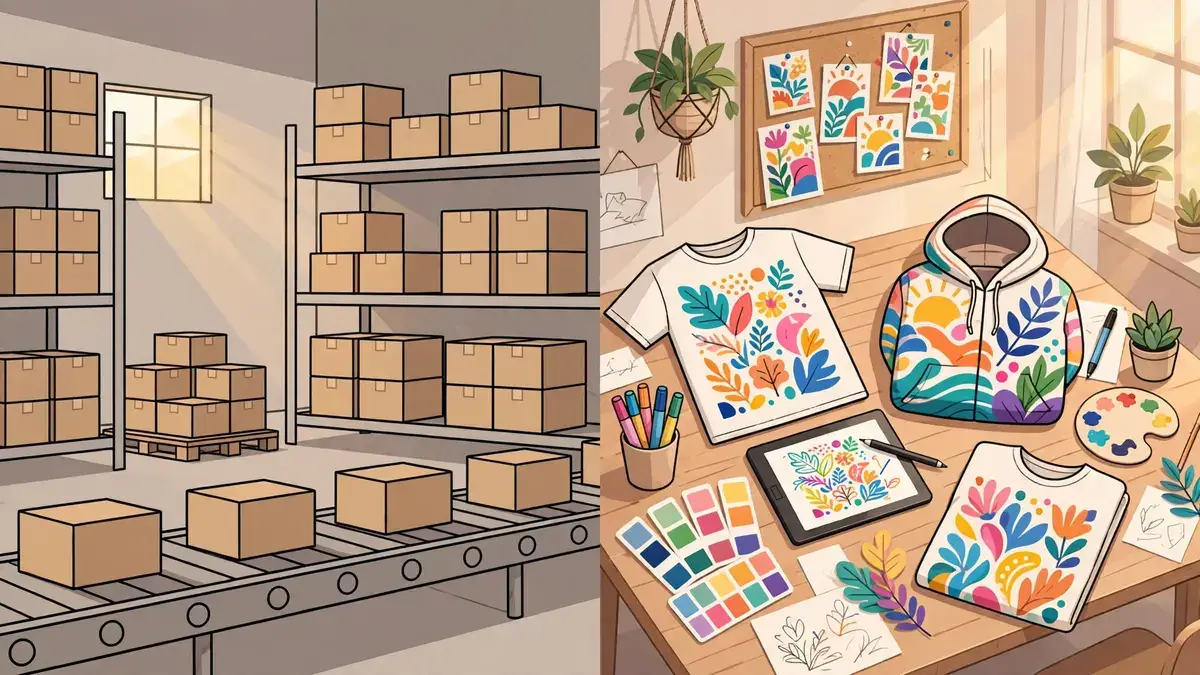
Choosing between dropshipping and print on demand feels simple at first glance. Both models let you sell products without holding inventory. However, the daily work behind each model differs far more than most guides admit. One model rewards marketing speed and product hunting. Meanwhile, the other rewards design skill and brand patience. Therefore, the right choice depends less on hype and more on your strengths. This guide compares both models honestly, with costs, margins, and trade-offs laid out clearly.
Vendor blogs often push whichever model their company happens to sell. In contrast, this comparison stays neutral from start to finish. You will see one product worked through both models with illustrative numbers. Additionally, you will get a skills-fit verdict and a hybrid path worth considering. By the end, you can match the model to your budget, skills, and goals.
How Each Model Actually Works
Understanding the mechanics first prevents expensive confusion later. Consider this section your print on demand explained how it works guide, minus the jargon. Similarly, the next part offers dropshipping explained for beginners in equally plain steps. Each model removes inventory risk in a different way. Consequently, your responsibilities change completely between the two.
Print on Demand, Step by Step
A customer orders a product carrying your original design. Next, a print provider produces that single item only after payment clears. The provider then packs and ships it directly to your customer. You never touch stock, boxes, or postage labels yourself. For example, a hoodie exists only once someone actually buys it. As a result, unsold inventory simply never happens in this model.
Your job centres on design, product selection, and store presentation. Moreover, you choose blank products, upload artwork, and set your retail price. The provider handles printing, quality checks at the press, and delivery logistics. Profit comes from the gap between your price and the provider base cost. Hence, every design decision directly shapes your earnings per sale.
Dropshipping, Step by Step
A customer buys a ready-made product listed in your store. Afterwards, your supplier receives the order details automatically. That supplier packs their own product and ships it to your buyer. You keep the difference between your price and the supplier cost. For instance, a kitchen gadget might travel straight from a warehouse overseas. Meanwhile, you focus on finding products and persuading people to buy them.
Product research dominates the daily routine in this model. Additionally, ad testing, listing optimisation, and customer support fill most working hours. You rarely influence how the product itself looks or feels. In contrast, the print model gives you creative control but slower fulfilment. Understanding e-commerce distribution and how products reach customers helps you judge both routes realistically.
At a Glance: Side-by-Side Comparison
Tables reveal patterns that paragraphs sometimes hide. However, a table alone cannot capture skills fit or daily workload. Use the summary below as a starting map, not a final verdict. Then read the detailed sections before spending any money.
| Factor | Dropshipping | Print on Demand |
|---|---|---|
| Inventory held | None | None |
| Your main skill | Marketing and product research | Design and branding |
| Product control | Low, supplier decides | High, your artwork leads |
| Production time | Usually none | Added before shipping |
| Branding options | Mostly packaging and store | Product itself carries your design |
| Catalogue speed | Very fast to expand | Slower, design-led |
| Competition style | Many sellers, identical products | Unique designs, fewer direct copies |
Notice how neither column wins every single row. Instead, each model trades one advantage for another weakness. Your skills determine which trade-off feels comfortable over time.
Startup Costs: What You Actually Pay First
Comparing startup costs dropshipping vs pod reveals a surprisingly similar starting line. Both models need a store, a domain, and basic business setup. Neither model demands a warehouse lease or bulk stock purchase. However, the smaller line items differ in revealing ways. Dropshippers often spend early money on product samples and ad tests. Meanwhile, print sellers often spend on design tools, fonts, or freelance artwork.
Sample orders deserve a line in every starter budget. For example, testing three products yourself quickly exposes quality problems before customers do. Similarly, design software subscriptions quietly add up across a full year. Therefore, list every small recurring cost before calling either model free. Truly free starts rarely survive contact with real marketing.
Time also counts as a genuine startup cost here. Learning ads can consume weeks before the first profitable campaign appears. Likewise, building a design portfolio takes focused hours upfront. Readers comparing other model-based ventures, such as alternative business models explained step by step, will recognise the same pattern. Upfront effort always substitutes for upfront cash in low-inventory businesses.
Profit Margins: One Product Through Both Models
Understanding pod vs dropshipping profit margins requires one product tracked through both models. Abstract percentages mislead beginners more than almost anything else. Instead, a worked example shows where money actually leaks away. The figures below are illustrative and hypothetical, created only to show the maths. They are not market data, averages, or earnings predictions.
Illustrative Example: A Graphic Hoodie Versus a Trendy Gadget
Imagine a printed hoodie sold through print on demand first. Suppose the retail price is set at a round, hypothetical figure. From that price, the provider base cost leaves the store first. Shipping charged to the customer may cover delivery, or you may absorb it. Payment processing and platform transaction costs then take their share. Whatever remains becomes your contribution before marketing spend.
| Illustrative Line Item | POD Hoodie | Dropshipped Gadget |
|---|---|---|
| Hypothetical retail price | 50 units of currency | 40 units of currency |
| Product and fulfilment cost | 32 units | 14 units |
| Shipping absorbed by seller | 5 units | 4 units |
| Payment and platform costs | 2 units | 2 units |
| Left before marketing | 11 units | 20 units |
| Illustrative ad cost per sale | 7 units | 13 units |
| Remaining contribution | 4 units | 7 units |
The gadget looks stronger until returns and refunds enter the picture. However, one faulty batch can erase several weeks of gadget profit. Conversely, the hoodie margin looks thin but stays remarkably predictable. Design-led products also keep selling without constant new ad angles. As a result, break-even depends on return rates, ad costs, and repeat buyers. Calculate your own break-even with real quotes before committing serious money.
Break-even maths stays simple once you write it down. First, add every per-order cost into one honest total. Next, subtract that total from your intended selling price. The remainder must cover ads and still leave acceptable profit. If the remainder looks tiny, raise the price or change products. Consequently, weak margins usually signal a pricing problem, not a model problem.
Product Quality Control: Who Touches the Product?
The real difference in product quality control pod dropshipping sellers face is simple. Ask yourself who physically handles the item before your customer does. With print on demand, the provider prints, checks, and packs each piece. With dropshipping, a distant supplier controls materials, finish, and packaging entirely. Therefore, your influence over quality differs sharply between models. Neither setup removes your responsibility when something arrives damaged.
Print errors usually involve colour shifts, placement mistakes, or fabric flaws. In contrast, dropshipping complaints often involve wrong items, weak materials, or broken parts. Both problems land in your inbox wearing your store name. Moreover, marketplaces and payment processors judge you, not your supplier. Hence, quality systems matter more than supplier promises in both models.
Practical sellers build simple checks into their weekly routine. For example, they reorder bestsellers periodically and inspect them like customers. They also track complaints by product, not just by total sales. Patterns then reveal which listings deserve removal before damage spreads. As a result, small stores can protect reputations surprisingly well.
Shipping Times and the Customer Experience
Buyers notice shipping times print on demand vs dropshipping differences before anything else. Print orders need production days before the parcel even starts moving. Dropshipped orders may leave quickly, yet travel slowly from distant warehouses. Either way, the total wait matters more than each separate stage. Consequently, honest delivery estimates protect your reviews in both models.
Clear communication reduces complaints more cheaply than faster couriers. For instance, a realistic delivery window on the product page sets expectations early. Tracking updates then reassure buyers during the silent middle days. Additionally, a proactive delay email often prevents a chargeback entirely. Stores studying retention, loyalty and customer experience in e-commerce usually learn this lesson quickly. Happy buyers forgive waits they understood in advance.
Returns handling also shapes the shipping conversation significantly. Print providers each follow their own reprint and refund policies. Dropshipping suppliers vary even more widely on return addresses and costs. Therefore, read return terms before listing a single product anywhere. Surprises here destroy margins faster than slow delivery ever could.
Branding: Where Print on Demand Pulls Ahead
The clearest branding and custom designs pod advantage is control over the product itself. Your artwork becomes the product, not just decoration around it. Customers wear, gift, and photograph designs that exist nowhere else. In contrast, dropshippers sell items any competitor can list tomorrow morning. Branding for dropshippers therefore lives in packaging, inserts, and service quality.
Design skill compounds quietly inside a print catalogue. Each strong design can sell across shirts, hoodies, mugs, and posters. Moreover, seasonal collections give loyal buyers reasons to return regularly. Typography alone can define a recognisable store style over time. Exploring resources like guides to striking typography for design-led products shows how much craft sits behind memorable lettering. Great lettering turns plain garments into collectable pieces.
Dropshippers should not abandon branding efforts entirely, though. Consistent store design, honest descriptions, and helpful support still build trust. Additionally, branded packaging becomes possible once order volume justifies it. The gap is real, but effort narrows it considerably. Ultimately, print sellers start branding on the product, while dropshippers build around it.
Which Is Better for Clothing Brands?
Clothing sharpens every difference between these two models. Fit, fabric feel, and print durability decide repeat purchases in apparel. Print on demand lets a small clothing label launch without size runs. You can test ten designs before committing to any bulk order. Consequently, failed designs cost embarrassment rather than a garage of unsold stock. That safety suits experimental, niche, or community-led labels perfectly.
Dropshipping clothing carries heavier risks around sizing and consistency. Different suppliers interpret size charts in frustratingly different ways. Returns then multiply, especially across international sizing expectations. However, established generic basics can still sell through careful supplier selection. The safest clothing path for beginners usually starts with print production. Later, proven designs can graduate into bulk manufacturing for better margins.
Scaling: Growing Without Breaking the Model
Judging scalability dropshipping vs print on demand depends on what limits your growth. Dropshipping scales catalogue breadth almost instantly with new supplier listings. A trending product can join your store within a single afternoon. Meanwhile, print catalogues grow one design at a time, more slowly. Yet each design remains exclusively yours while it sells. Both paths scale revenue, but through very different engines.
Operational strain appears in different places during growth spurts. Dropshippers face supplier stock-outs, shifting prices, and inconsistent fulfilment under pressure. Print sellers face production queues during peak seasonal demand periods. Therefore, scaling plans should name the bottleneck before it arrives. Technology helps both models handle rising order volume gracefully. Stores exploring marketing automation and the tech stack behind e-commerce growth can automate order routing, emails, and support basics. Automation buys time, whichever fulfilment model sits underneath.
Another pressure deserves honest attention during any growth phase. Dropshipping competition saturation means winning products attract copycats within days. Your advantage then rests on creative testing speed and audience trust. In contrast, original designs resist instant copying, though imitation still happens. Sustainable scale therefore favours assets competitors cannot simply reorder themselves. Audience, brand, and design libraries all qualify as such assets.
Supplier Vetting and Sample Orders
Serious supplier vetting and sample orders protect you in either model. Never list a product you have not held, worn, or tested. Order samples to your own address and inspect them harshly. Check stitching, materials, print alignment, packaging, and delivery time carefully. Moreover, photograph everything, because evidence speeds up later dispute conversations.
Communication tests reveal plenty before money changes hands. For example, ask suppliers about returns, defects, and peak-season capacity directly. Slow or evasive answers predict future support headaches accurately. Similarly, small test orders expose tracking quality and packaging standards. Reliable partners welcome scrutiny because scrutiny filters out careless competitors. Your reputation, however, cannot be outsourced along with fulfilment.
- Order every hero product yourself before promoting it heavily.
- However, also test the returns process with one deliberate return.
- Record delivery times across several separate sample orders.
- Additionally, keep screenshots of supplier promises and specifications.
- Compare print samples under daylight, not just indoor lighting.
Choosing Platforms Without the Hype
With print on demand platforms compared generically, the pattern becomes clear quickly. Most platforms connect your store to a network of print providers. They differ mainly in product range, print locations, and integrations. Some emphasise apparel depth, while others highlight varied gift products. Base costs and shipping structures also vary between competing platforms. Therefore, compare total delivered cost, not headline product prices alone.
Dropshipping platforms and supplier directories follow a similar logic. They aggregate suppliers, automate order passing, and standardise product data. Convenience, however, never replaces your own supplier checks and samples. Platform reviews often carry affiliate incentives behind their rankings. Consequently, treat rankings as leads for research, never as final answers. Your own sample orders remain the most trustworthy review available.
Common Mistakes Beginners Make in Both Models
Most common mistakes beginners pod dropshipping sellers make are avoidable with a checklist. The patterns repeat so often that naming them feels almost unfair. Nevertheless, each mistake below still drains new stores every single month.
- Skipping samples because product photos looked convincing enough online.
- Moreover, pricing from gut feeling instead of written cost maths.
- Copying trending products without checking trademark or design rights.
- However, ignoring delivery estimates until angry emails start arriving.
- Launching twenty products before validating even one properly.
- Additionally, treating customer support as an afterthought rather than marketing.
Trademark mistakes deserve special emphasis for design-led sellers. Popular phrases, characters, and logos can trigger takedowns or account closures. Similarly, dropshippers using supplier photos may inherit misleading product claims. Careful sellers verify rights and write original descriptions from scratch. As a result, their stores survive platform reviews that close careless rivals. Slow diligence here genuinely protects future income.
Long-Term Brand Building
Thinking about long term brand building ecommerce models reward changes the decision completely. Short-term product flipping and long-term brand equity pull opposite directions. Print catalogues naturally accumulate into a design library with lasting value. Each season adds assets instead of replacing last month entirely. Meanwhile, dropshipping brands must manufacture loyalty through service and curation. Both routes can work, yet the equity sits in different places.
Repeat buyers lower your dependence on expensive advertising over time. Email lists, communities, and honest reviews compound quietly behind the scenes. Studying advanced digital marketing for customer acquisition helps here, because paid reach only rents attention. Owned audiences, by contrast, keep returning without fresh ad spend. Therefore, whichever model you choose, build an audience asset from day one. That single habit separates durable stores from disposable ones.
The Hybrid Path Nobody Mentions
Vendor guides rarely mention combining both models inside one store. However, a hybrid approach often fits real skills better than purity. Start with print on demand for your original, brand-defining products. Then add carefully vetted dropshipped accessories that complement those core designs. For example, a design-led apparel store might dropship plain accessories alongside printed clothing. The branded items build identity, while accessories widen the basket.
Hybrid stores demand stricter quality discipline than single-model stores. Different fulfilment routes create different delivery times within one order. Clear product-page messaging must explain split shipments before checkout happens. Additionally, sample every dropshipped accessory as rigorously as printed samples. When managed carefully, the hybrid path balances creativity, range, and speed. It also lets you test which engine suits you before committing fully.
Which Model Fits Your Skills?
Honest self-assessment beats any generic recommendation at this point. Designers, illustrators, and witty writers usually thrive with print on demand. Their existing skills produce the actual product customers pay for. Marketers, analysts, and trend spotters usually thrive with dropshipping instead. Their skills shine in testing offers and scaling winning campaigns. Neither profile is superior, because the models reward different talents.
Ask yourself which daily tasks you could enjoy for a year. Would you rather refine artwork or analyse advertising dashboards daily? Would slow, steady catalogue growth satisfy you, or frustrate you? Do you have more time for design, or more appetite for testing? Answers to those questions predict persistence better than margin tables. Persistence, ultimately, decides most outcomes in both business models.
Final Verdict
Print on demand suits creators building a recognisable, design-led brand patiently. Dropshipping suits marketers who test fast and move on quickly. Both models avoid inventory risk, yet neither avoids real work. However, the hybrid path deserves consideration if your skills span both areas. Start with samples, written cost maths, and one focused product range. Then let your own results, not vendor promises, guide the next step.



