
A warning light, a new noise, or a repair bill you did not expect can unsettle any driver. Still, the smartest move is rarely the fastest one. Good care starts with evidence, not guesswork. That idea sits at the heart of Mike Akbar Auto Service. The name stands for a simple promise in this guide. Test first, explain clearly, and repair only what the evidence supports.
This article walks you through that decision process step by step. First, you will learn how warning signs should be read. Next, you will see what a proper diagnosis involves. After that, you will learn how to read a mechanic estimate with confidence. Finally, you will get a calm way to decide between repair and replacement.
What should happen before anyone picks up a wrench?
A careful shop treats your first description as valuable evidence. So, tell the story of the fault in plain words. When did the noise start? Does the car hesitate only when the engine is cold? Small details like these narrow the search quickly. In fact, a vague report often leads to wasted testing time.
Next, the technician should confirm the symptom before suggesting parts. A short road test can reproduce a vibration or a clunk. Likewise, a visual check can reveal a leak or a cracked hose. Only after that should tools come out. This order matters because parts replaced on a hunch rarely fix anything.
Drivers comparing approaches can see the same test-first mindset in this guide to Gomora auto service and peak vehicle performance. Different shops describe it differently, of course. However, the principle stays identical everywhere. Diagnose the cause, then quote the cure.
How do dashboard warning lights guide your first decision?
Dashboard symbols are not decoration, and they are not all equal. Some lights ask for a booking soon. Others demand that you stop right away. Knowing the difference protects both your engine and your wallet. Therefore, learning basic dashboard warning lights meaning is a real money skill.
Which lights mean stop now rather than stop soon?
A red oil pressure light belongs in the stop-now group. Low oil pressure can damage an engine within minutes. Similarly, a temperature gauge in the red zone signals overheating. Pull over safely, switch off, and let the engine cool. Driving on can turn a small fault into a ruined engine.
A red brake warning light also needs urgent attention. It can point to low brake fluid or a hydraulic fault. By contrast, an amber check engine light usually allows a careful drive. Still, flashing check engine behaviour is different. A flashing light often signals a severe misfire, so slow down and book help promptly.
What does a check engine light diagnosis really check?
A steady amber light starts with a scan for stored fault codes. Yet the code alone never tells the whole story. Codes point to a system, not always to a failed part. For example, a lean-running code can come from several causes. A split vacuum hose is one possibility. A weak fuel pump is another.
Good technicians therefore treat the code as a starting clue. They check live data and inspect the related parts. Sometimes the cause is as simple as a loose fuel cap. Other times the trail leads to a sensor or wiring fault. Either way, testing beats guessing every single time.
What do strange noises, vibrations, and smells usually point to?
Your ears often notice trouble before any scanner does. Squealing under braking commonly points to worn brake pads. Grinding, however, suggests the pads have worn far too thin. That delay can damage the discs as well. So, early attention usually keeps a brake job smaller.
Clunks over bumps often come from tired suspension parts. Humming that changes with road speed can suggest a wheel bearing. Meanwhile, a vibration through the steering wheel deserves its own check. It might involve tyre balance, alignment, or a worn joint. Each pattern gives the technician a useful first direction.
Smells carry clues too, and they should never be ignored. A sweet smell can hint at leaking coolant. Burning oil smells sharp and lingers after a drive. A rotten-egg odour sometimes points to a struggling catalytic converter. None of these signs confirms a fault alone. Together with testing, though, car noises and what they mean become much clearer.
What does a proper car diagnostic test actually involve?
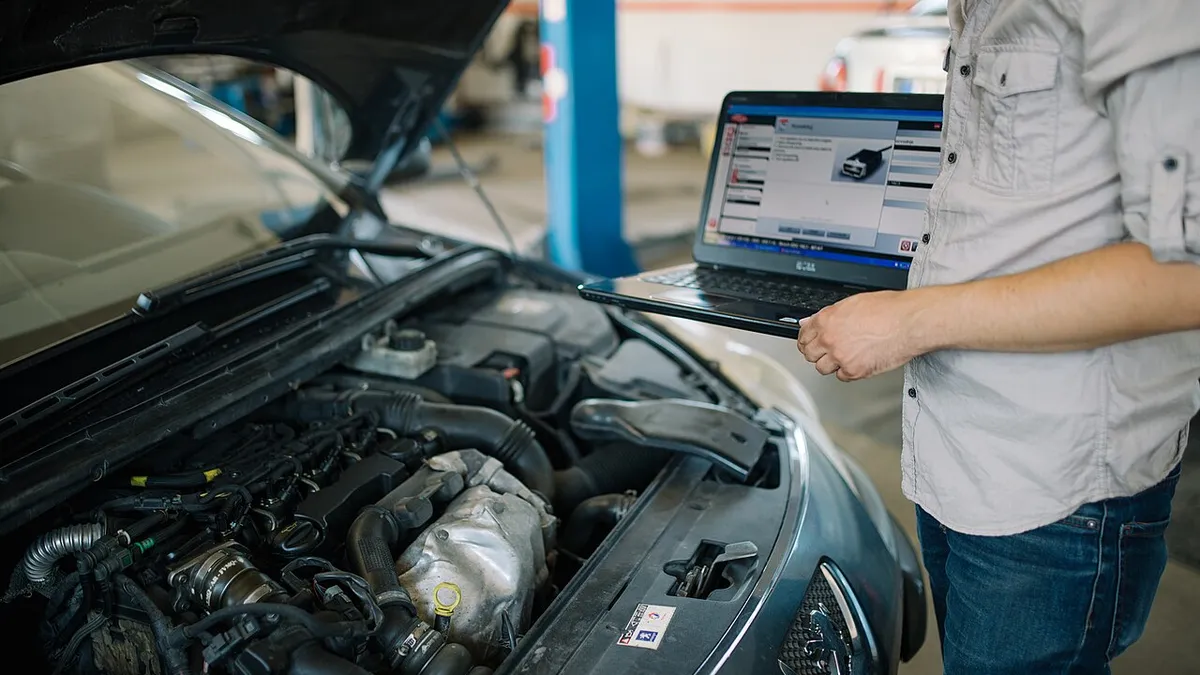
A proper car diagnostic test is a structured investigation, not a quick plug-in. First, the technician connects a scanner to the diagnostic port. The scan retrieves OBD-II fault codes and freeze-frame data. Freeze-frame data shows engine conditions when the fault was recorded. That snapshot often explains why a fault appears only sometimes.
Afterwards, live data takes centre stage during testing. The technician watches sensor readings while the engine runs. Fuel trims, oxygen sensor signals, and misfire counts all get compared. Values outside the expected range highlight the weak area. Consequently, the search narrows from a whole system to a few parts.
Pinpoint tests then confirm the actual culprit before parts are ordered. A multimeter can test a sensor circuit properly. A pressure gauge can confirm fuel delivery under load. Sometimes a known-good part is swapped for comparison. This stage separates careful diagnosis from parts swapping. It also protects you from paying for guesses.
- A full system scan that records every stored and pending code
- Freeze-frame and live data reviewed against expected values
- Targeted electrical or mechanical tests on the suspect part
- A road test that tries to reproduce your exact symptom
- A written finding that names the cause, not just the symptom
Hands-on checks still matter alongside the electronics, of course. Belts, hoses, and fluid levels get inspected visually. Leak colours help too, since coolant and oil look different. Drivers who like the full workshop picture may enjoy this look at Flying Eagle auto service and complete car care. Even so, the diagnostic logic stays the same. Evidence first, verdict second.
How do good mechanics separate a symptom from its cause?
Symptoms describe what you feel, while causes explain why it happens. Confusing the two leads to repeat visits and repeat bills. Consider an engine misfire diagnosis as a clear example. The symptom is a shudder and a flashing light. Yet the cause could sit in ignition, fuel, or compression.
A methodical tester works through those three areas in order. Spark gets checked with the plugs and coils. Fuel delivery gets checked with pressure and injector signals. Compression gets checked if the first two areas pass. Skipping steps invites the classic parts cannon approach. That approach replaces parts until something finally works.
Battery and electrical diagnosis follows the same careful logic. A car that clicks once may not need a battery. Corroded terminals or a weak starter can mimic one. Therefore, voltage and voltage-drop tests come before any sale. Testing the charging system matters just as much. A new battery fitted to a failing alternator will fail again.
Brake complaints deserve the same cause-first treatment every time. Brake repair warning signs include pulling, pulsation, and longer stopping distances. Each sign points towards a different likely cause. Uneven pad wear can reveal a sticking caliper, for instance. Measuring parts beats assuming the whole system has failed.
How can you read a mechanic estimate line by line?
Learning how to read a mechanic estimate changes the whole conversation. Start at the top with the header details. Your name, mileage, and vehicle details should all be correct. Next, read the concern line written in your words. Vague wording there allows the job scope to drift.
Then study the diagnosis line before any price line. A strong estimate states what was tested and found. Measurements make that section far more trustworthy, too. Pad thickness in millimetres beats a vague worn-out label. Specific findings show that real testing actually happened.
What should the parts and labour lines show clearly?
Every part should carry a name, a type, and a price. Types include new, original-brand, aftermarket, rebuilt, and used parts. Each type suits different budgets and repair goals. Ask which type you are getting before approving. Warranty length often differs between those choices as well.
Labour is normally shown as hours multiplied by a rate. Shops usually take those hours from a standard labour guide. That flat-rate system is normal across the trade. However, overlapping jobs should not double-count shared steps. Replacing parts that share one strip-down is the classic example. Ask politely whether any labour lines overlap.
Finally, review the small lines near the total. Shop supplies, disposal fees, and taxes often sit there. None of these lines is automatically suspicious, of course. Still, each one should be visible before you authorise. A clear auto repair estimate breakdown hides nothing at the bottom.
Which questions expose a weak or padded estimate?
Ask what test proved that the part has failed. A confident shop answers that question easily and specifically. Ask also whether the repair fixes the original symptom. Sometimes extra items relate only loosely to your complaint. Those items may still matter, yet they need separating.
Urgency labels deserve a calm question as well. Which items affect safety right now? Which items can wait until next month safely? Honest answers sort the bill into clear priorities. That sorting is the heart of sensible repair planning. It also shows how a good shop respects your budget.
Readers wanting a second workshop viewpoint can compare this breakdown of Shiva auto repair services for reliable car care. The paperwork style may differ between shops. Nevertheless, the questions above work on any estimate. What failed, what proved it, and what does it cost?
Which red flags reveal upselling you do not need?
Pressure is the clearest of all mechanic upselling red flags. A repair that cannot wait for questions deserves suspicion. Safety faults do exist, and some truly are urgent. Even then, a good shop explains the risk calmly. Vague threats about total failure help nobody decide well.
Refusal to show the old part is another warning sign. Most worn parts can be inspected in seconds. Likewise, a refusal to write findings down matters. Verbal-only diagnoses are hard to question or compare. Written evidence, by contrast, invites fair scrutiny and trust.
Watch also for repairs sold without any testing at all. A fluid described as dirty may simply look used. Colour alone rarely proves that a fluid has failed. Ask what test or measurement supports the recommendation. That single question helps you avoid unnecessary car repairs. It also tends to sharpen the whole conversation.
- Pressure to decide before you can read the estimate
- No test result, measurement, or photo behind a big claim
- Old parts withheld or discarded before you can see them
- Vague lines that bundle parts and labour into one lump
- New items added mid-job without a fresh approval call
Balance matters here, because not every extra suggestion is a trick. Technicians often spot genuinely worn parts during inspection. Tyres, belts, and brakes wear whether anyone sells them or not. The difference lies in evidence and timing. Honest advice shows proof and respects your final say.
When does a second opinion on car repair actually pay off?
A second opinion on car repair suits some situations perfectly. Big-ticket work is the obvious candidate for one. Engine, gearbox, and steering repairs carry real money. A second diagnosis can confirm the cause before you commit. Sometimes it also reveals a smaller fix entirely.
Get another view when the diagnosis feels uncertain too. Phrases like it might be the gearbox should pause you. Uncertainty is honest at the testing stage, of course. However, uncertainty should shrink before the bill grows. A second shop can rerun tests with fresh eyes.
Take your paperwork with you when seeking that view. Codes, measurements, and the written estimate all help. The second technician can then verify specific claims quickly. This guide to Lincoln Wilson auto service and vehicle solutions shows similar documentation habits. Clear records make every comparison faster and fairer.
Disagreement between shops is not automatically bad news, though. Different test orders can highlight different weak parts. Ask each shop what evidence supports its verdict. Compare those answers rather than comparing prices alone. The shop explaining its reasoning best usually deserves trust.
How do you decide between repairing and replacing the car?
The repair or replace car decision deserves numbers, not nerves. Start by comparing the repair quote with the car’s value. A common guide suggests pausing near half that value. Beyond that point, replacement deserves serious thought and comparison. Treat the guide as a prompt, never a verdict.
Next, look honestly at the pattern behind the bill. One large repair on a reliable car differs greatly. Repeated breakdowns tell a very different story, however. Frequent visits drain money, time, and confidence together. Reliability history therefore weighs as heavily as today’s quote.
Safety should settle close calls more than sentiment does. Worn brakes, steering faults, and structural rust change everything. A car that cannot protect its occupants has failed. By contrast, a sound car with one tired component continues. Fixing that component can be the rational choice.
Total ownership cost completes the picture beyond the quote. Replacement brings payments, higher insurance, and fresh depreciation along. Keeping the car brings maintenance, fuel, and occasional repairs. Protection choices matter in that maths too, as this look at Rainbow car insurance for vehicle protection explains. Electric models shift the sums again, as shown by China EV insurance registrations and electric vehicle cover. Compare a full year of costs, not one frightening invoice.
- Repair usually suits a reliable car with one clear fault
- Repair also suits a paid-off car in sound overall shape
- Replacement suits repeated failures across several different systems
- Replacement also suits safety faults that compromise the structure
- Either choice improves once quotes and values sit in writing
How can you approve work at Mike Akbar Auto Service with confidence?
Confidence comes from a simple approval routine done every time. First, agree the diagnosis and the written estimate together. Then set a clear approval limit before work starts. Any extra finding beyond that limit needs your call. That rule alone prevents most pickup-day surprises.
Ask for your old parts back as standard practice. Seeing the worn component closes the loop neatly. Also ask what the car repair warranty covers exactly. Parts and labour warranties can differ in length. Written terms beat verbal comfort when problems return.
A thorough shop also flags issues beyond the original job. Tyre wear, fluid leaks, and tired brakes fall into that group. Compliance items can appear during checks as well. Window film is one example, and this guide to legal tint in Connecticut and window compliance shows the detail involved. Good advice separates urgent items from future ones. You then choose the order with full information.
Finally, keep every estimate and invoice in one folder. That history strengthens future diagnoses and resale conversations alike. Patterns become visible across years of paperwork, too. At Mike Akbar Auto Service, that evidence-led habit defines expert care. Test first, explain plainly, and repair with your informed approval.
Frequently asked questions?
How long does a full diagnostic check usually take?
A simple scan can take well under an hour. Deeper faults, however, can need several hours of testing. Intermittent problems often take the longest to reproduce. Ask the shop to explain its testing plan upfront. Time spent testing usually saves money on wrong parts.
Should you pay a diagnostic fee at all?
Yes, skilled testing time is real work worth paying for. The fee buys equipment, training, and careful fault finding. Some shops credit the fee towards the approved repair. Ask about that policy before the work begins. A paid diagnosis also stays yours to take elsewhere.
Can a fault code tell you exactly which part failed?
Rarely, because codes identify a system or a circuit. Several different faults can trigger the same code. Testing then separates those possibilities one by one. Replacing parts on a code alone often wastes money. Always ask what pinpoint test confirmed the cause.
Is it worth repairing a car with very high mileage?
Sometimes, provided the rest of the car stays sound. A well-kept engine and gearbox can outlast expectations comfortably. Rust, safety faults, and repeated failures argue the other way. Compare the quote against value and reliability history. That honest comparison beats any rule based on mileage.
What should you do when two shops disagree completely?
Ask both shops for their test evidence in writing. Measurements and data usually reveal the stronger diagnosis quickly. A third opinion can settle a costly disagreement, too. Avoid approving work while the cause stays disputed. Certainty should arrive before the spending does.
How can you keep repair bills smaller in future?
Act on small warnings before they grow into big ones. A faint noise investigated early often stays cheap. Keep records, follow test evidence, and question vague lines. Those habits protect both the car and the budget. Care, in the end, is mostly timely attention.



