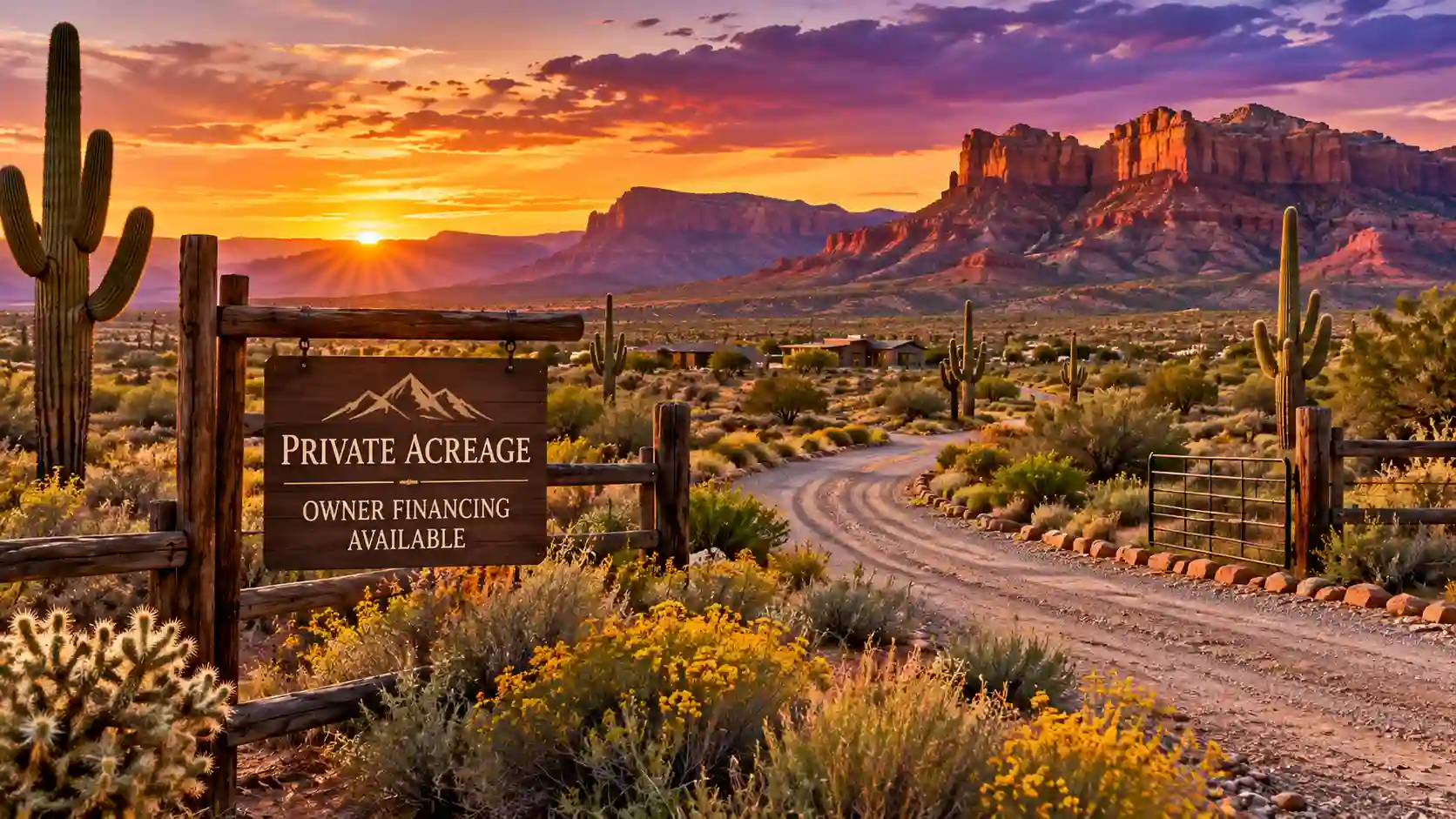
Buying vacant land in the American Southwest offers incredible freedom. However, conventional mortgage lenders often reject raw desert parcels. Therefore, exploring Owner Financed Land in Arizona: Secure Your Dream Property Today provides a simple path to real estate ownership. Arizona features stunning desert valleys, pine forests, and dramatic red rock mesas. Yet, traditional banks demand excessive cash reserves for unimproved parcels. Consequently, seller financing has become the premier choice for homesteaders, off-grid builders, and long-term land investors.
Historically, securing vacant land required substantial upfront capital. Commercial banks usually demand 30% to 50% cash down payments. In addition, bank loan officers scrutinize credit scores and tax returns for months. Fortunately, owner financing removes these rigid institutional barriers. For buyers seeking trusted guides on real estate investments, modern tools, and intentional living, visit the WordGlowUp homepage. Examining legal structures, water rights, and closing procedures reveals why Arizona buyers prefer seller-financed deals.
What Is Owner Financed Land in Arizona and How Does It Work?
Owner financing happens when the property seller acts as the mortgage lender. Instead of borrowing funds from a commercial bank, the buyer makes monthly payments directly to the seller. Both parties execute a formal purchase contract and a binding promissory note. This agreement establishes the principal loan amount, interest rate, repayment term, and monthly installments.
In Arizona, real estate transactions primarily utilize a Deed of Trust. This legal instrument secures the promissory note against the real property. An independent title company or third-party trustee holds legal foreclosure authority if a default occurs. Most importantly, buyers receive equitable ownership and legal occupancy rights immediately at closing.
Core pillars of Arizona seller financing include:
- Direct Term Negotiation: Buyers and sellers agree on down payments, interest rates, and loan durations without bank interference.
- Streamlined Approval: Approvals prioritize upfront cash and down payments rather than rigid credit bureau scores.
- Rapid Escrow Closings: Transactions complete through local title companies within seven to fourteen business days.
- Immediate Land Possession: Buyers gain immediate rights to clear trails, camp, build, or garden on their parcel.
To explore more in-depth reviews on business software, automation, and asset management, browse our curated Technology & Business category archive for practical technical guides.
Top Benefits of Buying Arizona Acreage with Seller Financing
Choosing seller financing provides distinct financial advantages over rigid institutional loans.
1. Bypassing Traditional Credit Rejections
Self-employed workers, freelancers, and small business owners often struggle with strict mortgage underwriting. However, private land sellers take a practical approach. If a buyer provides an adequate down payment, sellers approve the transaction quickly. As a result, hardworking individuals bypass credit bureau gatekeepers.
2. Low and Flexible Down Payments
Commercial banks demand massive liquidity upfront for undeveloped acreage. In contrast, Arizona seller-financed listings frequently feature accessible terms. Sellers routinely accept down payments between 5% and 15% of the total purchase price. Furthermore, buyers can negotiate customized seasonal payments or interest-only trial periods.
3. Substantial Savings on Origination Fees
Institutional mortgage underwriting includes expensive administrative charges. For example, banks charge processing fees, loan origination points, and mandatory underwriting reviews. Fortunately, owner financing eliminates these unnecessary charges entirely. Consequently, buyers only pay basic title search fees and county recording costs.
4. Total Freedom for Off-Grid Homesteading
Much of the rural land across northern and southern Arizona has zero homeowner association (HOA) covenants. Therefore, owners enjoy complete freedom on their acreage. For instance, you can place a tiny home, install off-grid solar panels, or build a custom workshop without neighborhood interference.
Comparing Bank Land Mortgages with Arizona Owner Financing
Review this side-by-side comparison to see why buyers choose seller financing:
| Financing Feature | Traditional Commercial Bank Loan | Arizona Owner Financing |
|---|---|---|
| Down Payment | Requires 30% to 50% upfront cash. | Negotiable, often 5% to 15%. |
| Credit Scrutiny | Strict credit score requirements (often 680+). | Flexible terms based on down payment capability. |
| Closing Timeline | Takes 45 to 90 days of underwriting reviews. | Closes in 7 to 14 days through a title company. |
| Lender Junk Fees | High origination and underwriting charges. | Zero bank origination points or application fees. |
| Raw Land Access | Banks rarely finance unimproved rural parcels. | Easily available for off-grid and rural acreage. |
| Early Payoff Rules | Often enforces prepayment penalty clauses. | Generally allows penalty-free early payoffs. |
This comparison confirms that seller financing provides superior speed, flexibility, and affordable entry into rural real estate.
Arizona Legal Structures: Deed of Trust vs. Agreement for Sale
Understanding Arizona contract structures is essential for legal protection. State law recognizes two primary seller-finance mechanisms.
The standard structure is a Promissory Note paired with a Deed of Trust. Under this structure, the buyer receives a recorded Special or General Warranty Deed at closing. If a payment default occurs, the trustee can initiate a non-judicial trustee sale under Arizona Revised Statutes (A.R.S. § 33-801). This method protects both parties with clear statutory rules.
Alternatively, some sellers utilize an Agreement for Sale (commonly called a contract for deed) under A.R.S. § 33-741. In this setup, the seller retains legal title until the buyer completes all scheduled loan payments. Although Arizona law provides statutory grace periods to protect buyers, legal professionals recommend closing with a recorded Deed of Trust.
Essential Due Diligence for Arizona Land Buyers
Buying rural land in Arizona involves unique environmental and legal considerations. Before signing a promissory note, buyers must perform rigorous due diligence across three critical areas.
1. Water Availability and Well Drilling Rights
Water is the most valuable resource in the desert. Research whether the property sits inside an Active Management Area (AMA) governed by the Arizona Department of Water Resources (ADWR). Outside AMAs, landowners can generally drill private residential exempt wells. In addition, many rural homesteaders utilize permitted hauled-water delivery tanks and rainwater harvesting systems.
2. Legal Road Ingress and Egress Easements
Never assume an open dirt trail provides legal access. Arizona law does not guarantee automatic access to landlocked parcels. Therefore, verify that your deed includes a recorded, perpetual ingress and egress easement connecting the property to a public county road.
3. Soil Conditions and Alternative Septic Feasibility
Before installing plumbing, the local county environmental health department requires a perc test. Rocky or dense clay soils may require specialized engineered septic systems. Confirming soil feasibility early prevents expensive surprise construction costs later.
Insurance, Sustainable Land Stewardship, and Modern Living
Managing private land requires responsible stewardship, adequate insurance coverage, and clear planning. Property owners must maintain comprehensive liability coverage to protect against desert wildfires and trespasser accidents.
Furthermore, property owners frequently review insurance guidelines to protect their financial interests. For example, understanding formal broker authorizations—such as the principles detailed in bor meaning in insurance understanding its impact on your coverage—ensures that property insurance binders remain legally valid.
In addition, developing rural acreage connects directly with environmental responsibility. Building off-grid homesteads with solar energy, passive cooling, and drought-tolerant landscaping reflects the values of a sustainable business architecture triple bottom line. Sustainable practices preserve desert soil and enhance property values for future generations.
Similarly, aspiring land buyers who encounter local zoning or easement disputes can seek structured community legal resources. Reviewing civic legal aid models—such as the public frameworks analyzed in metrowest legal services framingham navigating free and low cost civil legal aid—demonstrates how formal property rights protect independent property owners.
Moreover, building a quiet country retreat supports an intentional domestic lifestyle. This restorative balance mirrors the living principles celebrated in american lifestyle magazine your ultimate guide to modern living. Escaping noisy cities gives families space to recharge and connect with nature.
Finally, owning Arizona land gives families the freedom to explore outdoor recreation. Private acreage allows owners to camp, stargaze, hike, and unlock unforgettable moments with lifestyle xperiences 365 live fully across sunny desert weekends.
Actionable 5-Step Blueprint: Purchasing Arizona Owner Financed Land
Follow this practical five-step roadmap to acquire your Arizona property safely:
- Select Your Ideal County: Choose between cooler pine regions in Coconino County or sunny desert valleys in Cochise, Mohave, or Pinal County.
- Order a Certified Boundary Survey: Hire a licensed surveyor to locate physical boundary pins and verify recorded access easements.
- Close Exclusively Through a Title Company: Never execute a land purchase with cash in person. Always close through a licensed Arizona title company.
- Purchase an Owner’s Title Insurance Policy: Ensure the title policy protects against unrecorded liens, back taxes, or previous ownership claims.
- Record All Legal Deeds Promptly: Confirm that the escrow officer files your Deed of Trust and Warranty Deed with the County Recorder immediately.
Frequently Asked Questions About Arizona Owner Financed Land
Is owner financing legally recognized in Arizona?
Yes. Owner financing is fully legal and common throughout Arizona. Transactions must comply with state real estate contract statutes and federal lending guidelines.
Do I receive the property deed at closing in Arizona?
Yes, provided the deal uses a Deed of Trust structure. You receive a recorded Warranty Deed at closing, granting you legal ownership while making loan payments.
Can I live on the land in an RV while building?
County zoning codes govern RV occupancy. For example, some rural Arizona counties allow temporary RV living with an active building permit, while others impose strict time limits.
Are there prepayment penalties on Arizona owner-financed notes?
Most seller-financed promissory notes allow penalty-free early payoffs. However, always review your specific loan paperwork to confirm that early payoff fees do not apply.
To learn more about our real estate investment research, property due diligence frameworks, and editorial team, explore our About Us page. If you have questions regarding land financing strategies, zoning regulations, or general editorial feedback, please connect with our team through our Contact Us page.