
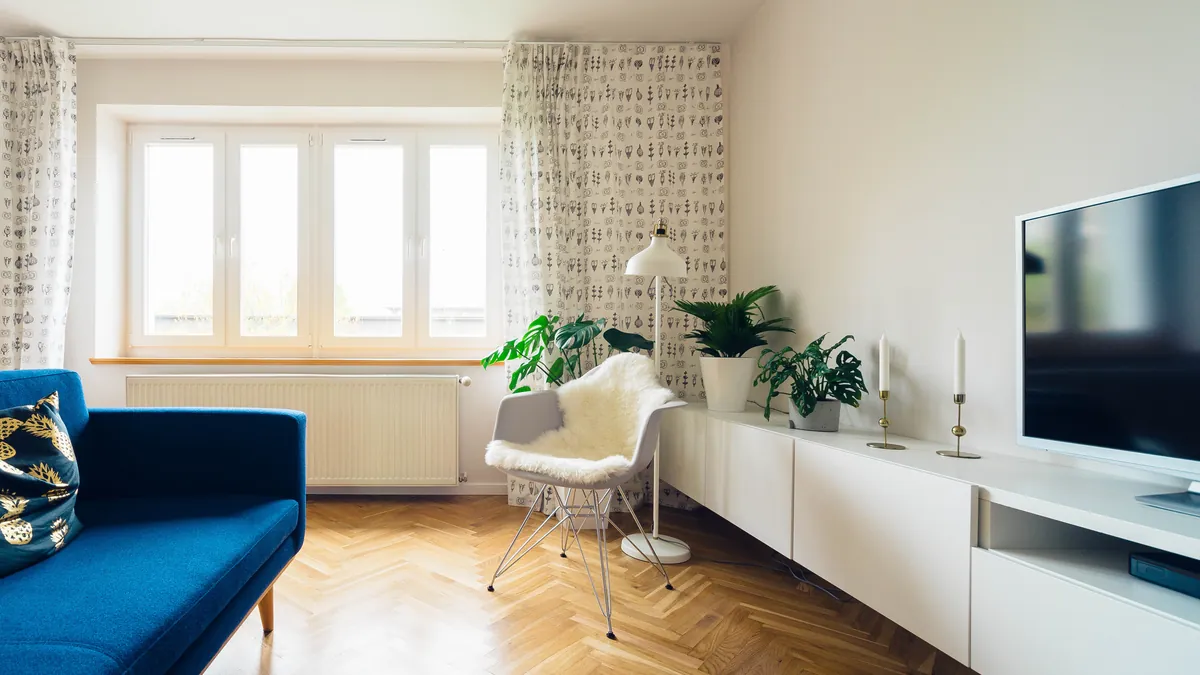
A modern floating entertainment center lifts your storage off the floor and onto the wall. The screen hangs above a slim console, and the floor below stays completely clear. As a result, the room feels wider, calmer, and far easier to clean. This guide covers the full job in order, from first measurements to final styling. You will learn sizing, wall checks, safe mounting, cable routing, and daily care. No step assumes special skills, yet no step hides the real risks either.
What Is a Floating Entertainment Center, and How Does It Differ From a Floor Console?
A floating entertainment center is a wall mounted entertainment center with no legs and no base. The console fixes directly to the wall, so the unit appears to hover above the floor. Most designs pair that console with a wall-mounted television above it. Some add side shelves or a full back panel behind the screen.
A floor console works very differently. It stands on legs or a plinth, and it carries the television on its top surface. Moving it takes minutes, and renters often prefer that freedom. A floating TV console, by contrast, stays fixed until you unbolt it. In return, you gain clear floor space and a built-in architectural look.
Designer wall units sit at the opposite extreme of scale and ornament. A glamorous Michael Amini entertainment center, for example, frames the screen with towers, mirrors, and rich veneers. Floating designs strip that drama back to clean lines and open floor. Both approaches can anchor a room beautifully, so choose the mood you truly want.
How Should You Plan the Layout Before You Buy Anything?
Good floating setups start on paper, not at the checkout. First, sketch the wall and mark every door swing, window, and radiator on it. Next, note where your sofa sits and where people walk through the room. The screen belongs on the wall your seating naturally faces. Indeed, a beautiful unit on the wrong wall will annoy you daily.
Power and connections deserve equal attention at this stage. Count your devices honestly, including streamers, consoles, soundbars, and routers. Then check how many sockets sit near the media wall today. Running new power later costs far more than planning it now. If your home is still being built or renovated, guides to land and manufactured home packages show why early room planning pays off.
Viewing distance shapes the plan as well. Most viewers sit comfortably at roughly one and a half to two and a half times the screen diagonal. So a 55 inch screen suits seating about seven to eleven feet away. A 65 inch screen prefers roughly eight to thirteen feet. Measure your real seating line before you fix any screen size in stone.
How Do You Measure for a Floating Console and TV?
How Wide Should the Console Be Compared With Your TV?
Screen sizes are quoted diagonally, so the diagonal number misleads many buyers. A 65 inch television actually measures about 57 inches across. Your floating media console should extend beyond the screen on both sides. Most designers add roughly three to six inches of margin per side. That margin balances the wall visually, and it protects the screen edges from knocks.
Simple starting ranges keep shopping sane. Firstly, plan about 54 to 60 inches of console for a 50 to 55 inch TV. Secondly, allow roughly 64 to 72 inches for a 60 to 65 inch screen. Thirdly, look beyond 74 inches for 70 to 75 inch models. Tape the outline on your wall with painter tape, then judge it from the sofa.
What Is the Right Viewing Height for a Wall Mounted TV?
The right viewing height for a wall mounted TV puts the screen centre near your seated eye level. For most sofas, that point sits roughly 40 to 44 inches above the floor. Deep recliners lower your eye line, so the centre can drop slightly there. Measure from your actual seat, in your normal relaxed posture.
Console height follows the screen, never the other way round. Leave a clear gap between the screen bottom and the console top. A soundbar needs extra room inside that gap, plus space for its sound to escape. However, a huge gap makes the console feel detached from the screen. Aim for a calm, connected band of wall between the two pieces.
Floating Shelves, a Single Console, or a Full TV Wall Panel System?
Three formats dominate this style, and each suits a different household. A single floating TV stand gives you one long cabinet with doors or drawers. It hides devices, stores remotes, and keeps the wall composition simple. Most families find this format the easiest to live with daily.
Floating shelves offer the lightest option of all. Open shelves carry a soundbar, a streaming box, and a few display pieces. They cost less wall strength than a loaded cabinet, yet they expose every cable and dust layer. Choose them only if your device count stays genuinely small.
A full TV wall panel system builds the biggest statement. Panels cover the wall behind the screen, and consoles plus shelves attach to that panel grid. The panels hide cable runs elegantly, and many include ledges or integrated lighting channels. However, panel systems add weight, cost, and installation time. Renters and first-time installers usually do better with a single console.
Which Materials and Finishes Hold Up Best on a Floating Unit?
Weight shapes every material decision on a wall-hung unit. Engineered boards with quality veneer keep wide consoles light and stable. Solid wood looks superb, yet long solid spans can grow heavy and may move with humidity. Plywood cores with real wood faces offer a strong middle path.
Finish choice affects daily life just as much. Matte and low-sheen fronts hide fingerprints and soften screen reflections. High-gloss fronts look striking in dim rooms, but they show dust and smudges quickly. Wood tones warm up minimalist rooms, while white or pale finishes bounce daylight around small spaces. If you plan to paint a companion piece later, this guide to the best wood for painted furniture explains which surfaces accept paint cleanly.
Hardware quality decides how the unit ages. Soft-close hinges protect doors from slamming, and metal hanging rails spread weight better than small brackets. Check drawer runners in person whenever you can. Smooth, quiet movement now usually means fewer repairs later.
How Can You Tell Whether Your Wall Can Carry the Weight?
Every floating setup hangs from the wall, so the wall becomes part of the furniture. Stud mounting is the safest method on standard framed walls. A stud finder locates the timber or metal studs behind the plasterboard. Your main rail or brackets must fix into at least two studs, ideally three. Screws in plasterboard alone cannot carry a loaded console safely.
Other wall types demand other fixings. Solid masonry walls accept heavy-duty wall plugs and bolts, and they carry floating units very well. Metal stud walls need special toggles or fixings designed for hollow steel framing. Old plaster and lath walls vary wildly in strength, so test them cautiously. When the wall construction stays unclear, pause and get advice before drilling.
Weight maths protects both the wall and your equipment. First, check the floating console weight capacity in the product specifications. Next, add up the console itself, every device, and the decor you plan to load. Keep the total comfortably below the rated limit, with a clear safety margin. Remember that the television mount carries its own separate load rating too.
How Do You Install a Floating Entertainment Center Safely?
The heart of how to install a floating entertainment center safely is a calm, fixed order. Firstly, mark the stud positions and the console outline with painter tape. Secondly, hold the hanging rail against the wall and mark each fixing point. Thirdly, drill pilot holes into the studs and fix the rail with the specified screws. Check the rail with a long spirit level before you tighten anything fully.
Lifting the console safely takes two people. One person supports each end, and both lift together onto the rail. Then secure the cabinet to the rail with the locking screws provided. Hang the television on its own wall bracket next, keeping the screen centre at your planned height. Finally, load devices only after every fixing feels rock solid.
- Stud finder, tape measure, and a long spirit level
- Drill with bits matched to your wall type
- Screws, bolts, and fixings rated for the total load
- Painter tape and a pencil for marking lines
- A second person for every lifting stage
Test the finished unit before you trust it. Press down gently along the console top and watch for any movement. A sound installation stays silent and still under that pressure. Recheck the fixings after the first week, because new installations can settle slightly.
What Does Good Cable Management for Wall Mounted TV Setups Look Like?
Clean cable management for wall mounted TV setups starts behind the console. Route every lead through the cabinet back or a rear cable channel. Group cables by device with soft ties, and label each plug at the power strip. Labels sound fussy now, yet they save real frustration during future upgrades.
An in-wall cable management kit gives the cleanest result of all. The kit creates a hidden channel inside the wall for signal cables between screen and console. Power, however, follows stricter rules in most regions. Never run a standard power cord inside a wall cavity unless the kit and local code allow it. A recessed outlet behind the screen solves that problem properly.
Surface solutions suit renters and solid walls better. A paintable cord cover runs down the wall and blends in once painted. Short covers also hide the drop between console and floor-level sockets. While you plan connections, reviewing your wider setup, from router placement to home phone service options, keeps every line reaching the media wall neatly. Plan the power strip position last, inside a ventilated cabinet section.
Why Does Ventilation for Media Devices Matter Inside Closed Cabinets?
Closed doors hide devices beautifully, but trapped heat shortens their life. Consoles, amplifiers, and streaming boxes all shed warmth while they run. Ventilation for media devices therefore belongs on your buying checklist, not in later fixes. Look for open cabinet backs, slatted doors, or discreet vent slots.
Simple habits protect your equipment daily. Leave breathing space behind and above each warm device. Keep the hottest amplifier on an open shelf whenever possible. Dust vents monthly, because clogged slots quietly choke airflow. If a cabinet still runs hot, a small quiet cabinet fan can move air gently.
How Does Lighting Complete a Floating Media Wall?
Lighting sells the floating effect after dark. LED bias lighting behind the screen softens contrast and reduces eye strain during films. A soft strip under the console casts a gentle glow across the floor. That underglow makes the unit appear to hover even more convincingly.
Warm white light flatters wood finishes and skin tones best. Keep bright lamps out of the screen reflection path, or films will mirror your furniture. Dimmable circuits let the room shift from family time to cinema mood quickly. Test every lighting layer at night before you call the project finished.
How Should You Style Floating Shelves Without Creating Clutter?
Styled shelves reward restraint above all else. Group objects in small clusters, and leave clear empty space between each group. Books, a plant, and one sculptural piece can fill a shelf gracefully. Twelve tiny ornaments, by contrast, dissolve into visual noise.
Balance matters more than symmetry here. Place heavier visual items low, and keep lighter pieces near the top. Repeat one accent colour across the wall to tie the arrangement together. Hide daily clutter inside the closed console instead, because open shelves should stay calm. Your future self will thank you during every rushed tidy-up.
When Should You Call a Professional Instead of Drilling Yourself?
Some parts of this project genuinely suit professional hands. Moving or adding power outlets always belongs to a qualified electrician. Unknown wall construction, very heavy panel systems, and chimney breast walls also justify expert help. Local specialists such as Titan Home Services illustrate the premium support available for complex home projects.
Comparing providers helps you judge any quote fairly. Services like 360 Home Services show the range of installation and finishing work on offer. A safe mount costs far less than a fallen screen and a damaged wall. Pride should never outrank physics on installation day.
What Mistakes Make Floating Setups Sag, Overheat, or Look Wrong?
The commonest mistake is fixing into plasterboard without hitting studs. The second is guessing measurements and discovering the error after drilling. People also mount screens far too high, then wonder why long films hurt their necks. Each mistake shares one cause, namely skipped planning at the start.
Styling and airflow errors follow close behind. Overloaded shelves bow quietly until doors stop closing true. Sealed cabinets cook expensive consoles during summer gaming sessions. Glossy black units under bright windows mirror the whole room back at viewers. Match finish, load, and layout to your real habits, and most problems never appear.
How Do You Clean and Care for a Wall Mounted Entertainment Center?
Daily care stays refreshingly simple with a floating unit. Dust tops and shelves with a soft dry cloth each week. The clear floor below vacuums in seconds, and robot vacuums pass underneath freely. That easy access quietly becomes the benefit owners praise most.
Longer checks protect the installation itself. Tighten visible fixings and inspect the hanging rail once a year. Wipe spills before moisture reaches veneer edges or board joints. Keep heavy stacks of books off long shelf spans. Small habits, repeated calmly, keep the wall looking showroom fresh.
Frequently Asked Questions
How High Should You Mount a Floating TV Console?
Set the screen first, with its centre near your seated eye level. Then position the console top roughly 20 to 24 inches above the floor for typical sofas. Leave a comfortable gap between the screen bottom and the console top. A soundbar needs extra clearance inside that gap, so measure yours before drilling.
Can a Floating Entertainment Center Hold a Large TV?
The console rarely carries the television itself, because the screen hangs on its own wall bracket. Each part still needs a proper load rating and solid stud fixings. Large screens suit wide consoles, since the furniture must balance the screen visually. Check both ratings carefully, and keep total cabinet loading below its limit.
Can You Install a Floating Console on Drywall Without Studs?
Drywall alone should not carry a loaded floating console. The main rail needs fixings into at least two studs, or into solid masonry. Hollow-wall anchors suit light decor, not heavy cabinets full of electronics. If studs sit in awkward positions, a professional can often add reinforcement inside the wall.
How Do You Hide Cables Without Opening the Wall?
A paintable cord cover offers the simplest surface route down the wall. Inside the cabinet, rear channels and grommet holes guide leads out of sight. Short cables in the right lengths remove most slack and tangles. Wireless streaming helps too, although the screen and soundbar still need power.
Are Floating Entertainment Centers Safe Around Children and Pets?
A properly stud-mounted console removes the tipping risk that floor units carry. The wall-mounted screen also sits beyond toddler reach when mounted sensibly. Keep heavy decor off high open shelves, and use safety straps where makers provide them. Regular fixing checks keep the whole wall secure as years pass.
Do Floating Consoles Work in Rental Homes?
Rentals depend on your lease and your landlord’s permission. Stud fixings leave holes that need filling and painting when you leave. Some renters choose a low floor console instead and save floating designs for owned homes. Get written permission first, because deposit disputes cost more than patience.
A modern floating entertainment center rewards the homes that plan it properly. Measure the wall honestly, respect the studs, and route cables before you hang anything. Your living room then gains clean lines, clear floors, and a screen at a truly comfortable height. Start with the tape measure, and let the wall do the rest.



