
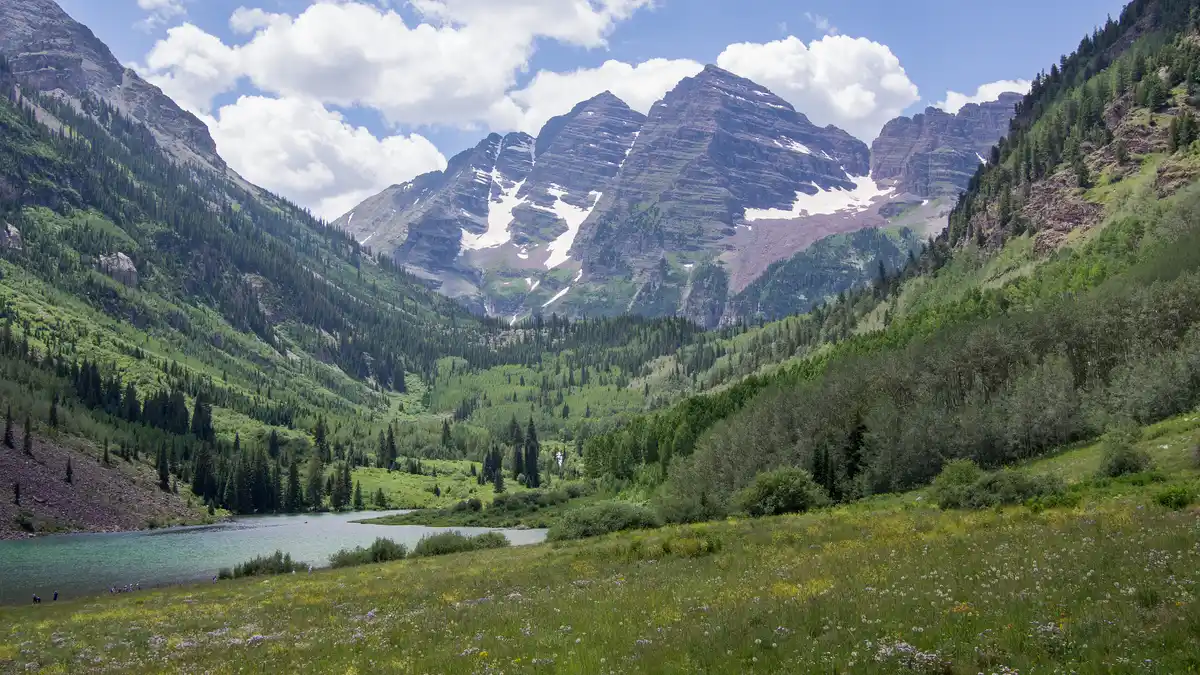
Summer unlocks Colorado in a way no other season can match. Snow melts from the high passes at last. Alpine lakes turn a bright, clear turquoise. Wildflower meadows open across whole hillsides, and long evenings stretch over lively mountain towns.
Choosing where to go still feels hard, though. Distances look short on a map, yet mountain roads twist and climb. One valley can feel cool and green, for instance, while another sits hot and dry. A little planning therefore goes a long way here.
This guide covers the essential places to visit in Colorado in summer, region by region. You will find classic national parks, quieter small towns, and honest advice on altitude. A sample route and a packing list sit near the end, so you can turn ideas into a real trip.
Why does Colorado feel made for summer?
Elevation shapes almost everything about a Colorado summer. Denver sits just over a mile above sea level. Many mountain towns sit far higher, often between 8,000 and 10,000 feet. Temperatures there stay pleasantly cool, even in July.
Colorado wildflowers give the season its colour, for example. Lower meadows bloom first, in late spring. Higher slopes follow later, and the fullest displays usually arrive in July. Photographers plan whole trips around that short, vivid window.
Summer also opens roads that winter keeps closed. High passes clear, trailheads become reachable, and rivers run full with snowmelt. Rafting, hiking, and scenic driving all peak in the same few months. Few states, indeed, pack so much variety into one season.
If you enjoy comparing regions before you commit, browsing the top outdoor places to visit in the US can help you place Colorado in a wider picture. Colorado still stands out, mainly because its highlights sit so close together.
How should you handle altitude, sun, and afternoon storms?
Altitude deserves respect from day one. Air holds less oxygen up high, so even fit visitors can feel breathless. Headaches, poor sleep, and unusual tiredness are common early signs. Most people adjust within a day or two, provided they take things gently.
Hydration helps more than almost anything else. Drink water steadily through the day, not just when you feel thirsty. Eat regular meals, even if your appetite fades a little. Alcohol hits harder at altitude, so go easy on that first evening.
Sunlight also grows stronger with every thousand feet you climb. Burns happen fast, even on cool and breezy days. Wear sunscreen, a hat, and sunglasses as a daily habit. Lip balm with sun protection sounds minor, yet cracked lips ruin many trips.
Afternoon thunderstorms follow a familiar pattern in the high country. Mornings often start clear and calm. Clouds then build around midday, and storms can arrive by early afternoon. Lightning above the treeline is a genuine danger, not a small inconvenience.
Start hikes early, therefore, and aim to be descending by noon. Check the forecast each morning before you set out. If thunder rumbles nearby, turn back without debate. Locals treat that rule as non-negotiable, and visitors should copy them.
These Colorado altitude sickness tips sound simple, but they prevent most ruined days. Sleep lower when you can, and climb gradually between bases. Rest if dizziness or nausea lingers. Descending remains the surest fix when symptoms grow worse.
Why is Rocky Mountain National Park the classic first stop?
Rocky Mountain National Park in summer delivers the Colorado postcard in real life. Jagged peaks rise above green valleys. Elk graze in open meadows, and moose feed near quiet ponds. Trails range from gentle lakeside strolls to demanding summit climbs.
Estes Park, meanwhile, works well as the eastern base for most visitors. Grand Lake, on the western side, feels smaller and calmer. Either town puts trailheads within easy reach. Staying two nights at least gives the park a fair chance overall.
One practical point matters before you arrive. A timed-entry permit system operates in peak season, and popular areas fill quickly. Check recreation.gov well ahead and read the current rules for your dates. Planning that step early removes a lot of stress later.
What makes Trail Ridge Road and the Bear Lake area so special?
A Trail Ridge Road scenic drive crosses the park from east to west. The road climbs above the treeline for long stretches. Pullouts reveal tundra, distant snowfields, and valleys far below. Take it slowly, because the views deserve unhurried stops.
Bear Lake anchors the park’s most loved hiking area. Short paths lead to Nymph Lake and Dream Lake. A slightly longer walk, by contrast, reaches Emerald Lake beneath steep cliffs. Arrive early for calmer water and softer light.
Wildlife watching rewards patience in this park. Dawn and dusk bring the best chances of sightings. Keep a generous distance from every animal, however tempting a photo feels. Rangers enforce that rule strictly, and rightly so.
Families often pair the park with easy town time afterwards. Estes Park offers ice cream shops, a riverwalk, and relaxed cafés. That balance keeps children happy after a big hiking day. Grown-ups usually appreciate the slower evening pace too.
Why do Aspen and the Maroon Bells stop everyone in their tracks?
The Maroon Bells Aspen pairing might be Colorado’s most photographed view. Two maroon-toned peaks rise sharply above Maroon Lake. On a still morning, the lake mirrors them almost perfectly. Arrive near sunrise for the calmest reflections.
Access needs a little forethought in summer. Daytime entry to the scenic area is managed carefully, and shuttle or reservation systems often apply. Check the official Forest Service guidance before your visit. Spontaneity works poorly at this particular beauty spot.
Walking options suit most energy levels here. A gentle loop circles part of Maroon Lake. The path to Crater Lake climbs higher and feels wilder. Meadows along both routes glow with wildflowers in midsummer.
Aspen itself, indeed, adds culture to the scenery. Galleries, bookshops, and open-air dining fill its compact centre. Music and food events, especially, animate many summer weekends. After a quiet morning hike, that buzz feels welcome.
Independence Pass offers a dramatic route east when conditions allow. Hairpin bends and high tundra make the drive memorable. Weather can close it without much warning, though. Always confirm its status on the day you travel.
What makes Great Sand Dunes feel like another planet?
Great Sand Dunes National Park Colorado surprises almost every first-time visitor. Immense dunes rise against the Sangre de Cristo Mountains. Some dunes, in fact, tower hundreds of feet above the valley floor. Wind constantly reshapes their ridges and curves.
Medano Creek adds a playful twist in late spring and early summer. Snowmelt water spreads shallow and wide at the dune base. Children splash happily while adults, meanwhile, rest tired legs. By late summer, the creek usually fades away.
Timing matters a great deal on the sand itself. Surface sand grows fiercely hot by midday in summer. Walk the dunes early in the morning or near sunset instead. Closed shoes protect your feet far better than sandals.
Sandboarding and sand sledding bring out everyone’s playful side. Specialist boards work best, since ordinary snow gear slides poorly. Rent equipment in a nearby town before you enter. Falling on soft sand hurts less than you might fear.
Night brings a second show at this park. Skies here rank among the darkest in the region. Stars appear in staggering numbers on clear nights. Campers often rate the evening sky above the daytime dunes.
Anyone building a wider list of the best places to visit in the USA should give this park serious thought. Few landscapes anywhere feel quite so unexpected. Desert and alpine scenery collide here in one view.
Where should you go in the San Juan Mountains?
The San Juan Mountains fill Colorado’s southwest corner with drama. Peaks look sharper here, in fact, and old mining towns cling to steep valleys. Roads thread through passes that feel thrilling and humbling. Many travellers call this their favourite corner of the state.
Telluride Colorado summer days blend scenery with festival energy. The town sits at the end of a box canyon, beneath towering walls. A free gondola links Telluride with Mountain Village above. Bridal Veil Falls pours down the rock at the canyon head.
Ouray, a short scenic drive away, offers, instead, a different mood. Hot springs steam at the edge of town. Waterfalls tumble within walking distance of the main street. Its nickname, the Switzerland of America, feels earned on arrival.
Why do Durango and Silverton pair so well?
A Durango Silverton train journey ranks among America’s great rail experiences. The narrow gauge line follows the Animas River through a deep gorge. Steam and history fill the air in equal measure. Book ahead in summer, because carriages sell out fast.
Durango itself makes an easygoing base for several nights. Historic streets, likewise, hold breweries, bakeries, and family-run shops. Rafting trips leave town daily during the warmer months. Evenings feel lively without becoming overwhelming.
Silverton, at the other end of the line, feels raw and remote. One main street serves a town surrounded by huge peaks. Jeep roads climb toward alpine basins and old mines. Summer wildflowers carpet those high basins in July.
The Million Dollar Highway connects these towns with unforgettable scenery. Guardrails stay scarce, and drops look dramatic in places. Nervous drivers may prefer travelling it slowly in daylight. Confident passengers, meanwhile, will love every single mile.
Which central mountain towns work best for a slower pace?
Not every great Colorado day needs a national park gate. Central mountain towns reward travellers who linger a little. Coffee on a sunny porch can rival a summit view. Local trails often start right at the edge of town.
Why is Crested Butte the wildflower favourite?
Crested Butte wildflowers enjoy a fame that is fully deserved. Hillsides erupt with lupine, paintbrush, and columbine each July. The town proudly calls itself a wildflower capital. Its annual festival celebrates the bloom with guided walks.
Mountain biking runs deep in the town’s identity too. Trails roll through meadows and aspen groves for miles. Beginners find gentle routes near town without much searching. Experienced riders, in contrast, can chase long alpine descents.
Downtown keeps a refreshingly local feel. Colourful old buildings house bakeries and bike shops. Chain stores stay noticeably absent from the main street. That character makes evenings here feel genuinely restful.
Why does Breckenridge suit families and first timers?
Breckenridge Colorado summer visits feel easy from the moment you arrive. The historic main street stays walkable and welcoming. A gondola rises straight from town toward the slopes. Trails, bike paths, and picnic spots spread out in every direction.
Gold mining history gives Breckenridge extra depth. Guided tours explore old mines and dredge remains nearby. Children enjoy panning demonstrations and hands-on exhibits. History here feels tangible rather than dusty.
Day trips multiply your options from this base. Nearby Dillon Reservoir invites paddleboarding and sailing on calm mornings. Scenic drives reach high passes within an hour. Return each evening to the same bed, and the trip stays simple.
Travellers comparing summer bases across the country often look at places to visit in Michigan during the summer for lakeside ideas. Colorado towns offer a different pleasure, built on altitude and trails. Both styles shine, just in very different ways.
What can you see around Colorado Springs and the southwest?
Southern Colorado mixes red rock, high peaks, and deep history. Distances grow longer here, so group your stops sensibly. Two bases, Colorado Springs and Durango, cover most highlights. Each base deserves at least two nights.
Why is Garden of the Gods an easy win?
Garden of the Gods Colorado Springs visits require almost no effort for huge reward. Giant red sandstone fins rise from green parkland. Pikes Peak frames the view from behind. Paved paths make the central formations accessible to nearly everyone.
Early morning light paints the rocks a deep, warm red. Climbers dot the taller formations on many days. Hawks circle above the ridges in the quiet hours. Go early, and the park feels almost peaceful.
Nearby Manitou Springs adds small-town charm to the day. Mineral springs bubble up at fountains around town. Quirky shops line its gentle main street. The famous Incline climb challenges very fit visitors nearby.
Why should Mesa Verde be on a history lover’s list?
Mesa Verde cliff dwellings preserve a story unlike any other in the country. Ancestral Pueblo people built entire villages within sheltered alcoves. Cliff Palace and Balcony House remain the best-known sites. Seeing them in person feels quietly astonishing.
Ranger-led tours explain how these communities lived and farmed. Some tours involve ladders and tight passages. Check tour descriptions carefully before you book. Comfortable shoes and water matter on every route here.
Summer heat builds quickly on the exposed mesa tops. Start tours in the morning whenever possible. Carry more water than you think you need. Shade stays limited across much of the park.
History fans planning a broader western loop might also enjoy places to visit near Rapid City SD on a separate trip north. The two regions share a frontier spirit. Each rewards travellers who slow down and look closely.
How could you link these stops into one Colorado summer road trip?
A Colorado summer road trip works best as a loop with unhurried stages. Rushing between every highlight quickly drains the fun. Pick fewer bases, and stay longer in each. The sample route below suits roughly ten days.
- Start in Denver, and sleep one night while you adjust to altitude gently.
- Drive to Estes Park next, and give Rocky Mountain National Park two full days.
- Cross Trail Ridge Road when conditions allow, and continue toward Aspen for two nights.
- Head south through Crested Butte, and pause there for wildflowers and biking.
- Continue to Durango via Ouray and Silverton, and ride the mountain train.
- Visit Mesa Verde from Durango, and then swing east toward the Great Sand Dunes.
- Finish in Colorado Springs for Garden of the Gods, and return to Denver afterwards.
Shorter trips demand harder choices, of course. With five days, combine Rocky Mountain National Park with Breckenridge or Aspen. With a long weekend, Colorado Springs alone can fill the days happily. Quality beats quantity on mountain roads.
Winter planners sometimes ask about the best places to visit in Dec in US lists for a return trip. Colorado ski towns sparkle then as well. Summer, though, shows the state’s fullest range.
Adventure seekers building a bigger bucket list may enjoy the best adventure places to visit in USA roundup for inspiration. Colorado earns several spots on any such list. Rafting, via ferrata routes, and high trails keep pulses racing.
What should you pack for high country summer days?
Layers solve most Colorado packing problems. Mornings can feel chilly, even in towns. Midday sun then warms exposed trails quickly. A light insulated jacket earns its space in your bag.
- Broken-in hiking shoes with good grip for rocky and sandy paths.
- Sun hat, sunglasses, and high-protection sunscreen for intense high-altitude light.
- Reusable water bottle or hydration pack, filled before every outing.
- Rain jacket that packs small, ready for fast afternoon storms.
- Warm layer for evenings, since temperatures drop sharply after sunset.
- Swimsuit for hot springs, creeks, and hotel pools along the way.
- Binoculars for wildlife watching in meadows and along quiet roads.
Small extras often save the day as well. Electrolyte sachets help after long, dry hikes. A paper map, likewise, backs up patchy phone signals. Snacks prevent grumpy detours between small towns. Keep essentials in the car, not buried in luggage.
Desert lovers sometimes compare this list with notes on the best place to visit in Joshua Tree before a southwest trip. Packing overlaps a lot between the two regions. Sun and water discipline matter in both.
Frequently asked questions
What is the best month to visit Colorado in summer?
July usually offers the fullest summer experience overall. High roads stand open, and wildflowers peak across many ranges. June, by contrast, brings stronger waterfalls and slightly thinner crowds. August suits climbers, since afternoon storms often ease a little.
How many days do you need for a Colorado summer trip?
Seven days allow a satisfying loop through two or three regions. Ten days, overall, feel better for the full southwest circuit. A long weekend works if you pick one base only. Travel days run longer than the map suggests.
Do you need a reservation for Rocky Mountain National Park?
Peak season brings a timed-entry permit system in the park. Rules and release dates change, so check recreation.gov before you travel. Book as early as the system allows. Early morning entry outside permit hours may suit flexible visitors.
How can you avoid altitude sickness in Colorado?
Climb gradually, and sleep lower during your first nights. Drink water steadily, and eat regular, balanced meals. Skip strenuous hikes until your body settles. Descend promptly if headaches, nausea, or dizziness grow worse.
What are the best mountain towns in Colorado for summer?
The best mountain towns in Colorado depend on your travel style. Telluride and Aspen feel polished and dramatic. Crested Butte and Ouray feel quieter and more local. Breckenridge and Durango suit families who want plenty to do.
Is Colorado too hot in summer?
Lower cities can feel hot during July afternoons. Mountain towns, in contrast, stay cool and comfortable most days. Plan desert visits for mornings or evenings. Altitude, ultimately, becomes your best air conditioning.
Colorado in summer rewards curiosity, early starts, and a flexible plan. One morning might bring an alpine lake in perfect stillness. An evening might end in a hot spring beneath bright stars. Pack your layers, respect the altitude, and let the mountains set the pace.



