
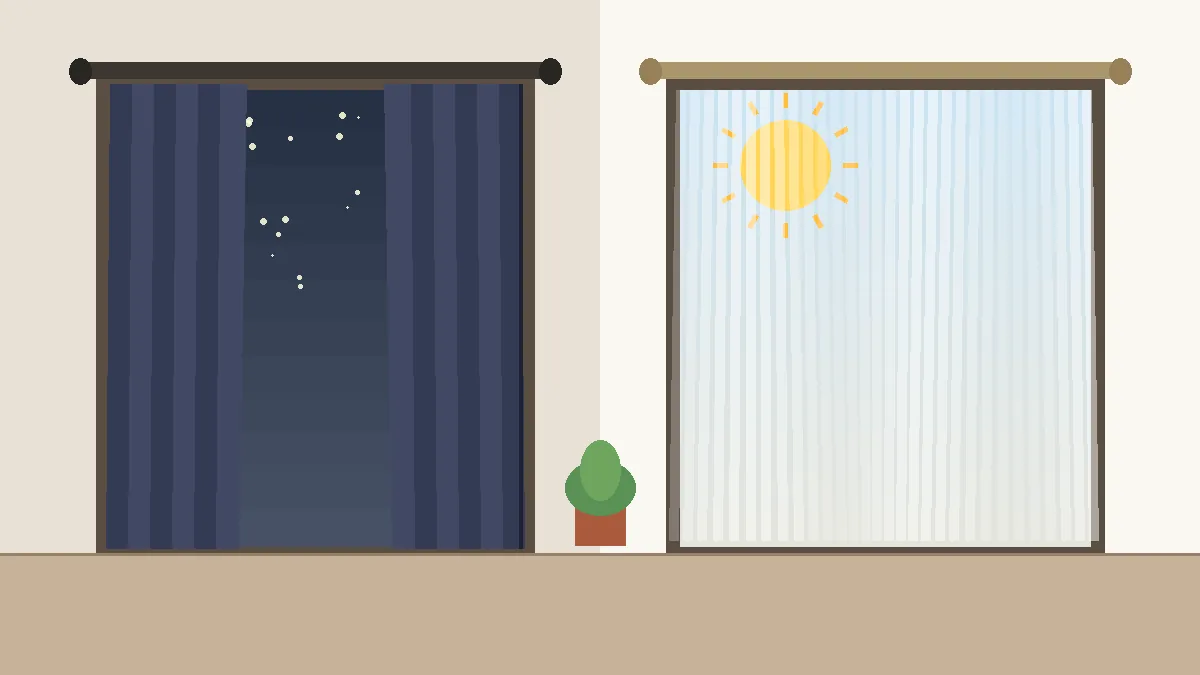
Most people choose curtains by colour first. However, the blackout vs sheer curtains choice is really about light. In fact, one fabric blocks daylight almost completely. In contrast, the other fabric softens daylight beautifully. Therefore, the right answer changes in every room. For example, a bedroom needs darkness for sleep. Meanwhile, a living room usually needs brightness for daytime life. Consequently, this guide compares both fabrics room by room.
Moreover, this comparison goes beyond the usual simple table. Retailer guides often stop at bedroom and living room labels. Instead, you will find privacy, insulation and care here. Additionally, you will find layering, measuring and rental advice. Specifically, those practical details decide whether curtains work daily. As a result, you can buy once and buy correctly.
What does blackout vs sheer curtains actually mean?
Firstly, a sheer curtain is a lightweight, translucent panel. It diffuses sunlight rather than blocking it fully. For instance, voile and linen-look sheers soften harsh glare. However, they never create true darkness at midday. Indeed, shapes and movement remain faintly visible through them. Therefore, sheers suit rooms where soft light matters most.
Secondly, a blackout curtain is an opaque, heavier panel. It uses dense weaving or a coated lining. Consequently, it blocks most outside light when fitted well. For example, streetlights and early sunrise fade dramatically behind it. Moreover, it gives complete visual privacy day and night. In short, blackout fabric prioritises control over brightness.
How does the comparison look at a glance?
| Feature | Sheer curtains | Blackout curtains |
|---|---|---|
| Light control | It filters and softens daylight gently. | It blocks most light when closed fully. |
| Privacy by day | It blurs views inward during bright daylight. | It blocks views inward completely. |
| Privacy by night | It offers very little privacy after dark. | It blocks views inward completely. |
| Insulation | It adds almost no thermal barrier. | It adds a noticeable barrier at glass. |
| Feel and look | It looks airy, light and relaxed. | It looks structured, calm and cocooning. |
| Care | It usually washes easily at home. | It often needs gentler, label-led care. |
| Best strength | It preserves natural light beautifully. | It protects sleep and privacy reliably. |
Admittedly, the table alone cannot choose for you. A north-facing room behaves differently from a west-facing room. Similarly, a ground-floor window faces different privacy pressures. Therefore, use the table as orientation, not instruction. Then, judge each window by its own conditions.
How do light control and privacy differ by day and night?
Firstly, daylight is where sheers genuinely shine. They cut glare while keeping rooms feeling open. For example, a sheer softens direct sun on furniture. Moreover, it reduces the squinting feeling near bright windows. However, it does not darken a room meaningfully. Consequently, sheers suit waking hours far better than sleep.
Secondly, blackout panels reverse that daylight experience completely. Closing them turns a bright room noticeably dim. Indeed, that darkness helps shift workers rest during daytime. It also helps anyone sensitive to early morning light. Nevertheless, a closed blackout panel removes your view entirely. Therefore, many people open them fully every morning.
Why does sheer curtains privacy at night surprise people?
Surprisingly, sheer curtains privacy at night is almost reversed. During daytime, brighter outdoor light protects your privacy. Specifically, people outside struggle to see inward clearly. However, nighttime flips that balance completely against you. Once indoor lamps switch on, silhouettes become visible outside. Therefore, sheers alone fail on overlooked ground-floor windows.
Moreover, blackout fabric never has that nighttime problem. Its opaque weave blocks shapes in both directions. For instance, a bathroom or bedroom stays private all evening. Consequently, street-facing sleeping rooms usually need an opaque layer. Alternatively, a blind behind the sheer can solve it. In short, judge privacy after dark, not at noon.
Can curtains help with insulation and outside noise?
Firstly, thermal blackout curtains energy saving claims need honest context. A heavy, well-fitted panel traps still air at glass. As a result, it can reduce draughts and heat transfer. For example, a cold window feels less chilly nearby. However, curtains never replace proper window insulation itself. Therefore, expect comfort gains rather than dramatic bill changes.
Moreover, results vary considerably by fabric, lining and fit. A floor-length panel fitted close performs very differently. In contrast, a short, loose panel leaks air freely. Similarly, single glazing loses more heat than double glazing. Consequently, your window type shapes the final result. Above all, close gaps at the sides for best effect.
What should you expect from blackout curtains noise reduction?
Honestly, blackout curtains noise reduction is modest, not magical. Thick fabric can soften some higher-frequency street sounds. For instance, distant chatter may feel slightly muffled indoors. However, low traffic rumble passes through glass regardless. Indeed, curtains are not acoustic panels or sealed units. Therefore, light sleepers should not buy them for silence.
Nevertheless, the combined effect still helps bedrooms feel calmer. Darkness, softer sound and steadier temperature work together. Moreover, a pelmet or close-fitting track reduces light leaks. Similarly, heavier lining usually performs better than thin fabric. In short, treat noise softening as a welcome bonus.
What is the dim out vs blackout curtains difference?
Firstly, the dim out vs blackout curtains difference confuses many shoppers. Dim-out fabric reduces light substantially without total darkness. For example, a dim-out living room feels shaded and comfortable. However, you can still move around without switching lamps on. Consequently, dim-out suits shared spaces that need balance. Meanwhile, true blackout aims for near-complete darkness instead.
Secondly, construction explains most of that performance gap. Dim-out panels often use a dense triple weave. In contrast, blackout panels add coated or layered lining. Moreover, labels vary widely between brands and countries. Therefore, hold fabric against bright light before buying. Indeed, that simple test reveals more than marketing words.
How are curtain lining types explained simply?
Firstly, curtain lining types explained clearly starts with standard lining. Standard lining adds body and protects the face fabric. However, it offers only modest light reduction alone. For instance, it suits decorative curtains in bright hallways. Secondly, thermal lining adds a coating for insulation. Consequently, it helps rooms feel steadier through seasonal changes.
Thirdly, blackout lining uses multiple coated layers for darkness. It sits behind a decorative face fabric neatly. Moreover, interlining adds a soft, padded middle layer. That layer improves drape, warmth and a luxurious feel. Alternatively, some curtains build blackout into the weave itself. In short, the lining often matters more than colour.
Which curtains work best in the bedroom?
Firstly, blackout curtains for bedroom sleep remain the clear winner. Darkness supports a consistent sleep routine for most people. For example, summer dawn arrives hours before many alarms. However, blackout panels keep that dawn outside the room. Consequently, you wake by your clock, not the sun. Moreover, shift workers gain daytime sleep that feels protected.
Secondly, fit decides whether bedroom blackout actually works. Light leaks around edges undermine even excellent fabric. Therefore, extend the rod beyond the frame on both sides. Similarly, hang the rod higher than the frame top. For instance, ceiling tracks reduce the top light gap. In short, generous overlap turns good fabric into darkness.
Additionally, colour choice matters less than many shoppers expect. A light-coloured blackout panel can still block light effectively. Indeed, the lining or weave does the blocking work. However, very pale fabrics may glow slightly in strong sun. Therefore, check samples against your brightest window first. A bedroom styled around a calm centrepiece, much like a living space built around a modern floating entertainment center, still needs function first.
What are the best curtains for a nursery or a child’s room?
Firstly, the best curtains for nursery blackout setups support daytime naps. Babies and toddlers nap while streets stay bright outside. Therefore, reliable darkness helps protect a predictable routine. For example, a blackout layer keeps nap time consistent year-round. Moreover, it helps early bedtimes during long summer evenings. Consequently, most nurseries benefit from blackout as the base.
Secondly, safety must shape every nursery window decision. Keep cords completely out of a child’s reach always. Indeed, cordless, wand or motorised controls are safer choices. Additionally, ensure rods and brackets feel firmly fixed. However, style still matters for a cheerful room too. For instance, a soft sheer softens the blackout layer beautifully.
Thirdly, consider blackout blinds as a nursery alternative. A well-fitted blind sits closer to the glass. As a result, it can reduce edge light leaks effectively. Nevertheless, curtains add softness and warmth that blinds lack. Therefore, many parents layer a blind behind curtains. In short, combine close fit with a soft finish.
What are the best curtains for living room natural light?
Firstly, the best curtains for living room natural light are usually sheers. Living rooms host reading, conversation and everyday relaxing. Therefore, daylight usually matters more than darkness there. For example, sheers keep plants and people in gentle light. Moreover, they make smaller rooms feel larger and calmer. A statement piece such as a Michael Amini entertainment center also looks softer under diffused light.
Secondly, consider your living room orientation before deciding finally. A south-facing or west-facing room may overheat in summer. In contrast, a shaded north-facing room needs every lumen. Consequently, bright rooms may need a second, heavier layer. For instance, evening films benefit from a closable blackout layer. Similarly, overlooked rooms need nighttime privacy on demand.
Thirdly, media viewing changes the living room calculation entirely. Screen glare ruins films even in otherwise bright rooms. However, you may not need full blackout for television. A dim-out layer often reduces reflections sufficiently for daytime viewing. Therefore, test your screen position against afternoon sun first. Above all, layering gives living rooms the most flexibility.
Which curtains for home office glare actually work?
Firstly, curtains for home office glare need diffusion, not darkness. You need daylight for alertness and a healthy routine. However, direct sun on a monitor destroys screen visibility. Therefore, sheers often solve office glare surprisingly well. For example, they soften contrast between window and screen. Consequently, video calls also look more evenly lit.
Secondly, position matters as much as fabric choice here. Sit sideways to the window where layout allows it. Indeed, facing a bright window strains eyes over hours. Moreover, a screen facing the window reflects it directly. Therefore, rotate the desk before replacing curtains unnecessarily. Simple painted pieces, like those in our guide to the best wood for painted furniture, remind us that arrangement shapes rooms.
Thirdly, some offices still need a blackout option occasionally. Presentations and detailed design work sometimes demand controlled light. Additionally, strong afternoon sun can overheat a small office. As a result, a layered setup suits serious workspaces best. In short, use sheers daily and blackout selectively.
What should dining rooms, kitchens and bathrooms choose?
Firstly, dining rooms usually suit sheers or dim-out panels. Meals feel warmer under soft, natural daylight daily. However, overlooked dining rooms need evening privacy too. Therefore, a sheer plus a closable layer works well. For instance, dinner guests feel comfortable after dark then. Consequently, dining rooms reward flexible layering most evenings.
Secondly, kitchens need practicality before drama at windows. Steam, splashes and cooking smells cling to heavy fabric. Moreover, long panels near hobs create obvious safety concerns. Therefore, short sheers or café-style panels suit kitchens better. Similarly, bathrooms need moisture-tolerant fabrics and strong privacy. In short, choose washable, shorter treatments in wet rooms.
Thirdly, guest rooms deserve more darkness than hosts expect. Guests sleep lightly in unfamiliar rooms and routines. Indeed, a thoughtful host provides blackout as a courtesy. Additionally, hallways and landings rarely need blackout at all. A simple sheer keeps those transitional spaces feeling bright. Hotel rooms, like those in our guide to boutique hotel stays, layer both for good reason.
How does layering sheer and blackout curtains double rod styling work?
Firstly, layering sheer and blackout curtains double rod setups give control. The sheer hangs on the inner rod, nearest glass. Meanwhile, the blackout hangs on the outer rod. Therefore, each layer moves independently throughout the day. For example, use sheers alone during bright mornings. Then, close blackouts for films, privacy or sleep.
Secondly, hardware strength matters more with two layers. Blackout panels weigh considerably more than sheers do. Consequently, choose sturdy brackets fixed into solid wall material. Moreover, wider windows usually need a centre support bracket. Indeed, a sagging rod spoils both look and function. Therefore, check bracket ratings against your panel weight.
How do you install a layered setup step by step?
Firstly, measure the window and mark rod positions carefully. Use a level so both rods sit perfectly straight. Secondly, fix the double brackets at the marked points. Then, hang the sheer panels on the rear rod. After that, hang the blackout panels on the front rod. Finally, test both layers for smooth, tangle-free movement.
Moreover, leave enough clearance between the two layers. Cramped layers drag, bunch and wear fabric faster. In contrast, proper spacing lets folds fall cleanly. For instance, deeper brackets suit fuller blackout headings better. Additionally, keep the sheer slightly shorter than the blackout. As a result, the layered edge looks deliberate and tidy. Historic inns in guides like where to stay in St. Francisville show that layered look well.
How to measure curtains width and drop correctly?
Firstly, learning how to measure curtains width and drop prevents costly mistakes. Measure the rod or track width, not the glass. Then, allow extra width for attractive fabric fullness. For example, flat panels look thin and mean when closed. Consequently, most curtains need substantially more width than the rod. Therefore, check the seller’s fullness guidance before ordering.
Secondly, measure the drop from the rod to your endpoint. Common endpoints include sill, below sill or floor. Moreover, decide that endpoint before measuring anything else. For instance, floor-length panels usually stop just above the floor. Indeed, a small clearance prevents dragging and dust collection. Similarly, radiators below windows may require shorter panels.
What are the most common measuring mistakes?
Firstly, people often measure glass width and order exactly that. The closed curtain then stretches flat without folds. Secondly, people forget to extend beyond the frame. As a result, light leaks around both edges daily. Thirdly, people measure drop from the frame top instead. However, rods usually sit above and outside the frame. Therefore, always measure from the actual rod position.
Additionally, record every window separately, even similar-looking ones. Old houses rarely contain two truly identical windows. Indeed, small differences change how panels hang noticeably. Moreover, note which side each panel pair opens toward. For instance, furniture placement may block one side completely. In short, measure twice and order once confidently. Anyone weighing a longer-term home, as in our explainer on land manufactured home packages, should measure after flooring is final.
How should you wash and care for both curtain types?
Firstly, linen sheer curtains care washing starts with the label. Many linen and linen-blend sheers prefer gentle, cool washing. However, some require dry cleaning to protect their weave. Therefore, check the label before the first wash always. For example, remove hooks and rings before washing panels. Moreover, shake dust outdoors before any wash cycle.
Secondly, treat ordinary voile sheers as delicate laundry items. Use a gentle cycle and a mild detergent sparingly. Additionally, avoid hot water that can distort lightweight fibres. Then, hang panels damp so wrinkles fall out naturally. Indeed, rehanging while slightly damp saves difficult ironing. In contrast, tumble drying risks shrinkage and creasing badly.
Thirdly, blackout panels need even gentler handling generally. Coated linings can crack if folded or heated harshly. Therefore, many blackout curtains suit vacuuming and spot cleaning best. For instance, use an upholstery attachment on low suction. Moreover, never assume a blackout panel is machine washable. Above all, the care label outranks any general advice. Regular home care, much like reliable home services, protects long-term value.
What are the best rental-friendly curtain options?
Firstly, renters can layer curtains without drilling new holes. Tension rods inside the frame hold lightweight sheers easily. However, heavy blackout panels usually exceed tension rod limits. Therefore, pair a tension-rod sheer with existing landlord hardware. Alternatively, use the existing rod for the blackout layer. Consequently, many rentals allow both layers without damage.
Secondly, adhesive and clamp-style brackets offer another route. They suit lighter panels on suitable wall surfaces only. Moreover, always check your tenancy agreement before installing anything. Indeed, some agreements ban adhesive fixings on painted walls. Therefore, photograph windows before making any change at all. As a result, you protect your deposit with clear evidence.
Thirdly, portable blackout solutions suit short tenancies particularly well. Temporary blackout blinds attach directly to the glass itself. For example, they help renters sleep without permanent fixtures. However, remove and clean them carefully before moving out. In short, renters need reversibility more than perfection.
How do you choose the right curtain for each room?
Firstly, start each room with one honest question. Ask whether the room serves sleep, light or both. Therefore, bedrooms and nurseries point strongly toward blackout. Meanwhile, living rooms and dining rooms point toward sheers. Additionally, offices and media spaces usually need both layers. Consequently, room function beats fashion in every decision.
Secondly, test your window before spending serious money. Hang a dark blanket temporarily for one night first. Then, judge sleep quality and morning light honestly afterwards. Similarly, hang a light sheet to preview sheer softness. For instance, that cheap test reveals glare patterns clearly. Indeed, real windows behave differently from showroom displays.
Finally, buy the layer you need most first. You can always add the second layer later. Moreover, a double rod installed now saves rework later. Therefore, plan hardware for layering even when buying singly. In short, blackout protects rest, while sheers protect daylight. Above all, the best homes use each where it belongs.