
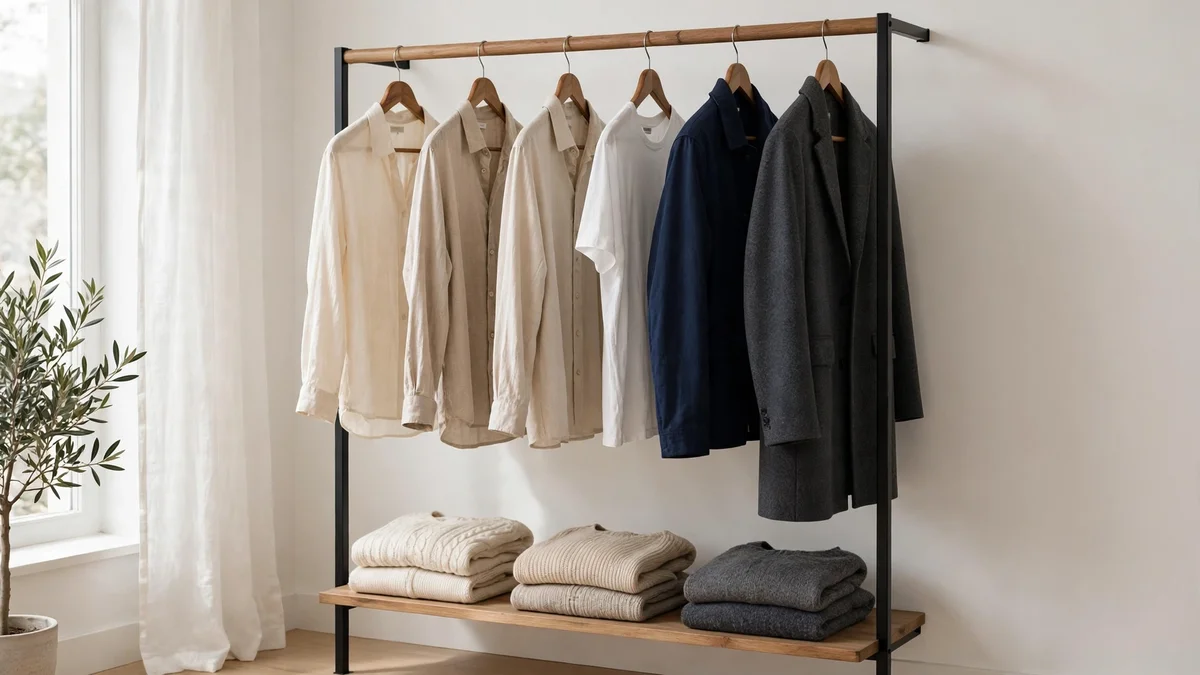
Learning how to build a capsule wardrobe can change the way you get dressed every single morning. Instead of standing in front of a full closet and feeling like you have nothing to wear, you open a smaller, calmer collection where almost everything works together. That is the whole idea. A capsule wardrobe is not about owning less for the sake of it, and it is certainly not about dressing the same way every day. It is about choosing fewer, better pieces on purpose, so getting dressed becomes quick, easy, and honestly enjoyable.
If your mornings start with a pile of rejected outfits on the bed, this guide is for you. We will walk through how to build a capsule wardrobe step by step, from understanding what a capsule wardrobe really is to planning your colours, picking your essentials, swapping pieces with the seasons, and avoiding the mistakes that trip most beginners up. You do not need a big budget, a new closet, or a style degree. In fact, most people already own half of their capsule without realising it.
What Is a Capsule Wardrobe?
A capsule wardrobe is a small, carefully chosen collection of versatile clothes that mix and match to create many different outfits. Most capsules hold somewhere between 25 and 40 core pieces, including shoes and outerwear, although there is no official rule and no magic number. Underwear, sleepwear, and workout clothes are usually counted separately, because they serve a different job.
The idea is older than the minimalist trend that made it famous. London boutique owner Susie Faux is widely credited with coining the term in the 1970s, and designer Donna Karan brought it to a much wider audience in 1985 with her Seven Easy Pieces collection. Later, writer Courtney Carver turned it into a popular challenge called Project 333, which asks people to dress with just 33 items for three months. The details have changed over the years, but the heart of the idea has stayed the same: fewer pieces, chosen well, worn often.
So what makes a capsule different from an ordinary wardrobe? Three things. First, every piece earns its place by working with several other pieces, not just one. Second, the colours are coordinated, so tops, bottoms, and layers combine without much thought. Third, the collection fits your real life, not an imagined one. A capsule built around office meetings will look very different from one built around school runs and weekend walks, and that is exactly how it should be.
Why Learning How to Build a Capsule Wardrobe Is Worth It
Before we get practical, it helps to know what you actually gain. After all, sorting through your whole closet takes an afternoon, and you deserve to know why that afternoon is worth it.
The most obvious benefit is time. When everything in your wardrobe goes together, choosing an outfit takes minutes instead of twenty frustrated minutes. You stop trying on five tops before work and start walking out of the door feeling put together. Over a week, those saved minutes add up to real breathing room.
Then there is money. A capsule forces you to notice what you already own and what you genuinely need, which makes impulse buying much harder. Instead of buying a fifth black top because it was on sale, you buy the one pair of trousers that unlocks ten new outfits. Over time, many people find they spend less overall, even when individual pieces cost a little more, because each piece gets worn far more often. That is the cost-per-wear idea in action: a coat you wear a hundred times costs less per wear than a bargain top you wear twice.
How to Build a Capsule Wardrobe for a Calmer, Kinder Life
There is also a quieter benefit that people rarely mention until they have tried it. A smaller wardrobe is calmer to look at and easier to keep tidy. You can see everything you own at a glance, which means you actually wear what you own. And because you chose each piece deliberately, you tend to feel more like yourself in your clothes, not like someone trying on a different personality every morning.
Finally, a capsule is kinder to the planet in a small, practical way. Buying fewer, longer-lasting pieces means fewer clothes thrown away and fewer resources used. You do not have to be perfectly sustainable to make a difference. Simply wearing what you already own more often is one of the most effective steps any of us can take.
How to Build a Capsule Wardrobe in 7 Practical Steps
Now for the hands-on part. The method below works whether you are starting from a packed closet or from almost nothing. Take it in order, because each step makes the next one easier. Give yourself a free afternoon for the first few steps, and let the later ones unfold over a few weeks. There is no rush, and rushing is where most capsules go wrong.
Step 1: Look at Your Real Week First
Before you touch a single hanger, write down how you actually spend a typical week. How many days are spent at a desk or on video calls? Count the days spent running errands, looking after children, or working on your feet. How often do you go out in the evening, attend a formal event, or exercise outdoors? Be honest, because your capsule should match this week, not a fantasy life of galas and beach holidays.
Next, turn those notes into rough percentages. If half your week is casual and a third is work, your wardrobe should reflect that split. This simple exercise stops you from building a capsule full of smart blazers when you mostly need comfortable, washable clothes, or the other way around. It also gives you a clear answer later when you are tempted by something beautiful but useless. If it does not serve your real week, it does not belong in the capsule.
Step 2: Audit the Wardrobe You Already Own
Now pull everything out. Yes, everything. Lay it on the bed, open every drawer, and check the back of the closet too. Then sort each item into four piles: love and wear often, wear sometimes, maybe, and let go. The maybe pile is for pieces you are unsure about. Put them in a box with today’s date on it and store the box out of sight. If you do not open it within a season, you have your answer.
As you sort, pay attention to patterns. Which colours keep appearing in your love pile? Which shapes do you reach for again and again? Do any items still have their tags on? These patterns are pure gold, because they show you your real style, not the style you think you should have. Most people discover they already own fifteen to twenty capsule-worthy pieces. That means the job is smaller than it first looked.
For the let-go pile, be kind but firm. Clothes that no longer fit, feel uncomfortable, or carry bad memories are not doing you any favours by staying. Donate, sell, or recycle them so someone else can use them. A capsule starts with space, and space starts with letting go.
Step 3: Define Your Style in Three Words
Here is a quick exercise that stylists use all the time. Write down three words that describe how you want to feel in your clothes. Relaxed, sharp, and creative is one combination. Soft, structured, and timeless is another. Sporty, elevated, and unfussy works beautifully too. There are no wrong answers, and your three words will be different from everyone else’s. That is the point.
Keep those three words somewhere visible while you learn how to build a capsule wardrobe. Every time you consider a piece, ask yourself whether it matches at least two of them. A ruffled blouse might be lovely, but if your words are minimal, sharp, and calm, it will probably sit unworn. This tiny filter saves more money and regret than any shopping rule ever will.
It also helps to think about the people and eras whose style you admire. Classic tailoring has stayed relevant for decades for a reason, and looking at how timeless suiting is put together can sharpen your eye for fit and proportion. The goal is not to copy anyone. It is to understand what consistently appeals to you, so your capsule feels personal rather than generic.
Step 4: Choose Your Capsule Wardrobe Colour Palette
Colour is the glue that holds a capsule together. When your pieces share a palette, almost any top works with almost any bottom, and that is what creates the famous outfit multiplication effect. Without a palette, even beautiful clothes can refuse to cooperate.
Start with two or three neutrals that you already wear a lot and that suit you near your face. Black, navy, charcoal, cream, camel, grey, and white are the usual suspects, and they earn their popularity. Then add one or two accent colours that you genuinely love and actually wear, not colours you only admire on other people. Rust, olive, burgundy, teal, soft blue, and blush are all good choices, depending on your taste.
A handy way to keep the balance right is the 60-30-10 rule. Roughly sixty percent of your capsule sits in your main neutrals, about thirty percent in a secondary colour that bridges the neutrals and the accents, and around ten percent in your strongest accent. You do not need to measure anything precisely. Just glance at your rail: if most of it is neutral with small pops of colour, you are on track. We will go deeper into colour shortly, because it deserves its own section.
Step 5: Pick Your Capsule Wardrobe Essentials
With your lifestyle, your audit, your three words, and your palette in hand, you can now list the pieces you actually need. Think in categories rather than individual items at first: tops, bottoms, layers, dresses or skirts, shoes, and accessories. Then fill each category with pieces that pass three tests. Does it fit well right now? Does it match your palette? And does it work with at least three other pieces in the capsule?
That third test is the most important one. A top that only works with one specific pair of trousers is not a capsule piece, however pretty it is. A simple, well-fitting top that works with jeans, trousers, and a skirt is worth far more. If you are unsure, try the outfit test before you commit: build three different outfits around the piece using only clothes already in your capsule. If you cannot, leave it out for now.
Quality matters more than quantity here, especially for the pieces you will wear most. Look for natural fabrics like cotton, wool, and linen for everyday basics, because they tend to wash better and last longer than thin synthetics. Check the seams, the buttons, and the lining. A well-made piece does not have to be expensive, but it should feel solid in your hands. Meanwhile, remember that trends travel fast on social media, and what looks exciting this month can feel tired by next season, so let your core stay classic and save trend experiments for small, cheap accents.
Step 6: Build Outfits Before You Buy Anything
This step surprises people, but it is the one that saves the most money. Before you spend anything, build as many outfits as you can from the pieces you already have. Lay them out on the bed, photograph your favourites on your phone, and save them in an album you can check in the morning. Most people discover they can make far more outfits than they expected, and the gaps become obvious very quickly.
Try building outfits around one bottom and two different tops, then change the outer layer. Add a scarf, swap the shoes, or roll the sleeves. Small changes like these are what make thirty pieces feel like a hundred outfits. If you want inspiration for putting classic pieces together, our guide to classic tailoring and timeless suiting shows how simple, well-cut shapes can carry a whole look.
Write down the gaps you find, and rank them by how many new outfits each piece would create. The piece at the top of the list is your first purchase. Everything else can wait. This list also becomes your shopping list, which means you walk into a shop with a purpose instead of wandering and hoping.
Step 7: Shop Slowly and Fill Only Real Gaps
Now, and only now, is it time to shop. Buy one piece at a time, starting with the gap that unlocks the most outfits. Try it on with at least three things you already own before you decide. If it does not work with them, it does not come home, no matter how good the discount is.
Mix your sources. New, secondhand, and tailored pieces can all belong in a capsule, and a good tailor can transform an almost-right piece into a perfect one. Keep a note of what you buy and roughly how often you wear it. After a month, you will see clearly which purchases earned their place and which ones were impulse buys in disguise. That feedback loop is how a good capsule gets better with every season.
Capsule Wardrobe Essentials: A Flexible Checklist
Every capsule is personal, but most well-functioning ones share a similar skeleton. Use the checklist below as a starting point for learning how to build a capsule wardrobe, then adjust the numbers to your climate, your laundry routine, and your lifestyle split. The total lands somewhere around 30 pieces, not counting underwear, sleepwear, or workout clothes.
For tops, aim for two or three plain tees in your core neutrals, one or two smart shirts, one or two fine-knit sweaters, and one blouse or elevated top that makes you feel polished. For bottoms, one pair of well-fitting dark jeans, one pair of tailored trousers, and one skirt or pair of lighter trousers usually covers most weeks. Add one versatile dress that can go casual with flat shoes or smart with a blazer.
For layers, you need one blazer that fits beautifully, one casual jacket such as a denim or utility jacket, and one coat suited to your coldest months. A well-cut sport coat is one of the hardest-working layers you can own, because it sharpens jeans and softens tailoring in equal measure. For shoes, three pairs cover most lives: clean everyday trainers or flats, one smart pair such as loafers or low heels, and one weather-appropriate pair such as ankle boots.
Accessories finish the capsule without adding bulk. One everyday bag, one belt, one scarf, and a small set of jewellery you reach for daily will take the same outfit in several directions. Simple jewellery pieces can change the mood of an outfit completely, which is why accessories punch far above their weight in a small wardrobe. Keep the rest simple, and let each accessory earn its place the same way your clothes do.
How to Build a Capsule Wardrobe Colour Palette That Actually Works
Choosing colours sounds easy until you are standing in a shop holding a beautiful top in a shade that matches nothing you own. So, as you learn how to build a capsule wardrobe, let us make it practical. Start by looking at your love pile from the audit. Which neutrals appear most often? Those are your base colours, because you have already proven you like wearing them.
Next, hold potential new pieces next to your face in natural light, not under shop lighting. The right colours will make you look rested and bright, while the wrong ones can make you look tired even on a good day. If you are torn between two shades, choose the one that matches more of your existing clothes. Versatility beats novelty in a capsule every time.
Then apply the 60-30-10 balance we mentioned earlier. Your main neutrals cover about sixty percent of the wardrobe, and they belong on your biggest pieces: coats, trousers, and shoes. The secondary colour, around thirty percent, bridges the gap and shows up in knitwear and shirts. Your accent, the final ten percent, appears in small doses: a top, a scarf, or a bag. This balance keeps outfits calm but never boring.
One more tip that makes a surprising difference: pick one metal and stick to it. If your belt buckle, bag hardware, and everyday jewellery are all gold, or all silver, your outfits will look more pulled together without any extra effort. It is a tiny detail, and it works.
How to Build a Capsule Wardrobe for Each Season
A capsule is not a fixed set of clothes you wear all year. It is a system that rotates. Most peopl who are learning how to build a capsule wardrobee keep a core of year-round pieces and swap a smaller seasonal layer in and out four times a year. That way, you never have to rebuild from scratch, and your closet never holds heavy coats in the middle of summer.
Start each season with a short review. Take out the stored box from last year, try things on, and check what still fits, what still suits you, and what has worn out. Then decide what this season actually needs. A spring capsule might swap heavy knitwear for lighter layers and add a trench coat, while an autumn capsule brings back boots, richer colours, and one warm coat.
Swapping Pieces as the Seasons Change
Seasonal swaps are also a good moment to notice trends without being ruled by them. The trend cycle moves quickly, and a capsule lets you enjoy a seasonal colour or silhouette in one small piece while your core stays steady. Fashion is never just about clothes, though. As our piece on how fashion reflects social movements shows, what we wear also says something about the world around us, so choose seasonal pieces that feel meaningful to you, not just fashionable for a month.
When summer arrives, lighter fabrics and looser shapes matter more than extra pieces. Breathable cotton and linen, one good pair of shorts or a light skirt, and sandals or clean trainers will carry most warm-weather weeks. A fun seasonal piece can still earn its place if it works with your palette. For example, relaxed summer shorts can anchor plenty of casual outfits, and our look at bold summer statement shorts is a good reminder that even playful pieces can work when the colours and fit are right.
Finally, store the out-of-season clothes properly. Clean them before you pack them away, fold knitwear instead of hanging it, and keep the box somewhere dry. When you open it next year, you will be glad you took ten minutes to do it well.
Outfit Formulas: Making 30 Pieces Feel Like 100 Outfits
The real magic of learning how to build a capsule wardrobe is outfit multiplication, and it is simpler than it sounds. The maths is friendly: a handful of tops multiplied by a handful of bottoms, then multiplied again by your layers and shoes, quickly reaches dozens of combinations. You do not need to count them. You just need a few reliable formulas to reach for on busy mornings.
Try the smart-casual formula first: tailored trousers, a plain tee, a blazer, and loafers. Swap the tee for a shirt and you are ready for a meeting. Swap the loafers for trainers and the blazer for a casual jacket, and the same trousers are ready for the weekend. That is four outfits from one pair of trousers, and you have not even changed the colours yet.
Then try the dress formula. One simple dress, worn alone with flat shoes, is a relaxed daytime outfit. Add a blazer and smart shoes, and it becomes an evening look. Add a knit over the top and boots, and it works in cooler weather. Three outfits, one dress, no extra shopping.
Accessories are the fastest way to multiply outfits without adding clothes. A scarf, a belt, or a different bag can shift an outfit from casual to polished in under a minute. If you enjoy exploring how personal style works, our guide to expressing your personal style is a lovely reminder that a wardrobe should reflect who you are, not just what is practical. Your capsule should feel like you on your best day, every day.
Common Mistakes When You Build a Capsule Wardrobe
Most capsules fail for the same handful of reasons, and all of them are easy to avoid once you know what to watch for. The first mistake is buying everything at once. A capsule built in one shopping trip is usually a capsule full of guesses. Buy slowly, wear what you buy, and let real life tell you what is missing.
The second mistake is copying someone else’s list exactly. A capsule that works for a fashion creator in a mild climate will not work for a parent in a cold one, and a list designed for office work will not suit a mostly outdoor life. Use other people’s lists as inspiration, then adapt every line to your week, your body, and your climate.
The third mistake is choosing a palette you do not actually like. If you pick all black because a guide told you to, but you feel happiest in warm neutrals and soft colour, you will not wear the capsule. Your palette should make you feel good when you look in the mirror, not just look correct on paper.
The fourth mistake is ignoring fit. A capsule lives or dies on fit, because you wear each piece so often. A slightly-too-tight shirt or trousers that need constant adjusting will drive you mad by the third wear. Try everything on, sit down in it, walk around in it, and be honest. Tailoring is not a luxury here. It is the difference between a piece you love and a piece you tolerate.
Shoes, Accessories and Keeping It Enjoyable
The fifth mistake is forgetting shoes and accessories. People often plan their clothes carefully and then realise their shoes match nothing. Plan shoes and accessories at the same time as the clothes, using the same palette, and the whole system clicks into place. If you love elevated everyday style, our look at elevating your everyday style shows how small, thoughtful choices can lift simple outfits.
The last mistake is treating the capsule as a punishment. If it feels restrictive, it is too small or too strict. Add a piece you love, even if it breaks a rule. A capsule should make your life easier and your mornings happier, not turn getting dressed into a test you can fail.
How to Keep Your Capsule Wardrobe Working
Building the capsule is only the beginning. Keeping it working takes a little maintenance once you know how to build a capsule wardrobe, but far less than managing a huge wardrobe. The simplest habit is a monthly five-minute check. Look at what you wore most, what you did not touch, and what is starting to wear out. That quick review stops small problems from becoming a closet full of clothes you no longer wear.
A good test for any new capsule is the 30-day trial. Live with your capsule for a month before you donate the maybe box. If you keep reaching for something outside the capsule, ask why. Sometimes it means the capsule has a genuine gap. Sometimes it means you miss a favourite piece that deserves a place after all. Either answer is useful, and neither is a failure.
Care matters too. Wash clothes as the label suggests, fold knitwear instead of hanging it, and repair small problems quickly. A loose button or a small hole is a five-minute fix when you catch it early, and it can save a favourite piece. Quality pieces last longer when they are looked after, which is another reason to choose well in the first place.
Finally, review your capsule at the turn of every season, and let it evolve as your life changes. A new job, a new city, or a new routine will shift what you need, and your capsule should shift with you. If you are building a capsule for the first time, our capsule wardrobe guide for women offers a friendly beginner’s angle that pairs well with the steps above. Think of your capsule as a living system, not a finished project, and it will keep serving you well for years.
Frequently Asked Questions
How many pieces should a capsule wardrobe have?
There is no official number, and anyone who insists on one is selling you a rule, not a wardrobe. Most people find that 25 to 40 core pieces work well, including shoes and outerwear, but the right number is the one that covers your week without leaving you short on laundry day. Start near 30, live with it for a month, and adjust from there.
How do I start a capsule wardrobe on a budget?
Start with what you already own, because that costs nothing. Audit your closet, keep the pieces that fit and match, and write a short list of genuine gaps. Then buy one piece at a time, beginning with the gap that creates the most new outfits. Secondhand shops, swaps with friends, and tailoring can all stretch a small budget a long way.
Can a capsule wardrobe work for every season?
Yes, and seasonal rotation is part of how it works. Keep a year-round core of pieces that suit your climate, then swap a smaller seasonal layer in and out as the weather changes. Store out-of-season clothes clean and dry, review them each year, and replace only what has worn out or no longer fits.
What if I get bored of wearing the same clothes?
Boredom usually means the outfits have gone stale, not that the clothes are wrong. Try a new combination, change your shoes or accessories, roll your sleeves, or add a scarf. Most capsules can make far more outfits than their owners realise, so experiment for a week before you buy anything new. If a piece still bores you after a fair trial, swap it for something you love.
A Smaller Wardrobe, A Calmer Morning
Learning how to build a capsule wardrobe is really about learning what you like, what you wear, and what your life actually needs. Start with an honest look at your week, keep the pieces you love, choose colours that work together, and add new pieces slowly and deliberately. Before long, getting dressed stops being a daily struggle and becomes a small, quiet pleasure. Your closet gets smaller, your mornings get calmer, and your style gets clearer. That is a trade worth making, and you can start it this weekend with the clothes you already own.