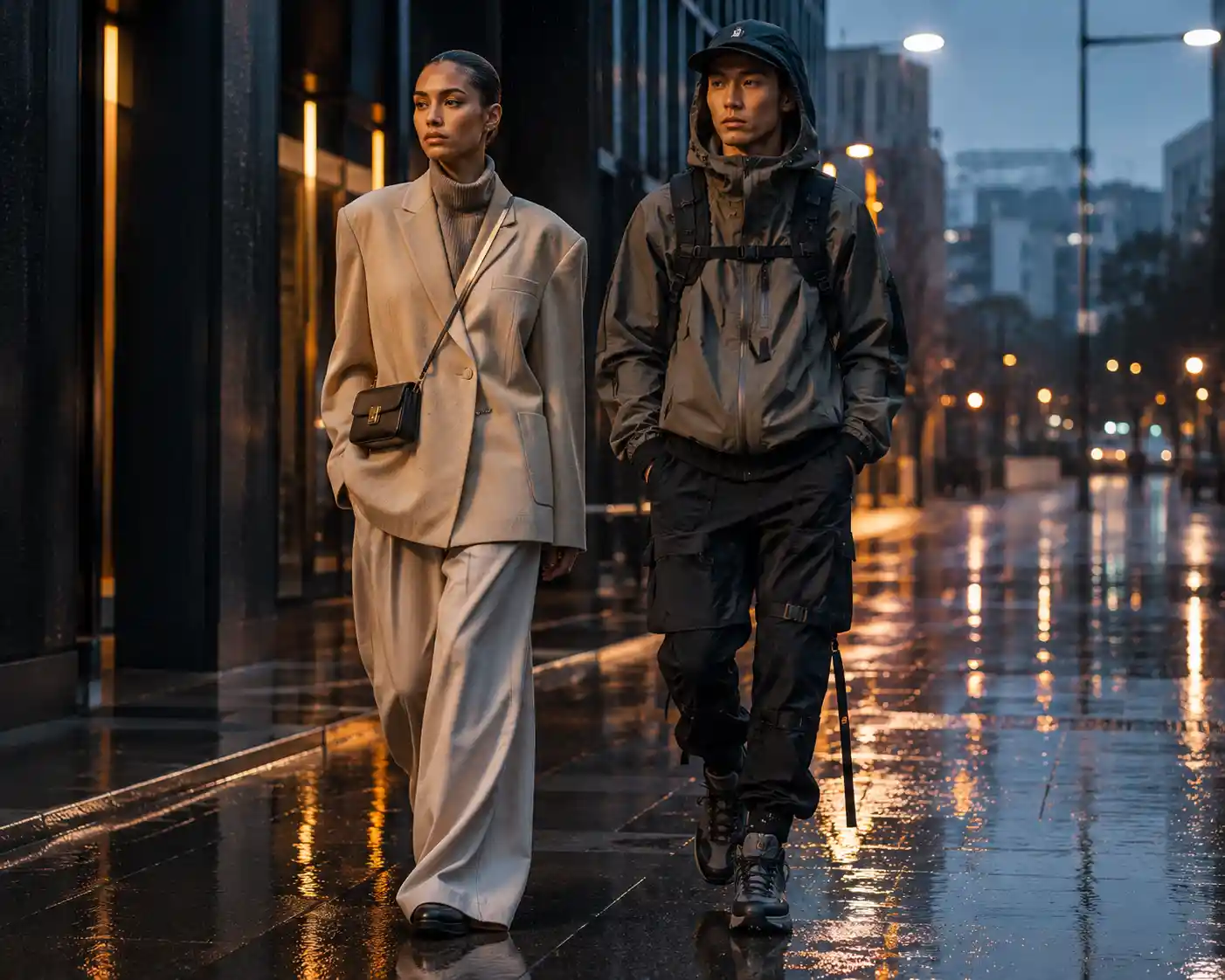

Every era leaves a wardrobe behind. Long after speeches fade, the clothes remain in photographs. A white suffragette dress still speaks. A patched wartime coat still speaks. In other words, fashion is history that people wore on their backs.
This is why fashion as a reflection of social movements is more than a catchy phrase. Movements need to be seen before they are believed. Clothing gives them a visible shape, a colour, and a uniform. As a result, a stranger can read a crowd at a glance.
Fashion and social change have always moved together. Sometimes dress follows a movement, like a shadow. At other times, it runs ahead, testing freedoms early. Either way, the mirror rarely lies. What a society argues about, it eventually wears.
Why Does Clothing Carry a Movement’s Message?
Clothing is public in a way few things are. A pamphlet can be refused, but a passer-by still sees your coat. For example, a shared colour turns scattered individuals into a visible group. Photographers notice, newspapers print it, and the message travels.
Clothing as protest also works because it is personal. The wearer risks something, even if only ridicule. That small risk makes the statement honest. In fact, movements have long understood this instinctively. They choose symbols that ordinary people can copy cheaply.
Identity matters just as much as protest. Dress tells insiders who belongs, and it tells outsiders who to reckon with. Above all, it does this without a single speech. The history of protest fashion is therefore a history of smart visual shortcuts.
Suffragettes: Colour Used as a Campaign Language
The women’s suffrage movement grasped visual politics early. In Britain, campaigners adopted a famous colour code. The suffragette fashion colours were white, purple, and green. White suggested purity of purpose, purple stood for dignity, and green meant hope.
These colours appeared on sashes, badges, banners, and dresses. As a result, a march became instantly recognisable in a crowd. Sympathisers could also wear the colours quietly in daily life. A brooch or a ribbon carried the argument into shops and drawing rooms.
Practical dress mattered too. Campaigning women walked, organised, and spoke in public for long hours. Heavy, restrictive clothing suited that life badly. However, the point was never sloppiness. Suffragette dress stayed neat and respectable on purpose. It answered critics who called campaigners unwomanly.
Fashion and feminism met clearly in this moment. The clothes said two things at once. They demanded political equality, and they refused shame about demanding it. In other words, the wardrobe itself became an argument for the vote.
Wartime Utility Clothing: Dressing Under Rationing
War changes wardrobes faster than any designer can. During the Second World War, Britain faced strict shortages of cloth. The government answered with the Utility clothing scheme. Wartime utility clothing followed set standards, used fabric sparingly, and kept prices controlled.
Design details shrank under these rules. Pleats, extra pockets, and wide hems largely disappeared. Skirts grew shorter and straighter, simply because cloth was precious. Meanwhile, the famous “Make Do and Mend” spirit encouraged repair over replacement. Old garments were patched, unravelled, and knitted again.
Women also entered war work in large numbers. Trousers and practical overalls became normal sights, not scandals. That shift carried a quiet social meaning. Competence, not decoration, defined the wartime silhouette.
By contrast, luxury did not vanish entirely. A bright scarf or a carefully kept hat still lifted morale. The lesson of the era is simple. When society tightens its belt, fashion shows exactly where the belt sits.
The 1920s Flapper: Freedom You Could Wear
After the First World War, many young women wanted a different life. Flapper fashion in the 1920s announced that wish loudly. Dresses dropped the waist, shortened the hem, and loosened the whole silhouette. Corseted stiffness gave way to clothes that moved.
Bobbed hair completed the signal. Cutting long hair was cheap, quick, and impossible to ignore. For example, a bob told employers, parents, and strangers the same thing. This woman intended to live on newer terms.
The flapper look also belonged to city life. Jazz clubs, cinemas, and dance halls rewarded lighter, freer clothing. Dancing in a rigid gown was absurd, so the gown changed. In fact, leisure itself became a quiet social movement.
Not everyone approved, and that was partly the point. The style marked a generation gap you could see across a street. Older respectability wore one uniform, and youth answered with another.
Postwar Order: The 1950s and the Return of the Suit
The 1950s pulled fashion back towards order. After years of shortage, full skirts and polished tailoring felt like prosperity. For men, the decade celebrated the well-cut suit as a badge of stability. Guides to 1950s men’s fashion and suits show how sharp that ideal became.
Tailoring carried the message beyond one decade. A classic suit still promises reliability in boardrooms today. Pieces like Hickey Freeman sport coats belong to that same tradition of quiet confidence. The cloth changed less than the world around it.
However, conformity always creates its own rebels. Teenagers in the 1950s began dressing apart from their parents. Jeans and leather jackets hinted at the storm coming next. The calm suit, in other words, was only half the story.
The 1960s: Youth Culture Lifts the Hemline
The 1960s handed fashion to the young. London designer Mary Quant became closely associated with the miniskirt. The miniskirt and youth culture rose together, cheekily and deliberately. Shorter skirts said that young women owned their own image.
Counterculture fashion pushed far beyond hemlines, though. Hippie style favoured loose, colourful, often handmade clothing. Tie-dye, flowing fabrics, and second-hand finds rejected corporate polish. As a result, dressing “natural” became a protest against war and consumer routine.
Music drove much of this change. Bands dressed their audiences as surely as designers did. A concert crowd could look like a movement, because often it was one. Style and belief shared the same stage.
By contrast, older generations often read these clothes as chaos. That misreading is itself revealing. Every era’s rebels look untidy to the order they challenge. The untidiness is usually the message.
Civil Rights and Pride: Dressing With Dignity
The American civil rights movement understood presentation deeply. Marchers often wore their Sunday best on protest lines. Suits, dresses, and polished shoes answered slurs with visible dignity. In fact, the respectability was strategic. It forced cameras to record citizens, not caricatures.
A different signal followed within the same struggle. The Black Power era celebrated natural hair and African-inspired dress. Afros and dashikis rejected the pressure to imitate European beauty standards. By contrast, the message here was pride, not persuasion. Identity itself became the statement.
Pride movements later used colour in a similar spirit. Rainbow imagery turned parades into rivers of visible joy. Clothing carried belonging for people told to hide. As a result, a T-shirt or a flag could function as both shelter and announcement.
These chapters share one thread with the suffragettes. Oppressed groups rarely control parliaments or newspapers first. They do control their own appearance, however. Dress is therefore often a movement’s first media channel.
Punk: DIY Dressing as a Political Statement
Punk arrived in the 1970s with torn cloth and bad manners. Its fashion history begins on the street, not the catwalk. Young people ripped jeans, added safety pins, and wrote on their own shirts. The DIY aesthetic was the whole point.
Designer Vivienne Westwood helped carry that look into shops and photographs. Her work with the London punk scene turned provocation into design. However, punk’s energy stayed rooted in bedrooms and gig venues. Anyone with scissors could join in.
The clothes attacked polish itself. Expensive taste looked like obedience to punk eyes. Instead, visible repairs and clashing prints showed refusal. In other words, ugliness, chosen deliberately, became a form of honesty. Every retelling of punk fashion history starts with that refusal.
Punk also proved how fast rebellion gets absorbed. Within years, high fashion borrowed its pins and rips. That borrowing repeats in every generation. The street invents, the runway copies, and the argument starts again.
Hip-Hop: From Street Corners to Luxury Runways
Hip-hop began in the Bronx, and its clothes began there too. Tracksuits, trainers, oversized silhouettes, and bold logos formed the early uniform. Hip hop fashion influence grew alongside the music itself. Dressing well, visibly and proudly, asserted worth in neighbourhoods often ignored.
Street style carried specific meanings. Fresh trainers signalled care and status. Sportswear signalled energy, confidence, and belonging to the culture. For example, a perfectly kept pair of sneakers could speak louder than jewellery. The look was deliberate, never accidental.
Luxury fashion resisted at first. Then it surrendered, profitably. Streetwear culture moved from pavements into flagship stores and Paris runways. Designers began collaborating with the very artists they once kept outside. As a result, the hierarchy of taste flipped on its head.
That flip is the real story. A movement born far from privilege redrew the map of fashion power. Above all, hip-hop showed that influence flows upward too. The street can dress the palace.
Grunge: Anti-Fashion as a Form of Honesty
Grunge emerged from the Pacific Northwest music scene in the early 1990s. Its uniform was flannel shirts, ripped jeans, and thrift-store layers. Grunge fashion looked like not caring, yet it cared about one thing deeply. It rejected the glossy excess of the decade before.
The clothes were cheap because the wearers were not rich. Second-hand shops supplied the look long before designers noticed it. In fact, that ordinariness was the credential. A worn cardigan proved you had not bought your identity new.
Fashion houses soon copied the thrift-store aesthetic at high prices. The irony was obvious, and widely mocked. Still, grunge left a permanent mark on taste. Comfort, layering, and deliberate scruffiness stayed in the mainstream wardrobe.
Grunge also blurred gender lines quietly. Flannel and boots belonged to everyone in the scene. Nobody needed permission to share the uniform. That ease anticipated later conversations about unisex dressing.
Sustainability and Slow Fashion: The Movement You Wear Twice
Today’s defining movement asks a harder question. What does a garment cost the planet? The sustainable fashion movement grew from concern over waste, pollution, and factory conditions. Its answer starts with buying less and choosing better.
Slow fashion is the movement’s practical philosophy. It favours durable fabrics, fair making, and clothes kept for years. Repair, resale, and swapping all belong to the same ethic. Consequently, an old coat worn proudly can signal values, not poverty.
The same thinking now reaches beyond wardrobes. Ideas behind sustainable business and the triple bottom line echo through clothing companies too. Profit, people, and planet are weighed together. Shoppers increasingly ask brands to show that working.
However, slogans are cheaper than change. Green claims need evidence, such as traceable materials and honest labels. The movement’s own supporters police it fiercely. That scrutiny, in fact, is a sign of health. A living movement argues with itself.
Fashion, Identity and the Social Media Feed Today
Social media has sped up every cycle described above. A street look can circle the planet in a day. Platforms turn local subcultures into global trends almost overnight. The mirror of fashion now reflects at feed speed.
Niche identities flourish in this environment. Styles like otome fashion show how romantic, storybook dressing builds its own community. Nobody waits for a magazine’s permission anymore. Belonging is posted, shared, and remixed.
Regional platforms shape taste just as strongly. The story of Douyin and fashion culture shows how one app can steer global trends. Meanwhile, roundups of 2024’s dynamic fashion trends capture how quickly those waves now break. Even spectacle follows the feed, as when Guess staged a ski collection show at high altitude.
Fashion as self expression has therefore become a daily broadcast. That brings freedom, and also pressure. A feed rewards novelty, while slow fashion counsels patience. Today’s wardrobe holds both impulses at once.
What Does Fashion Tell Us About Where Society Is Heading?
Read together, these eras form a pattern. When people demand rights, dress becomes a banner. Hardship, by contrast, makes dress resourceful. Youth in revolt makes it louder, cheaper, and freer.
Fashion never causes change on its own. Instead, it does something subtler. Change becomes visible in cloth before it becomes law or habit. Therefore, a hemline can announce a shift years before a history book names it.
The mirror still works today. Thrift hauls, protest colours, and gender-fluid runways all report the same restlessness. Society is renegotiating value, identity, and responsibility again. Finally, the clothes already know. We only have to learn to read them.
Frequently Asked Questions
How does fashion reflect social movements?
Fashion reflects movements by giving them visible symbols. Colours, silhouettes, and fabrics carry shared beliefs into public space. For example, suffragette colours turned a march into a recognisable campaign. As a result, even silent crowds can communicate clearly.
Why is clothing such an effective form of protest?
Clothing is visible, personal, and easy to copy. A simple symbol can spread through a whole city in days. It also asks the wearer to commit publicly. That small public risk gives clothing as protest its force.
What did suffragettes wear to signal their cause?
British suffragettes famously used white, purple, and green. The colours appeared on sashes, badges, and banners. Supporters could wear them in everyday dress too. In other words, the whole wardrobe became campaign material.
How did punk fashion challenge society?
Punk rejected polish, expense, and obedience. Ripped clothes, safety pins, and handwritten slogans made refusal visible. Its DIY methods meant anyone could take part. Above all, punk treated bad taste as a deliberate political choice.
What is slow fashion, and why does it matter?
Slow fashion means buying fewer, better clothes and keeping them longer. It values durable materials, fair labour, and repair. The movement answers the waste created by rapid trend cycles. Consequently, it treats a wardrobe as a long-term responsibility.