
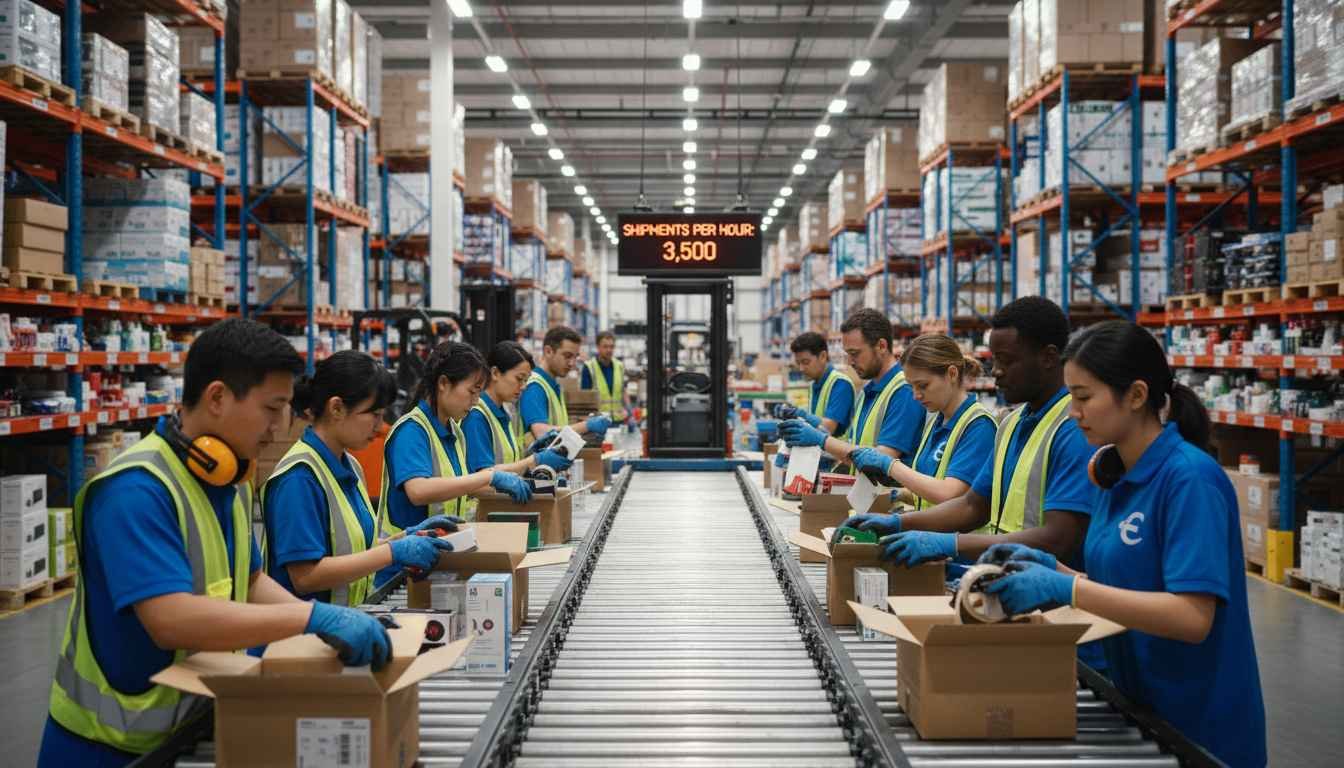
Good news and bad news. The good news is that selling online has never been easier – anyone can reach customers worldwide with just a few clicks. The bad news? Managing how your products get from your warehouse to your buyers can be a tangled web of logistics, shipping carriers, and inventory headaches.
Effective e-commerce distribution is the backbone of a successful online store. It ensures that your products arrive on time, in perfect condition, and with minimal friction for your customers. As Rachel Kim, a hypothetical e-commerce logistics authority, explains, “Your distribution strategy defines your brand’s promise to the customer. A delayed package isn’t just a missed shipment – it’s a missed opportunity to build trust.”
Multichannel distribution – selling on multiple platforms simultaneously – adds both reach and complexity. Tools like LitCommerce simplify this by centralizing listings, inventory tracking, and order management. This single-dashboard approach not only saves time but also reduces human error and improves customer satisfaction.
Timeline: E-Commerce Distribution Milestones
- 1994: First online retail platforms emerge, requiring sellers to manually manage orders and shipments.
- 2000: Automated inventory systems begin reducing errors and stockouts.
- 2010: Multichannel selling tools appear, enabling integration with major marketplaces.
- 2020: Advanced analytics and AI optimize shipping routes and fulfillment centers for speed and cost efficiency.
Choosing the right distribution method depends on your business size, product type, and target audience. Direct fulfillment allows complete control but can strain resources, while third-party logistics (3PL) offers scalability at the cost of some oversight. Hybrid approaches often provide the best balance, letting you maintain control over flagship products while outsourcing volume-heavy inventory.
Potential Drawbacks
While e-commerce distribution opens doors, it isn’t without risks. Shipping delays, international customs, and rising carrier costs can eat into profits. Smaller businesses may struggle with managing multiple warehouses or marketplaces. Additionally, relying heavily on third-party logistics may lead to less control over packaging quality and delivery timelines.
Ultimately, successful e-commerce distribution requires a systems-thinking approach: seeing the connections between inventory management, shipping, marketplace policies, and customer expectations. By aligning these elements, you create a frictionless experience that builds brand loyalty and repeat business.