
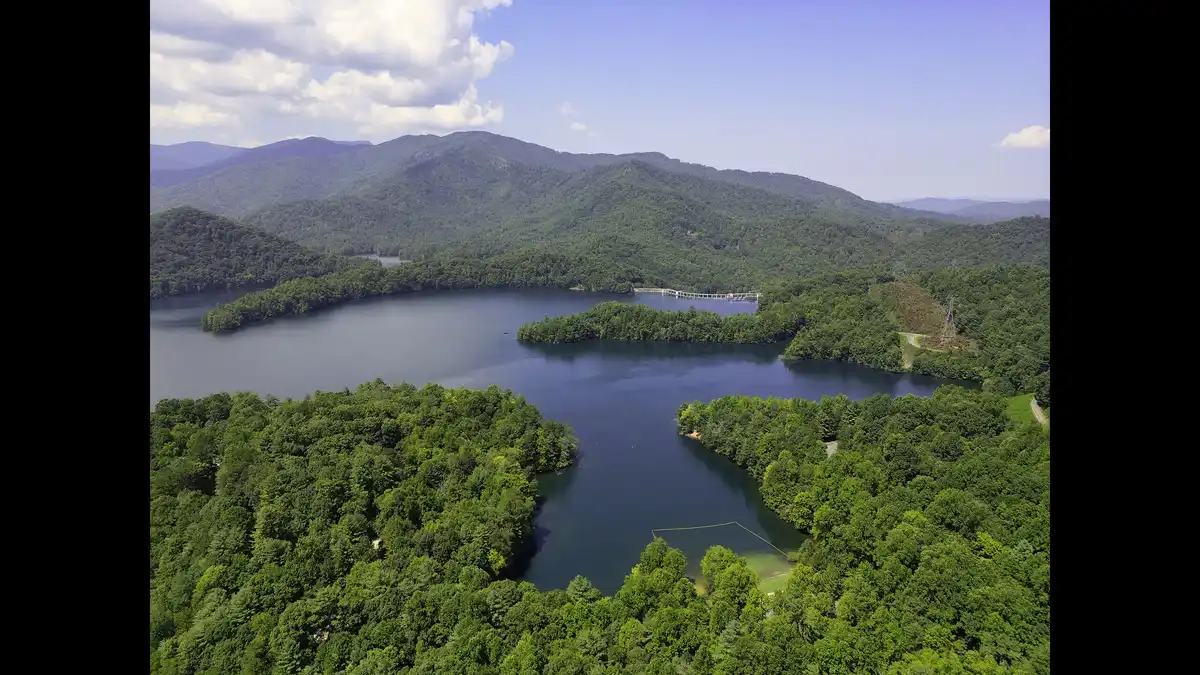
Some lakes feel busy from the moment you arrive. Lake Santeetlah feels different, however, because forest covers most of its shoreline. Buyers therefore discover a quiet mountain lake instead of a crowded resort strip. For example, mornings here often bring mist, still water, and very little boat traffic. As a result, Lake Santeetlah real estate attracts people who value privacy above entertainment.
This guide treats the area as a careful buying decision, not as a promise. In other words, you will find no hype about returns or easy profits here. Instead, you will find a practical evaluation of homes, shoreline rules, and rural living. Above all, the goal is simple: help you judge whether this remote lake truly fits your life.
Where is Lake Santeetlah, and why do buyers look here?
Lake Santeetlah NC sits in Graham County, in the far western corner of North Carolina. The lake is a reservoir on the Cheoah River, created in 1928 for hydroelectric power. Meanwhile, the small town of Lake Santeetlah occupies a peninsula on the northern shore. Robbinsville, the county seat, lies about six miles southeast of the town. Consequently, most daily services for lake residents are based in Robbinsville.
The setting explains much of the appeal. Specifically, the Cheoah District of the Nantahala National Forest surrounds most of the lake. About 80 percent of the surrounding land is under Forest Service jurisdiction, in fact. The lake itself holds about 76 miles of shoreline, mostly undeveloped forest. Nearby, the Joyce Kilmer Memorial Forest protects rare old-growth trees. The Great Smoky Mountains region, similarly, shapes the scenery in every direction.
Buyers look here for that protected backdrop. A view across the water, for instance, usually ends in trees rather than rooftops. In addition, the forest boundary limits how much shoreline can ever be built on. Private land is therefore the exception along this lake, not the rule. That scarcity shapes Graham County real estate in a lasting way.
What is the character of the Lake Santeetlah real estate market?
The market here is small, first of all, and it moves at a rural pace. Listings appear in modest numbers because the town and its subdivisions are small. Indeed, the town of Lake Santeetlah has only a few hundred residences in total. Many of those homes, notably, are second homes rather than full-time residences. Owners often live elsewhere and visit for long weekends or whole seasons.
Because supply is limited, patience matters more than speed. A suitable home, for example, may appear months after you start watching. On the other hand, a thin market also means fewer competing distractions. You can study each property properly instead of rushing between dozens of showings. In short, Lake Santeetlah homes for sale reward prepared and patient buyers. Neighbouring Robbinsville NC real estate, by contrast, offers a more conventional small-town market.
Character matters more than labels here, however. Some homes are grand, while others are simple cottages from earlier decades. The word luxury, therefore, should describe setting and privacy rather than finishes alone. A modest cabin on deep, quiet water may feel richer than a larger house elsewhere. Ultimately, buyers pay for place, frontage, and peace above all else.
What types of homes will you find around the lake?
Lakefront homes and waterfront lots
Lake Santeetlah waterfront property forms the most sought-after category, understandably. True lakefront homes sit directly on the shore, often on sloping wooded lots. Some include a private dock, while others rely on shared or marina access. Lake Santeetlah lakefront homes, for instance, range from rustic cabins to substantial custom houses. Vacant waterfront lots also appear occasionally, although buildable frontage is genuinely scarce. Among lakefront homes North Carolina buyers consider, in fact, few sit inside so much protected forest.
Frontage quality varies a lot, however. Deep water near the dock, for example, suits boating far better than a shallow cove. Slope matters too, because steep lots complicate access for some owners. In addition, sun exposure shapes how you use the deck across the seasons. Therefore, judge each shoreline on its own facts, never on the label alone.
Lake-view and forest homes
Just uphill, lake-view homes trade direct frontage for elevation and outlook. These properties often sit along ridges and quiet lanes above the water. Consequently, they can deliver wide mountain views without shoreline responsibilities. These Nantahala National Forest homes, similarly, offer shade, privacy, and a strong sense of retreat. For many buyers, in fact, a view home is the sensible middle ground.
Cabins, cottages, and second homes
Mountain lake cabins NC buyers love are plentiful in character around Santeetlah. Small cottages suit lock-and-leave use, especially for weekend owners. Larger cabins, on the other hand, work well for extended family stays. A second home North Carolina mountains shoppers choose here is usually about escape. Therefore, simple layouts and durable materials often beat delicate designer finishes.
Why is shoreline and dock access so important to check?
This lake is not a typical TVA lake property, and that distinction matters. The area below the high-water mark is managed by Brookfield Energy Partners, a hydroelectric operator. The Forest Service, meanwhile, controls most of the land around the shore. TVA involvement is limited, mainly relating to water flows in the wider river system. As a result, dock and shoreline rules here differ from TVA reservoirs nearby.
A dock in a photograph proves nothing, however. You must confirm whether an existing dock is properly permitted and transferable. In addition, you should confirm what shoreline use the operator and Forest Service allow there. Rules can differ between stretches of shore, notably between town lots and forest edges. Therefore, get written confirmation before you rely on any dock or path.
Water levels also deserve attention. Reservoir levels change with power generation and seasonal water management, for example. A dock that floats comfortably in summer may sit awkwardly in lower water. Similarly, swimming and launching conditions can shift along shallow coves. Ask the seller, above all, how access works across the whole year.
What should you check about septic, water, and utilities?
Rural mountain homes depend on systems city buyers rarely think about. Many properties, for instance, use private septic systems rather than public sewer. A septic inspection is therefore essential before you commit to a purchase. Ask for permit records, tank age, and recent pumping history, in particular. Repairs on steep or rocky lots can be complicated, so evidence matters.
Water supply varies by neighbourhood as well. Some town properties connect to a community water system, while others use private wells. Consequently, you should confirm the source and test quality before closing. Power reliability, similarly, deserves a question in a forested mountain area. Storms can interrupt service, and remote lines may take longer to restore.
Connectivity is the final utility to test honestly. Internet and mobile coverage, for example, can change from one cove to the next. If you plan remote work, test speeds at the house itself. In addition, ask neighbours which providers actually serve that specific road. A lake house that cannot support your work pattern will frustrate you quickly.
How do roads and winter access affect daily life?
Access roads shape everyday life here more than almost anything else. Some lanes are paved, while others are private gravel roads through the trees. Private roads, notably, raise questions about maintenance duties and shared costs. Ask who maintains the road, and get the arrangement in writing. Otherwise, a beautiful home can come with an awkward surprise later.
Winter adds another layer. Higher elevations and shaded slopes, for instance, can hold ice after main roads clear. A steep gravel driveway may challenge two-wheel-drive vehicles in cold snaps. Therefore, visit in poor weather if you possibly can. At the same time, check where you would park, turn, and store winter supplies.
Distance also compounds in the mountains. A few miles on winding roads take longer than the same distance in town. As a result, grocery runs and appointments need simple planning. Most owners adapt quickly, however, and many enjoy the slower rhythm. The key is choosing a property whose access matches your habits.
What should you know about short-term rental rules?
Rental potential tempts many second-home buyers, understandably. Rules, however, are local and they change over time. The town of Lake Santeetlah and Graham County may each apply relevant ordinances. Homeowner associations, in addition, can restrict rentals within specific subdivisions. Therefore, never assume a home can be rented simply because neighbours rent theirs.
Check the current position before you buy, in short. Ask the town and county directly about permits, occupancy, and parking rules. In addition, request the subdivision covenants and read the rental clauses carefully. Insurance and tax treatment, similarly, differ when a home becomes a rental. A careful buyer verifies every layer before counting any rental income.
Seasonality matters too. Demand for Smoky Mountains lake homes, for example, peaks in warmer months. Winter bookings are usually quieter in a remote mountain setting. The same seasonal pattern, in fact, shapes most lake homes in the Smoky Mountains. Consequently, any rental plan should rest on conservative, season-aware assumptions. Enjoyment value, above all, should justify the purchase on its own.
How do insurance and maintenance differ for mountain lake homes?
Mountain lake homes ask more of their owners than suburban houses do. Humidity, for instance, encourages mildew in closed-up cottages. Decks and docks weather quickly under sun, rain, and shifting water levels. Roofs collect leaves and branches from the surrounding forest canopy. Therefore, budget time and money for steady, unglamorous upkeep every year.
Insurance needs equal care. Policies for a second home North Carolina mountains property can differ from primary-home cover. Vacancy periods, for example, may require specific endorsements or checks. Waterfront features like docks, similarly, may need separate confirmation within the policy. Ask an insurer who knows rural mountain properties, in particular.
Distance shapes maintenance planning as well. Trusted local tradespeople exist, however, their schedules fill quickly in peak season. A small leak can wait days for attention in a remote county. As a result, simple systems and good records become real assets. Ask the seller for contractor contacts before you complete the purchase.
Your buying a lake house checklist for Lake Santeetlah
A structured approach keeps emotion and evidence in balance. Use this buying a lake house checklist before and during your search:
- Firstly, confirm the exact boundaries with a current survey.
- Secondly, verify dock and shoreline permissions in writing.
- Thirdly, inspect the septic system and review its permits.
- Next, confirm the water source and test its quality.
- Then, identify who maintains every private road you will use.
- Afterwards, test internet and mobile coverage at the property.
- Subsequently, check town, county, and association rental rules.
- Finally, review insurance options for second-home and waterfront cover.
Each step protects a different part of your decision. The survey, for example, prevents boundary disputes with forest or neighbours. Written shoreline confirmation, similarly, protects the access you are paying for. In addition, understanding assessments helps you budget honestly; our guide to how property assessments shape ownership costs explains that side well. Therefore, treat the checklist as essential work, not paperwork. In short, this is lake house due diligence in practice.
Professional help matters throughout, of course. Choose a local agent who understands Santeetlah shoreline arrangements specifically. Hire an inspector familiar with mountain construction, septic systems, and moisture problems. In addition, use a North Carolina real-estate attorney for document questions. Local knowledge, in short, is the cheapest protection you can buy.
What lifestyle trade-offs should you accept before buying?
Quiet is the headline benefit, and also the main trade-off. Evenings are dark, still, and wonderfully free of traffic noise. However, restaurants, shops, and medical services sit a drive away in Robbinsville or beyond. Some owners love that separation, while others feel isolated after a week. Therefore, rent nearby for a few nights before you commit.
Nature sets the terms here, after all. Wildlife is part of daily life, and forest surrounds every errand. Weather can change plans quickly in the mountains, for instance. In addition, seasonal visitors bring the town to life, then leave it hushed again. A second home here suits people who entertain themselves easily.
The region rewards explorers generously, though. Autumn colour alone justifies the drive; our roundup of places to visit in North Carolina in fall shows the wider seasonal appeal. Boating, fishing, and swimming fill the warmer months on the lake. Cheoah Point, meanwhile, offers developed swimming, camping, and boat access nearby. In short, the lifestyle is outdoors first and amenities second.
How does Lake Santeetlah compare with other lake markets?
Comparing markets sharpens your priorities. Buyers drawn to coastal settings, for example, often study Popponesset real estate on the Massachusetts coast for a different waterfront rhythm. Others compare village-style buying through Manomet real estate in Plymouth and its neighbourhood feel. Santeetlah, by contrast, offers forested seclusion rather than beaches or villages.
International and rural comparisons help too. Shoppers weighing a Canadian lake country move, for instance, browse Knowlton Quebec real estate in the Eastern Townships. Those eyeing Central America read about Dolega Panama real estate and its mountain towns. Each market trades access, rules, and climate very differently.
Product type comparisons matter as well. Some buyers weigh land-and-home bundles, covered in our guide to land manufactured home packages for homebuyers and builders. Santeetlah buyers, however, mostly compare existing houses and rare buildable lots. Consequently, your shortlist here stays refreshingly focused on setting and structure. That focus, in fact, simplifies the final decision.
Frequently asked questions
Where is Lake Santeetlah in North Carolina?
Lake Santeetlah NC lies in Graham County, in far western North Carolina. The town sits on a peninsula about six miles northwest of Robbinsville. In addition, the Nantahala National Forest surrounds most of the lake. The Great Smoky Mountains region rises nearby in every direction.
Is Lake Santeetlah a TVA lake?
No, it is not managed like a typical TVA reservoir. The hydroelectric operator Brookfield Energy Partners manages the area below the high-water mark. The Forest Service, meanwhile, manages most surrounding land. Therefore, confirm shoreline rules with the operator and the town, not TVA.
Can every lakefront home have a private dock?
No, dock rights never come automatically with frontage. Each property depends on its permits, shoreline position, and operator approval. For example, some homes use shared docks or the marina instead. Always verify the arrangement in writing before you make an offer.
Are most homes at Lake Santeetlah second homes?
Many homes here are second homes, in fact, especially within the town. Owners often live in other states and visit seasonally. However, some residents live at the lake throughout the year. The mix gives the town a quiet off-season character.
Can you rent out a Lake Santeetlah home on a short-term basis?
Possibly, but permission depends on current local rules. Town, county, and association requirements may all apply to one property. In addition, those rules can change between your search and purchase. Therefore, confirm the current position directly before relying on rental use.
What is the biggest mistake buyers make here?
Assuming city systems and TVA rules apply is the biggest mistake. Septic, private roads, and shoreline permits work differently in this valley. For instance, a dock photo or a neighbour’s rental proves nothing. Careful written checks, in short, protect your purchase.
Lake Santeetlah real estate will not suit everyone, and that is its strength. The lake protects its quiet through forest, distance, and careful rules. Buyers who accept those terms, however, gain a rare mountain waterfront life. Do the homework first, and the hidden gem label finally makes sense.



