
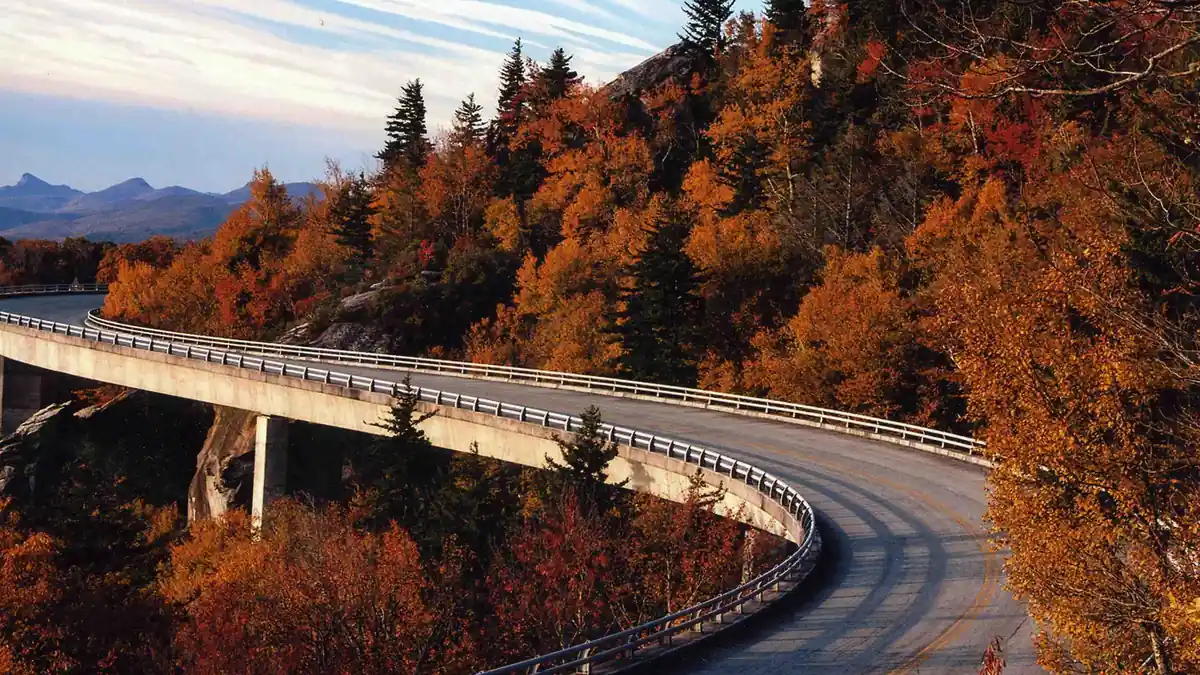
North Carolina does fall on a slope. In fact, the state drops from high mountain ridges to sea level in one long sweep. As a result, colour never arrives everywhere on the same weekend. Instead, it starts high, rolls downhill, and keeps moving for weeks. That simple fact changes how you should plan any trip here.
Most guides list towns and hope you guess the timing. This guide does the opposite. First, it explains the elevation bands and the week-by-week logic. Then, it follows the colour from the peaks to the Piedmont and the coast. Of course, no year follows a perfect calendar. Still, the pattern itself is reliable, and it is your best planning tool.
If you are choosing the best places to see fall colors in North Carolina, start with timing. A famous overlook visited too early can look mostly green. Meanwhile, a modest Piedmont park at its peak can look unforgettable. Timing, in short, beats reputation.
How Does Fall Colour Move Downhill in North Carolina?
Cool nights trigger the change first where the air is thinnest. The highest ridges therefore turn before the valleys below them. However, warm afternoons can slow the change at lower elevations for days. Rain, wind, and early frost can also shift the show. Consequently, North Carolina fall foliage behaves like a slow wave, not a switch.
Think in bands rather than in single dates. The bands below describe a typical season in general terms. They will not predict a specific tree on a specific day. Instead, they help you pick the right region for your travel week.
- Highest elevations, above about 5,000 feet: colour often begins around early to mid October in general terms, sometimes a little earlier.
- Mid elevations, roughly 3,000 to 5,000 feet: colour usually builds through mid October and often looks strongest there in that window.
- Mountain valleys and Asheville, roughly 2,000 to 3,000 feet: colour typically follows later in October, after the high country fades.
- The Piedmont, roughly 500 to 1,500 feet: colour generally peaks from late October into November in many years.
- The coast, near sea level: trees change latest, and some coastal colour can linger well into November.
Why does this matter for NC fall foliage peak times? Simply put, you can chase the wave instead of missing it. For example, a traveller in early October should aim high. By contrast, a traveller in early November should aim low.
What Should You Know Before You Chase the Colour?
Weather rewrites the calendar a little every year. A dry summer can mute some trees and stress others early. Meanwhile, a wet spell can knock leaves down just as they peak. As a result, local fall colour reports matter more than old blog posts. Check a current report in the week before you travel.
Flexibility helps more than precision here. If possible, book a base that lets you drive up or down in elevation. Asheville works well for that strategy, for example. Similarly, Boone and Blowing Rock give you quick access to high ground. In short, stay somewhere with options, not somewhere with only one viewpoint.
This approach also explains why North Carolina ranks among the best places to visit in the US for fall colour. Few states offer such a long season in one trip. That contrast, indeed, is part of the magic.
The High Country: Where the Season Starts
Grandfather Mountain fall colors usually lead the state conversation for good reason. The mountain rises high above the valleys, so its slopes feel autumn first. On clear days, however, the view is not just about one peak. Layered ridges fade into blue distance, and colour fills the folds between them.
Nearby trails and overlooks reward an early start. Morning light, for example, makes red maples glow against dark evergreens. Still, high country weather changes fast, even in a mild week. Pack a warm layer, therefore, even if the valley felt pleasant at breakfast. Wind at the top can feel like a different season entirely.
The high country also suits short walks with big payoffs. Some viewpoints sit close to parking areas, while others ask for a steeper climb. Either way, this band rewards patience and slow driving.
Blue Ridge Parkway Fall: The Spine of the Trip
Blue Ridge Parkway fall driving is the classic North Carolina fall road trip experience. The road is often called America’s favourite drive, and fall explains why. It links overlook after overlook without billboards or busy town traffic. As a result, the landscape itself becomes the itinerary for the day.
Plan the Parkway by segments, not by total miles. The speed limit is low, and stops tempt you constantly. For example, a short stretch near Grandfather Mountain can fill half a day. Meanwhile, the stretch south of Asheville climbs into even higher country. In short, choose one segment and enjoy it properly.
Why Is the Linn Cove Viaduct So Memorable?
The Linn Cove Viaduct curves around Grandfather Mountain instead of cutting through it. Its S-curve, in fact, seems to float above the coloured slope below. From the trail underneath, you can appreciate how gently it touches the mountain. From the road, however, you simply feel suspended inside the colour.
Photographers love this spot at mid-morning on a clear day. Still, it impresses in soft cloud too, when mist drifts through the trees. If parking looks busy, wait a little instead of skipping it.
What Makes Craggy Gardens and Waterrock Knob Different?
Craggy Gardens sits high north of Asheville, among twisted trees and open views. In summer it is famous for rhododendron blooms, of course. In fall, however, its charm comes from exposure and wide horizons. The short climb to the pinnacle gives you colour in almost every direction.
Waterrock Knob, near the southern end, feels even grander. It is one of the highest stops on the whole Parkway route. Consequently, sunrise and sunset both draw devoted crowds there. The parking-area view alone is superb, even without the summit trail. Still, the climb adds a quieter, higher perspective above the road.
Together, these stops show why the Parkway belongs on any list of top outdoor places to visit in the US during autumn. Each overlook frames a different elevation and a different mood. You therefore see the season changing as you drive, not just at one stop.
Asheville in the Fall: Colour With a City Attached
Asheville in the fall offers something the overlooks cannot offer alone. You get mountain colour, yes, but you also get long lunches and lively streets. After a morning on the Parkway, for example, you can be eating downtown by early afternoon. That mix, in fact, makes Asheville an ideal fall base.
The food scene here punches far above the city’s size. Chefs lean hard on local farms, mushrooms, apples, and squash in autumn. Meanwhile, bakeries, breweries, and coffee shops give rainy days a pleasant backup plan. Book popular dinner spots ahead on peak weekends, however. Fall crowds arrive hungry, and the best tables go first.
The River Arts District adds a slower, creative afternoon. Studios and galleries line streets along the French Broad River there. You can watch makers at work and then walk by the water. By contrast, downtown feels busier and more polished in the evenings. Both moods, indeed, suit different travellers on the same trip.
Biltmore deserves a mention in general terms for its vast grounds and gardens. In fall, its wooded drives and open lawns frame colour beautifully around the house. Still, it is a major attraction, so treat it as a planned day, not a casual add-on. If grand estates are not your style, skip it without regret. Asheville, after all, offers plenty beyond one famous address.
For more ideas, see these places to visit in the fall in North Carolina. Use them as inspiration, however, not as a timing guide.
Fall in the Smoky Mountains: The Quiet Western Edge
Fall in the Smoky Mountains feels softer and mistier than the high Parkway country. Morning fog often fills the valleys and lifts slowly through coloured trees. As a result, early drives here can feel dreamlike and calm. By midday, however, the ridges sharpen and the colours turn bolder.
Bryson City in fall makes a friendly base on this western edge. It is small, walkable, and closely tied to the river and the forest. From town, you can reach deep creek trails and quiet park roads easily. Meanwhile, its main street offers simple food, outfitters, and a relaxed evening pace.
The scenic railroad from Bryson City is a beloved way to see the gorge country. In general terms, it lets you watch river and forest colour without driving yourself. Families, for example, often prefer it on a peak weekend for that reason. Book ahead in fall, however, because popular departures fill quickly.
This corner also rewards travellers who dislike crowds. Drive beyond the famous viewpoints, and the roads quieten noticeably. In short, the Smokies edge is about lingering, not ticking stops.
Hendersonville Apple Picking and Harvest Flavour
South of Asheville, Hendersonville sits inside North Carolina’s best-known apple country. Hendersonville apple picking is therefore a fall ritual for many local families. Orchards spread across gentle hills, with mountain views behind the rows of trees. On crisp days, in fact, the valley smells faintly of cider.
Expect more than a bag of apples at most orchards. Many offer fresh cider, warm doughnuts, jams, and simple farm activities in season. Still, each farm runs its own schedule and its own picking rules. Check the orchard’s own page before you go, therefore, rather than assuming hours. That small step prevents a wasted drive on a closed weekday.
Apple country also changes the pace nicely. A morning orchard visit balances an afternoon of overlooks. Children, for example, often remember the doughnuts as fondly as the views. Few souvenirs, indeed, travel better than local apples.
Harvest flavour spreads beyond orchards too. Farm stands sell pumpkins, honey, and late tomatoes along rural roads. As a result, a Hendersonville day feels grounded and local, not purely scenic.
The Piedmont: Later Colour and Room to Breathe
Fall colors in the Piedmont arrive after the mountain headlines fade. That timing is an advantage, not a consolation prize, however. When high ridges turn bare, Piedmont forests often glow gold and russet. Consequently, late-October and November travellers should look here first.
Raleigh, Durham, and Chapel Hill anchor this middle band of the state. Together, they offer museums, gardens, and leafy university streets in autumn. Umstead State Park, for example, puts real forest trails between Raleigh and Durham. Meanwhile, neighbourhood walks in Chapel Hill feel calm under old oaks and maples.
These cities also solve practical problems. They offer more lodging, more restaurants, and easier parking than mountain towns. Prices, in fact, often feel gentler here.
Why Do Hanging Rock and Pilot Mountain Stand Out?
Hanging Rock State Park in fall gives the Piedmont a genuine mountain feel. Its quartzite peaks rise suddenly above the surrounding farmland and forest. Trails lead to rocky viewpoints, waterfalls, and a small lake below. On a clear late-season day, however, the coloured ridges seem to roll forever.
Pilot Mountain in fall is even more distinctive from the road. Its bare rocky knob rises alone, visible for miles across the countryside. You can drive close to the summit area and then walk the short loop. From the top, by contrast, farmland and forest spread out like a patchwork quilt.
Both parks prove that North Carolina fall getaways do not require the highest peaks. They suit day trips, late-season visits, and travellers based in central cities. Still, arrive early on fine weekends, because their parking areas fill quickly. Weekday visits, of course, feel calmer and far more spacious.
The Coast in the Quiet Season: A Different Kind of Fall
Not every fall trip needs fiery maples and mountain overlooks. The North Carolina coast, instead, offers mild air, empty sand, and golden marsh light. Trees still change here, but later and more gently than inland. As a result, the coast extends the season in a completely different way.
Outer Banks in fall feels like a secret the summer crowds left behind. Beaches open up, rental choice improves, and the pace slows right down. Meanwhile, the ocean often stays mild enough for long walks and paddling. You may still swim on warm days, however, so pack for pleasant surprises.
Fall fishing is a major draw along the Outer Banks too. Piers, surf anglers, and charter boats all chase seasonal catches in autumn. Even non-anglers, in fact, enjoy the morning activity on the piers.
Wilmington in fall pairs that coastal calm with a handsome historic riverfront. You can stroll brick streets, browse shops, and watch the Cape Fear River drift by. Nearby beaches, by contrast, offer space and soft late-season light. Together, they make Wilmington an easy long weekend without mountain driving.
This chapter also helps if you are comparing the best places to visit in the USA across landscapes. Few states pair high colour with quiet beaches in one season.
How Should You Build a North Carolina Fall Road Trip?
A smart North Carolina fall road trip follows the colour downhill. Start high if you travel early, and start low if you travel late. For a mid-season trip, however, begin in the high country and end at the coast. That route, in fact, lets you ride the colour wave eastward.
Consider this simple logic for a longer journey. Spend two nights near the Parkway first, based around Asheville or a mountain town. Then, drive east for a night or two in the Piedmont cities. Finally, finish with two quiet nights on the coast near Wilmington or the Outer Banks. As a result, each stop feels different, and no day repeats the last.
Shorter trips need harder choices, of course. If you love overlooks, give the mountains almost all your time. Meanwhile, beach lovers should not force a mountain detour in late November.
Driving time deserves honest respect here. Mountain roads are slow, scenic, and sometimes foggy in the morning. Consequently, a short map distance can still fill a full afternoon. Plan fuel stops in towns, because Parkway services are limited.
What About Costs and Practical Planning?
Costs also need honest framing rather than false precision. The Parkway itself does not charge a general entrance fee, of course. State parks, attractions, rail journeys, and estate visits may charge, however, and prices change. Lodging is usually the biggest cost, especially on peak October weekends in mountain towns. By contrast, Piedmont and coastal stays often cost less outside event dates. Booking early, travelling midweek, and self-catering some meals all help meaningfully.
If fall inspires a bigger adventure list, compare this route with best adventure places to visit in USA guides for contrast. North Carolina’s appeal, however, is its gentle variety rather than extreme thrills. Similarly, travellers planning a multi-state loop may enjoy Michigan places to visit in the fall for scenic views and seasonal activities as a northern counterpart. The seasons peak earlier there, in fact, so the two trips pair well in different weeks.
Frequently Asked Questions
When is the best time to see North Carolina fall foliage?
It depends entirely on elevation, in fact, not on one statewide date. High country colour often leads around early to mid October in general terms. Meanwhile, Asheville and the valleys usually follow later in October. The Piedmont and coast, by contrast, often look best from late October into November.
Where should you go first on the Blue Ridge Parkway in fall?
Start with the segment closest to the colour that week. For early colour, aim high near Grandfather Mountain, Craggy Gardens, or Waterrock Knob, for example. For later colour, choose lower stretches near Asheville instead. Checking a current colour report, therefore, beats following a fixed list.
Is Asheville worth visiting if you only have a weekend?
Yes, because Asheville in the fall combines colour, food, and art efficiently. You can drive the Parkway in the morning and explore downtown by evening. Still, one weekend cannot cover the Smokies, orchards, and coast too. Choose the mountains properly, in short, and save the rest for another trip.
Can you still enjoy North Carolina fall colour in November?
Yes, especially in the Piedmont and along the coast in many years. Hanging Rock, Pilot Mountain, and the Raleigh area often hold colour after the peaks fade. Meanwhile, Wilmington and the Outer Banks offer mild, quiet days even without dramatic leaves. November, indeed, suits travellers who value space over spectacle.
How expensive is a North Carolina fall trip?
It varies widely by week, town, and lodging style, of course. Peak October weekends in mountain towns usually cost the most overall. By contrast, midweek Piedmont and coastal stays often feel noticeably gentler. The driving itself can stay affordable, however, if you picnic, hike, and use free overlooks.
What should you pack for a coast-to-mountains fall trip?
Pack layers first, because temperatures swing sharply with elevation here. A warm jacket suits high overlooks, while a light shirt may suit the beach. Also bring walking shoes, a rain layer, and sun protection for bright days. As a result, one small bag can cover mountains and coast comfortably.
Fall in North Carolina rewards travellers who follow the slope, not the crowd. Start high, drift downhill, and let each region show its own version of the season. Whether you end with orchard cider or quiet sand, the journey itself becomes the memory. For later-season inspiration after this trip, you might also browse best places to visit in December in the US when winter planning begins.



