
Historically, travelers often visited only the busy urban centers of Madrid or Barcelona. However, true cultural travel requires exploring the ancient provincial capitals, Roman ruins, and Andalusian palaces scattered across the country. In addition, Spain ranks among the world leaders in UNESCO World Heritage sites. For travelers seeking authoritative guides across luxury hospitality, mindful living, and cultural discovery, visit the WordGlowUp homepage. Examining the architectural marvels, historical context, and visitor advice for Spain’s greatest landmarks ensures an unforgettable cultural journey.
The Cultural Crossroads of Iberian History
Spain’s unique geographic position between Europe and North Africa shaped its complex history. Over thousands of years, distinct civilizations governed the peninsula. For example, the Roman Empire established sprawling cities and aqueducts during classical antiquity. Later, Islamic dynasties ruled Al-Andalus for nearly eight centuries, sparking a golden age of science, poetry, and architecture.
Following the Christian Reconquista, Renaissance monarchs built grand cathedrals and royal palaces funded by global maritime trade. Furthermore, early twentieth-century modernists reimagined urban design with expressive organic forms. Consequently, visiting Spain offers an unmatched chronological journey through human creativity.
Key foundational pillars that define Spanish cultural heritage include:
- Moorish Architecture: Intricate geometric tilework, carved stucco arabesques, and tranquil courtyard water fountains.
- Mudéjar Craftsmanship: A unique architectural style blending Islamic ornamental motifs with Christian Gothic structures.
- Monumental Roman Engineering: Imposing stone aqueducts, amphitheaters, and defensive city walls built two millennia ago.
- Gothic and Baroque Cathedrals: Towering religious monuments housing priceless tapestries, gilded altarpieces, and royal tombs.
To explore more in-depth perspectives on international destinations, mindful travel, and curated culture, browse our comprehensive Lifestyle category archive for practical travel guides.
The Alhambra and Generalife: Granada’s Moorish Crown
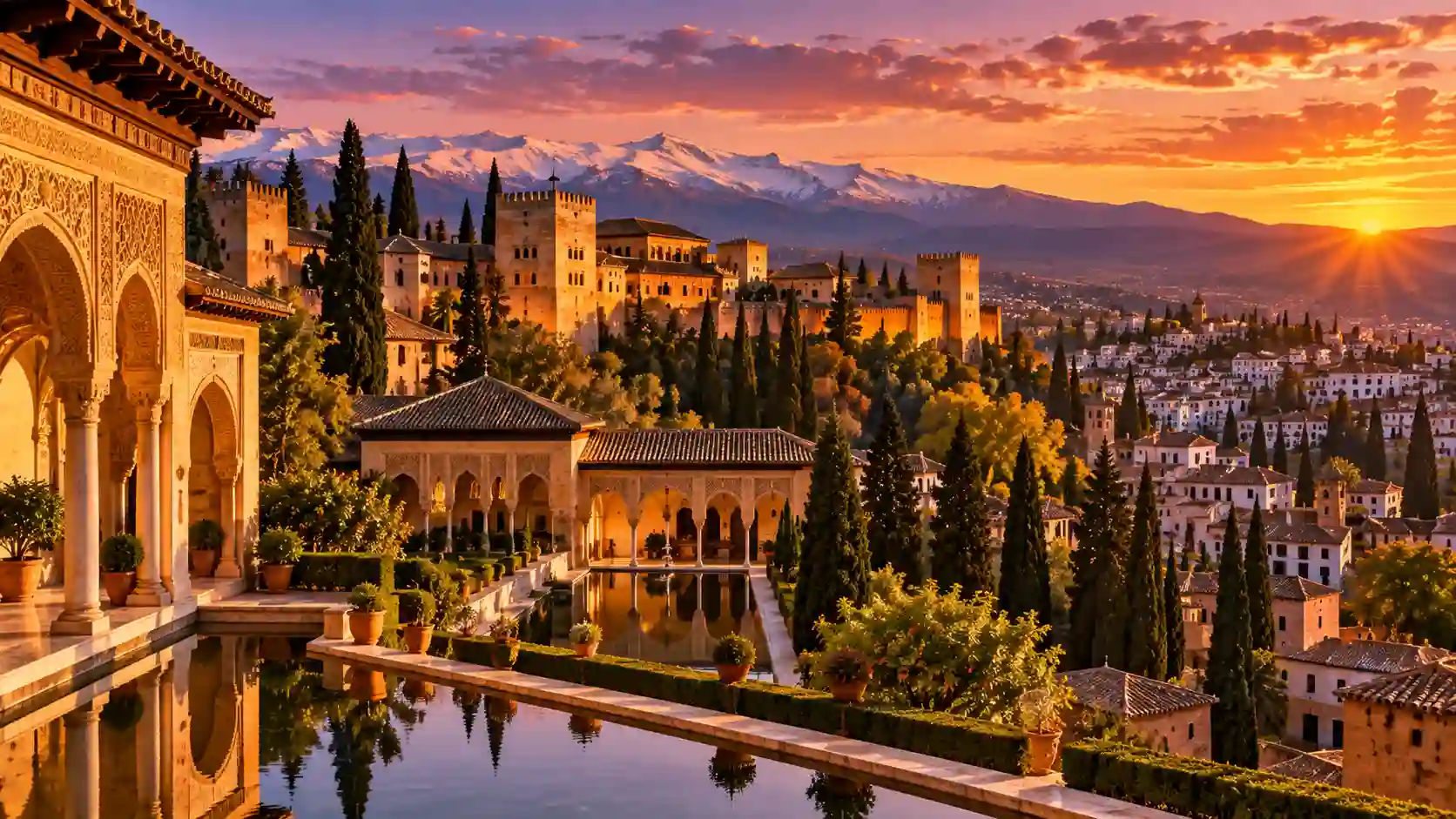
Perched high on a forested plateau above Granada, the Alhambra stands as the finest preserved example of Moorish palace architecture in Europe. Built primarily during the thirteenth and fourteenth centuries by the Nasrid dynasty, this fortified complex served as a royal residence, fortress, and government city.
The Nasrid Palaces showcase breathtaking craftsmanship. Visitors wander through the famous Court of the Lions, marveling at its 124 slender white marble columns and sculpted central fountain. In addition, the Court of the Myrtles features a calm emerald reflecting pool that mirrors intricate plaster arches. Nearby, the summer gardens of the Generalife feature fragrant rose beds, trickling water fountains, and panoramic views of the snowy Sierra Nevada mountains.
La Sagrada Família and Modernist Barcelona
In Catalonia, Antoni Gaudí transformed urban architecture with his visionary modernist masterpieces. The Basilica de la Sagrada Família in Barcelona represents his crowning achievement. Under construction since 1882, the basilica combines Gothic traditions with flowing natural organic forms.
The exterior showcases dramatic contrasting facades. For instance, the Nativity Facade resembles sculpted coral reefs and melting wax, celebrating life and birth. Conversely, the Passion Facade features stark, angular stone sculptures depicting sacrifice. Step inside, and massive stone pillars branch out like forest trees to support the ceiling. Furthermore, brilliant stained-glass windows bathe the interior nave in dynamic reds, blues, greens, and ambers throughout the day.
The Great Mosque-Cathedral (Mezquita) of Córdoba
Córdoba’s historic center houses one of the most remarkable religious buildings in the world. The Mezquita began in 785 as the principal grand mosque of the Umayyad Caliphate. Inside, visitors encounter a vast prayer hall supported by over 850 columns carved from jasper, onyx, and granite.
The hall’s iconic double-tiered red-and-white horseshoe arches create a dizzying forest of stone. In addition, the gold-gilded prayer niche, or mihrab, displays exquisite Byzantine glass mosaics. Following the Reconquista in the thirteenth century, Christian rulers preserved the mosque structure. Later, in the sixteenth century, Renaissance architects erected a towering Catholic cathedral directly in the center of the Moorish hall. This architectural blend creates a striking physical symbol of Spain’s complex religious history.
Comparative Analysis: Spain’s Greatest Historical Landmarks
Evaluating Spain’s top cultural destinations helps you prioritize your travel itinerary. Review this side-by-side comparison of major historical landmarks:
| Monument & Location | Primary Era & Century | Architectural Style | Key Historical Highlight |
|---|---|---|---|
| The Alhambra (Granada) | 13th–14th Century | Nasrid Moorish | The final Islamic royal palace complex in Western Europe. |
| Sagrada Família (Barcelona) | 19th–21st Century | Catalan Modernisme | Antoni Gaudí’s organic basilica and ongoing UNESCO masterpiece. |
| The Mezquita (Córdoba) | 8th–16th Century | Moorish & Renaissance | A vast mosque hypostyle hall enclosing a 16th-century cathedral. |
| Toledo Historic Quarter | 1st–16th Century | Mudéjar, Gothic, Jewish | The medieval “City of Three Cultures” and former Spanish capital. |
| Alcázar & Cathedral (Seville) | 12th–15th Century | Mudéjar & High Gothic | The tomb of Christopher Columbus and royal palace gardens. |
| Roman Aqueduct (Segovia) | 1st Century AD | Classical Roman | Over 20,000 mortarless granite blocks spanning the city center. |
| Cathedral of Santiago | 11th–18th Century | Romanesque & Baroque | The sacred pilgrimage endpoint of the famous Camino de Santiago. |
This comparative overview makes clear that Spain offers diverse historical experiences across every major region of the country.
Toledo: The City of the Three Cultures
Perched dramatically on a rugged granite hill surrounded by the Tagus River, Toledo served as the ancient capital of the Spanish Empire. Known famously as the “City of the Three Cultures,” Toledo represents a rare historical period where Christian, Jewish, and Muslim communities coexisted productively.
Wandering through Toledo’s steep cobblestone alleys reveals this rich multicultural heritage. For example, the Synagogue of Santa María la Blanca features delicate Moorish horseshoe arches designed by Islamic craftsmen for a Jewish congregation. Nearby, the towering Toledo Cathedral showcases High Gothic grandeur, housing masterworks by Renaissance painter El Greco. In addition, local artisan workshops still forge legendary Toledan steel swords and intricate damascene gold jewelry.
The Royal Alcázar and Cathedral of Seville
Seville embodies the romantic soul of Andalusia. At its heart stands the Royal Alcázar, the oldest royal palace still in active use in Europe. Spanish monarchs built this residential palace using Muslim craftsmen, producing the world’s finest example of Mudéjar architecture. Visitors stroll through the Courtyard of the Maidens, admiring intricate lace-like plasterwork and peaceful sunken gardens.
Directly across the plaza rises the Cathedral of Seville, the largest Gothic cathedral on Earth. Inside, the central nave rises over 130 feet above the monumental tomb of Christopher Columbus. Furthermore, visitors can climb the adjoining Giralda bell tower. Originally built as the minaret for the Almohad grand mosque, the tower uses gentle ramps instead of stairs, allowing riders to reach the summit on horseback.
Ancient Roman Engineering in Segovia
Located just north of Madrid, the historic city of Segovia features one of the best-preserved Roman monuments on Earth. Built around the first century AD, the Roman Aqueduct carried mountain water over ten miles to the city fortress.
The aqueduct stands over ninety feet high, spanning the central city plaza with two tiers of graceful arches. Remarkably, Roman masons built this colossal structure using over twenty thousand granite blocks without a single drop of mortar or cement. The structure relies entirely on precise stone balance and gravity. In addition, visitors can explore Segovia’s fairy-tale Alcázar fortress, which inspired classic castle silhouettes in modern animation.
Cathedral of Santiago de Compostela: A Sacred Legacy
In the misty green hills of Galicia in northwestern Spain lies Santiago de Compostela. Since the early Middle Ages, millions of pilgrims have walked the famous Camino de Santiago to reach this sacred sanctuary. The cathedral marks the reputed burial place of Saint James the Apostle.
The western facade on the Praza do Obradoiro presents a breathtaking display of Spanish Baroque stonework. Inside, the Romanesque Portico of Glory welcomes weary pilgrims with expressive sculpted biblical figures. Furthermore, during special liturgical services, priests swing the massive Botafumeiro silver incense burner across the cathedral ceiling, filling the high nave with fragrant smoke.
Curating Style, Packing, and Travel Logistics
Experiencing Spain’s cultural wonders requires comfortable, versatile travel clothing. Exploring medieval cobblestone streets and climbing ancient bell towers demands supportive footwear and breathable natural fabrics.
For daytime tours through sun-drenched Andalusian plazas, travelers choose lightweight linen shirts, cotton trousers, and supportive walking shoes. Pairing functional travel attire with refined accessories mirrors the curated collections available at the avanti lifestyle shop elevate your everyday with luxury style. Dressing thoughtfully ensures you feel comfortable in sacred monuments and elegant at evening dinner bistros.
Furthermore, navigating regional high-speed rail lines and historic streets is easiest with organized luggage. Choosing durable, modular carry-on luggage like the experience the ultimate adventure with the civic travel bag 35l keeps your electronics, cameras, and garments neatly organized during transit. Streamlined luggage eliminates travel stress while moving between Spanish cities.
In addition, balancing international travel adventures with an intentional home routine reflects the lifestyle concepts featured in american lifestyle magazine your ultimate guide to modern living. Collecting artistic ideas from historic palaces enriches your daily aesthetic and home environment long after your vacation ends.
Restful Sanctuaries and Curated Experiential Living
Where you stay plays an integral role in shaping your cultural journey. Discerning travelers avoid generic chain hotels, choosing intimate boutique accommodations that reflect regional character.
Guests discover peaceful courtyards, minimalist design, and attentive personal care when they discover the ultimate stay at comma boutique hotel your gateway to unmatched luxury. Staying in a thoughtfully designed boutique property offers a quiet sanctuary to rest and reflect after a day of sightseeing.
Moreover, immersing yourself in Spain’s living culture reflects the core philosophy of travelers who unlock unforgettable moments with lifestyle xperiences 365 live fully across global destinations. Savoring local tapas in Granada, listening to live flamenco in Seville, and wandering through ancient courtyards creates lifelong memories.
Actionable 5-Step Blueprint: Planning Your Spanish Heritage Tour
To ensure a seamless, enriching cultural vacation in Spain, follow this structured five-step planning roadmap:
- Reserve Monument Tickets Months in Advance: Global demand is intense for iconic monuments. Book entry tickets for the Alhambra, Sagrada Família, and Seville Alcázar at least eight to twelve weeks ahead.
- Travel by High-Speed Rail (AVE): Spain features one of the world’s best high-speed rail systems. Trains connect Madrid to Barcelona, Seville, Córdoba, and Valencia in just two to three hours.
- Plan Your Daily Schedule Around the Siesta: Many historic churches, municipal museums, and small artisan shops close between 2:00 p.m. and 5:00 p.m. Schedule sightseeing in the morning and late afternoon.
- Dress Respectfully for Sacred Sites: Major cathedrals and religious shrines enforce modest dress codes. Keep your shoulders and knees covered when entering churches and basilicas.
- Embrace Regional Evening Gastronomy: Dinner in Spain starts late, usually after 8:30 p.m. Spend your early evenings participating in the local “paseo” (evening stroll) and enjoying tapas at neighborhood bars.
Frequently Asked Questions
Which historical site in Spain requires booking tickets farthest in advance?
The Alhambra in Granada requires booking tickets the farthest in advance. Because park authorities strictly limit daily visitors to protect the delicate Nasrid Palaces, tickets frequently sell out two to three months ahead.
How many days are needed to experience Spain’s main cultural landmarks?
A ten to fourteen-day itinerary allows travelers to explore the core cultural triangle of Madrid, Toledo, Seville, Córdoba, Granada, and Barcelona comfortably using high-speed rail.
What is the best time of year to visit historical sites in Andalusia?
Spring (April to May) and autumn (September to October) offer ideal weather. Summer temperatures in southern cities like Seville and Córdoba regularly exceed 100°F (38°C), making daytime sightseeing exhausting.
Are Spain’s historical monuments accessible by public transit?
Yes. Spain possesses exceptional public transportation. High-speed AVE trains link major heritage cities, and local buses or pedestrian walkways connect directly to major monuments.
To learn more about our cultural research methodologies, heritage travel guides, and editorial team, explore our About Us page. If you have questions regarding customized European travel itineraries, boutique accommodations, or general editorial feedback, please connect with our team through our Contact Us page.



