
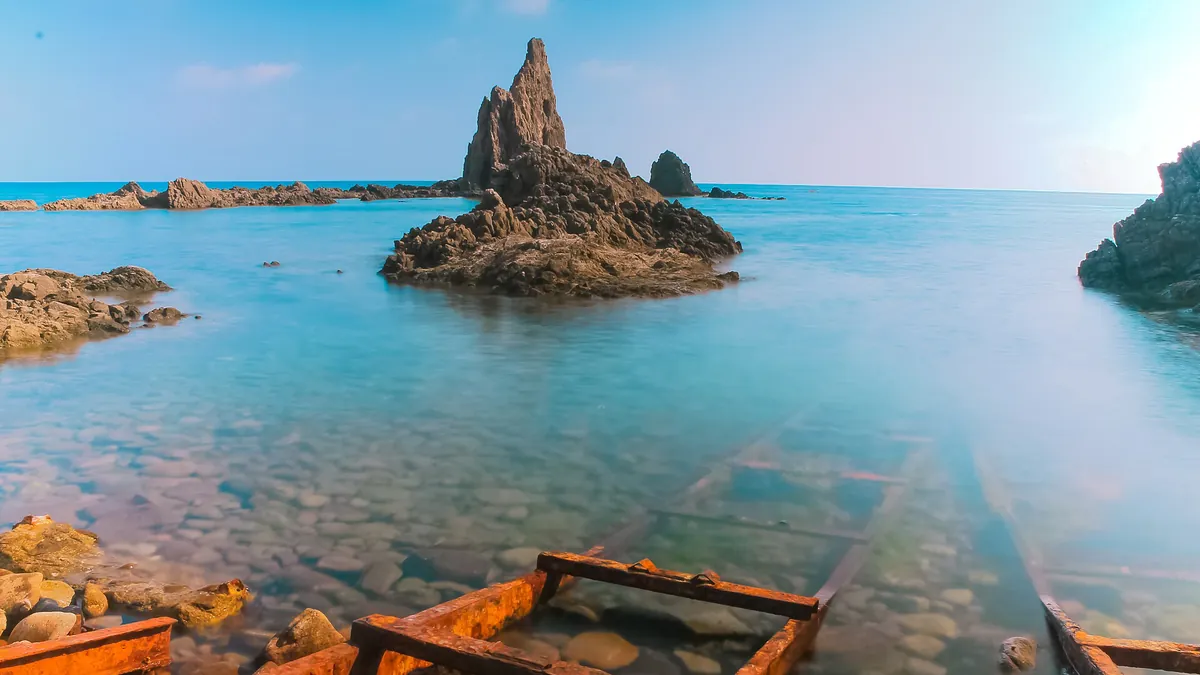
Most visitors picture southern Spain as Seville, Córdoba and Granada. However, the country’s south-eastern corner tells a different story entirely. Indeed, this Mediterranean arc runs from Alicante down to Almería. In fact, locals often group it within the wider Spanish Levante region. Meanwhile, Murcia sits quietly between the Valencian Community and Andalusia. As a result, the area feels Spanish first and touristic second.
For example, you can start the morning inside a Roman theatre. Then, you can swim in a volcanic cove before sunset. Still, many travellers drive straight past on the motorway. Instead, this guide slows the journey down properly. Of course, the region rewards anyone who explores province by province. Therefore, treat it as one connected road trip, not separate stops.
Besides, the contrasts here are unusually sharp for such short distances. For instance, lush orchards sit barely an hour from near-desert. Similarly, busy resort towns neighbour silent, protected coastline. Consequently, choosing where to base yourself matters enormously.
Where exactly is south east Spain?
Geographically, the south east covers three provinces in a coastal arc. Firstly, Alicante province forms the northern gateway. Secondly, the Region of Murcia sits in the middle. Finally, Almería province closes the arc in the south west. In addition, Granada lies inland as an occasional extension.
Historically, Romans, Carthaginians and Moors all fought over this coast. For example, Cartagena began life as a Carthaginian port. Meanwhile, Murcia grew rich from irrigated Moorish farmland. In fact, Arabic water systems still shape the orchards today. As a result, history here feels layered rather than decorative.
For instance, travellers often pair it with free sights and neighbourhoods in Seville afterwards. Similarly, fans of heritage routes enjoy the most important cultural and historical places in Spain next.
How do the provinces differ at a glance?
Alicante, for example, feels polished, international and easy. Murcia, by contrast, feels warmer, local and proudly unhurried. Meanwhile, Almería feels wilder, drier and more cinematic. Consequently, your favourite province will depend on your travel style. Still, most road trippers end up loving all three.
- Alicante and the Costa Blanca: the easiest arrival, with airports, resorts and pretty old towns.
- Murcia: the food lover’s province, with orchards, tapas cities and the Mar Menor lagoon.
- Almería: the adventurer’s province, with desert, volcanoes and empty coves.
- Granada (optional): the inland anchor, adding the Alhambra and cooler mountain air.
Therefore, think of the trip as three holidays in one. For example, beach days belong mainly to Alicante and Almería. Meanwhile, desert drama belongs entirely to Almería alone. As a result, a varied route never feels repetitive.
Alicante and the Costa Blanca: the easy first base
Alicante province is, of course, the region’s natural entry point. Besides, the motorway network makes onward driving genuinely simple.
What should you see in Alicante city itself?
The list of things to do in Alicante starts above the rooftops. Santa Bárbara Castle, for example, crowns Mount Benacantil proudly. From there, indeed, the whole bay opens below you. Meanwhile, the Explanada de España promenade anchors life at sea level. Its wave-patterned mosaic, in fact, is instantly recognisable. As a result, an evening stroll here becomes a daily ritual.
The Barrio de Santa Cruz, for instance, climbs in colourful steps. Therefore, Alicante city works brilliantly as a first base.
Why does Altea old town steal so many hearts?
North of Alicante, Altea old town climbs a steep, whitewashed hill. Its blue-domed church, in fact, appears on countless postcards. Meanwhile, cobbled lanes hide galleries, studios and tiny restaurants. For example, artists have settled here for generations. As a result, the atmosphere feels creative rather than commercial. Still, arrive early, because the lanes fill by midday.
Debates about Costa Blanca best towns always return to Altea. Indeed, nearby Calpe adds a giant rock and flamingo lagoon. Similarly, Villajoyosa charms visitors with brightly painted fishermen’s houses. For instance, its chocolate heritage adds a sweet extra stop. By contrast, Benidorm delivers high-rise energy and big beaches. Therefore, the northern Costa Blanca suits almost every taste.
Beach lovers, meanwhile, should compare coves carefully here. The best beaches in Costa Blanca mix sand and pebble coves. For example, Cala Granadella near Jávea feels almost Caribbean. In fact, its clear water suits snorkelling particularly well. However, Granadella gets extremely busy in high summer. Consequently, smaller coves reward those who walk a little further.
What about Jávea, Dénia and Tabarca island?
Jávea, also called Xàbia, splits into port, old town and beach. Each part, in practice, feels like a separate village. Meanwhile, Montgó Natural Park looms protectively behind the town. For example, viewpoints along Cape San Antonio reveal stunning cliffs. As a result, walkers rate this corner very highly indeed.
Further north, Dénia adds a castle and serious gastronomy. Indeed, UNESCO recognised the town for its creative food culture. Similarly, ferries from Dénia reach the Balearic Islands directly. For example, rice dishes and red prawns headline menus across town. As a result, Dénia suits a slower overnight stop.
Back near Alicante, a Tabarca Island day trip feels wonderfully different. Boats, for instance, leave from Santa Pola and Alicante. Once ashore, a tiny walled village greets you first. Meanwhile, clear marine-reserve water surrounds the island’s small coves. For example, snorkellers spot far more life here than usual. Still, summer boats fill fast, so book ahead. Therefore, spring and autumn suit Tabarca best.
Murcia: the warm corner most visitors skip
South of Alicante, the Region of Murcia changes the mood. Indeed, this is one of Spain’s least visited autonomous communities. In fact, that low profile is precisely its charm. Meanwhile, the Segura River valley grows much of Europe’s vegetables. As a result, Murcia proudly calls itself Europe’s orchard.
Is a Murcia city break worth your time?
Absolutely, a Murcia city break suits slow, food-led weekends. The cathedral, for instance, mixes Gothic bones with a Baroque façade. Nearby, however, the Episcopal Palace adds elegant pink stone. Meanwhile, Plaza de las Flores buzzes with tapas terraces nightly.
Besides, the city rewards gentle, unplanned wandering most. The Segura riverside, in fact, offers shady walks and sculptures. In addition, Murcia’s Holy Week and spring festivals draw devotees. Still, ordinary weekends here feel calm and very Spanish. Of course, Cartagena lies under an hour away for contrast.
Food, overall, defines the best places to visit in Murcia city. For example, zarangollo pairs courgettes, onions and eggs in one simple dish. Meanwhile, pastel de carne delivers spiced meat inside flaky pastry. In addition, paparajotes wrap lemon leaves in sweet batter for dessert. As a result, even a simple tapas crawl becomes sightseeing here.
Why is Cartagena the region’s great surprise?
Cartagena, by contrast, delivers the south east’s deepest history. The Cartagena Roman theatre, for instance, hid beneath later buildings for centuries. Indeed, workers only rediscovered it in the late 1980s. Its museum, meanwhile, leads visitors dramatically towards the stage.
Moreover, Cartagena layers history far beyond the Romans. The Punic Wall, for instance, survives from the Carthaginian city. Similarly, the port has sheltered navies for over two millennia. However, the harbour setting ties everything together beautifully. Therefore, allow Cartagena a full day, not a quick stop.
History fans, in fact, often rank Cartagena above bigger names. It sits naturally beside the best places to visit in Spain on any serious list. Still, Cala Cortina beach sits minutes from the centre. Consequently, sightseeing mornings can end with afternoon swims.
What will you find at the Mar Menor and the Ricote valley?
East of Cartagena, Mar Menor Murcia presents a strange, shallow sea. In fact, a long sandbar separates it from the Mediterranean. That sandbar, meanwhile, is La Manga, a narrow resort strip. For example, you can watch sunrise over one sea. Then, indeed, you can watch sunset over the other. As a result, the lagoon suits sailing, kayaking and beginners.
However, the Mar Menor has faced well-reported environmental problems. Algal blooms, for instance, have damaged its delicate ecosystem. Consequently, authorities now restrict farming runoff around the lagoon. In practice, nearby Mediterranean beaches offer an easy alternative. Therefore, check local conditions and choose your beach thoughtfully.
Inland, meanwhile, the Valle de Ricote offers the region’s greenest escape. The Segura River, for example, bends through orchards and palm groves. Indeed, Moorish irrigation wheels still turn near Abarán. As a result, the valley suits a slow inland detour.
Almería: wild coast, white villages and desert
Further south west, Almería province feels like another country. Indeed, it is officially the driest corner of Europe. By contrast, protected areas remain astonishingly empty and wild. Consequently, Almería divides visitors more than anywhere else.
Which Almería places to visit come first?
Among Almería places to visit, the capital’s Alcazaba comes first. This Moorish fortress, for instance, ranks among Spain’s largest. From its walls, indeed, the port and old town spread below. Meanwhile, the fortress-cathedral below was built to resist pirates. For example, its thick walls look more military than religious. As a result, Almería city rewards a full sightseeing day.
Besides, the city keeps a refreshing, working-port character. Tapas bars, in fact, still serve a free tapa with drinks. Therefore, staying one night here balances the trip nicely.
North along the coast, Mojácar offers a classic whitewashed hilltop village. Its beach resort, meanwhile, stretches below along the shore. However, the province’s true star lies east of the capital. Indeed, that star is the Cabo de Gata natural park.
What does this Cabo de Gata guide recommend most?
Every honest Cabo de Gata guide starts with one warning. Facilities, in fact, are deliberately minimal inside the park. For example, many coves lack bars, shade and lifeguards. Meanwhile, that emptiness protects volcanic cliffs and crystal water. As a result, the park feels gloriously untamed. Still, bring water, food and sun protection always.
San José, of course, makes the park’s friendliest base. From there, Playa de los Genoveses offers a huge, gentle bay. Nearby, Playa de Mónsul adds a famous volcanic dune. Consequently, two full park days rarely feel enough.
Further north, Agua Amarga offers a softer, village-style stay. Its beach, for example, suits families wanting nearby cafés. Meanwhile, Las Negras keeps a laid-back, slightly bohemian feel. Indeed, seeing the park from the water changes everything. Therefore, add a boat morning if time allows.
Nature lovers, overall, compare this coast with island escapes. It pairs well in spirit with the best places to visit in the Canary Islands for volcanic scenery. Similarly, beach hunters browsing the best beach places to visit in the world should note Mónsul. However, Cabo de Gata stays far quieter than both.
Why does the Tabernas desert feel so familiar?
Inland from Almería, the Almería desert Tabernas landscape feels instantly cinematic. Indeed, Sergio Leone filmed his famous westerns here. Clint Eastwood, for example, rode through these dusty ravines. Meanwhile, film sets survive as western-themed visitor parks. For instance, Mini Hollywood preserves an original 1960s town set. As a result, movie fans treat Tabernas as sacred ground.
Besides cinema, the desert itself deserves quiet attention. Eroded badlands, in fact, twist into gullies and dry riverbeds. However, summer heat here can feel genuinely extreme. Consequently, visit early, carry water and avoid midday walking. In practice, combine Tabernas with an Almería city night. Therefore, the desert becomes an easy half-day excursion.
Coast, inland or desert: which contrast suits you?
Choosing your mix, in other words, shapes the whole trip. Coast lovers, for example, should weight Alicante and Cabo de Gata. History lovers, meanwhile, should weight Cartagena, Murcia and Almería city. Nature lovers, by contrast, should add Ricote and Tabernas. As a result, no two itineraries need look alike.
- Choose the coast if: you want swims, seafood and promenade evenings daily.
- Choose inland towns if: you prefer tapas, festivals and orchard scenery.
- Choose the desert fringe if: you love film history, silence and strange geology.
- Choose Granada as an add-on if: you can spare two extra days easily.
Granada, of course, sits about two hours from Almería. Its Alhambra, in fact, justifies almost any detour. For example, many road trippers finish their route there. However, Granada belongs culturally to inland Andalusia instead. Therefore, treat it as a bonus, not the centrepiece.
Couples, meanwhile, often extend trips towards Italy afterwards. The region’s slow evenings resemble the most romantic places to visit in Italy in spirit. Similarly, culture completists cross to Portugal for top places to visit in Porto, Portugal on longer tours.
What is a smart south east Spain itinerary for seven days?
A logical south east Spain itinerary runs north to south. Firstly, fly into Alicante and sleep there two nights. Secondly, move to Murcia or Cartagena for two nights. Finally, finish with three nights around Almería and Cabo de Gata. As a result, driving stays short and scenery keeps changing. In addition, flying home from Almería or Málaga saves backtracking.
- Day 1: Arrive in Alicante, climb to Santa Bárbara Castle, then stroll the Explanada.
- Day 2: Day trip to Altea and Jávea, with a swim at Granadella cove.
- Day 3: Drive to Cartagena for the Roman theatre, then evening tapas in Murcia.
- Day 4: Murcia city sights, then an afternoon around the Mar Menor.
- Day 5: Drive to San José and explore Genoveses and Mónsul beaches.
- Day 6: Cabo de Gata lighthouse, salt flats and La Isleta del Moro.
- Day 7: Almería city and the Alcazaba, or a morning in Tabernas desert.
Of course, you can easily stretch this route to ten days. Extra days, for example, suit Tabarca or the Ricote valley. Similarly, Mojácar deserves an overnight on longer trips. Consequently, the seven-day version works best as a framework. In practice, let your favourite province steal the extra nights.
When should you go, and how hot does it really get?
Spring, in fact, is the region’s sweet spot. April, May and early June bring warm, swimmable weather. For example, hiking in Cabo de Gata feels comfortable. As a result, most experienced visitors choose spring first. Indeed, autumn runs a very close second.
September and October, similarly, deliver warm seas and thinner crowds. However, late summer storms can occasionally bring intense rain. In fact, the region knows sudden Mediterranean downpours well. Still, most autumn days remain dry, bright and pleasant. Of course, winter also works surprisingly well here.
Winter, by contrast, suits city sightseeing and desert visits. Daytime temperatures, for instance, often feel mild in the sun. However, July and August demand real heat realism. Temperatures inland, in fact, can climb well above thirty-five degrees. Consequently, plan siestas, shade and early starts then. In short, summer is doable, but never casual.
How should you choose your bases and get around?
A car, overall, transforms this region completely. Trains, for example, link Alicante, Murcia and Cartagena reasonably well. However, Cabo de Gata and Tabernas really need wheels. Similarly, the Ricote valley rewards independent driving. As a result, most road trippers hire a car at Alicante airport. Indeed, motorway driving here is straightforward and scenic.
For bases, meanwhile, three nights maximum per stop works well. Alicante city, for instance, suits the northern section best. Murcia city or Cartagena, similarly, anchors the middle section. San José or Almería city, finally, anchors the south. Consequently, you unpack less and explore more.
Costs, in general, stay below Spain’s famous hotspots. Murcia and Almería, for example, offer especially good-value eating. In fact, free tapas in Almería stretch food budgets further. As a result, the region suits longer, slower trips. Still, book popular Cabo de Gata stays well ahead.
Frequently Asked Questions
How many days do you need in south east Spain?
Seven days, in practice, cover the highlights without rushing. However, ten days allow Tabarca, Ricote and Mojácar too. For example, beach lovers benefit most from extra time. Meanwhile, a long weekend suits just one province. As a result, match the trip length to your interests. Indeed, returning visitors almost always stay longer.
What is the best base for exploring the region?
No single base, in fact, covers the whole region well. Alicante, for instance, suits the Costa Blanca section best. Murcia or Cartagena, meanwhile, suits the middle section. San José, similarly, suits Cabo de Gata perfectly. Therefore, split your stay across two or three bases. Consequently, daily driving stays short and relaxed.
Is Murcia worth visiting, or should you skip it?
Murcia is, indeed, absolutely worth visiting on this route. Its food scene, for example, rivals far bigger cities. Meanwhile, Cartagena delivers world-class Roman remains nearby. In addition, the region feels refreshingly untouristy overall. As a result, many travellers name Murcia their favourite surprise. Still, give it days, not just hours.
Can you visit Cabo de Gata without a car?
Technically yes, however, it is genuinely difficult without one. Buses, for instance, reach San José and some villages. Meanwhile, the best coves require walking from road ends. For example, Genoveses involves a dirt-track approach. Consequently, a car or organised tour works far better. In practice, drivers enjoy much greater freedom here.
When is the sea warmest in south east Spain?
The sea, in fact, feels warmest from July to October. September, for example, combines warm water with calmer beaches. Meanwhile, the Mar Menor warms earlier than the open Mediterranean. As a result, lagoon swimming starts sooner in spring. Still, hardy swimmers enjoy Cabo de Gata by May. Of course, personal tolerance varies, so test carefully.



