
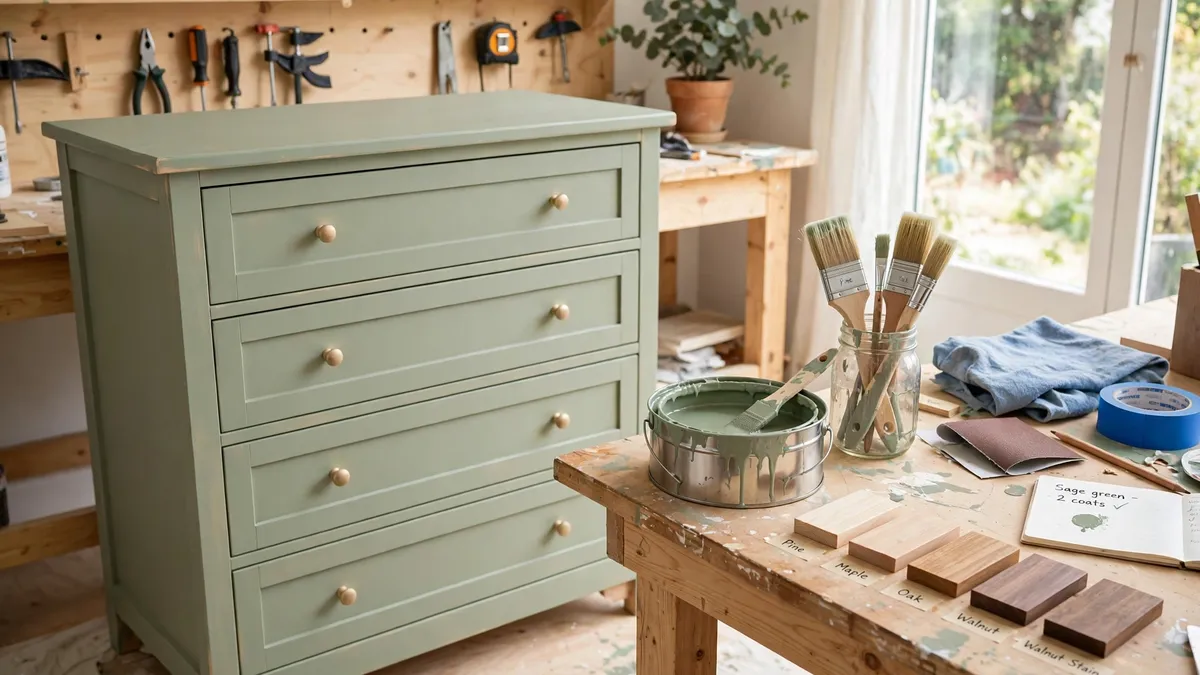
Paint can hide a tired finish in a single weekend. Still, paint cannot hide the wrong wood. The grain, the knots, and the pores sit under every coat, so they shape the final result more than the colour does.
Here is the quick verdict first. Poplar is the best all-rounder for most painted pieces because its grain is fine and even. Soft maple paints even smoother, but it costs more. MDF gives the flattest surface of all, yet it hates water. Pine stays the budget favourite, however it needs the most careful priming.
This guide compares seven options side by side. It covers the best wood for painting furniture across dressers, chairs, tables, and cabinets. It also explains prep, primer, and paint pairings in plain steps. So even furniture painting for beginners feels manageable from the first board to the final coat.
Quick picks at a glance
Start here if you need an answer fast. For a solid wood dresser or chair, choose poplar. A hard-wearing table or cabinet door calls for soft maple instead. And for flat cabinet doors and panels, choose MDF or birch plywood instead.
Then match the wood to the room. A bathroom vanity needs moisture sense, so sealed solid wood or plywood wins there. A nursery dresser needs low cost and easy touch-ups, so pine or poplar fits better. In fact, the room often decides before the budget does.
| Wood | Grain under paint | Durability | Ease of painting | Cost level | Best for |
|---|---|---|---|---|---|
| Poplar | Low, fine and even | Good | Easy | Moderate | Dressers, chairs, frames |
| Soft maple | Very low, tight grain | Excellent | Easy to moderate | Higher | Tables, cabinet doors, busy homes |
| Pine | Moderate, knots may show | Fair, dents easily | Moderate, needs sealing | Low | Budget and rustic pieces |
| Birch plywood | Low on the face veneer | Good | Easy | Moderate | Cabinet boxes, shelves, wide panels |
| MDF | None, no natural grain | Fair, swells when wet | Very easy on faces, edges need care | Low | Flat doors, panels, built-ins |
| Rubberwood | Low to moderate | Good | Moderate | Low to moderate | Ready-made chairs and tables |
| Oak | High, open pores show through | Excellent | Hard without grain filler | Moderate to higher | Better stained than painted |
The table tells a simple story. Tight grain paints smoothly, and open grain fights back. So a cheap board that needs three extra steps may not stay cheap for long.
Why do grain and pores decide the finish?
Paint sits on top of wood, but it also sinks into it. Woods with small, even pores drink primer evenly. Then the surface seals fast and feels flat. Painters call these diffuse-porous woods, and poplar, maple, and birch all belong in that group.
Oak behaves very differently. Its large pores sit in clear rings, so primer pools in some spots and skips others. The texture then telegraphs through thin topcoats. You can still paint oak well, but you must fill those pores first.
Knots cause a second problem. Pine knots hold resin and tannins, and both can bleed through pale paint as yellow stains. Shellac-based primer blocks that bleed because it seals the knot like a varnish. Regular water-based primer often cannot, so the stain returns weeks later.
Hardness plays a smaller role than most people expect. A hard wood can still paint poorly if its grain is open. A softer wood can paint beautifully if its grain is tight. So judge a board by its surface first, and by its strength second.
Poplar, the reliable all-rounder
Most cabinet shops reach for poplar first, and for good reason. Poplar for painted furniture is almost a default choice now. The grain is straight, fine, and mostly knot-free. It also cuts and sands without much fuss.
The colour underneath varies from pale cream to greenish streaks. That patchwork looks messy under stain, but paint erases it completely. In fact, poplar is a poor staining wood and a great painting wood for the same reason. Its surface simply wants a solid colour.
Poplar is softer than maple or oak, so edges can dent in a busy hallway. Still, it resists warping well and holds screws firmly. For drawers, bed frames, and bookcases, that balance works nicely. Prime it with a shellac-based or quality bonding primer, then paint with confidence.
Pine, cheap and cheerful with a catch?
Pine is everywhere, and it is usually the lowest-cost solid option. Painting pine furniture is a classic first project because the boards feel friendly. They are light, easy to cut, and easy to sand by hand.
However, pine asks for respect at the priming stage. Knots can bleed resin through white and cream paints for months. First, spot-prime every knot with a shellac-based primer. Then prime the whole piece. Skip that step, and brown rings may appear later.
Pine is also soft, so it dents under dropped toys and chair legs. Many people accept those marks as part of a relaxed, rustic look. If you want a flawless showroom finish, though, poplar or maple will forgive you less work. Choose clear pine with few knots when you can, because fewer knots mean fewer surprises.
Maple, the smooth premium pick
Maple has a tight, closed grain that painters love. Soft maple is the paint-grade favourite because it costs less than hard maple. It still feels dense and sturdy in the hand. Hard maple paints smoothly too, but paying its premium only to cover it feels wasteful.
Painting maple furniture rewards anyone who hates visible texture. The surface levels out cleanly, so a smooth paint finish on wood is easier to reach here. Brush marks fade faster, and edges stay crisp after sanding. Dining chairs and kitchen tables benefit most, because they take daily knocks.
Maple can be dense enough to resist primer on very smooth boards. So scuff-sand before priming to give the primer something to grip. Then use thin coats and let each coat dry fully. The result is a hard, calm surface that suits both modern and classic rooms.
That durability matters for statement living-room pieces too. A painted frame beside a quality unit like a Michael Amini entertainment centre needs to survive remotes, keys, and daily dusting without chipping at the corners.
Birch plywood, the panel problem solver?
Solid boards come in narrow widths, but furniture often needs wide panels. Birch plywood solves that problem neatly. Its face veneer is smooth and pale, so birch plywood for painted furniture gives wide, stable surfaces without glue-ups. It also resists warping better than many solid boards.
Many builders rate it as the best plywood for painted cabinets. The cabinet box stays light, strong, and flat. Doors can then use MDF or solid wood for a different feel. That mixed approach is common in good kitchens, because each material does the job it does best.
The edges need a plan, though. Raw plywood edges show layered stripes under paint. So cover them with edge banding or a thin solid wood strip first. Then sand, prime, and paint as normal.
Painted plywood also suits media furniture. A build inspired by a modern floating entertainment centre uses flat panels that must stay straight on the wall, and plywood delivers exactly that stability.
MDF, the flattest surface you can buy?
MDF has no grain at all because it is made from pressed wood fibres. That fact makes it the smoothest canvas in this guide. Cabinet doors, wardrobe panels, and built-in cupboards often use it for that reason. Paint levels on MDF like paint on glass.
Still, MDF has two real weaknesses. First, it is heavy for its size, so large pieces feel awkward to move. Second, it swells when water reaches raw edges or screw holes. A chipped bathroom panel can puff up fast, and sanding cannot truly fix swollen fibres.
The faces paint easily, but the edges drink primer. Raw MDF edges feel fuzzy after the first coat because the fibres raise. So seal edges with primer, let them dry, and sand them smooth. Then repeat once more before painting. That extra pass is the difference between a crisp edge and a rough one. For dry rooms, MDF remains a smart and tidy choice.
Rubberwood, the underrated ready-made option?
Many flat-pack chairs, stools, and small tables are already made from rubberwood. It comes from rubber trees after their latex years end, so it is a resourceful material. The grain is fairly straight and the colour is pale and even.
Rubberwood furniture paint projects usually start with an existing finish, not raw wood. So the key step is scuff-sanding and a bonding primer. The wood itself is medium-hard and holds up well in daily use. It resists dents better than pine, though it paints a touch less smoothly than poplar.
Because rubberwood pieces are common in rental homes and first flats, they make great practice projects. Clean the piece well, because factory finishes can repel paint. Then prime and test one hidden area first. If the primer grips, the rest of the piece will follow happily.
Oak, strong but stubborn under paint?
Oak is an excellent furniture wood, but paint is not its natural partner. Its open pores print through ordinary paint coats as a visible texture. Some people like that grainy look on farmhouse pieces. Others want a flat finish and feel frustrated fast.
If you love the piece and the colour must change, use a grain filler for oak before priming. Work the filler across the grain, let it cure fully, and sand it back flat. Then prime and paint in thin coats. The pores fade greatly, though a hint of character may remain.
Think twice before painting good oak, though. Quality oak is also beautiful under stain or clear finish. Painting it is hard to reverse, because paint settles deep into those pores. So paint damaged or dated oak freely, but pause before covering a fine, clean grain.
Woods to avoid for painted furniture
Some woods waste your time and paint. Very resinous pine boards weep sap around knots, even under primer. Reclaimed wood with oil or wax soaked deep inside can reject paint in patches. Soft balsa-like project woods dent if you look at them firmly.
- Open-grain oak and ash without filler, because the texture keeps showing through.
- Very knotty construction pine, because every knot is a future bleed risk.
- Unsealed MDF near sinks or floors, because swelling ruins the finish.
- Oily exotic woods, because paint adhesion can be poor and sanding dust needs care.
- Green or damp wood, because paint traps moisture and peels later.
Start with a forgiving wood first. Then tackle the stubborn species later, once your prep skills are solid.
How do you prep each wood for paint?
Good prep looks boring, but it decides everything. The steps stay similar across species, yet each wood adds one special task. Work through the basics first, then add the species-specific step from the notes below.
- Clean the piece with a degreasing cleaner, because wax and kitchen grease block paint.
- Fill dents and gaps with paintable wood filler, then let it cure fully.
- Sand with medium grit, then fine grit, and always follow the grain direction.
- Wipe away dust with a tack cloth or a slightly damp cloth.
- Prime with the right primer for the wood, then sand lightly once dry.
- Paint in two or three thin coats, and let each coat dry properly.
For pine, spot-seal knots with shellac-based primer before the full prime coat. For poplar, a shellac-based or bonding primer stops faint grain telegraphing on wide panels. Choosing the right primer for painted furniture matters more than adding an extra topcoat later.
For MDF, seal the edges twice as described above. Birch plywood needs its edges banded or stripped before priming. Maple boards should be scuff-sanded smooth so primer grips. For oak, fill the grain first.
Planning a whole-room refresh around the painting? Then it helps to map the bigger jobs first, using a 360 home services overview to see what to do yourself and what to hand over.
MDF vs solid wood for paint: which should you choose?
The MDF vs solid wood for paint debate comes down to place and use. MDF wins for flat doors, panels, and built-ins in dry rooms. Its surface is flawless and its price is friendly. It also stays stable, so wide doors rarely twist.
Solid wood wins where edges take knocks or screws hold hinges. Chair legs, table frames, and drawer boxes all prefer solid stock. Poplar and maple repair easily too, because you can sand and repaint a dent. Swollen MDF, in contrast, rarely returns to its first shape.
Many smart projects mix both materials. Use solid wood for the frame and MDF for the panels. Then you get strength where hands pull and smoothness where eyes look. That hybrid thinking is exactly how many manufactured units are built, as the guide to land and manufactured home packages shows for whole homes.
For larger built-in work, some owners compare quotes before lifting a saw. A premium home solutions guide can help you judge when a pro build beats a weekend project on cost and finish.
Which paint types pair well with each wood?
Water-based acrylic and acrylic-enamel paints suit most painted furniture today. They level nicely, dry fast, and clean up with water. They also resist yellowing better than old oil-based paints. For busy family pieces, an enamel-style finish adds welcome hardness.
Chalk-style paint has a soft, matte look that suits vintage shapes. Chalk paint on pine is a favourite pairing because the relaxed finish forgives small dents and brush marks. Still, chalk paint needs a wax or clear topcoat on tabletops. Without protection, water rings and scuffs mark it quickly.
Milk paint gives an even softer, older feel on raw pine and poplar. It can chip in a charming way over a bonding layer. However, it looks patchy on factory-finished rubberwood unless you prime first. So match the paint to the starting surface, not just to the photo you liked.
Whatever paint you choose, thin coats beat thick coats every time. A thick coat sags, drips, and shows brush lines. Two patient coats look smoother than one rushed coat. Then a clear protective topcoat on high-use tops adds a final layer of defence.
Sellers use fresh paint with intent, too. Bright, tidy pieces help a home feel cared for, as listings like Popponesset real estate opportunities show.
Mistakes beginners make most often?
Most failed paint jobs fail before the colour goes on. Skipping primer is the classic error, because raw wood drinks paint unevenly. The finish then looks blotchy and needs extra coats. Primer is cheaper than paint, so use it generously.
Rushing the drying time causes the second failure. A coat that feels dry can still be soft underneath. Sanding too soon tears the surface, and recoating too soon traps solvents. So read the tin, wait the full time, and then continue. Patience is a real tool in this craft.
Skipping sanding between coats leaves nibs and dust bumps sealed in place. A light pass with fine paper keeps each layer smooth. Also, painting in dusty or humid air invites texture problems. If other dusty home jobs are planned, such as booking from a list of air conditioning repair services, finish those first and let the room settle.
Finally, many beginners choose the wood last and regret it first. A stubborn species turns a fun weekend into a long repair. Pick an easy wood, follow the prep, and your first success will fund your confidence for harder projects.
Frequently asked questions
What is the best wood for painted furniture?
Poplar is the best all-round answer for most homes. Its grain is fine, its price is fair, and it resists warping. Soft maple beats it for hardness, and MDF beats it for flatness. So pick poplar first, then adjust for wear or budget.
Does oak paint well?
Oak paints well only with extra work. Its open pores show through normal coats, so fill the grain first. Then prime and use thin topcoats. Without filler, expect a textured finish. Many painters therefore save oak for stain instead.
Do you need a primer for painted furniture?
Yes, in almost every case you do. Primer seals the wood, blocks stains, and helps paint grip. Shellac-based primer handles knots and tannin bleed best. A bonding primer suits glossy factory finishes. Skipping primer usually costs more paint later.
Can you use chalk paint on pine without sanding?
You can on clean, sound pine, because chalk paint grips well. Still, a light scuff improves the bond. Knots still need sealing, or they may bleed through. A protective topcoat is also wise on tops and seats.
Is MDF strong enough for everyday furniture?
MDF is strong enough for doors, panels, and shelves in dry rooms. It is weaker at edges and screw points than solid wood. It also swells when water soaks in. So use solid wood for legs, frames, and wet areas.
How do you get a smooth paint finish on wood?
Start with tight-grain wood and careful sanding. Then prime, sand lightly, and paint thin coats. Let each coat dry fully before the next one. A good brush or sprayer helps too. Smooth results come from layers, not luck.
Choose the wood with clear eyes, prep it with patience, and paint it in thin coats. Then almost any solid colour can look calm, clean, and built to last.