
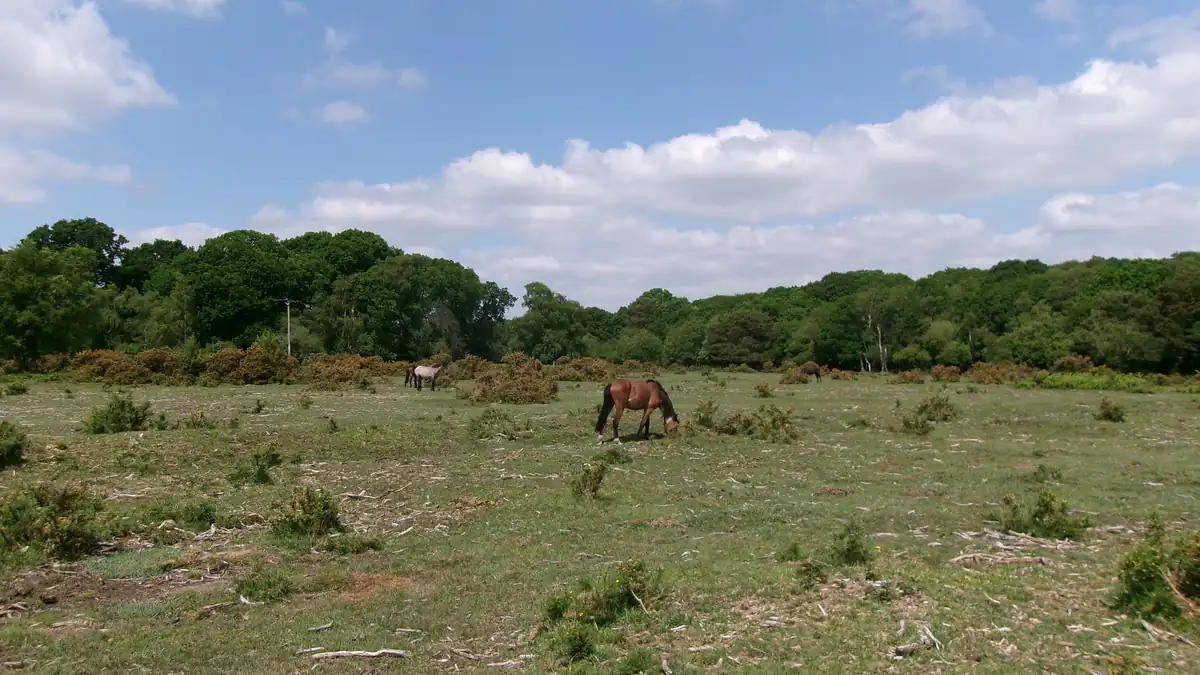
First, picture a pony blocking a quiet lane. Then, picture ancient oaks, open heath, and villages with cream teas. In fact, that mix defines the best places to visit in New Forest. This is not a tidy park with one entrance. Instead, the New Forest National Park spreads across Hampshire in a loose, lived-in patchwork.
So, plan by experience rather than by checklist. For example, start with the New Forest ponies on open ground. Next, walk under tall trees in cool shade. Later, end the day beside the sea at Lymington. Overall, that rhythm gives you the Forest at its best.
Why do the New Forest ponies steal every visit?
First, the ponies roam freely across heath and woodland. Indeed, commoners own them, yet nobody pens them in. Cattle, donkeys, and deer share the ground too. Consequently, animals often appear beside roads, car parks, and village greens. A normal walk suddenly feels quietly wild.
Spring brings the sweetest sight of all. For instance, newborn foals stay close beside their mothers in May. Visitors watch them wobble, feed, and nap in the sun. Meanwhile, older ponies graze calmly and ignore everyone completely. Still, that calm mood can mislead first-time visitors.
How should you behave around free-roaming ponies?
First, never feed the ponies, however gentle they look. Human food harms them, so keep snacks firmly packed away. Next, never touch them, stroke them, or crowd them for photos. Foals need space, and mothers protect them fiercely. Therefore, watch from a respectful distance every time.
Driving needs the same careful mindset too. Because ponies wander onto roads, drivers must slow right down. In fact, animals have right of way here in practice. So, pass wide, stay patient, and expect sudden stops. Once you accept their pace, the whole place relaxes.
Where does the ancient woodland feel most magical?
First, head for the tall, shaded inclosures near Brockenhurst. Towering oaks and beeches have stood here for centuries. Moss covers fallen trunks, and birdsong fills the gaps. Consequently, even a short stroll feels deep and old. Few places to visit in Hampshire offer this atmosphere.
Then, try the famous Ornamental Drives for contrast. Rhinefield Drive mixes native woodland with planted giants. Meanwhile, Bolderwood Drive offers picnic lawns and deer nearby. Both drives suit drivers, walkers, and cyclists equally well. Indeed, you can enjoy them without a long hike.
What makes the Tall Trees Trail so special?
First, the Tall Trees Trail starts near Blackwater car park. Giant redwoods and Douglas firs rise above the path. Some trees here rank among Britain’s tallest conifers. So, the scale surprises almost every first-time walker. Children, in particular, love craning their necks upwards.
Next, the trail stays short, flat, and clearly waymarked. Therefore, beginners and grandparents can manage it comfortably. Benches invite slow pauses beneath the canopy. In fact, the full loop fits an unhurried hour easily. Later, longer paths branch deeper into Rhinefield woodland.
Why should you stop at the Rufus Stone?
First, a simple stone marks a famous royal mystery. Tradition says William Rufus died here in 1100. An arrow struck him during a hunting ride, apparently. Historians still debate accident, murder, and simple folklore. Consequently, the quiet clearing feels strangely charged and thoughtful.
Still, the stop itself takes only minutes. So, pair it with a longer woodland walk nearby. Ponies often graze around the surrounding lawns too. For example, nearby Canterton Glen adds shade and streams. Overall, the stone rewards curious visitors, not rushed ones.
Which New Forest villages deserve your time first?
First, understand that New Forest villages differ hugely. Some feel busy, handy, and full of cafes. Others feel sleepy, small, and wonderfully odd. Indeed, visiting two or three shows the range best. This section ranks them by mood, not size.
Public transport also shapes your choice here. For instance, Brockenhurst has the main railway station. Buses link key villages, though services run infrequently. Therefore, drivers will find hopping between villages far easier. Still, walkers can happily base themselves in one place.
Why do most trips start in Lyndhurst?
First, Lyndhurst calls itself the unofficial capital of the Forest. Its high street holds cafes, pubs, and independent shops. The New Forest Heritage Centre explains commoning life clearly. Consequently, first-time visitors gain useful context very quickly. Allow an hour there before exploring further afield.
Next, visit St Michael and All Angels church above the village. Its tall spire dominates views for miles around. Inside the churchyard, Alice Liddell rests in her family grave. In fact, she inspired Alice’s Adventures in Wonderland as a child. Literature fans therefore make a quiet pilgrimage here.
Later, climb nearby Bolton’s Bench for open views. A huge yew tree crowns this grassy hill. Ponies graze below, and the village spreads beneath you. So, the bench suits picnics and sunset pauses perfectly. Honestly, Lyndhurst traffic can crawl, so arrive early.
What makes Brockenhurst such an easy base?
First, Brockenhurst blends village charm with real practicality. Trains from London and Southampton arrive here directly. Bike hire shops sit close to the station too. Consequently, car-free visitors start their walks within minutes. Few New Forest villages make arrival this simple.
Then, explore the village green and Waters Green ford. Ponies and donkeys wander through the centre freely. Children splash in the shallow river on warm days. Meanwhile, pubs and bakeries line the nearby streets. In fact, Brockenhurst works brilliantly for New Forest with kids.
Later, walk straight from the village into woodland. Waymarked paths cross heath, streams, and shaded inclosures. So, you need no car for a full day out. Cyclists also rate Brockenhurst as their favourite hub. Overall, convenience and charm rarely combine this well. If you enjoy village-based exploring, our guide to places to visit near Stratford-on-Avon offers a similar gentle pace.
Why does Burley feel delightfully different?
First, Burley leans proudly into witchcraft folklore. A famous local witch, Sybil Leek, lived here once. Shops now sell crystals, fudge, and quirky gifts. Consequently, Burley feels playful rather than spooky today. Visitors either grin or raise an eyebrow throughout.
Next, look beyond the theme shops for real charm. Thatched cottages cluster around the village centre. Ponies wander past pubs and tea rooms daily. Meanwhile, cycle hire and wagon rides start here too. So, Burley suits a half day, not a flying stop.
How do Beaulieu and Buckler’s Hard make a full day out?
First, treat Beaulieu as a paid day out. One ticket-style visit covers several major attractions together. Grounds, gardens, and the abbey ruins fill the estate. Consequently, families can spend a whole day here easily. Budget a full day, plus food money, therefore.
What will you find at the Beaulieu National Motor Museum?
First, the Beaulieu National Motor Museum celebrates motoring history brilliantly. Hundreds of vehicles span early cars to record breakers. Racing cars, film cars, and quirky prototypes fill the halls. In fact, even non-drivers enjoy the storytelling here. Interactive displays keep children engaged between the exhibits.
Next, walk across to Palace House nearby. The Montagu family home mixes Victorian style with older roots. Costumed details and family stories bring rooms alive. Then, explore the peaceful abbey ruins and exhibition. Monks founded the abbey over 800 years ago. Overall, history layers stack up beautifully at Beaulieu, much like the sites in our guide to the best historical places to visit in the UK.
Why should you walk down to Buckler’s Hard?
First, Buckler’s Hard feels like a village frozen mid-story. Two rows of cottages face a wide grassy street. Shipbuilders built warships for Nelson’s fleet here once. Consequently, the riverside setting carries real naval history. A small museum explains the shipbuilding years clearly.
Later, stroll beside the Beaulieu River and breathe deeply. Boats bob quietly, and woodland frames the water. Seasonal river cruises sometimes run from the jetty. So, time your visit for a calm, bright day. Meanwhile, the walk back to Beaulieu village rewards walkers.
Which wildlife stops work best for families?
First, Bolderwood deer sanctuary deserves a top spot. A viewing platform overlooks a wide, open meadow. Fallow deer gather there, especially around feeding times. Consequently, patient visitors often enjoy clear, close views. Arrive quietly, because deer startle very easily indeed.
Next, Bolderwood also offers three waymarked walking trails. Short loops suit toddlers and picnic plans perfectly. Longer loops dive deeper into ancient beech woodland. In fact, autumn colour here looks absolutely spectacular. So, photographers should visit in late October especially.
What happens at the New Forest Wildlife Park?
First, the New Forest Wildlife Park houses native and past wildlife. Otters, wolves, lynx, and deer live in woodland enclosures. Keeper talks explain each species in plain, friendly language. Consequently, children learn while they wander between enclosures. Play areas also help younger visitors burn energy.
Still, this is another paid attraction, so plan accordingly. Allow half a day rather than one rushed hour. Meanwhile, Exbury Gardens offers a gentler paid alternative nearby. Indeed, families often split these across two days. Our wider round-up of places to visit in the UK for families helps you compare similar days out.
Why do garden lovers rate Exbury Gardens so highly?
First, Exbury Gardens bursts with colour in spring. Rhododendrons and azaleas line the woodland paths spectacularly. The Rothschild family created these gardens a century ago. Consequently, rare and champion trees grow throughout the grounds. A miniature steam railway delights younger visitors too.
Later in the year, autumn brings a second show. Maples and other trees turn red, gold, and orange. Quiet ponds reflect the colour beautifully on still days. So, Exbury rewards repeat visits across the seasons. In fact, keen gardeners often call it their highlight.
Which New Forest walks suit every ability?
First, good news: New Forest walks rarely involve steep climbs. Most paths cross gentle heath, lawns, and woodland floors. Waymarked trails start from many car parks directly. Consequently, beginners can build confidence very quickly here. Seasoned hikers, meanwhile, can link routes into long days.
- First, try the Tall Trees Trail for giant redwoods and easy ground.
- Next, choose the Bolderwood deer trail for wildlife and short loops.
- Then, walk the Rhinefield trails for shade, streams, and picnic spots.
- Later, cross open heath at Wilverley for ponies and wide skies.
- Finally, follow the coast path near Lymington for birds and sea air.
Honest advice matters before you set off. For example, paths can turn muddy after heavy rain. Heathland routes offer little shade on hot days. Therefore, pack water, sun protection, and sensible footwear always. Mobile signal also fades in deeper woodland areas. If you love northern scenery too, compare these routes with the best places to visit in North Yorkshire next.
Why is New Forest cycling so popular?
First, New Forest cycling follows waymarked gravel tracks. Riders must stick to these marked routes, not roam freely. That rule protects fragile heath and woodland habitats. Consequently, cycling here feels safe, calm, and largely traffic-free. Over 100 miles of tracks link villages and beauty spots.
Next, hire shops in Brockenhurst and Burley simplify everything. Staff fit bikes, supply maps, and suggest family routes. Children manage shorter forest loops without much trouble. Meanwhile, keen riders tackle longer circuits between villages. So, cycling often beats driving on busy summer days. Indeed, things to do in New Forest rarely feel healthier.
Where does the Forest meet the sea?
First, many visitors forget the Forest has a coastline. Salt marsh, shingle, and sea views line its southern edge. Lymington anchors this coast with colour and character. Consequently, a forest trip can end with fish and chips. That contrast refreshes a walking-heavy itinerary beautifully.
What should you do in Lymington first?
First, wander down to the busy working quay. Yachts and fishing boats crowd the sheltered harbour. Cobbles, old pubs, and seafood smells fill the air. Next, browse the famous Saturday Lymington market on the high street. Stalls sell local food, crafts, plants, and antiques there.
Later, try the historic sea-water baths in summer. Swimmers have used this open-air lido since Victorian times. Families also enjoy its inflatable obstacle course on the water. Meanwhile, marshland walks start right beside the town. Birdwatchers, in particular, love the Lymington-Keyhaven nature reserve. For a different coastal mood, see the best places to visit in East Devon afterwards.
Why walk from Milford on Sea to Hurst Castle?
First, Milford on Sea offers classic seaside simplicity. Colourful beach huts line its shingle shore neatly. Views stretch across to the Isle of Wight clearly. Cafes serve walkers, swimmers, and ice-cream hunters alike. So, the village suits a relaxed coastal afternoon perfectly.
Then, walk the long shingle spit towards Hurst Castle. Henry VIII built this fortress to guard the Solent. The walk feels exposed, wild, and strangely thrilling. Alternatively, a small ferry runs from Keyhaven in season. Finally, check castle opening before you set out. Wind and tides shape this trip, so plan carefully. Families exploring other regions may also enjoy our guide to places to visit in Manchester for families for a city contrast.
When is the best time to visit New Forest?
First, spring wins for foals, bluebells, and fresh green leaves. Woodland floors glow, and villages feel calm before summer. Next, summer brings long days, outdoor swimming, and busy car parks. Arrive early then, because popular spots fill by midday. Still, evening light on the heath looks magical.
Autumn, however, delivers the Forest’s most famous season. Pannage season releases pigs to eat fallen acorns safely. Acorns poison ponies in quantity, so pigs protect them. Meanwhile, fungi sprout across damp woodland floors everywhere. Deer rut, leaves turn gold, and photographers arrive happily. Overall, the best time to visit New Forest depends on your priorities.
Winter suits walkers who prefer empty paths. Bare trees reveal views that summer foliage hides. Pubs with fires welcome muddy boots warmly then. Consequently, a short winter break feels cosy, not bleak. Just pack waterproofs, because low ground floods sometimes. Broader inspiration sits in our list of the 15 places to visit in the world.
Where should you eat, drink, and pause?
First, cream teas anchor almost every village itinerary. Tea rooms in Lyndhurst, Brockenhurst, and Burley compete cheerfully. Warm scones, jam, and clotted cream restore tired walkers. Next, village pubs pour local ales beside open fires. Many pubs welcome dogs and muddy boots warmly.
Farm shops add another tasty layer too. For example, local pork, honey, and ice cream fill their shelves. Pannage pork earns special praise in autumn months. Meanwhile, Lymington adds seafood restaurants along its quay. So, nobody needs to rely on packed lunches alone. In fact, food becomes a highlight, not an afterthought.
How should you plan getting around honestly?
First, accept that the Forest spreads wider than maps suggest. Driving between villages takes longer than expected usually. Narrow lanes, ponies, and cyclists slow every journey. Consequently, cluster nearby stops into one day each. Rushing across the whole Forest wastes precious time.
Next, think carefully about parking before you travel. Forestry car parks dot the area, and charges vary seasonally. Popular car parks fill fast on sunny weekends. Therefore, start walks early or choose quieter trailheads. Cyclists and train users skip this stress entirely. Brockenhurst station, in particular, makes a car-free trip realistic.
- First, base yourself in Brockenhurst or Lyndhurst for simplicity.
- Next, spend day one on ponies, villages, and woodland walks.
- Then, give Beaulieu and Buckler’s Hard a full second day.
- Later, finish with Lymington, Milford on Sea, and Hurst Castle.
- Finally, leave one loose half day for weather and discoveries.
Frequently asked questions
Can you touch or feed the New Forest ponies?
No, you must never feed or touch them. First, human food can seriously harm their health. Next, feeding encourages ponies to crowd roads and car parks. So, admire them, photograph them, and keep your distance. That simple rule protects ponies and visitors alike.
How many days do you need in the New Forest?
Two days cover the highlights without exhausting anyone. First, spend one day on villages and woodland walks. Then, spend another day at Beaulieu or the coast. Finally, add a third day for cycling or gardens. A longer stay simply deepens the pleasure here.
Is the New Forest good for children?
Yes, the Forest suits children exceptionally well. Ponies, deer, and short walks hold their attention naturally. Wildlife parks and steam railways add structured fun too. Consequently, New Forest with kids feels active, safe, and varied. Just keep children close around free-roaming animals always.
Do you need a car to visit the New Forest?
No, a car helps, but trains work surprisingly well. First, travel to Brockenhurst by train from major stations. Then, hire a bike or walk straight into woodland. Buses and taxis cover longer hops between villages. So, car-free visitors can still enjoy a full trip.
What should you pack for a New Forest walk?
Pack waterproof shoes, layers, water, and a simple map. First, weather changes quickly across open heathland. Next, mud appears even after short rain showers. Sun protection matters too, because heath offers little shade. Finally, carry snacks, since cafes cluster in villages only.
Overall, the best places to visit in New Forest reward slow, curious travellers. First, let the ponies set the pace on the lanes. Then, wander from ancient oaks to a shingle shore. In fact, few English landscapes mix wildness and welcome so well. So, pick your villages, lace your boots, and begin.



