
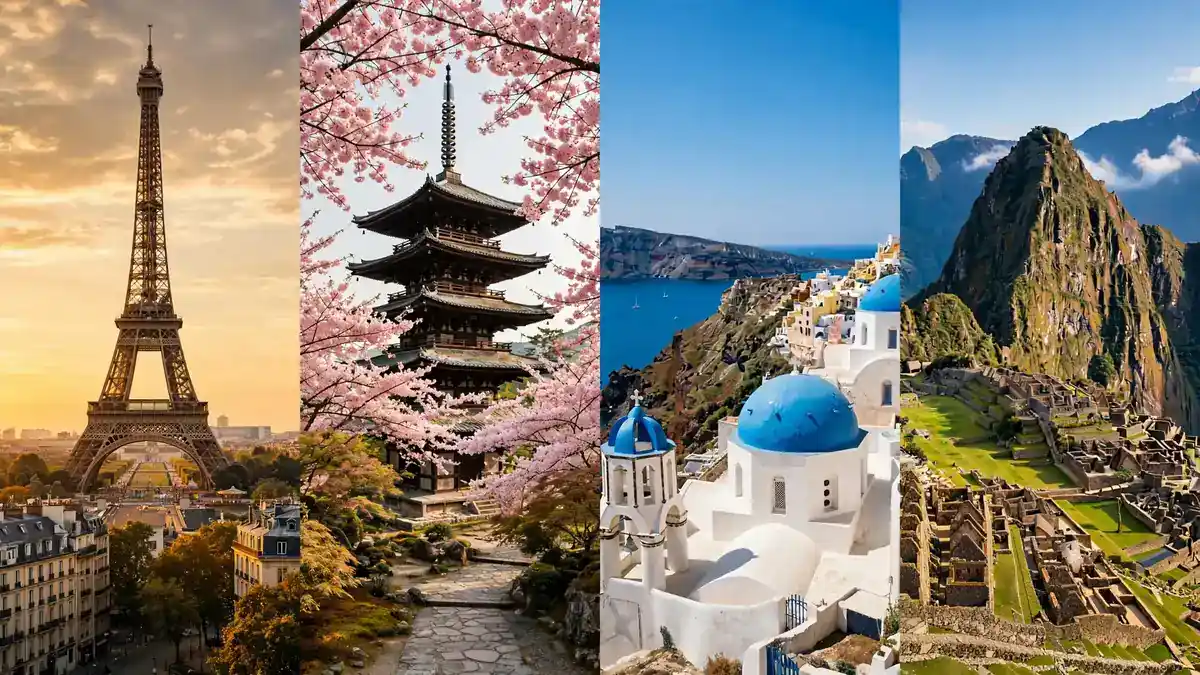
Some places look good in photos, and then they feel even better in person. Paris at dawn, Kyoto under cherry blossom, and Machu Picchu above the clouds all belong in that rare group. This guide covers 15 places to visit in the world that keep earning their reputation, year after year.
In fact, these are not just the most visited places in the world by arrival numbers alone. They mix famous landmarks to visit, deep history, wild nature, and food you will remember for years. So the list works whether you want romance, adventure, culture, or one slow and beautiful escape.
Below you will find the best places to visit in the world for different travel styles and budgets. Each entry explains what makes the place special, when to go, and one practical tip that actually helps. Therefore, you can shortlist faster and plan with far less guesswork.
How Do You Choose Between So Many Places to Visit in the World?
Start with the feeling you want, not the famous name. Do you want busy streets and museums, or quiet mornings and mountain air? For example, Rome rewards history lovers, while Banff suits travellers who recharge outdoors. Because the mood matters, the same trip can feel perfect for one person and tiring for another.
Next, match the destination to your season and your budget. Some top tourist destinations in the world shine in spring, yet they feel crowded and pricey in summer. Meanwhile, shoulder season often gives you better light, shorter queues, and lower hotel rates. In addition, a cheaper flight month can free money for tours, food, and a nicer stay.
Then think about pace, especially if this is one of your once in a lifetime trips. First-time visitors often try to fit five countries into ten days, and then they remember airports more than places. However, two or three bases with day trips usually create a richer trip. If Asia is on your list, for example, you might pair Japan with a slower stop after reading about where is the best place to visit in Vietnam.
In short, pick one anchor place, one nearby contrast, and one rest day with no fixed plan. That simple mix keeps the trip human. Still, leave a little room for surprise, because the best travel stories rarely follow the spreadsheet.
1. Paris, France
Paris earns its place on almost every list of world bucket list destinations, and rightly so. The Eiffel Tower, Notre-Dame, and Montmartre are famous for a reason, yet the smaller moments often stay with you longer. For example, warm bread from a corner bakery at 8 a.m. can beat any ticketed attraction.
The best months are April to June and September to October, when the weather is mild and the crowds thin slightly. Meanwhile, early mornings are your friend at major sights, so book the first entry slot you can get. Tip: buy a Navigo Easy card or use contactless payment on the Metro, because single paper tickets waste time and money.
2. Kyoto, Japan
Kyoto feels calm in a way few big-name cities can match. Bamboo groves in Arashiyama, golden pavilions, and quiet temple lanes give it a slow, deliberate beauty. In fact, many travellers call it one of the most beautiful places in the world during cherry blossom season.
The best time to visit Kyoto is late March to April for blossom, or November for deep red maple leaves. However, those peak weeks book out fast, so reserve hotels at least three months ahead. For a deeper route through its shrines and districts, see our guide to the top 15 places to visit in Kyoto. Tip: start at Fushimi Inari before 7 a.m., then the famous torii gates feel almost private.
3. Santorini, Greece
White houses, blue domes, and a flooded volcanic caldera make Santorini instantly recognisable. Yet the island is more than a sunset photo from Oia. It also has black-sand beaches, cliff paths, and small villages where life moves at a gentler pace.
The best time to visit Santorini is May, June, or late September, when the sea is warm and the lanes are calmer. As a result, you get the views without the peak-season squeeze. If you are island-hopping, compare it with other stops in our guide to the best places in Greece to visit. Tip: walk the Fira to Oia trail in the morning, then reward yourself with a long lunch in Imerovigli.
4. Rome, Italy
Rome is an open-air museum, but it never feels stiff or distant. The Colosseum and the Vatican draw huge crowds, however neighbourhoods like Trastevere show the city’s warm, everyday side. Similarly, a simple plate of cacio e pepe in the right trattoria can become a trip highlight.
Visit from April to June or September to October for pleasant walking weather. Book Colosseum and Vatican tickets online well ahead, because walk-up lines can swallow half a day. To plan beyond the capital, read our notes on what places you should visit in Italy. Tip: carry a refillable bottle, since Rome’s public fountains pour clean, cold drinking water across the city.
5. Zermatt and the Swiss Alps, Switzerland
Few views stop people mid-sentence like the Matterhorn above Zermatt. This car-free village pairs crisp alpine air with some of Europe’s finest rail journeys and ski slopes. After all, Switzerland does mountain travel with a precision that is hard to match anywhere else.
Come in December to March for skiing, or June to September for hiking under clear skies. The Gornergrat railway is worth the splurge on a bright morning, so check the summit webcam before you buy tickets. For wider route ideas, see which is the best place to visit in Switzerland. Tip: stay two nights minimum, because one cloudy day should not decide your whole Matterhorn memory.
6. Machu Picchu, Peru
High in the Andes, this 15th-century Inca citadel still feels mysterious and deeply moving. Stone terraces cling to green ridges, and clouds drift through the ruins like slow theatre. It is, without question, one of the top places to visit before you die for history lovers.
The best time to visit Machu Picchu is April to October, the drier season in the Sacred Valley. Therefore, book entry tickets and the train from Cusco or Ollantaytambo weeks in advance. In addition, spend a night in Aguas Calientes so you can enter early and rested. Tip: acclimatise in Cusco or the Sacred Valley for two days first, because the altitude surprises even fit travellers.
7. Petra, Jordan
Walking through the narrow Siq and then seeing the Treasury glow rose-red is pure travel theatre. Petra is far larger than that one facade, however, with royal tombs, a monastery, and desert viewpoints spread across the site. So give it a full day, not a rushed two-hour stop.
March to May and September to November bring the most comfortable temperatures for walking. Start at opening time, then the main trail is quiet and the light is soft for photos. Tip: the hike up to the Monastery has around 850 steps, yet the scale at the top makes every step worthwhile. Carry cash for tea stops along the trail.
8. The Great Wall, China
Stretching thousands of miles across northern China, the Great Wall is human ambition on a landscape scale. Some sections feel grand and restored, while others sit wild and crumbling on empty ridges. That contrast, in fact, is part of its power.
Spring and autumn offer the clearest views and the kindest hiking weather. Mutianyu suits most visitors because it balances scenery, access, and fewer crowds than Badaling. Meanwhile, keen hikers should look at Jinshanling for a quieter, more rugged walk. Tip: take the cable car up and the toboggan down at Mutianyu, then you save energy for the wall itself.
9. Banff and Lake Louise, Canada
Turquoise lakes, jagged peaks, and pine forests give Banff a postcard look that is somehow real. Lake Louise and Moraine Lake glow an unreal blue on sunny mornings, and elk sometimes wander right through town. For nature-first travellers, this is one of the must visit places in the world.
June to September is best for hiking and lake access, while winter turns the area into a ski and snowshoe base. Because Moraine Lake road is closed to private cars, book the Parks Canada shuttle early. If your trip extends south, pair it with ideas from the best places to visit in North America. Tip: visit Lake Louise at sunrise, then hike to the Lake Agnes Tea House before crowds build.
10. Bali, Indonesia
Bali blends jungle temples, surf beaches, rice terraces, and a warmth that goes beyond the weather. Ubud suits slow days and yoga mornings, while Uluwatu brings cliff temples and serious surf. On the other hand, the east of the island still feels quiet and local.
The dry season from April to October is the safest bet for beach days and boat trips. Rent a private driver for full-day loops, because distances look short on the map but traffic moves slowly. Bali also proves a dream trip need not cost a fortune, as our round-up of the cheapest places to visit explains. Tip: respect temple dress codes and carry a sarong, then you will never be turned away at the gate.
11. New York City, USA
New York runs at full volume, and that energy is exactly the point. Broadway lights, world-class museums, and neighbourhoods that each feel like a different city keep it endlessly repeatable. Still, first-timers should not try to do everything in three days.
September to November brings crisp air, fall colour in Central Park, and slightly calmer hotel prices after summer. Book Broadway and the Statue of Liberty well ahead, because popular slots sell out fast. For a wider American route, browse the best places to visit in the USA alongside this stop. Tip: walk the High Line early, then eat in the West Village instead of near Times Square.
12. Serengeti National Park, Tanzania
A safari in the Serengeti is not really sightseeing, it is witnessing something ancient still in motion. During the Great Migration, over a million wildebeest move across the plains followed by lions, leopards, and crocodiles. As a result, even seasoned travellers often rank it first among once in a lifetime trips.
June to October is the dry season, when animals gather at waterholes and migration viewing is strongest. Book lodges and guides early, however, because the best-located camps fill months ahead. Tip: choose fewer nights in a well-placed camp over many nights far from the action, since location decides what you actually see at dawn.
13. Iceland and the Northern Lights
Iceland feels like the planet still under construction. Black beaches at Reynisfjara, waterfalls you can walk behind, and volcanoes beside glaciers create a route full of contrast. Then, on a clear winter night, the northern lights can turn the whole sky green.
Visit from September to March for aurora chances, or in summer for the midnight sun and open highland roads. The Golden Circle makes an easy first loop, yet the South Coast rewards those who add an extra day. Tip: check the aurora forecast and cloud cover each evening, because a short drive away from town lights can make all the difference.
14. Marrakech, Morocco
Marrakech wakes up all your senses at once. Spice pyramids, lantern-lit souks, and the call to prayer over the Koutoubia Mosque create a city that feels vivid and alive. Similarly, its gardens and palaces offer calm corners when the medina energy gets intense.
March to May and October to November give warm days without the fierce summer heat. Haggle with good humour in the souks, but agree the price before any photo or henna offer. Among the cheapest places to visit in the world for culture, Marrakech delivers remarkable value. Tip: book a riad inside the medina, then breakfast on a roof terrace becomes a daily ritual you will miss at home.
15. Queenstown, New Zealand
On the shore of Lake Wakatipu, Queenstown pairs mirror-calm water with serious adventure. Bungy jumping began nearby, yet the town also suits slow travellers who love lakeside walks and vineyard lunches. After all, a great destination should let you choose your own pace each day.
December to February is summer and best for hiking, while June to August brings skiing at the Remarkables. A day trip to Milford Sound is unmissable, however the drive is long, so many visitors take the coach and relax. Tip: ride the Skyline Gondola at sunset, then watch the light fade over the lake with dinner in town below.
Which of These Places Suits Your Travel Style Best?
Couples usually get the most from Santorini, Paris, and Kyoto, because each one rewards slow evenings and shared rituals. Families, however, tend to love Banff, New York, and Queenstown, since the activities suit mixed ages and energy levels. Solo travellers often pick Kyoto, Marrakech, or Iceland, yet each one feels safe, social, and easy to navigate alone.
Adventure seekers should look first at the Serengeti, Iceland, and Queenstown, where the landscape itself becomes the main event. Culture hunters, on the other hand, get more from Rome, Petra, and the Great Wall. Because the history there runs thousands of years deep, every walk feels layered and alive. Then pair nearby stops to save long flights, for example Rome with Santorini, or Paris with Zermatt by train. In fact, one strong pairing often beats two rushed single stops.
What Should You Check Before You Book Any of These Places?
Some sights on this list now cap daily visitors or sell timed entry only. Machu Picchu is the clearest case, so its tickets can sell out weeks before the travel date. The Colosseum, the Vatican, and the Statue of Liberty work in a similar way, however, and late bookers miss out. Therefore, check the official ticket calendar before you fix your flights, not after.
Visas and entry rules also differ sharply between these countries, yet many travellers check them last. China, for example, needs advance paperwork for most visitors, while Jordan and Tanzania often grant visas on arrival. In addition, respect each place while you are there, because heavy crowds now strain small sites like Santorini and Kyoto. So choose shoulder season, hire local guides, and follow site rules, then these places stay worth visiting for everyone.
How Can You Plan and Budget for These Trips?
Money stretches further when you plan the big three first: flights, stays, and headline tickets. Those three usually decide the shape of the whole budget. For example, shifting a Paris or New York trip by two weeks into shoulder season can cut hotel costs sharply. Therefore, compare dates before you fall in love with one exact week.
Costs also split this list into clear tiers, so set expectations early. Bali and Marrakech sit at the best-value end, because local food, stays, and drivers stay affordable there. Paris, Rome, and Kyoto land in the middle, yet hotel prices swing hard with the season. Meanwhile, Zermatt, New York, Iceland, and Queenstown usually cost the most, so save the splurge days for them.
How Do You Keep Daily Costs Down Once You Arrive?
Next, build a daily spending pot for food, local transport, and small joys. In addition, keep a small reserve for the unplanned boat ride or museum you discover on arrival. Travellers chasing value should study the best travel destinations for first time travellers alongside budget guides, because easy logistics save money too. Hidden gems to visit in the world often cost less than headline capitals, yet they still need the same care with timing.
- Book long-haul flights 6 to 10 weeks ahead for a fair price.
- Stay near public transport, so taxi costs do not quietly grow.
- Mix one splurge experience with free walks and viewpoints.
- Use city passes only when your planned sights make them pay off.
- Check entry rules and ticket release dates before you book anything.
Finally, protect the trip with simple admin. Save offline copies of bookings, tell your bank you are travelling, and check passport validity early. Those boring steps take an hour, however they prevent the most common travel-day disasters. In short, good planning does not kill spontaneity, it buys you more of it.
Frequently Asked Questions
What are the best places to travel in 2026?
Paris, Kyoto, Rome, and Queenstown all look strong for 2026 because they mix major events, easy routes, and timeless appeal. However, the right pick still depends on your season and budget. So match the place to your travel style first, then book the headline tickets early.
How many places should you visit on one trip?
Two or three bases in ten to fourteen days works well for most people. That pace leaves time for day trips and rest, yet still feels varied. As a result, you remember neighbourhoods and meals, not just stations and airports.
Which destinations suit a first big international trip?
Rome, Paris, and Bali are forgiving choices because tourism is well organised and English is widely understood. In fact, they rank among the best travel destinations for first time travellers for exactly that reason. Tip: choose one base city for the first three nights, then confidence builds quickly.
When should you book bucket list trips?
Book flights and hotels three to six months ahead for peak season at famous places. Some sights, like Machu Picchu, release limited tickets that sell out even earlier. Therefore, set a reminder for ticket release dates as soon as you pick your travel month.
Can you visit famous world destinations on a budget?
Yes, if you travel in shoulder season and stay slightly outside the centre. Marrakech and Bali offer especially strong value, and even Paris gets cheaper in late autumn. Meanwhile, free walking days and local bakeries keep daily costs low without shrinking the experience.
How much should you budget per day for these destinations?
Value stops like Bali and Marrakech can still work on a modest daily pot, especially outside peak season. Mid-range cities like Rome and Kyoto need a larger pot, however, because headline sights and hotels add up fast. Zermatt, New York, and Iceland sit at the top end, so plan the biggest daily budget for them. In short, match the daily pot to the tier, then the trip total stops surprising you.



