
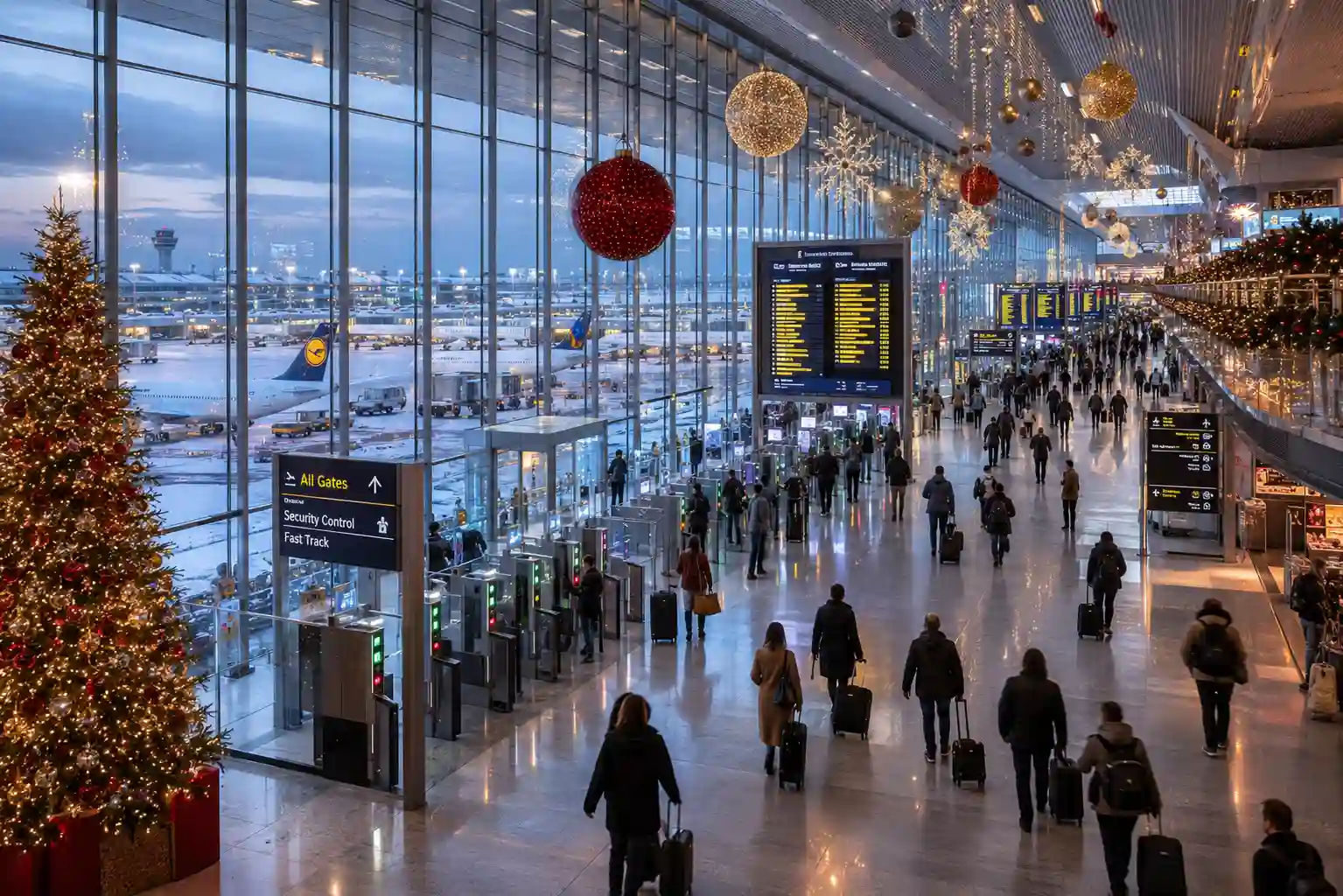
Winter holiday journeys across the continent are climbing to unprecedented peaks, creating an intense operational challenge for aviation authorities. As Europe airports prepare for busiest ever Christmas travel season, major transportation hubs from London Heathrow and Paris Charles de Gaulle to Frankfurt and Amsterdam Schiphol are deploying advanced biometric screening, scaling ground staff, and optimizing runway logistics to handle record-breaking passenger volumes.
The surge in holiday travel reflects a booming global desire for seasonal family reunions, alpine ski vacations, and festive winter getaways. However, unprecedented passenger demand combined with unpredictable winter weather conditions means that travel efficiency requires meticulous preparation from airport operators and passengers alike. Understanding terminal strategies, boarding timelines, and winter flight dynamics is essential for navigating the peak European holiday rush smoothly.
Operational Overhauls: Why Europe Airports Prepare for Busiest Ever Christmas Travel Season
Managing millions of international travelers during a tight multi-week holiday window requires seamless coordination across airlines, security agencies, air traffic controllers, and baggage handlers. The primary catalyst behind these record numbers is the full resurgence of long-haul tourism and expanded regional low-cost flight routes across the European Union.
When Europe airports prepare for busiest ever Christmas travel season, their chief priority is eliminating bottleneck zones at security checkpoints and border control gates. Traditional manual passport checks and physical baggage inspections are being reinforced by next-generation 3D computed tomography (CT) scanners and automated biometric e-gates. These technologies allow passengers to leave liquids and electronic devices inside their carry-on bags, significantly speeding up security throughput.
Several key operational upgrades are being deployed across major European hubs:
- Deployment of high-throughput 3D baggage scanners to accelerate security clearance lines.
- Expanded biometric e-gates at Schengen border zones to reduce international arrival queues.
- Dynamic ground-crew scheduling and round-the-clock aircraft de-icing operations.
- Automated baggage tracking networks designed to prevent luggage misrouting during peak transfers.
These large-scale infrastructure investments reflect broader digital modernization trends across global enterprises, drawing inspiration from systemic models like digital transformation in business marketing to streamline consumer touchpoints in real time.
Winter Weather Challenges and Flight Disruption Protocols
Winter aviation in Europe always contends with severe meteorological variables, including sub-zero temperatures, dense freezing fog, sleet, and heavy snowstorms. Similar to how American air corridors manage disruptions when early christmas travel threatened by series of storms in the us, European civil aviation authorities must implement rapid de-icing protocols and runway clearing procedures to prevent severe cascading network delays.
Aircraft de-icing is a safety-critical procedure that involves spraying specialized glycol fluids over wing surfaces and fuselages to eliminate ice accumulation before takeoff. During peak morning departure waves, de-icing queues can add 20 to 45 minutes to tarmac turnaround times. Major airports in Central and Northern Europe maintain massive reserves of environmentally certified anti-icing compounds and fleet plows to ensure continuous runway availability.
Airlines also use predictive AI meteorology tools to adjust flight paths dynamically, minimizing holding patterns over congested airspace and reducing unnecessary carbon burn during turbulent winter weather fronts.
Top European Destinations Fueling the Holiday Rush
The unprecedented holiday foot traffic is distributed across diverse travel corridors, from classic winter wonderland capitals to sun-seeking coastal retreats. Millions of travelers board flights to experience historic festive markets, illuminated cathedral squares, and cultural winter celebrations.
France remains a primary travel magnet, with passengers flocking to the French capital to explore the historic list of places to visit in paris for historical and cultural experiences and charming suburban gems throughout the best places to visit in ile de france. Others head south toward the sunny Mediterranean coast to explore the best places to visit in montpellier france.
In the United Kingdom and Central Europe, travelers embrace picturesque heritage cities. Holiday voyagers explore historic sites in Britain, making trips to the best historical places to visit in uk, planning family getaways to the places to visit in manchester for families, or wandering through fairytale medieval towns by checking places to visit in rothenburg ob der tauber for cultural and historical sights.
Southern Europe also experiences high winter traffic as travelers escape chilly northern climates to enjoy mild weather across the Iberian Peninsula, taking advantage of budget-friendly city breaks and the places to visit in seville for free.
Comparative Analysis: Major European Airport Hub Preparations
A look at how Europe’s primary international aviation hubs are structuring their operations reveals distinct strategic approaches to handling the holiday passenger volume:
| Airport Hub | Primary Congestion Factor | Key Operational Solution |
|---|---|---|
| London Heathrow (LHR) | High long-haul connecting flights and UK border processing. | Expanded automated e-gates and dedicated transit passenger concierges. |
| Paris Charles de Gaulle (CDG) | Inter-terminal passenger transit and Schengen entry bottlenecks. | Upgraded terminal shuttle frequencies and automated luggage drop bays. |
| Frankfurt Airport (FRA) | Sub-zero de-icing procedures and tight railway hub integration. | Synchronized air-to-rail baggage transfers and heated runway fleets. |
| Amsterdam Schiphol (AMS) | Security line surges and strict slot management limits. | Time-slotted security booking apps and 3D cabin scanner integration. |
These synchronized preparations ensure that flight networks maintain steady turnaround schedules while passenger comfort and terminal safety remain uncompromised.
Smart Packing and Travel Wellness for Winter Flights
Navigating packed terminals during peak winter rushes requires a streamlined approach to personal packing, transit comfort, and health preservation. Overcrowded terminals and dry pressurized aircraft cabins can quickly deplete physical energy if passengers are unprepared.
Carrying a modular, durable carry-on like the experience the ultimate adventure with the civic travel bag 35l allows travelers to organize electronics, winter layers, and essential travel documents in dedicated quick-access pockets. Equipping day packs with compact hygiene and dental tools like the discover the best acclean interdental travel brush for clean fresh teeth on the go helps maintain hygiene during extended layovers.
To combat long flight fatigue, headaches, and unexpected muscle stiffness, packing trusted wellness remedies such as excedrin travel size your essential travel companion for headache relief is a practical safeguard. Travelers also protect their skin against harsh cabin dryness by packing hydrating skincare essentials like gee beauty prime skin unlock the secret to radiant and youthful skin, purchased from trusted specialty outlets like us beauty supply compton your ultimate destination for premium beauty essentials.
Maintaining high wellness standards keeps holiday voyagers refreshed so they can unlock unforgettable moments with lifestyle xperiences 365 live fully across their festive destinations.
Aviation Supply Chains and Cargo Freight Dynamics
While passenger terminals manage record crowds, the belly-hold cargo sections of passenger aircraft are operating at maximum capacity. The Christmas period represents the most critical supply chain window of the year for consumer electronics, luxury fashion items, and perishable holiday foods across continents.
Freight forwarders and air cargo coordinators rely on precision logistics networks to manage holiday freight delivery. Organizations leverage high-speed distribution operators like uhl logistics transforming supply chains with precision and speed and specialized freight networks such as mmk logistics maka reliable fast and secure freight solutions to ensure holiday goods arrive without customs friction.
Reliable ground freight transport across transit hubs is reinforced by leading industry carriers like us1 logistics powering america s supply chain with unstoppable precision, while logistics managers use precision planning software like the foxhole logistics calculator optimize your operations fast to prevent warehouse bottlenecks during peak shipping dates.
Sustainable Aviation and Environmental Balancing
The massive surge in holiday flights places added emphasis on environmental accountability within the European aviation sector. Under strict EU environmental directives, airlines and airports are actively working to mitigate their carbon footprints during high-density flight periods.
Leading European carriers are expanding their use of Sustainable Aviation Fuels (SAF), which reduce lifecycle greenhouse gas emissions by up to 80% compared to conventional jet kerosene. Additionally, airport ground support vehicles—from baggage tugs to passenger transit buses—are being converted to 100% electric fleets.
Major aviation corporations structure their sustainability commitments using the sustainable business architecture triple bottom line, balancing economic profit with environmental protection and social responsibility to ensure long-term, eco-conscious growth.
Airport Retail, Hospitality, and Commercial Optimization
For modern airports, the Christmas rush is not just an operational challenge—it is the single most lucrative retail season of the year. Duty-free shopping concourses, luxury fashion boutiques, and fine-dining lounges generate vital non-aeronautical revenue that subsidizes essential airport infrastructure.
Airport commercial operators leverage sophisticated consumer marketing techniques to engage waiting travelers. Brands implement proven models like digital marketing roi strategies for business success to deliver location-based discounts and mobile app promotions directly to passenger smartphones as they move through departure terminals.
By executing modern frameworks such as the scalable digital marketing strategy 7s framework and refining campaigns with strategic analysis digital marketing roi scottsdale principles, airport retailers turn terminal dwell time into engaging, high-conversion shopping experiences.
Essential Traveler Tips for Navigating the Peak Holiday Rush
To ensure a stress-free journey through busy European airports this season, travelers should adopt proactive habits before heading to the terminal:
- Arrive Early with Margin: Arrive at least 2.5 hours before intra-European flights and 3.5 to 4 hours before long-haul international departures.
- Reserve Security Slots Online: Take advantage of complimentary security timeslot reservation tools available at airports like Amsterdam Schiphol, Frankfurt, and London Heathrow.
- Download Airline and Transit Apps: Enable push notifications for immediate gate changes, boarding alerts, and baggage carousel assignments.
- Pre-Book Airport Parking and Transfers: Secure terminal parking or train tickets weeks in advance to avoid surge pricing and sold-out parking structures.
- Keep Essentials in Your Personal Item: Always store essential medications, chargers, passports, and a clean change of clothes in your cabin backpack.
Smooth Skies for the Winter Holidays
The record-breaking demand across international terminals proves that the joy of holiday travel and human connection remains stronger than ever. While the scale of crowds is historic, comprehensive planning across ground teams, air traffic controllers, and security agencies ensures that flight operations continue safely and efficiently.
As Europe airports prepare for busiest ever Christmas travel season, passenger readiness is the ultimate companion to advanced airport technology. By planning ahead, embracing digital travel tools, and allowing ample transit time, holiday voyagers can glide through bustling terminals and arrive at their festive destinations ready to celebrate with loved ones.
Frequently Asked Questions (FAQs)
How early should I arrive at European airports during the Christmas rush?
For flights within the Schengen Area, arrive at least 2.5 to 3 hours prior to scheduled departure. For long-haul intercontinental flights requiring passport control and baggage drop, arriving 3.5 to 4 hours in advance is strongly recommended.
Can I bring Christmas presents and wrapped gifts through airport security?
It is best to leave gifts unwrapped or use gift bags. If security scanners detect an item that requires physical inspection, security officers will unwrap the package, causing delays and ruining the wrapping.
How do European airports manage flight delays during heavy snowstorms?
Airports deploy specialized runway snow-clearing fleets, continuous friction testing equipment, and dedicated aircraft de-icing pads. Flights are safely metered into departure slots using collaborative decision-making software coordinated with Eurocontrol.
Are liquids still restricted to 100ml at all European airports?
While airports equipped with new CT 3D scanners are beginning to relax liquid rules, many terminals across Europe still enforce the strict 100ml liquid container limit. Travelers should verify the specific security rules of their departure and transfer airports before packing.