
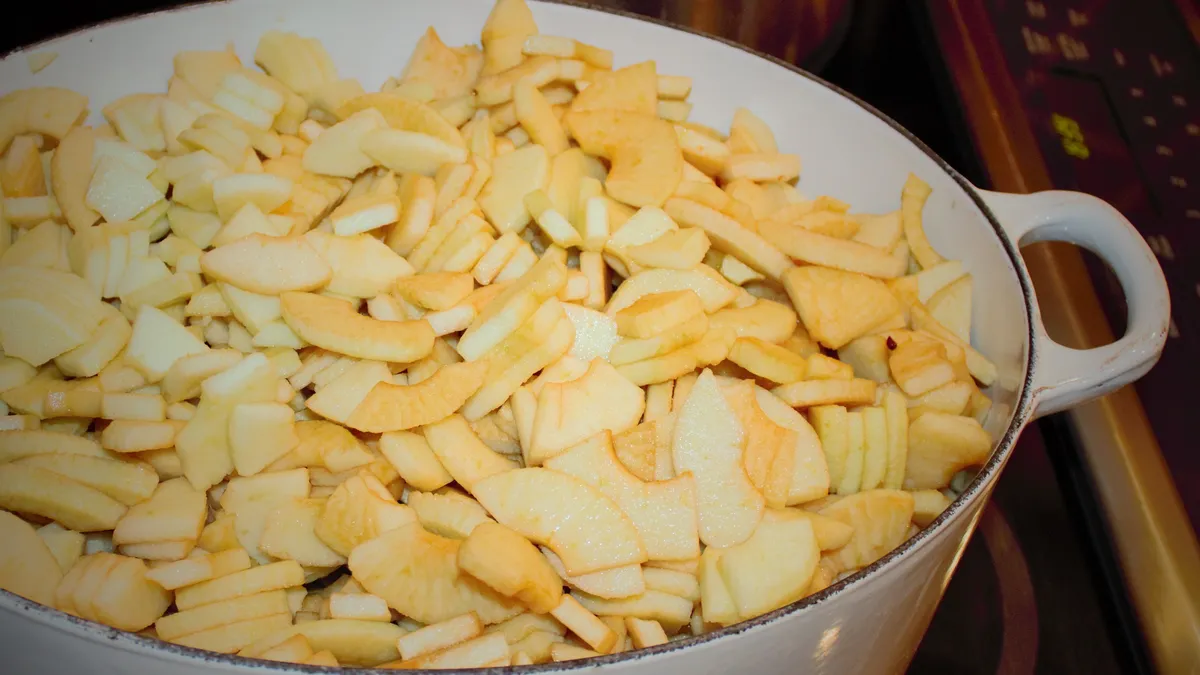
Let’s be honest for a second. Most of us grew up on applesauce from a jar, and that jar was perfectly fine. However, one spoonful of warm homemade sauce changes everything. Suddenly, the store version tastes flat, sweet, and a little tired. In contrast, a fresh batch tastes like actual apples, because it is actual apples. Moreover, the kitchen smells wonderful for hours afterwards.
Fortunately, this applesauce food mill recipe makes real applesauce from scratch with almost no fussy work. You wash the apples, quarter them, and simmer them until they collapse. Afterwards, the food mill does the hard part for you. Consequently, you skip peeling, coring, and endless chopping entirely. Above all, you end up with a silky sauce that still tastes homemade.
Perhaps you picked too many apples on a fall orchard trip. Alternatively, the fruit bowl simply holds more apples than anyone will eat. Either way, this recipe solves the problem deliciously. For example, our guide to the best places to visit in the US for fall is full of orchard country worth visiting. Therefore, bring home the extra bag without worry.
Why does a food mill make better applesauce?
A food mill is basically a hand-cranked sieve with a rotating blade. As you crank, the blade pushes soft cooked fruit through tiny holes. Meanwhile, skins, seeds, and tough cores stay behind in the mill. Therefore, the sauce below emerges smooth and clean every time. In fact, this one tool replaces peeling, coring, and straining altogether.
Moreover, the mill gives you real texture control. A fine disk produces a silky, baby-food smoothness, for instance. Conversely, a medium or coarse disk leaves a rustic, spoonable body. Because you choose the disk, you choose the final texture. Additionally, red skins tint the sauce a lovely soft pink.
There is also a gentle science behind the result. Apple skins and cores hold plenty of natural pectin, a soluble fibre. During simmering, that pectin loosens and helps the sauce set softly. Consequently, food mill sauce often feels fuller than blender sauce. Furthermore, the mill never whips in air, so the colour stays rich. Unlike a blender, it also never shreds seeds into gritty bits.
Which apples make the best applesauce?
Honestly, almost any apple can become sauce. Nevertheless, variety decides sweetness, tartness, and how fast apples break down. Soft apples collapse quickly and create a naturally smooth base. Firmer apples, meanwhile, hold some shape and add texture. Therefore, a thoughtful blend almost always beats a single variety.
Which sweet apples work best for a no-sugar sauce?
Fuji apples are wonderfully sweet, so they often need no added sugar. Similarly, Gala apples cook down quickly with a mild, floral flavour. Golden Delicious apples bring a gentle, buttery sweetness as well. If you use mostly sweet apples, unsweetened applesauce becomes easy. Consequently, children usually love this style straight from the bowl.
Which tart apples add brightness and balance?
Granny Smith apples are famously tart and firm. However, an all-Granny batch can taste sharp and cook unevenly. Instead, blend them with softer, sweeter fruit for balance. McIntosh apples offer a classic tart-sweet flavour and collapse beautifully. Likewise, Cortland apples resist browning and add a clean tang. Braeburn and Pink Lady apples sit happily between sweet and tart.
What is a simple blending formula that always works?
Start with roughly two-thirds sweet apples and one-third tart apples. For example, combine Gala and Fuji with a few Granny Smith apples. Alternatively, mix McIntosh with Golden Delicious for an old-fashioned flavour. Honeycrisp apples add juicy complexity when you have them. Ultimately, taste matters more than rules, so adjust freely. If the blend tastes good raw, it will taste great cooked.
Seasonal fruit from small growers often tastes especially vivid. Indeed, projects like the Fairview Gardens education farm show how much flavour fresh picking adds. Similarly, orchard trees reward patience just like the groves in our story on the beauty and benefits of olive trees. Therefore, buy the freshest apples you can reasonably find.
What do you need for this recipe?
This batch makes about six cups of sauce, enough for generous sharing. Naturally, you can halve it for a small household. Conversely, you can double it when the orchard haul is huge. Before you start, gather everything within easy reach. Preparation feels calmer that way, and cooking stays fun.
What ingredients go into the pot?
- 4 pounds (about 1.8 kg) apples, roughly 10 to 12 medium apples, mixed varieties
- 3/4 cup water, plus a little extra if the pot looks dry
- 2 tablespoons fresh lemon juice, to brighten flavour and protect colour
- 1 cinnamon stick, or 1 teaspoon ground cinnamon
- 2 to 4 tablespoons granulated sugar, honey, or maple syrup, entirely optional
- 1 pinch of fine salt, to sharpen the apple flavour
- 1/2 teaspoon vanilla extract, optional but lovely, added at the end
- 1 pinch of ground nutmeg, optional, for gentle warmth
Importantly, the sugar stays optional for a good reason. Sweet apples often carry the whole recipe on their own. Therefore, always taste the finished sauce before sweetening it. Afterwards, add sweetener one spoonful at a time. That way, the apple flavour always stays in charge.
What equipment do you need on the counter?
- Food mill with fine and medium disks
- Large heavy pot or Dutch oven with a lid
- Sharp knife and a sturdy chopping board
- Large heatproof bowl for the finished sauce
- Wooden spoon and a ladle
- Rubber spatula, for scraping the mill clean
- Airtight jars or containers for storage
A sharp, comfortable knife makes quartering far more pleasant. For instance, a good everyday set, like the one in our look at the Cutco entertainer pack for every kitchen, handles a pile of apples quickly. Similarly, a heavy pot prevents scorching during the long simmer. Consequently, simple tools genuinely improve the final sauce.
How do you make applesauce with a food mill?
The method is forgiving, even for first-time sauce makers. Basically, you cook the fruit until it surrenders completely. Then, you mill it, season it, and taste it. Meanwhile, keep the heat gentle and the lid slightly working for you. Follow these steps in order for the easiest result.
- Wash the apples thoroughly. Because the skins stay on, this step really matters. Rub each apple under running water, then pat them dry.
- Quarter the apples. Cut away any bruised or damaged spots carefully. However, leave the skins, cores, and seeds in place.
- Load the pot. Add the apple quarters, water, lemon juice, and cinnamon stick. The liquid looks scant, but apples release plenty of juice.
- Simmer until completely soft. Cover the pot and cook on the stovetop over medium-low heat for 25 to 35 minutes. Stir occasionally, and add a splash of water if needed. The apples are ready when a spoon slides through easily.
What happens after the apples soften?
- Rest the pot briefly. Remove the pot from the heat for five minutes. Also, fish out the cinnamon stick now. This short pause makes milling safer and easier.
- Mill the apples in batches. Set the food mill over your large bowl securely. Ladle in hot apples, then crank steadily in one direction. Occasionally, reverse the crank briefly to clear the blade.
- Scrape and continue. Empty skins and seeds from the mill between batches. Also, scrape the underside, where thick sauce loves to cling. Continue until every batch has passed through.
- Season the warm sauce. Stir in the salt and vanilla, if using. Then taste carefully and add sweetener only if needed. Finally, add nutmeg or extra cinnamon gradually.
- Cool and serve. Serve the sauce warm, at room temperature, or chilled. Afterwards, refrigerate any leftovers promptly in clean containers.
Altogether, active work takes only about twenty minutes. Most of the time, the pot quietly simmers by itself. Therefore, this is an ideal recipe for a slow afternoon. Moreover, children often love taking careful turns at the crank. Just supervise the hot pot closely, of course.
How do you control chunky or smooth texture?
Texture is where this recipe becomes truly yours. For a silky smooth applesauce, choose the fine disk first. Then, mill the whole batch without rushing the crank. Consequently, even tiny skin fragments stay behind in the mill. This style suits babies, toddlers, and elegant desserts beautifully.
For chunky applesauce, take a slightly different approach. First, reserve a cup of the soft cooked apple pieces. Next, mill the remaining batch on the medium disk. Afterwards, fold the reserved pieces back into the sauce. Alternatively, mill only three-quarters of the batch and mash the rest. Either method gives you pleasant, rustic spoonfuls.
Thickness is adjustable too, thankfully. If the sauce seems thin, simmer it uncovered briefly. Stir constantly, because thick sauce scorches surprisingly fast. Conversely, if it seems thick, stir in warm water slowly. A spoonful of apple cider also works nicely here. Ultimately, aim for a sauce that mounds softly on a spoon.
How should you season and vary the sauce?
Classic cinnamon applesauce needs little more than cinnamon itself. However, small additions create genuinely different jars of sauce. For example, vanilla rounds out sharp edges with soft sweetness. Similarly, a pinch of nutmeg adds quiet, old-fashioned warmth. Fresh lemon zest, meanwhile, makes the apple flavour sparkle.
Sweeteners deserve a light hand, always. Honey brings floral notes, while maple syrup adds caramel depth. Brown sugar, in contrast, tastes cosy and slightly rustic. Nevertheless, taste the plain sauce first before choosing anything. Often, ripe apples make every sweetener completely unnecessary.
You can also blend in other fruits occasionally. Pears soften the sauce and add gentle perfume, for instance. A handful of cranberries creates a tart, rosy holiday version. Likewise, a few strawberries make a pretty pink spring sauce. Therefore, treat this base recipe as a friendly starting point.
What mistakes can spoil a good batch?
Firstly, too much water dilutes the flavour badly. Apples release abundant juice as they cook down. Therefore, start with less water than instinct suggests. You can always add more, but removing it takes time.
Secondly, high heat invites scorching on the pot bottom. A heavy pot and gentle simmer prevent that bitterness. Moreover, regular stirring keeps the thickest pieces moving. If something sticks, switch pots rather than scraping hard. Burnt flecks spread their flavour through everything, unfortunately.
Thirdly, undercooked apples fight the food mill stubbornly. The crank feels heavy, and the yield drops noticeably. Instead, cook the fruit until it collapses under a spoon. Conversely, milling scalding fruit straight off a rolling boil splashes. A five-minute rest solves that problem neatly.
Finally, overseasoning hides the very flavour you worked for. Add spices in small pinches, then taste again patiently. Remember, flavours deepen slightly as the sauce cools. Consequently, a sauce that tastes perfect hot may taste strong cold. A gentle hand today means a balanced jar tomorrow.
How can you serve homemade applesauce?
Warm sauce beside roast pork is a timeless pairing. Similarly, it sits happily next to potato pancakes and schnitzel. At breakfast, spoon it over yoghurt, oatmeal, or pancakes. Moreover, it swirls beautifully into muffin and cake batters. Bakers often swap it for part of the oil too.
For families, the snack possibilities are especially handy. A small chilled jar satisfies hungry children after school. Indeed, our cost breakdown of bedtime snacks for kids shows how simple fruit snacks add up kindly. Homemade sauce also freezes in small portions for lunchboxes. Just thaw overnight, stir well, and pack it cold.
Can babies and toddlers enjoy this sauce too?
Yes, and the food mill really shines here. Mill a plain batch on the fine disk first. Skip the sugar, honey, and strong spices entirely. Consequently, you get a smooth homemade applesauce for babies with nothing extra. Always check the temperature carefully before serving, of course. Also, ask your paediatrician about timing for first foods.
Scaling up is simple when the season delivers a glut. Double the apples and water in your largest pot. However, cook large batches in two pots if needed. Overcrowded apples steam unevenly and scorch more easily, unfortunately. Afterwards, mill steadily in small batches for the smoothest result.
Presentation can be simple or a little festive. For example, serve warm sauce in small bowls with cinnamon dusted on top. Restaurants plate humble ingredients beautifully, as our visit to restaurants in Montville reminded us recently. Likewise, a neat swirl and a mint leaf elevate home servings. Even weeknight suppers deserve that small kindness.
How long does homemade applesauce keep?
In the fridge, the sauce keeps well for about one week. Store it in clean, airtight containers with little headspace. Moreover, cool the sauce before sealing the containers tightly. Label each jar with the date you made it. That small habit prevents mysterious fridge archaeology later.
Freezing applesauce works brilliantly for longer storage. Generally, frozen sauce keeps its quality for up to twelve months. Leave about half an inch of headspace for expansion. Alternatively, freeze flat in sturdy bags to save space. Ice-cube trays also make perfect baby-sized portions. Afterwards, thaw the sauce overnight in the fridge.
Thawed sauce sometimes releases a little liquid. Simply stir it back in before serving, though. If the texture still seems loose, simmer it briefly. Therefore, never throw away a jar just for weeping. The flavour usually remains bright and fresh.
Can you can applesauce safely at home?
Yes, home canning applesauce is well established and popular. However, canning is the one stage where improvisation stops. Always follow a current, tested recipe from a trusted authority. Specifically, use the USDA Complete Guide to Home Canning. The National Center for Home Food Preservation publishes the same guidance online.
In general terms, the tested method uses a hot pack. You fill hot jars and leave half an inch of headspace. Then, you process the jars in a boiling-water canner. Processing time depends on jar size and your altitude, however. Therefore, look up your exact altitude adjustment before starting.
For context, the NCHFP table lists fifteen minutes for pints at low altitude. Quarts at the same altitude need twenty minutes, by comparison. Higher elevations require longer processing, following the published tables. Nevertheless, treat those figures as a cross-check, not a substitute. Always confirm the current table on the day you can.
Also, respect every supporting step around the processing time. Use jars and lids designed for home canning only. Check seals after cooling, and refrigerate any unsealed jars. When in doubt, freeze the batch instead of canning it. Freezing asks less precision and tastes just as good.
Frequently asked questions
Do you really leave the skins and cores in?
Yes, you genuinely leave both in during cooking. The food mill separates skins, seeds, and cores afterwards. Consequently, preparation takes minutes rather than half an hour. However, remove stems and any damaged spots first. Wash the fruit especially well, since the skins stay on.
Can you make this recipe without a food mill?
Yes, although the preparation changes a little. Peel and core the apples before cooking them. Then mash them with a potato masher for chunky sauce. Alternatively, blend them briefly for a smoother result. The flavour stays lovely, even without the mill.
Why did my applesauce turn out pink?
Red skins naturally tint the sauce during simmering. Empire, Pink Lady, and McIntosh apples blush especially prettily. Moreover, longer simmering deepens that rosy colour further. The pink shade is harmless and often delightful. Children, in particular, tend to love it.
How do you fix sauce that tastes too tart?
Firstly, stir in a spoonful of honey or sugar. Then wait a minute and taste it again. A tiny pinch of salt also softens sharpness surprisingly. Alternatively, fold in a sweeter second batch of sauce. Gradual fixes beat one large, regrettable addition.
Can you cook this sauce in a slow cooker?
Yes, the slow cooker handles the simmering stage well. Cook the quartered apples on low until completely soft. Afterwards, mill the fruit exactly as described above. However, use less water, because slow cookers trap moisture. Check the pot occasionally for even softening.
So, let’s be honest one last time. A food mill, a pile of apples, and one quiet hour are enough. You gain a sauce that tastes like tradition and modern flavour together. Moreover, your freezer, fridge, or pantry gains something genuinely homemade. Crank once, taste once, and jars rarely last long.



