
Nebraska gets crossed, not visited. Drivers blast through on Interstate 80, they count cornfields, and they leave convinced they saw the state. In fact, they saw a corridor. The real places to visit in Nebraska in summer sit well away from that highway. Some hide in river valleys. Others rise from empty grassland hours apart. Still, that distance is the point here.
This guide follows one honest route west. It starts in Omaha, crosses Lincoln, and then climbs into the Sandhills. After that, it ends among Oregon Trail landmarks in the Panhandle. Along the way, it covers zoos, gardens, rivers, and county fairs. It also covers heat, long drives, and empty fuel gauges. A Nebraska summer vacation rewards patience, not rushing.
Why should Nebraska be your summer road trip?
Nebraska rarely tops lists of the best places to visit in Nebraska guides, let alone national ones. By contrast, that low profile keeps crowds thin everywhere. You can park easily at famous landmarks here. You can also hear yourself think at scenic overlooks. For travellers comparing what are the best places to visit in North America, that quiet feels rare now.
The value is real, too. Nebraska is comparatively affordable across lodging, food, and parking. Meanwhile, small towns still price meals for locals first. As a result, a family budget stretches noticeably further here. Of course, cheap is not the same as flimsy. The zoo in Omaha rivals any zoo anywhere. The capitol in Lincoln is a genuine architectural landmark.
Summer, specifically, is when the state opens up. Rivers run warm enough for floating and tubing. County fairs light up small towns weekly. Baseball takes over Omaha each June. In short, summer turns scattered stops into one connected Nebraska road trip itinerary. Winter, by contrast, would strand half of this route indoors.
How long does an east-to-west Nebraska drive really take?
Honesty helps here, so let us start there. Nebraska is roughly 430 miles wide, east to west. Omaha to Scottsbluff alone takes about six hours. That drive excludes fuel stops, meals, and actual sightseeing. Therefore, nobody should attempt this route in one weekend. Four to six days suits it far better.
The distances change how you plan each day. For example, towns can sit an hour apart in the west. Cell service fades between them, too. Instead, download maps before you leave the cities. Fill the tank earlier than feels necessary. In fact, experienced plains drivers refuel at half a tank. That habit sounds cautious until you need it.
Heat deserves the same respect as distance. July afternoons in eastern Nebraska feel humid and heavy. Western afternoons feel drier, but the sun stays fierce. As a result, smart travellers hike early and drive midday. They save gardens, rivers, and overlooks for cooler hours. Meanwhile, air conditioning becomes a strategy, not just comfort. Plan around the heat, and summer works beautifully.
Omaha first: a zoo that justifies the whole trip?
Start in Omaha, on the Missouri River. The city is Nebraska’s largest, and it feels it. It has proper neighbourhoods, serious steakhouses, and real nightlife. Still, one attraction towers over everything else here. That attraction is the Henry Doorly Zoo and Aquarium. Many Omaha summer attractions compete for attention, yet the zoo wins easily.
A short Henry Doorly Zoo guide for first-timers?
Treat this section as a short Henry Doorly Zoo guide for newcomers. The zoo is widely ranked among the world’s best zoos. Its indoor rainforest fills a vast glass structure. A desert dome recreates arid habitats under one roof. Meanwhile, the aquarium adds sharks, penguins, and coral reefs. In short, you walk through whole ecosystems, not just enclosures.
Pacing matters more than any single exhibit. Arrive near opening time, for example, and head deep first. Crowds gather near the entrance exhibits early. Instead, cross the grounds and work backwards later. Wear real walking shoes, because the site is large. Of course, kids will still ask for breaks constantly. Benches, shade, and indoor halls make those breaks easy.
June brings one more Omaha headline. The College World Series Omaha hosts each year fills the city. College baseball fans pour in from across the country. Hotels tighten, restaurants buzz, and downtown feels festive. However, non-fans can enjoy that energy, too. The crowds cluster near the ballpark, after all. Elsewhere, Omaha stays surprisingly calm during the tournament.
What should you do in Omaha’s Old Market?
Save an evening for the Old Market district. Brick streets and old warehouses shape the neighbourhood. Galleries, bookshops, and restaurants fill those solid buildings. Street musicians often play near the corners. As a result, the area rewards slow, aimless wandering. Dinner here needs no elaborate plan, honestly.
The riverfront sits a short walk away. A pedestrian bridge crosses into Iowa mid-river. You can stand in two states at once there. It is a small, silly, memorable moment. Meanwhile, sunset light flatters the whole skyline. For travellers listing the best places to visit in the USA, Omaha earns its mention here. It feels lived-in, not staged for visitors.
Lincoln next: capitol views and quiet gardens?
Lincoln lies about an hour southwest of Omaha. It is the state capital and a university city. That mix gives it government grandeur and student energy. Still, Lincoln moves at a gentler pace than Omaha. A half day covers its highlights comfortably. An overnight stay, however, makes it feel unhurried.
The Nebraska State Capitol dominates the skyline first. Its tower rises far above the flat city grid. Inside, mosaics, carvings, and murals tell state stories. The building blends prairie themes with grand civic design. In fact, architects praise it across the country. Guided and self-guided visits both work well here. The observation level, meanwhile, opens wide plains views.
Sunken Gardens Lincoln treasures offers a softer counterpoint. Terraced beds cascade down a former hillside site. Summer brings dense colour from annual plantings there. Paths wind past ponds, sculptures, and shaded benches. Best of all, the gardens suit a slow morning perfectly. Of course, photographers will linger longest here. Arrive early, and the paths feel almost private.
The Haymarket district handles evenings in Lincoln. Old warehouses now hold restaurants, bars, and shops. Brick streets keep the historic texture intact. On summer nights, patios fill with students and families. Meanwhile, the farmers market draws crowds on Saturdays. It is an easy, friendly place to end a day. Nothing here feels rushed or overproduced.
What makes the Sandhills so different?
West of Lincoln, Nebraska changes completely. The Sandhills Nebraska region covers a huge share of the state. Grass-covered dunes roll to every horizon here. Cattle outnumber people by a wide margin. Small lakes hide in valleys between the dunes. In short, this is one of America’s great empty landscapes.
The Sandhills are not desert, despite the name. Grass anchors the dunes, so they stay green. Rain soaks through sand into a vast aquifer below. As a result, rivers here flow steady and clear. Springs feed them evenly through the summer. Meanwhile, the night skies turn astonishingly dark. The Milky Way appears without any telescope here.
Driving the Sandhills Journey Scenic Byway suits this region. Highway 2 threads through ranch towns and dune country. Broken Bow, Thedford, and Alliance anchor the route. Between them, traffic thins to almost nothing. For example, you may drive twenty minutes without company. Some travellers find that emptiness unsettling at first. Most, however, settle into its calm quickly.
Do not expect a packed activity list here. The Sandhills reward looking, listening, and slowing down. Birdsong carries across wet meadows in the morning. Wind moves through dune grass all afternoon. Readers building top outdoor places to visit in the US lists should note this. The appeal is space itself, experienced slowly.
What is tanking in Nebraska, exactly?
Tanking in Nebraska is the state’s signature summer ritual. You float downriver in a round livestock tank. Yes, the tank is a stock tank for cattle. Outfitters fit seats inside and launch you gently. Then the current does all the work. A cooler, friends, and sunshine complete the setup.
The Middle Loup River hosts classic tanking trips. The Dismal River offers a wilder, spring-fed run. Both flow through the heart of the Sandhills. The water stays shallow, cool, and forgiving. As a result, beginners handle tanking with ease. Nobody needs paddling skill for these floats. You mostly steer with occasional pushes and laughter.
The North Platte River adds another floating option. Tubing and kayaking suit its broader channels well. Herons and deer often appear along quiet banks. Meanwhile, outfitters in several towns handle rentals and shuttles. Book ahead on summer weekends, of course. Trips sell out in small towns quickly. For fans of best adventure places to visit in USA lists, tanking is gentle adventure. It charms precisely because it stays unhurried.
County fairs, small towns, and summer between stops?
Summer in Nebraska also runs on county fairs. Nebraska county fairs pop up across the state weekly. Each fair mixes livestock shows, rides, and fried food. Demolition derbies and tractor pulls draw big crowds. Meanwhile, local bands play into the warm night. These fairs are not staged for tourists. They exist for the counties themselves, proudly.
That authenticity is exactly why visitors should go. You will eat what the town actually eats. You will watch kids show animals they raised. Conversations start easily in grandstands and food lines. In fact, strangers may ask where you travelled from. Small-town Nebraska takes genuine interest in visitors. It is hospitality without a sales pitch attached.
One seasonal warning belongs here, though. Sandhill cranes are a spring phenomenon, not summer. The famous Crane Trust migration peaks around March. By summer, those birds have moved far north. Instead, summer birding means meadowlarks, herons, and waterfowl. Do not let spring photos set summer expectations. Nebraska is honest country, so this guide stays honest.
Chimney Rock and Scotts Bluff: the Oregon Trail west?
The Panhandle changes the landscape again. Buttes and bluffs replace rolling grass dunes here. This is Oregon Trail country, historically speaking. Emigrants crossed this ground heading toward mountain passes. Their landmarks still rise above the North Platte valley. Approaching them slowly, as wagons did, feels right.
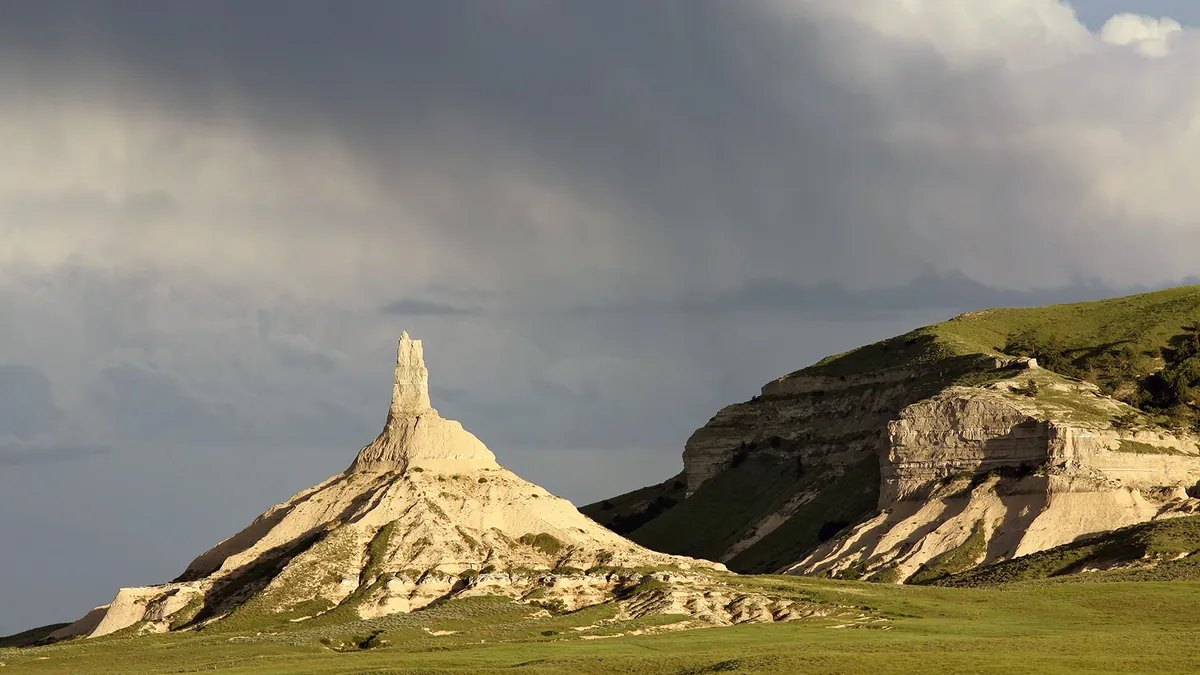
Chimney Rock Nebraska travellers spot from miles away. A slender spire lifts from a broad cone base. Trail diarists mentioned it more than any landmark. It signalled real progress across the plains. Today, a visitor centre explains that long journey. Trails near the base give closer, quieter views. However, the classic view remains the distant one. That silhouette against evening light explains the fame.
Scotts Bluff National Monument anchors the region nearby. Its bluffs rise hundreds of feet above the river. A summit road climbs through tunnels to overlooks. Hiking trails cross ground the wagon trains used. Wagon ruts still mark the prairie in places. In fact, standing there makes the trail tangible. History stops being abstract at Scotts Bluff.
Give this pair a full day together. Morning light suits Scotts Bluff’s summit drive best. Afternoon heat, meanwhile, suits the visitor centres indoors. Then Chimney Rock glows beautifully near sunset. As a result, one day covers both landmarks well. Rushing them into two hours would waste them. These are places to absorb, not to tick off.
Fort Robinson and Carhenge: history and humour?
Fort Robinson State Park spreads across the Pine Ridge. This former military post saw frontier history firsthand. Cavalry troops, Native leaders, and wartime training passed here. Today, its white buildings sit among pine-covered hills. Lodging ranges from historic rooms to open campgrounds. Bison and longhorn herds graze within the park. Jeep tours and horseback rides run through summer.
The setting explains Fort Robinson’s lasting appeal. Pine Ridge country feels almost mountainous after the plains. Cooler air and shade greet you here. Trails climb to views across the escarpment. Meanwhile, evening programmes share the fort’s layered stories. Some chapters are proud, and some are painful. The park presents that history honestly, thankfully. Families can balance learning with swimming and rides.
Carhenge in Alliance supplies the trip’s comic relief. Vintage American cars stand buried and stacked here. Together, they recreate Stonehenge at full scale, painted grey. Artist Jim Reinders built it as a memorial. It should not work, yet it absolutely does. Of course, everyone photographs it within minutes. The surrounding car sculptures extend the joke further.
Carhenge also captures something true about Nebraska. Plains people entertain themselves with wit and spare parts. The stop takes under an hour, usually. Still, travellers remember it for years afterwards. Pair it with Alliance’s Sandhills museum nearby. Then stay for a Sandhills Nebraska sunset outside town. Few roadside stops anywhere land this charmingly. It rivals stops on places to visit in Michigan during the summer routes for sheer surprise.
How should you plan a Nebraska summer trip well?
Timing shapes everything on this route. June offers long days and baseball in Omaha. July brings peak heat and peak fair season. August delivers warm rivers and thinning crowds late. Overall, June to August is the core season. Early June, however, balances weather and events best. Late August suits travellers avoiding the biggest crowds.
Pack for two climates in one state. Eastern humidity demands light, breathable layers daily. Western evenings, by contrast, can turn genuinely cool. A warm layer earns its suitcase space here. Sunscreen matters at this elevation and exposure. Hats matter on rivers and summit trails. In fact, sunburn ruins more plains trips than rain. Reapply after every float or swim.
- Book zoo days and tanking trips early.
- Refuel whenever the tank passes half full.
- Download offline maps before the Sandhills.
- Carry cash for fairs and small cafés.
- Start hikes before the midday heat builds.
- Leave one unplanned hour in every day.
Money planning stays pleasantly simple here. Nebraska remains comparatively affordable for road trippers. Small-town lodging undercuts big-city prices almost everywhere. Many top sights, like Carhenge, cost very little. State parks may require vehicle permits, though. Check official park pages before each visit. As a result, surprises stay small and manageable.
Compare that with hotter desert itineraries, for perspective. Travellers researching best places to visit in AZ in the summer face fiercer heat. Nebraska’s rivers offer built-in relief instead. Likewise, top places to visit in Colorado in summer trips bring altitude challenges. Nebraska keeps its pleasures at ground level. That simplicity suits families and first-time road trippers.
Frequently asked questions
What are the best things to do in Nebraska in summer?
The zoo, tanking, and Oregon Trail landmarks lead. Omaha and Lincoln cover culture, food, and gardens. The Sandhills cover rivers, space, and dark skies. Meanwhile, county fairs add local flavour between stops. Together, those things to do in Nebraska fill a week. No single stop carries the whole trip.
How many days do you need for Nebraska?
Four days is the realistic minimum here. Six days, however, lets the route breathe properly. Omaha deserves one full day at least. Lincoln needs a half day or overnight. The Sandhills and Panhandle each need a day. In short, distance decides the schedule, not attractions.
Is Nebraska too hot to visit in summer?
No, but the heat demands respect daily. Eastern humidity makes July afternoons feel heavy. Western sun feels intense despite drier air. As a result, plan indoor stops at midday. Float rivers and hike trails early instead. Evenings across Nebraska feel genuinely lovely in summer.
Can you see sandhill cranes in Nebraska in summer?
No, the great crane migration happens in spring. Cranes gather along the Platte around March. By summer, they have flown far north. Instead, watch for herons, meadowlarks, and deer. Summer wildlife is quieter, but it is real. Spring remains the season for crane spectacles.
What is the best Nebraska road trip itinerary?
Start in Omaha and finish in the Panhandle. That order follows the land’s natural story. Cities come first, then grassland, then bluffs. The drives grow emptier and prettier daily. In fact, the westward build feels cinematic throughout. Flying home from Denver afterwards works well.
Nebraska will not overwhelm you in one afternoon. It wins travellers slowly, mile by mile. A tank drifting down a spring-fed river helps. So does a spire glowing at sunset. Still, the quiet may stay with you longest. Give this flyover state a summer, honestly. It has been waiting patiently the whole time.



