
Why do the best places to visit near Zurich by train start at one station?
Zurich Hauptbahnhof is more than a station. In fact, it is the launch pad for half of Switzerland. So the smartest places to visit near Zurich by train all begin on its platforms. From there, lakes, waterfalls, and old towns spread out in every direction.
This guide works like a clock, not a catalogue. First, each trip gets an honest journey-time band. Then each stop explains what to do after you step off the train. As a result, you can match a trip to your energy, not to hype.
Choice is the only real problem here. After all, day trips from Zurich by train range from tiny lakeside towns to a full mountain summit. Therefore, this guide ranks trips by time first. In other words, short hops come before grand adventures.
One warning matters before you start. Switzerland is expensive, and nobody should pretend otherwise. Still, careful planning keeps a rail day rewarding rather than reckless. Because trains run so often, you rarely need tours, taxis, or a hire car.
How should you choose a trip by journey time?
Start with your return time, not your wish list. If you want a slow evening in Zurich, for example, pick a hop under an hour. However, a mountain day deserves an early start and a late return. Either way, the train should serve the day, never rule it.
Next, think about weather honestly. Old towns forgive grey skies, because museums and cafes fill the gaps. Mountains, by contrast, punish cloudy days with hidden views. So save summit trips for clear mornings. That single habit improves almost every Swiss rail holiday.
Families need a different filter again. Short rides, easy walks, and one clear highlight suit children best. Meanwhile, keen walkers can happily chain two stops together. Consequently, the same line north or south can produce two very different days.
- Under thirty minutes: Zug, Winterthur, and Baden suit half days and slow starts.
- Under an hour: Lucerne, Rapperswil, and the Rhine Falls fill a relaxed full day.
- A longer day: Mount Rigi or Pilatus needs clear weather and an early platform.
Readers building a wider route often ask which is the best place to visit in Switzerland for a first trip. Honestly, the answer near Zurich is usually Lucerne. Still, the trips below each win on the right day.
Lucerne: the classic trip under an hour by direct train
Lucerne is the day trip almost everyone gets right. The Zurich to Lucerne train is direct, frequent, and comfortably under an hour. Better still, the old town begins a short walk from the station. So a Lucerne day trip from Zurich feels easy from the first minute.
What should you do first in Lucerne?
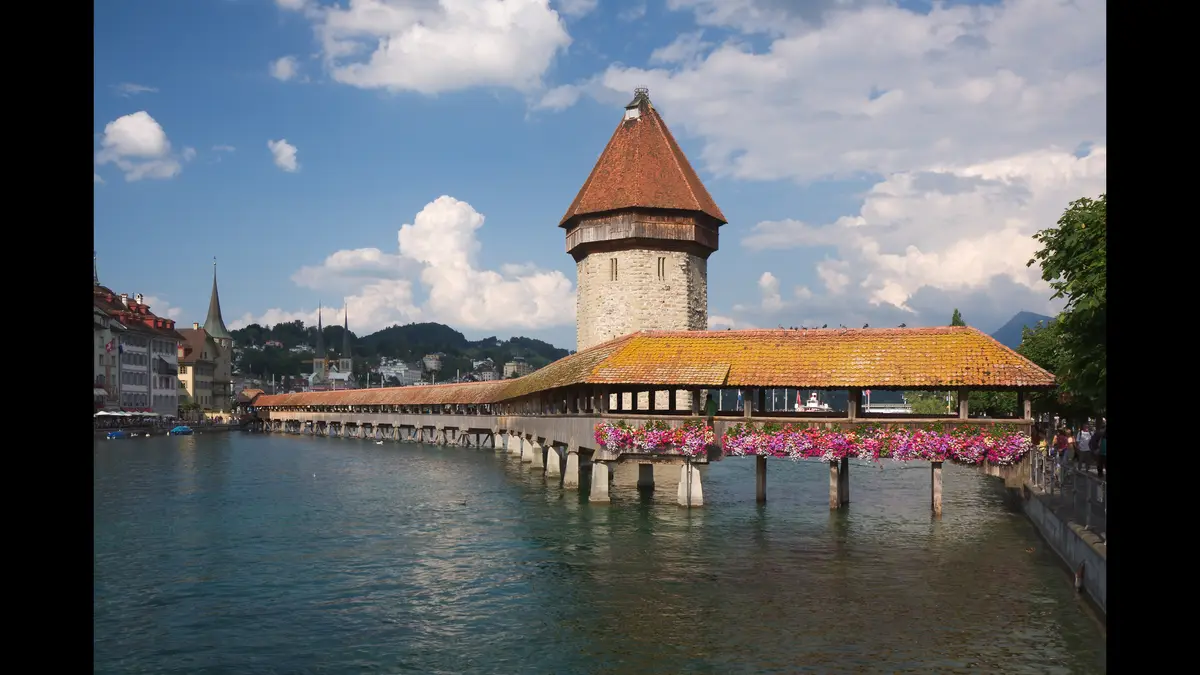
Walk to the river before you do anything else. There, the Chapel Bridge in Lucerne crosses the Reuss with its painted panels overhead. Because the bridge sits so centrally, it naturally starts your old town wander. Then painted houses, small squares, and church towers unfold street by street.
The Lion Monument rewards a quieter detour afterwards. Carved into rock, it remembers Swiss Guards with real dignity. Meanwhile, the old town walls give walkers a higher view over rooftops. In fact, Lucerne packs remarkable variety into very walkable distances.
Rain changes little here, happily. The Swiss Museum of Transport, for instance, can absorb a whole wet afternoon. Similarly, lake boats and cafes turn a slow hour into a pleasure. Therefore, Lucerne works in every season and almost every mood.
How does a lake hour change the day?
A short Lake Lucerne boat trip adds the missing wide view. From the water, the town shrinks and the mountains take over. Consequently, even one hour aboard resets the whole day. After the boat, a lakeside promenade walk brings you gently back to town.
Summer travellers will find Lucerne at its brightest then. Our round-up of the top places to visit in Switzerland in summer shows how lake towns anchor a warm-weather route. However, Lucerne also charms in winter, when lights reflect on dark water. Either season, the direct train home keeps evenings simple.
The Rhine Falls and Schaffhausen: power first, old town second
Some trips impress through beauty, yet this one impresses through force. The Rhine Falls near Schaffhausen form the largest waterfall in Europe by volume. Because direct and connecting trains reach the area in under an hour, the falls suit even a late start. Still, an earlier arrival keeps platforms calmer.
How should you experience the falls themselves?
Begin on the viewing platforms, where the spray reaches you quickly. Then follow the paths for wider angles across the gorge. After that, boat trips run towards the rock in the middle during the main season. As a result, a Rhine Falls day trip mixes viewpoints instead of repeating one.
Photographers should plan around light, not crowds alone. Morning often brings softer light and quieter walkways. Meanwhile, families may prefer a slower loop with castle views and picnic stops. In fact, the area rewards lingering far more than rushing.
Comfort matters near falling water, honestly. Paths can feel damp, and spray soaks careless clothing. So bring a light waterproof layer, even on bright days. That small preparation protects cameras, children, and good moods alike.
Why should you continue into Schaffhausen?
Schaffhausen old town turns a nature trip into a complete day. Its painted facades and oriel windows line street after handsome street. Because the town sits so close to the falls, the pairing costs little extra effort. Therefore, lunch among frescoed houses beats a rushed station snack.
The Munot fortress watches over the town from its hill. Climb up, and vineyards plus rooftops spread below you. Then wander back slowly through lanes built for lingering. Travellers heading north afterwards often compare onward routes with our guide to the best places to visit in Germany for couples, because the border sits close by. Either way, Schaffhausen deserves more than a photo stop.
Rapperswil: roses, a castle, and the gentle end of Lake Zurich
Rapperswil offers the softest day on this list. The town sits where Lake Zurich narrows, under an hour away by train. Because the ride follows the lake shore, the journey itself feels scenic. So Rapperswil on Lake Zurich suits travellers who want calm, not conquest.
What makes Rapperswil worth the ride?
Rose gardens give the town its famous nickname and scent. In season, beds of roses frame views across the water. Meanwhile, the castle above the old town adds height and history. After climbing up, visitors look across rooftops towards distant Alps.
The lakeside promenade then slows everything down again. Swimmers, sailors, and cafe terraces share the shore peacefully. For example, a long wooden footbridge crosses towards Hurden for walkers. That bridge walk delivers big lake feelings with almost no effort.
Children often rate Rapperswil surprisingly highly. A small zoo near the station delights younger visitors, honestly. Meanwhile, ice cream stops and paddle spots fill the gaps between sights. Consequently, families can build a full day without one stressful transfer.
Who should choose Rapperswil over Lucerne?
Choose Rapperswil when you crave quiet more than landmarks. Lucerne wins on variety, yet Rapperswil wins on breathing space. Similarly, repeat visitors to Zurich often prefer this gentler shore. In short, Rapperswil is the locals’ style of escape, relaxed and unhurried.
Zug: the shortest hop with a sunset reputation
Zug proves that distance and reward rarely match. This lakeside town lies well under an hour from Zurich by direct train. In fact, many visitors arrive in under thirty minutes. So Zug suits half days, late starts, and spontaneous escapes alike.
What should you do in Zug?
Start in Zug old town, where colourful houses crowd towards the lake. The clock tower there has watched over the lanes for centuries. Then drift down to the shore, because the waterfront is the real headline. There, promenades and bathing spots invite an unhurried hour.
Sunsets made Zug quietly famous among photographers. On clear evenings, the sun drops behind the lake hills beautifully. Therefore, an afternoon arrival can beat a morning one here. After sunset, trains still return you to Zurich without fuss.
Food lovers find a sweet footnote in Zug. The town is known for a cherry cake that locals defend proudly. Meanwhile, lakeside cafes serve unhurried lunches with mountain glimpses. As a result, Zug feels like a small holiday inside a short hop.
Winterthur and Baden: two short hops with opposite moods
Not every great trip needs a lake or a waterfall. Winterthur and Baden, for instance, deliver culture and calm instead. Both sit within easy reach as short train trips from Zurich. Yet each town rewards a completely different kind of traveller.
Why does Winterthur suit curious minds?
Winterthur museums punch far above the town’s size. The Swiss Science Center Technorama, for example, turns physics into hands-on play. Meanwhile, respected art collections draw visitors who never expected to stop here. So Winterthur is the thinking traveller’s short hop from Zurich.
The old town itself stays pleasantly unshowy. Pedestrian lanes, markets, and cafes fill time between museums easily. Because trains back run frequently, you can leave whenever energy fades. That freedom makes Winterthur ideal for a spontaneous half day.
Why does Baden suit tired travellers?
Baden thermal baths have drawn bathers since Roman times. Warm mineral water still anchors the town’s spa culture today. After days of sightseeing, therefore, Baden offers recovery rather than sightseeing. Honestly, few day trips return you home feeling better than this one.
The old town above the Limmat river adds charm afterwards. A ruined castle viewpoint overlooks the rooftops and bends of the river. Then small streets of shops and bakeries complete the wander. Small historic towns reached by rail have a special charm, as our guide to places to visit near Stratford-on-Avon shows in England. Similarly, Baden rewards anyone who slows down enough to notice details.
Mount Rigi or Pilatus: how do you choose the bigger mountain day?
Every Zurich rail plan eventually faces the mountain question. Lucerne opens the door to two famous summits, Rigi and Pilatus. Both demand a fuller day than the town trips above. However, each mountain delivers a very different personality in return.
What kind of day is a Mount Rigi day trip?
A Mount Rigi day trip unfolds like a gentle journey story. First, a boat crosses Lake Lucerne towards Vitznau. Then a cogwheel railway climbs through meadows to the summit. Because the pace stays unhurried, Rigi suits walkers and view lovers. At the top, lakes sparkle in almost every direction.
Summit paths let you stretch the experience further. Short walks lead to quieter viewpoints away from the station. Meanwhile, a different descent route can return you via another lakeside village. Consequently, Rigi rewards travellers who treat transport as part of the pleasure.
What kind of day is a Mount Pilatus day trip?
A Mount Pilatus day trip feels steeper, wilder, and more dramatic. Cable cars rise from the Lucerne side towards jagged rock. In season, a famously steep cogwheel railway climbs from the lake side instead. As a result, Pilatus thrills visitors who like their mountains bold.
Weather decides everything on Pilatus, honestly. Cloud can erase the view within minutes at the summit. So check the forecast and summit webcams before leaving Zurich. Winter travellers should also compare conditions with our guide to the best place in Switzerland to visit in winter before choosing a summit. Either mountain, though, needs an early start and a flexible evening.
Swiss rail passes or point-to-point tickets: which fits your trip?
Ticket choice confuses many first-time visitors to Switzerland. Basically, passes buy freedom, while single tickets buy precision. Neither option is automatically cheaper for everyone. Therefore, the right answer depends on how many trips you actually take.
When does a pass make sense?
A Swiss Travel Pass suits travellers stacking several rail days together. It covers trains widely, plus many boats, buses, and city transport. Better still, it removes ticket decisions at every platform. So pass holders can change plans with the weather, guilt free.
Passes also simplify mountain days, although coverage varies by railway. Some mountain lines are included, while others give a discount instead. Consequently, you should check each summit route before assuming it is covered. Official SBB and Swiss Travel System pages list current coverage clearly.
When do point-to-point tickets win?
Single tickets win when you plan just one or two outings. A single Lucerne return, for example, may cost far less than a multi-day pass. Meanwhile, travellers who mostly walk Zurich need no pass at all. In that case, paying per ride keeps spending honest and simple.
Half Fare style products sit between the two extremes. They cut many fares for travellers staying longer or riding often. However, terms and eligibility change, so check official SBB channels before buying. Above all, compare your real itinerary, not an imagined one. Train travel in Switzerland rewards planners who count their actual journeys first.
How can you pair stops into one smooth day?
Pairing stops works when geography does the heavy lifting. The falls and Schaffhausen, for instance, share one northern line naturally. Similarly, Lucerne pairs with either Rigi or Pilatus, never both comfortably. So pick one headline, then add one gentle extra.
- North day: Rhine Falls in the morning, then Schaffhausen old town for lunch and the Munot.
- Lake day: Lucerne old town first, then a boat hour, then an early train home.
- Mountain day: early train to Lucerne, one summit only, then a slow lakeside evening.
- Gentle day: Zug for lunch and the shore, then Baden for an evening soak.
Notice what these pairings avoid, though. None of them crosses the country twice in one day. Because backtracking eats hours and tempers, routes should flow one way. After all, the best days feel like stories, not obstacle courses.
Broader European routes can grow from these same habits. Our list of the best places to visit in Europe summer 2022 favourites shows how rail hubs shape whole holidays. Similarly, travellers heading south afterwards often ask what places should I visit in Italy next. Either way, Zurich teaches pacing lessons that work across the continent.
What should you know about costs and practical details?
Honesty helps here, because Swiss days out are rarely cheap. Rail fares, mountain railways, and cafe lunches all add up quickly. Still, the biggest costs are predictable, and predictable costs can be managed. So budget for the headline, then protect the rest.
Free pleasures soften every itinerary, fortunately. Old town walks, lake promenades, and viewpoints cost nothing beyond shoe leather. Meanwhile, a supermarket picnic beside a lake beats many restaurant views. In fact, some travellers remember those simple lunches longest.
- Save: walk old towns, picnic by lakes, and choose one paid highlight daily.
- Spend: put money into the summit or boat your group wants most.
- Check: live departure boards in the SBB app before leaving any station.
Practical habits matter as much as money, though. Trains are punctual, so platforms reward early arrivals. Similarly, connections can be tight yet entirely doable on foot. Therefore, keep tickets and passes ready before each change. Finally, carry water and a layer, because lake weather turns quickly.
Frequently asked questions
What is the easiest day trip from Zurich by train?
Lucerne is the easiest choice for most visitors. Direct trains run often, and the old town starts near the station. Zug is even closer, however, for a shorter escape. Either trip works without planning stress or complicated connections.
Can you visit the Rhine Falls and Schaffhausen in one day?
Yes, and the pairing is one of the best in this guide. Visit the falls first, while platforms stay quieter. Then continue into Schaffhausen for lunch and old town wandering. Because both stops share one direction, the day flows naturally.
Is Lucerne enough for a full day trip?
Easily, yes, because Lucerne layers town, lake, and mountains together. The old town alone can fill a happy morning. Then a boat ride or museum completes the afternoon. Add a summit, and the day becomes full indeed.
Which is better for a day trip, Rigi or Pilatus?
Rigi suits gentle journeys, boats, and wide lake views best. Pilatus, by contrast, suits drama, steep railways, and jagged rock. Weather should make the final call, honestly. On a cloudy day, both lose to an old town.
Do you need to book Swiss trains in advance for day trips?
Usually, regional and intercity day-trip trains need no reservation. You simply board with a valid ticket or pass. However, you should always check live times before travelling. Special scenic trains are the exception, so verify those separately.
How many day trips should you take from Zurich in a week?
Two or three day trips suit most week-long stays well. That rhythm leaves proper time for Zurich itself between outings. Meanwhile, daily excursions quickly turn relaxing trains into a commute. So alternate big days with slow city days, and everything improves.
Which Zurich train trip should you take first?
If you take only one trip, make it Lucerne. It delivers bridge, lake, and old town in under an hour. However, the Rhine Falls run it close for sheer spectacle. Meanwhile, Rapperswil, Zug, Winterthur, and Baden each reward a second, slower day.
The real lesson of Zurich is refreshingly simple. Great places sit close, and the trains make reaching them feel effortless. So pick by time, watch the weather, and spend on one highlight daily. Then let the railway do what Switzerland designed it to do.



