
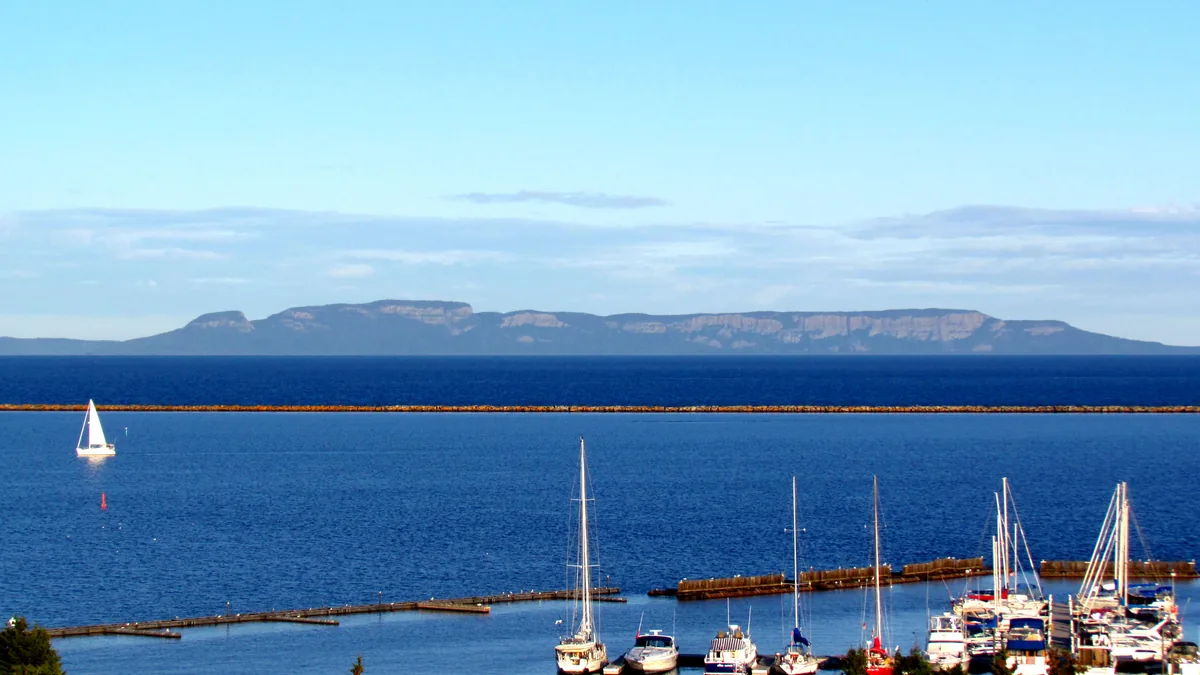
Thunder Bay does not ease you in gently. You arrive on the north shore of Lake Superior, and a giant is already lying across the horizon. In fact, that long, flat-topped formation shapes almost every view in the city. The best places to visit in Thunder Bay Ontario all connect back to it in some way.
This is a working port city, not a resort town. Grain elevators, rail lines, and a busy harbour sit beside marinas and walking paths. Still, wilderness is never far away. Waterfalls, canyon lookouts, and cliff-top trails all sit within an easy drive. So the city works best as a base camp, with a different landscape planned for each day.
Many travellers only pass through on a long highway drive. They stop for fuel, glance at the lake, and keep rolling east or west. Yet Thunder Bay rewards anyone who stays for two full days. If you are comparing it with the wider shortlist of what are the best places to visit in North America, its appeal is simple. Few cities mix this much wild shoreline with this much living history.
Why does Thunder Bay reward more than a stopover?
Geography explains a lot here. The city grew where the Kaministiquia River meets the lake, on routes used by Indigenous travellers long before ships and railways arrived. Fur traders later turned that meeting point into a crossroads for the whole northwest. As a result, history here is not tucked away in one museum. Instead, it sits in the harbour, the riverbanks, and the fort you will visit later in this guide.
Scale helps, too. Thunder Bay is the largest city in Northwestern Ontario, so it has the hotels, restaurants, and outfitters that smaller shore towns lack. Meanwhile, its streets still feel calm and spread out. You can eat a proper dinner downtown, then watch the light fade over the harbour minutes later. Most lists of things to do in Thunder Bay start with the Giant and the falls. That balance of city comfort and wild country, however, is the real reason to stay.
Sleeping Giant Provincial Park: a day trip above Lake Superior
Every local points you toward the same day trip first. Sleeping Giant Provincial Park protects the Sibley Peninsula, the land you have been staring at from across the water. From town, the mesas look like a giant resting on his back. Up close, however, the park becomes cliffs, boreal forest, and quiet inland lakes. Ontario Parks describes more than 100 kilometres of hiking trails here, so one visit only scratches the surface.
What makes the Sleeping Giant formation so memorable?
The formation is a line of flat-topped mesas and steep cliffs. Together, they form the outline of a reclining figure, head at one end and feet at the other. An Ojibwe legend links the Giant to Nanabijou, a spirit connected with the deep water. The story also ties the shape to a silver mine hidden somewhere on the peninsula. You will hear versions of it at lookouts all over town.
Views change with the light, too. Morning often brings a blue, hazy silhouette across the bay. By evening, the cliff faces can glow warm and sharp. Photographers therefore plan around the Giant rather than despite it. Even a simple harbour walk feels staged by that backdrop.
How should you plan a day inside the park?
Treat the park as a full-day outing, not a quick detour. Firstly, decide what kind of walking suits your group. Short shoreline and nature trails suit families and anyone short on time. Longer routes climb toward high lookouts, including the Top of the Giant Trail and the Thunder Bay Lookout. Those climbs reward effort with huge views over Lake Superior.
Sea Lion is the gentler showpiece for many visitors. This rock formation on the shore is reached by a shorter walk through the trees. Still, sturdy shoes and a windproof layer matter everywhere in the park. Lake Superior weather can turn quickly, even in summer. Check the Ontario Parks site before you go, and sort any day-use arrangements in advance during busy periods.
Canada does park drama well, after all. If the Giant leaves you hungry for more, compare it later with the alpine routes among the places to visit in Yoho National Park. The rock is different there. The sense of scale, however, feels very familiar.
Kakabeka Falls: the Niagara of the North
West of the city, the Kaministiquia River does something dramatic. At Kakabeka Falls, the river pours over a rock lip into a deep, rugged gorge. Locals and signs alike call it the Niagara of the North. The nickname is bold, yet the roar and the spray make it easy to forgive. You hear the falls before you see them properly.
Boardwalks and viewing platforms make this one of the easiest Thunder Bay attractions to enjoy. For example, you can view the falls from several angles without a long hike. Interpretive signs explain the layered rock and the ancient fossils held within it. Other panels share the Ojibwe legend of Green Mantle, which is tied closely to the falls. Allow time to read them, because the story deepens the place.
Spring runoff usually brings the heaviest flow. Autumn brings a different show, with red and gold forest framing the gorge. Either season beats a rushed five-minute stop. If waterfalls are your weakness, pair this stop in your notes with the unique places to visit near Niagara Falls for a very different Ontario falls trip.
Terry Fox Memorial: a short stop with a long shadow
East of the city, a bronze figure stands above the highway, looking out over the lake. The Terry Fox Memorial marks the area where Terry Fox ended his Marathon of Hope in 1980. His cancer had returned, and his run across Canada stopped near Thunder Bay. The stop is brief, yet few visitors leave unmoved.
Panels at the site tell his story in plain, powerful language. A visitor centre nearby adds context during the main season. The lookout also frames the Sleeping Giant across the water, so bring a camera as well as a quiet minute. Many road trippers rank this among the most meaningful places to visit in Thunder Bay Ontario, despite its small footprint.
Fort William Historical Park: fur-trade history you can walk through
History gets hands-on at Fort William Historical Park. The site recreates the North West Company inland headquarters on the Kaministiquia River. Costumed interpreters work in workshops, kitchens, and stores across a large palisaded post. You can watch a blacksmith at the forge, smell bread baking, and hear how furs and trade goods moved across the continent. In fact, it feels like a small, busy town from the early fur-trade era.
Families usually love this stop most. Children can ask questions, follow demonstrations, and explore the farm and encampment areas. Adults, meanwhile, get a clearer sense of why Thunder Bay exists at all. The fort explains the river, the port, and the city in one visit. Plan at least half a day if your group enjoys living history.
Marina Park and Prince Arthur’s Landing: the city’s front porch
Back in town, the Thunder Bay waterfront is where the city relaxes. Marina Park and Prince Arthur’s Landing spread along the harbour with paths, lawns, public art, and sailboats. Locals walk dogs, sip coffee, and watch ships move through the harbour. The Sleeping Giant fills the background of almost every photo here. Sunset, in particular, turns the whole landing golden.
The surrounding Waterfront District adds galleries, eateries, and small shops within an easy stroll. So an evening here needs no planning at all. Just wander, eat, and let the lake set the pace. If you enjoy mixing city culture with big scenery, compare this district with the interesting places to visit in Toronto for a much bigger, louder take on Ontario city life.
Hillcrest Park: the postcard view without the hike
Some viewpoints ask for a summit. Hillcrest Park asks only for a short drive uphill. This leafy park looks straight across the harbour toward the Sleeping Giant. Benches and open lawns make it a natural picnic and photo stop. On clear mornings, the Giant appears crisp enough to touch.
Photographers favour Hillcrest Park at sunrise and again near dusk. The harbour lights, the boats, and the long silhouette combine beautifully then. It also works as a gentle first stop after a long drive. You get the signature view, a stretch of the legs, and your bearings for the days ahead.
Ouimet Canyon: a dramatic detour east
Ouimet Canyon Provincial Park hides its drama until the last moment. In fact, a short walk through forest brings you to lookouts above a deep, steep-walled canyon. The floor below shelters plants more at home in the far north, protected by the canyon’s cool shade. From the platforms, the drop feels sudden and theatrical. It is a big payoff for modest effort.
The canyon pairs naturally with the Terry Fox Memorial on the same eastern drive. You can also combine it with an amethyst stop, since several mines sit in the same general direction. Check seasonal opening before you set out, because smaller parks and attractions keep limited schedules outside summer. A little planning, therefore, saves a wasted drive.
Amethyst mines: digging for Ontario purple
Ontario amethyst gives the region a sparkle you can take home. Several Thunder Bay amethyst mines welcome visitors in season, letting you see the purple stone where it formed. Some experiences focus on guided tours of the workings and the geology. Others, instead, let you search through rock piles and keep a favourite piece. Either way, the colour surprises people who expect only grey Shield rock.
Treat the mines as a half-day add-on rather than the main event. Wear shoes you do not mind dusting with reddish rock. Bring water, and expect a rural drive on the way out. Families, in particular, enjoy the treasure-hunt feeling of the dig piles. Check which mines are open on your dates, since the season is limited.
What should you taste before you leave Thunder Bay?
Every city has a signature snack. Thunder Bay has the Persian pastry. This local icon is a soft, cinnamon-spiced bun under a cap of bright pink icing. Bakeries here have served Persians for generations, and locals defend their favourite version fiercely. You will find them in coffee shops and bakery cases across town. Try one warm, with coffee, and you will understand the loyalty.
Finnish food is the other flavour to chase. Thunder Bay has deep Finnish roots, and Finnish pancakes appear on many breakfast menus. They are thin, golden, and usually served with berries or syrup. Markets and small eateries add lake fish, wild rice, and hearty baking to the mix. Food here, in short, tastes like the north itself.
When is the best time to visit Thunder Bay?
Summer is the classic answer, and for good reason. Warm days suit hiking, paddling, and long evenings on the waterfront. Most seasonal attractions run their fullest schedules then, including the mines and smaller parks. Lake Superior stays chilly, however, so swimmers should expect a bracing dip. Book popular stays early for peak weekends.
Canada’s summer cities each have a mood, after all. Montreal does festivals and patios. Thunder Bay, instead, does shoreline and silence. If that contrast appeals, you might also enjoy the festival-season energy in the places to visit in Montreal Canada in summer on a separate trip. Both cities reward slow evenings outdoors.
Late spring brings powerful waterfalls and quieter trails. Autumn brings colour, crisp air, and fewer crowds at Kakabeka Falls and the Giant. Winter is a different trip entirely, built around snow, skiing, and frozen scenery. Some attractions close or reduce hours then, so winter visitors should plan carefully. Shoulder-season travellers, meanwhile, often get the calmest version of the Lake Superior north shore.
How can you fit the best of Thunder Bay into two days?
This simple Thunder Bay itinerary keeps driving sensible and days balanced. One day stays close to the city and its stories. The other day goes big on landscape. Swap the order freely if the weather demands it.
What does day one look like?
Day one balances the city, the memorial, and the fort. Start early at Hillcrest Park, while the light is clean and the harbour is quiet. Then cross toward the east side for the Terry Fox Memorial before the day warms up. Fort William Historical Park fills the afternoon easily. Finish with dinner and a sunset walk at the landing.
- Morning at Hillcrest Park for the signature Giant view, followed by coffee and a Persian downtown.
- Late morning at the Terry Fox Memorial, with time for the panels and the lookout.
- Afternoon inside Fort William Historical Park, exploring the palisade, workshops, and riverbank.
- Evening on the waterfront at Marina Park, watching the harbour light change.
What does day two look like?
Day two belongs to the big landscapes. Choose Sleeping Giant Provincial Park if your group wants one epic park day outdoors. Choose Kakabeka Falls and Ouimet Canyon instead if you prefer shorter walks and more variety. An amethyst stop fits neatly into the second plan. Either route ends well with a slow waterfront evening.
- Option A, the Giant day: pack a picnic, pick your trail level honestly, and give the park the whole day.
- Option B, falls and canyon: Kakabeka Falls in the morning, Ouimet Canyon after lunch, and an amethyst dig if time allows.
- Final evening: one last Persian run and a golden-hour stroll at Prince Arthur’s Landing.
Hikers who collect big days will feel at home here. The Giant day rivals the challenge found on lists of the best adventure places to visit in USA, yet it sits an easy drive from your hotel. Road trippers crossing the border can extend the theme with the top outdoor places to visit in the US, since the Superior shore continues south into Minnesota.
Thunder Bay rarely shouts for attention. It simply waits at the top of the lake, with a giant on its horizon and waterfalls in its backyard. Give it two honest days, and the city usually wins people over. It also makes a superb anchor for a Thunder Bay road trip along the shore. Start with the Giant, end with a Persian, and let the north shore do the rest.
Frequently asked questions
Short answers help with final planning. These are the questions visitors ask most before a Thunder Bay trip.
Is Thunder Bay worth visiting?
Yes, especially if you like scenery with substance. The city pairs Lake Superior drama with fur-trade history, a moving national memorial, and a proud local food scene. It also lacks the crowds of better-known Ontario stops. Two or three unhurried days suit it well.
How many days do you need in Thunder Bay?
Two full days cover the highlights in this guide. One day handles the city, the fort, and the memorial. The second day then belongs to the Giant or to the falls-and-canyon route. Add a third day, however, if you want both big outings without rushing.
What is Thunder Bay famous for?
The Sleeping Giant leads the list, followed closely by Kakabeka Falls and Lake Superior itself. The Terry Fox Memorial holds deep national meaning here. Locals would also insist on the Persian. Few snacks inspire this much civic pride.
When is the best time to visit Thunder Bay?
Late spring through early autumn suits most visitors best. Summer offers the warmest days and the fullest attraction schedules. September, meanwhile, brings colour and calmer parks. Winter suits travellers who come specifically for snow and quiet.
Can you visit Sleeping Giant Provincial Park on a day trip?
Yes, and most visitors do exactly that. The park sits across the bay from the city and is reached by road around the shore. Day visitors can choose short shoreline walks or commit to a long lookout climb. Start early, check park guidance, and carry more water than you expect to need.
What food is Thunder Bay known for?
The Persian is the famous one, a cinnamon bun crowned with pink icing. Finnish pancakes are the beloved breakfast answer to it. Together, they tell the city’s story sweetly. One reflects local invention, and the other reflects Finnish immigration.



