
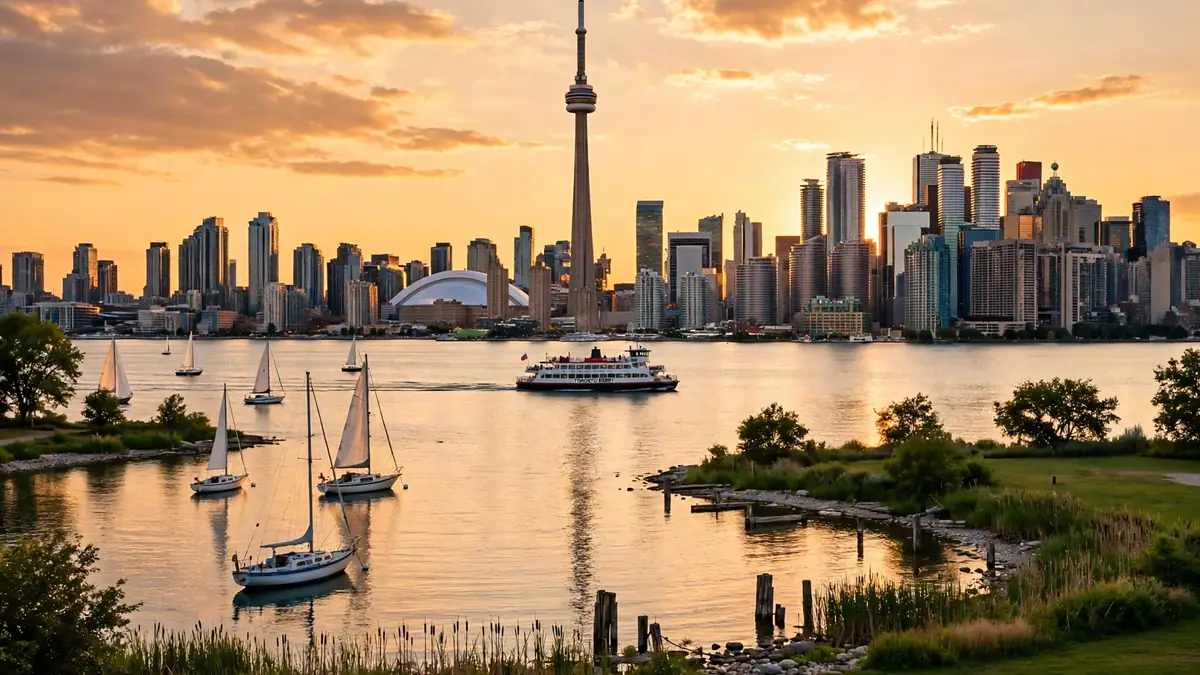
Toronto rewards you twice on the same day. In the morning, you can lose yourself in a market hall full of cheese counters and fresh bread. By evening, you can watch the whole skyline light up across Lake Ontario. Indeed, that mix is the real reason people love this city.
Most guides list the sights in one long, flat row. This guide works differently, because it splits the city into two simple threads. One thread covers urban culture, from neighbourhoods and museums to markets and street art. The other thread covers scenic views, from towers and ferries to cliffs and park hills. Together, both threads help you plan days that feel full, not rushed. Ask ten locals for the best places to visit in Toronto Canada, and you will hear ten different answers, yet the same names keep coming back.
Why Does Toronto Work Best When You Mix Culture and Views?
Toronto is Canada’s largest city, yet it rarely feels like one single centre. Instead, it feels like many small cities stitched together by streetcars and subway lines. Each district has its own food, its own shops, and its own pace. For example, Kensington feels bohemian and loose, while Yorkville feels polished and calm.
Where Can You See Toronto From Above?
High viewpoints show you the scale of Toronto in seconds. Lake Ontario spreads out on one side, and streets run inland on the other. On a clear day, the grid looks neat and calm from above. Still, each high place feels quite different once you are up there.
How Does the CN Tower Still Earn Its Place at the Top?
The CN Tower is the landmark that defines the Toronto skyline views most visitors picture first. It stands in the downtown core, right beside the Rogers Centre and the aquarium. From its observation levels, you look down on the harbour, the islands, and the dense financial district. On very clear days, the lake view stretches far toward the horizon. These CN Tower views set the standard that every other viewpoint in the city gets judged against.
Two details make the visit memorable for most people. Firstly, the glass floor lets you look straight down to the street far below. Secondly, the EdgeWalk lets harnessed visitors walk outside around the main pod, high above the city. That walk is not for everyone, of course. However, even a standard visit feels special near sunset, when the light turns warm and the city lights begin to come on.
Can a Castle Give You a Great City View Too?
Casa Loma surprises people who expect only a historic house. This Gothic Revival mansion sits on a hill in midtown, north of downtown. Its towers, terraces, and gardens look back toward the city centre. Consequently, you get a view with a story, not just a view from a deck.
Where Are the Best Skyline Views From Ground Level?
Some of the best scenic spots in Toronto keep your feet on the ground. From across the water, the skyline looks complete, with the tower in its proper place. Reflections help too, because the lake doubles the colour at dawn and dusk. Best of all, several of these views cost nothing beyond your time.
Why Do the Toronto Islands Give You the Classic Postcard View?
A Toronto Islands ferry trip is the simplest scenic move you can make. Ferries leave from the Jack Layton Ferry Terminal on the waterfront, near Harbourfront. In a short crossing, the noise of downtown fades behind you. Then the islands open up with beaches, bike paths, lawns, and quiet residential lanes. Together with the Harbourfront promenade and the piers, they anchor the Toronto waterfront attractions that most visitors end up loving.
Centre Island suits families, because it has open green space and a small amusement area. Ward’s Island feels quieter, with cottages and a village-like mood near the ferry dock. Hanlan’s Point, by contrast, feels open and beach-led, with wide sky and long views. Each island gives you a slightly different angle on the same skyline. For that reason, photographers often stay until the blue hour, just after sunset.
If Niagara is also on your route, pair this city break with our guide to unique places to visit near Niagara Falls. The contrast works beautifully in practice. Toronto gives you skyline and culture first, and Niagara then gives you raw natural power.
Which Piers and Parks Frame the Skyline Best at Sunset?
Polson Pier is the photographer’s favourite answer to where to see the Toronto skyline. From this waterfront point east of downtown, the whole skyline lines up across the harbour. The tower stands clear of the office blocks, and the water sits calm in front. At sunset, the glass towers catch pink and gold light. After dark, their reflections stretch across the harbour in long, bright lines.
Riverdale Park East offers a different, greener version of the same idea. This large park sits on a slope east of the Don River, above Broadview Avenue. From the top of the hill, the skyline rises beyond trees and open grass. Locals bring coffee in the morning and gather for sunset in the evening. In winter, the same hill turns into a popular toboggan run. So the park serves the neighbourhood all year, not just in photo season.
Which Places Show Toronto at Its Wildest and Greenest?
Toronto is greener than many first-time visitors expect. Ravines cut through the city, and big parks soften even busy districts. Two places prove the point better than any others. Both feel wild, yet both sit firmly inside the city limits.
What Makes the Scarborough Bluffs Feel So Dramatic?
The Scarborough Bluffs run along the lake in the city’s east end. Pale clay cliffs rise above the shore, and they look almost coastal in bright sun. Bluffer’s Park, at the foot of the bluffs, adds a beach, a marina, and picnic lawns. Together, cliffs and park create the most dramatic natural scenery in Toronto.
Why Do Locals Love High Park in Every Season?
High Park is the city’s best-known large park, set west of downtown near Bloor Street. It mixes woodland trails, a large pond, sports fields, and formal gardens. In spring, its cherry trees draw large, happy crowds for a short blossom season. In autumn, the same paths turn red and gold.
Which Neighbourhoods Give You the Strongest Taste of Urban Culture?
Neighbourhoods are where Toronto cultural attractions stop feeling formal. You taste the city instead of just viewing it. The best neighbourhoods in Toronto each reward slow walking and curious detours. Pick two or three, rather than skimming six in one day.
What Should You Look for in Kensington Market?
Any honest Kensington Market guide starts with one simple warning. Do not rush this place, because rushing misses the whole point. Kensington is a compact, bohemian district west of Spadina Avenue, beside Chinatown. Its streets mix vintage clothing shops, produce stalls, bakeries, and small restaurants from many cultures.
Cars matter less here than people do. On select Sundays in warmer months, pedestrian events close streets and fill them with music and stalls. Even on normal days, the mood stays loose and colourful. Murals cover walls, and shopfronts spill onto the pavement in a cheerful jumble. For example, you might buy old vinyl, then eat tacos, then find a handmade gift within three streets.
Why Does Queen West Feel Like Toronto’s Creative Strip?
Queen West runs west from the downtown core through galleries, boutiques, and record shops. Independent designers sit beside vintage stores, and cafes fill the gaps between them. The street has long drawn artists, musicians, and young shoppers. As a result, it still feels like the city’s creative front room.
Graffiti Alley is the stop everyone photographs on this strip. This long lane runs just south of Queen, between Spadina and Portland. Its walls carry large, changing murals by Toronto street artists. Some pieces stay for months, while others turn over quickly. Walk it slowly in daylight, because the detail rewards a second look. Then loop back to Queen for coffee and people-watching.
Budget shapes many Toronto plans, so our roundup of the cheapest places to visit offers useful context for cheaper trips. Queen West itself suits a tight budget well. Window shopping, street art, and park time all cost nothing at all.
How Did the Distillery District Turn Industry Into Art?
The Distillery District Toronto story begins with Victorian industry, not tourism. This pedestrian-only village grew from the old Gooderham and Worts distillery site. Its cobbled lanes and red-brick buildings now hold galleries, boutiques, theatres, and restaurants. Cars stay outside, so the whole district feels calm and walkable.
Art leads the experience here in a gentle way. You can browse small galleries, watch glass or craft work, and find local design pieces. Cafes and a well-known chocolate shop make natural breaks between shops. In the evening, string lights and brick walls give the lanes a warm glow. During the festive season, the district also hosts a popular winter market. Check current event details before you go, because special events can change entry arrangements.
Where Should Food Lovers and Market Fans Start?
Why Is St. Lawrence Market a Morning Ritual?
St. Lawrence Market Toronto has served the city since the early 1800s in Old Town. Its main hall holds butchers, bakers, cheese counters, fish stalls, and produce stands. Locals shop here with a list, while visitors wander and taste as they go. Both approaches work, because the hall rewards browsing as much as buying.
One item draws the longest queues in the hall. The peameal bacon sandwich, sold by a well-known bakery stall, is the classic Toronto bite. Order one, then explore with it in hand like everyone else. Saturday mornings feel busiest and most alive, with extra farm stalls in season. By contrast, weekday mornings feel calmer and easier for photos. Check current opening hours before you visit, because market hours vary by day.
Which Squares Show Toronto’s Social Energy Best?
Nathan Phillips Square sits in front of City Hall, under its curved twin towers. The illuminated TORONTO sign anchors the square, and a reflecting pool fills its centre. In winter, that pool becomes a much-loved public skating rink. In summer, festivals, markets, and rallies take over the same space. Either way, the square shows you civic Toronto at its most open. Nearby, Yonge-Dundas Square, now also called Sankofa Square, adds big screens, buskers, and constant downtown energy.
Which Museums Are Worth Your Time First?
Toronto has more museums than one short trip can hold. So choose by interest, not by fame alone. Three downtown anchors cover most tastes between them. Each one also sits near a good neighbourhood for lunch.
What Will You Find Inside the Royal Ontario Museum?
The Royal Ontario Museum, known as the ROM, stands at Bloor and Avenue Road near Yorkville. It is one of Canada’s largest museums of world cultures and natural history. Dinosaur skeletons fill its most famous halls, and galleries cover ancient Egypt, East Asia, and Earth treasures. Its modern crystal addition juts over Bloor Street in bold, angular glass.
Why Does the Art Gallery of Ontario Suit a Slow Afternoon?
The Art Gallery of Ontario, or AGO, sits on Dundas Street beside Chinatown. It holds a major collection of Canadian art, including Group of Seven landscapes. Indigenous art and European works add depth across its many rooms. Frank Gehry, who grew up in Toronto, reshaped the building with a sweeping wooden staircase.
Can Ripley’s Aquarium Work for Adults Too?
Ripley’s Aquarium of Canada sits at the foot of the CN Tower downtown. Its moving walkway carries you through an underwater tunnel while sharks glide overhead. Rays, jellyfish, and colourful reef tanks fill the other galleries. Children love it, of course, but adults enjoy the tunnel just as much.
Pair the aquarium with the tower for one efficient downtown block. Do the tower in clear morning light, then dive into the aquarium after lunch. Rainy days suit this pairing especially well. Both sights sit indoors or high above the weather. Families planning wider Canadian routes can also compare ideas in our guide to places to visit in Montreal in summer.
How Can You Pair Views and Culture in One Day?
Short on time? Treat the three plans below as a ready-made Toronto itinerary for first time visitors, and simply drop any part that does not suit your pace.
What Does a Classic Downtown Day Look Like?
- Start at St. Lawrence Market for breakfast and a slow browse of the stalls.
- Walk west through the financial district toward the CN Tower for late-morning views.
- Eat lunch near Harbourfront, then stroll the waterfront promenade at an easy pace.
- Ride the ferry to Centre Island in the afternoon for beaches and skyline photos.
- Stay on the island for sunset, then ride back as the city lights come on.
What Does a Neighbourhood and Art Day Look Like?
- Begin in Kensington Market with coffee and a grazing breakfast from small stalls.
- Walk south to the Art Gallery of Ontario for a calm late-morning visit.
- Eat lunch in Chinatown, right beside the gallery on Spadina Avenue.
- Spend the afternoon on Queen West, including a slow walk through Graffiti Alley.
- Finish with a picnic or a patio drink near Trinity Bellwoods Park.
How Does an East Side Day Add Nature to the Mix?
- Start with skyline photos and coffee at Riverdale Park East in the morning.
- Head east to the Scarborough Bluffs and Bluffer’s Park for cliffs and beach time.
- Return downtown for a late lunch and a rest near the waterfront.
- Spend the evening in the Distillery District among galleries and cobbled lanes.
- End at Polson Pier after dark for skyline reflections across the harbour.
Wider planning helps if Toronto is one stop among many. Our overview of the best places to visit in North America places Toronto beside its continental rivals. Similarly, our list of 15 places to visit in the world shows where the city fits globally. Both reads take minutes, and both sharpen your route choices.
When Is the Best Time of Day for Each Kind of Place?
Timing quietly decides how good Toronto feels. Markets reward early birds, while skyline spots reward patience at dusk. Museums, meanwhile, reward weekday visits over weekend ones. Use the simple pattern below, and your days will run smoother.
- Markets work best in the morning, when stalls are full and halls feel fresh.
- Galleries work best on weekday mornings, when galleries stay calm and queues stay short.
- Neighbourhoods work best from late morning onward, when shops and cafes are fully open.
- Ferries work best on sunny afternoons, with sunset as the natural finale.
- Skyline viewpoints work best at golden hour and during the blue hour after it.
- Green spaces work best in soft light, early or late, when heat and crowds both ease.
Seasons shift this pattern in predictable ways. Summer brings patios, festivals, beach days, and long evenings on the water. Autumn paints High Park and the ravines in fall colour, and it brings cooler walking weather. Winter means skating at Nathan Phillips Square and cosy market mornings, but it demands warm layers. Spring returns with cherry blossom season and fresh energy in the parks. Every season works, provided you dress for it honestly.
Cross-border trips often combine Toronto with American cities nearby. If that is your plan, our guide to the best places to visit in the USA helps you choose the next stop. Likewise, our roundup of top places to visit in the West Coast USA suits longer North American routes. Toronto makes a strong first chapter for either trip.
Frequently Asked Questions
What Are the Must-See Places to Visit in Toronto for First-Time Visitors?
Start with the CN Tower, the Toronto Islands, and St. Lawrence Market. Add Kensington Market and the Distillery District for neighbourhood flavour. Then pick one museum, either the ROM or the AGO, by interest. That set covers views, food, culture, and history in two full days. It also leaves room for slow walks, which Toronto rewards.
Where Can You See the Toronto Skyline for Free?
Riverdale Park East and Polson Pier both give you free skyline views in Toronto that cost nothing beyond the trip there. The Toronto Islands waterfront also frames the skyline, though the ferry itself has a fare. Harbourfront’s promenade adds another free angle along the water. Sunset and the blue hour give you the strongest photos at each spot. Arrive a little early, and claim a calm position before crowds gather.
How Many Days Do You Need for Things to Do in Toronto?
Three days cover the highlights at a comfortable pace for most visitors. On day one, you can handle downtown, the tower, and the waterfront. The second day suits neighbourhoods and one major museum. Finally, day three adds the islands or the Scarborough Bluffs. With four or five days, you can slow down and revisit favourite districts.
Are the Toronto Islands Worth Visiting in Winter?
Yes, but the experience changes completely in winter. Ferries run on a reduced schedule, and services on the islands stay limited. In return, you get quiet paths, stark lake views, and a moody skyline. Dress very warmly, because wind crosses the open water without mercy. Check the current ferry schedule first, and plan a shorter visit than in summer.
What Is the Best Area to Explore for Toronto Cultural Attractions?
No single area holds all of Toronto’s culture, which is part of the fun. Kensington and Queen West lead for street-level culture and independent shops. Bloor and Yorkville lead for major museums like the ROM. Old Town and the Distillery District lead for history you can walk through. Pick the mood you want, then build your day around that district.
Can You Visit Toronto and Niagara Falls on the Same Trip?
Yes, and many visitors do exactly that each year. Niagara Falls sits within day-trip reach by road or regional transit from Toronto. Spend your city days on culture and skyline views first. Then give Niagara its own full day, so neither place feels rushed. Book transport in advance during busy summer weekends, when demand peaks.
Toronto does not ask you to choose between culture and scenery. Its markets, museums, and mural lanes sit minutes from ferries, cliffs, and skyline hills. Plan each day with one foot in each world, and the city opens up fast. Start with a market morning, end with a skyline sunset, and repeat the pattern happily.



