
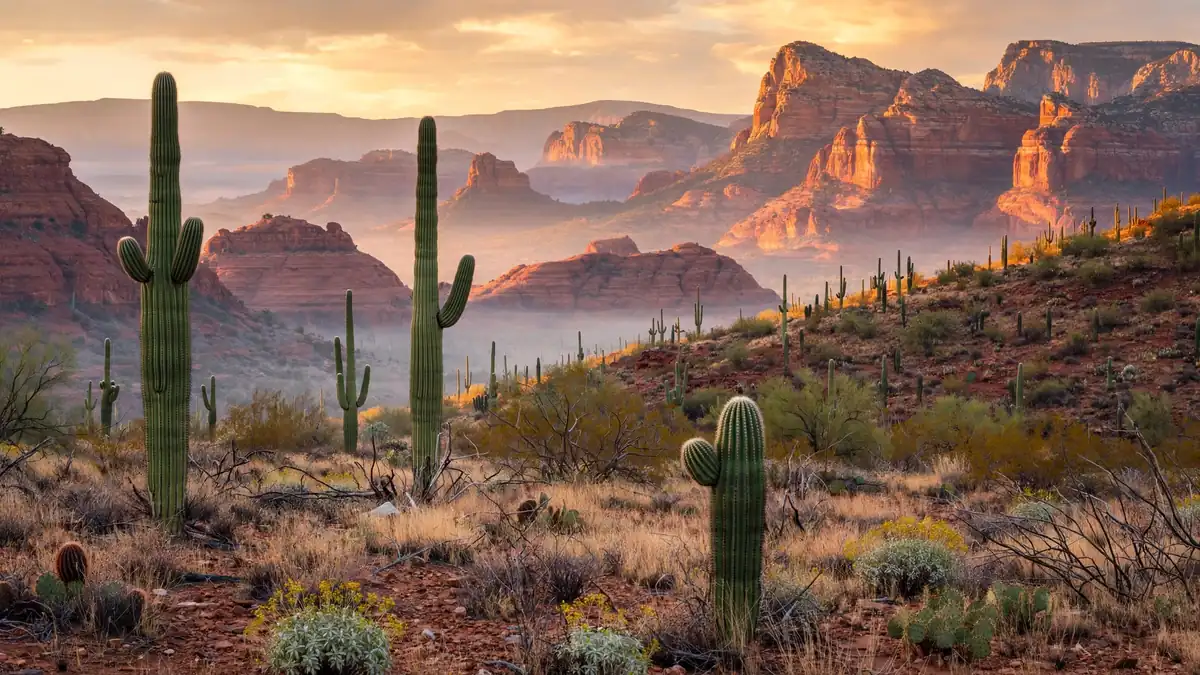
Arizona in summer is beautiful, harsh, and easy to misjudge. So this guide starts with honesty, not hype. Phoenix and the low desert regularly pass 110 degrees Fahrenheit in summer. In fact, some afternoons feel hotter on rock and pavement than the forecast suggests. However, Arizona also holds cool pine forests, deep lakes, and cold creeks. Also, the best places to visit in Arizona in the summer reward early risers. Then the heat becomes a timetable problem, not a trip killer.
This guide ranks places to visit in Arizona in summer by strategy, not just fame. First, you will learn the safety rules that protect every plan. Then you will find high places, water places, and dawn-only desert sights. Also, you will find indoor midday saves and calm after-dark options. For example, Flagstaff can feel mild while Phoenix still bakes at noon. Finally, a sample day rhythm shows how to stack these ideas well.
Arizona Summer Heat Safety Comes First
Arizona summer heat safety starts before you leave your room. So check the forecast for the exact town, not the state. Then check the heat risk, storm risk, and trail alerts too. Because a Phoenix forecast tells you little about Flagstaff weather. Also, tell someone your plan and your return time each day. In fact, phone signal fades fast in canyons and forest roads. Finally, treat a headache or nausea as a stop signal, never a challenge.
Heat illness builds quietly, and then it turns fast. So learn the early signs before you hike or swim. Early signs include heavy sweating, cramps, weakness, and feeling faint. However, confusion, hot dry skin, and collapse mean emergency help at once. Then move the person to shade and cool them fast. Also, sip water with electrolytes during long, sweaty outings. In fact, waiting until you feel very thirsty is already too late.
Water, Timing, and the Turn-Back Rule
- Carry a gallon of water per person for a full day outside.
- Start desert hikes before sunrise, and finish by 9 or 10 in the morning.
- Turn back when half of your water is gone.
- Wear a wide hat, sunscreen, and light, loose clothing.
- Never hike alone in extreme heat, and never skip the shade breaks.
- Keep extra water and a charged phone in the car.
These Arizona summer travel tips sound strict for a good reason. Hikers die from heat in Arizona every single year. So a short trail can still hurt an unready visitor badly. For example, rock holds heat and reflects it back at you. Also, dry air hides sweat loss, so dehydration sneaks up quietly. Then a fun walk becomes a rescue call within an hour. In fact, locals respect the dawn rule because they know this pattern.
Monsoon season adds a second danger from July into September. Arizona monsoon season travel adds one clear rule for storms. So never enter slot canyons or dry washes when storms are forecast. Because rain miles away can send a flash flood toward you fast. Also, never drive through flooded roads, even when water looks shallow. Then wait, reroute, and let the water drop on its own time. Finally, check canyon tour and park alerts again on the morning itself.
High-Elevation Escapes That Feel Like Another State
Your choice of where to go in Arizona in summer should start with elevation. So look at the map by height first, then by distance. The cool places in Arizona in summer share one simple trait. In fact, they sit thousands of feet above the low desert. Also, pine shade and cool nights change the whole trip there. Then normal walks feel fun again, even in July and August.
Flagstaff, the Coolest Easy Answer
Flagstaff in summer feels like another state entirely. The town sits at about 7,000 feet above sea level. So it often runs 25 to 30 degrees cooler than Phoenix. Also, ponderosa pines shade the trails and the downtown streets. Then a morning hike can end with coffee, not collapse. For example, families can stroll downtown and still feel a breeze. In fact, Flagstaff works as a base for the whole north.
Also, Flagstaff pairs well with day trips in every direction. Then the Grand Canyon, Walnut Canyon, and Sunset Crater sit nearby. However, summer storms can roll in fast during the afternoon. So plan outdoor time early, even in this cool town. Also, book rooms early, because Phoenix escapes here each weekend. Finally, bring a light jacket, because evenings can feel surprisingly cool. If you are weighing the wider state, our guide to where the best place to visit in Arizona is helps you compare regions.
Grand Canyon South Rim and North Rim
Grand Canyon in summer needs a split plan by rim. The South Rim sits at about 6,800 feet, so rim walks stay far cooler than Phoenix. However, the canyon floor is much hotter than the rim. So every step down means more heat on the climb back. Also, the North Rim sits higher and feels cooler and quieter. Then rim viewpoints, short walks, and sunrise starts make sense. In fact, never try to hike to the river and back in one summer day.
Also, the canyon rewards patience more than distance in summer. For example, a short rim walk at dawn can beat a long midday hike. Then shade, water stations, and visitor centers shape the middle hours. So carry water even for short walks below the rim. Also, watch the sky, because monsoon storms build fast here. Finally, sunset brings cooler air and soft light across the canyon. For bigger trip ideas, see these top outdoor places to visit in the US for context.
Prescott, Payson, the Mogollon Rim, and Bisbee
The best places to escape the heat in Arizona are not all famous. Prescott offers pine air, a walkable square, and cool lakes nearby. Also, Payson and the Mogollon Rim bring forest roads and creek shade. Then small towns like Pine and Strawberry slow the pace nicely. For example, a rim picnic can feel mild at noon. In fact, these towns suit travelers who dislike crowds and tour buses.
Bisbee sits high in the southeast, near the Mexican border. So its old mining streets feel cooler than Tucson and Phoenix. Also, galleries, stairs, and small cafes fill a relaxed day. Then a night there feels calm, artsy, and pleasantly mild. However, summer storms can still hit the mountain roads hard. Finally, check the road and storm forecast before the drive home. These towns are also some of the coolest places in Arizona in summer for repeat visits.
Water Places That Make Summer Feel Fun
Water changes the rules, but it never removes them. So swim early, reapply sunscreen often, and keep drinking water. Also, creek and lake water can hide strong currents after storms. Then a calm morning swim is safer than a late, stormy one. For example, shaded creek banks beat open rock at midday. In fact, the safest places to visit in Arizona in summer with family pair water with shade.
Sedona and Slide Rock in Oak Creek
Sedona in summer is hot, yet it works with smart timing. The town sits higher than Phoenix, so mornings feel milder there. Also, Oak Creek runs cold and clear below the red rocks. Then Slide Rock State Park turns the creek into a natural slide. For example, smooth rock chutes drop into deep, cool pools. So arrive early, because parking fills fast on summer weekends. Also, wear shoes with grip, because wet rock gets very slick.
Also, Sedona gives you a soft landing after the swim. Then galleries, cafes, and short shaded walks fill the late day. However, trailheads bake fast once the sun climbs high. So hike at dawn, swim mid-morning, and rest by noon. In fact, that rhythm is the secret to enjoying Sedona then. Finally, stay out of the creek when storms threaten upstream. For a desert contrast nearby, compare this best place to visit in Joshua Tree guide.
Page, Lake Powell, and Antelope Canyon Tours
Page works in summer because water sits at its center. Lake Powell offers boating, kayaking, and long swim stops. So a boat day can feel cooler than any land tour. Also, the lake breeze helps, even on very hot days. Then shaded coves make good picnic and rest spots. However, the rock and sand around the lake still bake. In fact, bring far more water and shade than you expect.
Antelope Canyon tours add the famous slot canyon light beams. So book ahead, because summer tours sell out fast. Also, only guided tours enter these protected slot canyons. Then guides watch the weather and close tours for flood risk. Because of that risk, never question a storm cancellation there. Finally, pair the tour with a lake swim for balance. If you love bold landscapes, browse these best adventure places to visit in USA for later trips.
Salt River Tubing and Other Easy Swims
For many locals, Salt River tubing Arizona weekends are a summer ritual. The river runs cool below desert cliffs east of Phoenix. So floating beats walking when the valley heat peaks. Also, wild horses sometimes graze along the quiet banks. Then the slow current turns a hot day into a lazy one. However, you still need water, sunscreen, and a dry bag. In fact, sunburn and dehydration hit tubers more than they expect.
Also, other water stops can save a Phoenix or Tucson base. For example, city pools, splash pads, and resort pools help families. Then lake parks near Phoenix offer swims with lifeguarded areas in season. So check each site for current hours and safety rules first. Also, never swim in canals, because they are dangerous and illegal. Finally, end water days early if thunder starts to build. Planning a family base in the valley? Then read this guide to places to visit in Phoenix, Arizona with family for leisure ideas.
Early-Morning-Only Desert Sights Worth the Alarm
Some desert sights are still worth seeing in summer. So see them at dawn, and leave them by mid-morning. Also, short loops and scenic drives beat long exposed hikes then. Then you get the color, the silence, and the cool air. For example, saguaros cast long shadows across empty trails at sunrise. In fact, dawn is the desert at its very best. The best things to do in Arizona in July all follow this clock.
Tucson, the Desert Museum, and Saguaro National Park
Tucson rewards early starters with two classic stops. The Arizona-Sonora Desert Museum blends a zoo, garden, and museum outdoors. So go at opening time and walk the grounds in cool air. Also, most paths sit outside, so timing matters a lot there. Then Saguaro National Park offers short dawn loops among giant cacti. For example, a brief scenic drive can replace a long hike. In fact, sunrise light makes the saguaros glow a soft gold.
Also, Tucson sits a bit higher than Phoenix, so nights cool more. However, midday still feels fierce on open desert trails there. So pair a dawn park visit with a long indoor lunch. Then rest through the peak heat and save energy for evening. Finally, carry water in the car for the drive between stops. If your route runs along the coast later, this list of top places to visit in West Coast USA may help.
Phoenix Desert Sights on a Dawn Schedule
Phoenix desert sights can work, but only on a dawn schedule. So pick one short trail or garden walk, not three. Also, finish before the heat builds, usually by 9 in the morning. Then head straight for shade, food, and cold drinks. For example, Papago Park offers short walks and big red buttes. In fact, its trails feel friendly for beginners at sunrise. However, even easy Phoenix trails turn risky by late morning.
Also, tell your group the finish time before you start walking. Because turning back early feels hard when views keep improving. So set the limit, keep the limit, and enjoy the win. Then use the saved hours for museums and rest instead. Finally, never leave pets in a parked car, even briefly. Heat inside a car rises to deadly levels within minutes.
Indoor Midday Saves in Phoenix
Midday is not lost time in a smart Arizona plan. So treat the hottest hours as your indoor chapter each day. Also, Phoenix holds two museums that can fill hours happily. Then you learn a lot while your body fully recovers. For example, a long museum visit can replace a risky hike. In fact, rest is part of the adventure in summer here.
The Heard Museum shares Native art, history, and living cultures. So its galleries give context for the land outside the city. Also, the stories there deepen every desert visit that follows. Then the Musical Instrument Museum in Phoenix feels huge and joyful. For example, you can hear instruments from nearly every country there. In fact, many visitors spend half a day inside without noticing. Finally, both museums offer cool air, cafes, and easy pacing.
Also, smaller indoor stops can stretch a hot afternoon well. Then a film, a library, or a shaded mall can help. However, pick one base and avoid hopping across hot parking lots. So park once, stay cool, and move again near sunset. Also, use this time for naps, laundry, and route checks. Finally, a rested traveler enjoys the evening far more. For dream-list balance, browse these 15 places to visit in the world while you cool off.
After-Dark Arizona and Famous Dark Skies
Summer nights are the reward for a careful summer day. So save some energy for the hours after sunset. Also, desert air cools fast once the sun drops low. Then patios, night markets, and evening walks come back to life. For example, Tucson and Phoenix both glow after dark in summer. In fact, many locals plan their social life around these hours.
Flagstaff holds a special place in dark-sky travel. Lowell Observatory in Flagstaff offers famous night sky programs there. So telescopes, talks, and mountain air make a fine evening. Also, Flagstaff was a pioneer city for dark-sky protection. Then the Milky Way can shine bright on clear nights. However, monsoon clouds can hide the sky on some evenings. Finally, check the program schedule and sky forecast before you go.
Also, other night options suit different bases and energy levels. Then a sunset drive can beat a long night hike easily. For example, desert viewpoints near Sedona glow red at dusk. So arrive before sunset, park safely, and watch the light change. Also, never wander off trail in the dark without proper gear. Finally, end the night with water, because dry air still drains you.
A Sample Summer Day Rhythm That Works
A good summer day in Arizona runs on a simple rhythm. So wake before dawn and start outside in the cool dark. Then hike, swim, or sightsee until about 9 or 10. Also, eat a real breakfast and drink water through the morning. For example, a dawn canyon walk plus a creek swim works well. In fact, that pairing gives you beauty without the worst heat.
- Start outside before sunrise, and finish by 9 or 10 in the morning.
- Swim, rest, or visit a museum through the hot midday hours.
- Eat slowly, nap if you can, and check the storm forecast.
- Head out again near sunset for views, food, or stargazing.
Also, base choice shapes the rhythm more than willpower does. So stay high when you want full outdoor days in summer. Then use Phoenix or Tucson mainly for dawn and night plans. However, a mixed trip can still work with honest pacing. For example, two high-country nights can balance one valley night well. Finally, leave one loose day for storms, rest, or a late start.
Frequently Asked Questions
Is Arizona worth visiting in the summer?
Yes, Arizona is worth visiting then with a heat-smart plan. So pick high towns, water stops, and dawn outings. Also, skip long midday desert hikes completely in summer. Then the state feels rewarding, varied, and far less stressful.
What is the coolest place in Arizona in the summer?
Flagstaff is one of the coolest easy bases in the state. Its high elevation brings mild days and cool nights. Also, the Grand Canyon North Rim and Mogollon Rim feel cool. Then lakes and pine forests add shade and swim options.
How much water should you carry on a summer hike?
Park guidance points to a gallon per person per day. So carry more than feels necessary for desert outings. Also, turn back when half of your water is gone. Then add electrolytes for long, hot, and sweaty efforts.
When is it too hot to hike in Arizona?
It is too hot once you cannot finish by mid-morning. So start before sunrise and set a firm turn-back time. Also, extreme heat warnings mean you should skip desert hikes. In fact, even short trails can turn dangerous by noon.
Is the monsoon season a bad time to visit Arizona?
No, monsoon season can still be a fine time to visit. However, you must respect flash flood risk every single day. So avoid slot canyons and washes when storms are forecast. Also, never drive through flooded roads or flowing crossings.
What should you pack for Arizona in summer?
Pack a wide hat, sunscreen, and light, breathable clothing first. Also, bring a large water bottle and salty snacks. Then add a light jacket for high towns at night. Finally, pack shoes with grip for wet creek rock.



