
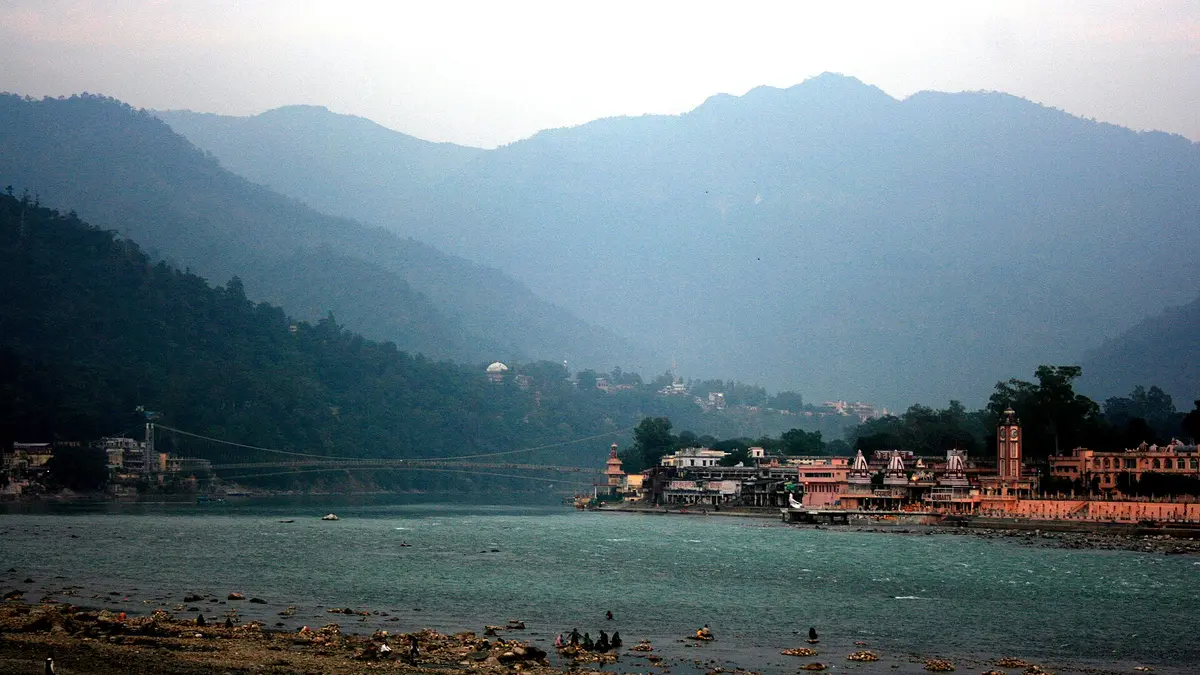
One day sounds too short for a town like this. Still, the best places to visit in Rishikesh in one day sit close together, so a smart route works well. First, you need one simple rule. So, stay in one zone for a block of hours, and then move once.
Rishikesh splits into two clear clusters. On one side, Tapovan and the Lakshman Jhula area sit north of the river bend. Meanwhile, Ram Jhula, Parmarth Niketan, and Triveni Ghat lie a few kilometres downstream. Because the two zones are close, you can cover both in a day. However, you cannot criss-cross between them all day without losing hours.
This Rishikesh one day itinerary follows that logic. First, it starts early in Tapovan with yoga and breakfast. Next, it gives you one big morning choice, either the Beatles Ashram or rafting. Later, it crosses Ram Jhula for the ashrams, ghats, and markets. Finally, it ends where the day should end, at the sunset Ganga aarti.
How does this Rishikesh one day itinerary flow?
Think of the day in four blocks. First, the early block runs from dawn until breakfast in Tapovan. Then, the morning block holds one major activity only. Next, the afternoon block belongs to Ram Jhula and the far bank. Finally, the evening block centres on the aarti and a calm exit.
- 6:00 to 7:00 am: Drop-in yoga in Tapovan, then a quiet riverside walk
- 7:15 to 8:15 am: Breakfast in a Tapovan café street
- 8:30 am to 12:30 pm: Beatles Ashram or a short rafting run, never both
- 12:30 to 1:30 pm: Lunch and a proper rest
- 1:30 to 4:30 pm: Ram Jhula, Parmarth Niketan, ghats, and markets
- 4:30 to 5:30 pm: Café break or riverside rest
- Around sunset: Ganga aarti at Triveni Ghat or Parmarth Niketan
- After the aarti: Dinner, then an auto or cab back to your stay
That shape protects your energy. For example, the morning choice decides the whole pace of the day. So, pick it the night before, and then book nothing else around it. Once that choice is fixed, the rest of the day falls into place easily.
Why should you start with yoga in Rishikesh?
Rishikesh calls itself the yoga capital of the world, and dawn shows why. First, the river sounds louder before the traffic wakes up. Then, the light turns soft over the hills, and the ghats stay calm. Because of that calm, an early class feels very different from a noon class.
Most visitors in Tapovan can find a drop-in morning class nearby. In fact, many guesthouses and small studios in the area run early sessions for travellers. So, ask your host the evening before about the closest option. Then, choose a gentle class, because a hard session will tire your legs for walking.
What if you do not practise yoga?
You can still start the day well without a mat. First, walk down to a quiet riverside spot in Tapovan. Then, sit for ten minutes and watch the current move past the rocks. For example, many travellers simply enjoy tea by the river at this hour. Still, keep the start early, because the whole plan depends on it.
Where should you eat breakfast in Tapovan?
After your class, head into the café streets of Tapovan Rishikesh travellers love. First, this area wakes up early for travellers, so breakfast is easy to find. Then, the cafés sit close together, so you will not waste time hunting. Because you are still in the same zone, the morning stays relaxed.
Order something filling but light. For example, fruit, eggs, toast, porridge, or a simple Indian breakfast all work well. Then, drink plenty of water, because the walking later adds up. Meanwhile, check your plan for the morning block while you eat. Once breakfast ends, the one big choice of the day begins.
Should you choose the Beatles Ashram for your morning?
For most first-time visitors, yes. First, the Beatles Ashram sits on the far side of the river near Ram Jhula. Then, it rests inside the green fringe of the Rajaji forest area. Because of that setting, the walkways feel quiet, shaded, and far from traffic. In fact, the place feels half forest and half open-air gallery.
The ashram is also known as Chaurasi Kutia. Back in 1968, the Beatles stayed here to learn meditation. Now, visitors wander past domed meditation huts, old halls, and walls covered in murals. So, a Beatles Ashram Rishikesh visit mixes music history with street art and silence.
How long does the Beatles Ashram really take?
Give it about one and a half to two hours, including getting there. First, you need time to reach the entrance from Tapovan. Then, the grounds are larger than most people expect. For example, rushing through in forty minutes misses the best halls and huts. So, walk slowly, and then leave by late morning.
Plan the transfer with care. First, ride by auto or cab towards the Ram Jhula side. Then, walk the last stretch on foot, because vehicles cannot do everything here. Meanwhile, carry water, because the grounds have little shade in some parts. Once you finish, you are already on the right side for lunch nearby.
Or should you choose Rishikesh rafting instead?
Rafting is the other strong morning choice, and it is a real choice. First, understand the true time cost before you decide. Even the shortest run takes about two hours door to door. So, that means travel, a safety talk, the run itself, and the ride back. Because of that, rafting replaces the ashram, and it never stacks on top of it.
Rishikesh rafting runs roughly from September to June. During the monsoon, operators stop because the river runs too high and fast. So, if you visit in July or August, choose the ashram instead. Then, in the main season, book the earliest slot you can find. By then, an early start keeps your afternoon free.
Who should pick rafting over the ashram?
Pick rafting if adventure tops your list for Rishikesh in 1 day. For example, groups of friends often value the river more than old ruins. Still, pick the ashram if you prefer history, art, or a slower pace. In fact, older travellers and young families usually enjoy the ashram more. So, be honest about your group, and then commit to one plan.
Also, think about your body after rafting. First, you will get wet, so you need time to change. Then, you may feel happily tired for an hour or two. Because of that, a rafting morning needs a longer lunch rest. Meanwhile, an ashram morning leaves more energy for the markets later.
Where should you stop for lunch?
Lunch works best near where your morning ends. So, if you visited the ashram, eat on the Ram Jhula and Swarg Ashram side. Then, if you rafted, eat back near Tapovan or Muni Ki Reti. Because both zones have plenty of cafés and simple restaurants, you will not struggle. In fact, Rishikesh is vegetarian by tradition, so expect fresh and filling meat-free meals.
Keep lunch unhurried. First, the afternoon block involves a lot of walking. Then, the sun can feel strong, even outside summer. So, rest indoors for at least forty-five minutes. For example, use this pause to check the aarti time for that evening. Once you feel rested, the afternoon can begin.
How should you cross Ram Jhula in the afternoon?
Now the day moves to its second zone. First, reach Ram Jhula, the working footbridge for this route. Then, walk across slowly and enjoy the view in both directions. Because the bridge carries only people on foot, the crossing feels safe and lively. In fact, this short walk often becomes a favourite memory.
Here, one warning matters a lot. The old Lakshman Jhula bridge has been closed for years. So, do not plan to walk across that old bridge at all. Instead, visit the Lakshman Jhula area for its temples, lanes, and views. Then, use Ram Jhula whenever you actually need to cross the river.
What can you see around the Lakshman Jhula area?
The area still deserves a short look earlier or later in the day. First, the tall Tera Manzil temple rises beside the river there. Then, small shops and cafés line the lanes on both sides. For example, many visitors browse for books, clothes, and simple souvenirs here. Still, treat this zone as a stop, not as your crossing point. Because of that, your route stays honest and workable.
What should you see at Parmarth Niketan and Swarg Ashram?
After the crossing, walk into the Parmarth Niketan and Swarg Ashram side. First, this bank feels greener and quieter than the market streets. Then, ashram gardens, temples, and ghats sit within an easy walk. Because everything sits close, this block suits a slow afternoon. In fact, this is the spiritual heart of most visits. This block is the core of Rishikesh sightseeing, so do not rush it.
Parmarth Niketan is one of the largest and best-known ashrams here. Visitors can walk through its grounds and sit by its ghat. Then, statues and gardens give the place a calm, open feel. Meanwhile, nearby lanes hold small temples and shops selling prayer items. So, wander gently, and then keep your voice low near prayer areas.
Which markets should you browse on this side?
Save shopping for this block, because the markets sit along your route. First, look for rudraksha malas, brass lamps, books, and simple cotton clothes. Then, compare two or three shops before you buy anything. For example, prices can vary a lot between neighbouring stalls. Still, bargain politely, and then enjoy the chat as part of the fun.
Families planning wider India trips may also enjoy our guide to places to visit in Jaipur with family for another heritage city. Likewise, our roundup of places to visit in Karnataka with family helps with a southern route. Both guides use the same calm, zone-based approach.
Why do you need a late-afternoon rest?
By about 4:30 pm, your feet will ask for a pause. So, listen to them. First, find a riverside café near Ram Jhula or Parmarth Niketan. Then, order tea or a cold drink and sit facing the water. Because the aarti still needs your attention later, this rest is strategic. In fact, travellers who skip it often leave the aarti early.
Use this hour wisely. For example, you can review your photos from the ashram. Meanwhile, children can snack before the evening crowd builds. Then, decide which aarti you will attend tonight. Once you choose, you can plan your walk there without stress.
Where should you watch the Ganga aarti in Rishikesh?
Sunset brings the moment that defines the day. The Ganga aarti Rishikesh travellers remember most happens around sunset, roughly between 6 and 7 pm. However, the exact time shifts with the season. So, confirm the timing locally that afternoon. Then, arrive at least thirty minutes early for a good spot.
You have two strong choices. First, Triveni Ghat hosts the largest and most local-feeling ceremony. Then, Parmarth Niketan offers a slightly more organised setting on its ghat. Because both sit on the downstream side, either choice fits this route. In fact, your afternoon already ends near both of them.
What happens during the aarti at Triveni Ghat?
At Triveni Ghat, priests line up facing the river with large fire lamps. First, chanting builds as the light fades. Then, the lamps move in circles, and the crowd joins the song. Meanwhile, small floating lamps drift away on the current. So, the whole scene feels warm, loud, and deeply moving at once.
Triveni Ghat marks the believed meeting of three sacred rivers. Because of that, pilgrims value this ghat above all others here. Still, visitors are welcome to watch quietly from the steps. For example, simply standing at the back still gives a clear view. Once the ceremony ends, the market beside the ghat glows with food stalls.
If sacred river cities fascinate you, our guide to best places to visit in Chittagong City covers a very different river culture. Similarly, temple towns in our list of 15 places to visit in the world show how rituals shape travel. Both reads pair well with an evening here.
How should you end the evening?
After the aarti, the town slows down fast. First, eat a simple dinner near the ghat or back near your stay. Then, avoid starting any new sightseeing, because most temples close early. Because Rishikesh sleeps early, the streets feel peaceful by 9 pm. So, end the day in the same calm mood as it began.
Getting back needs one small plan. First, autos gather near the main roads after the aarti. Then, shared vehicles run towards the bus stand and railway side. For example, if you stay in Tapovan, a cab or auto ride is simplest. Meanwhile, walkers near Ram Jhula can often reach their stay on foot. Once back, rest well, because hill travel rewards early sleep.
What should you honestly skip in one day?
Honesty will save your day here. Some famous places to visit in Rishikesh simply do not fit into one day. First, Neelkanth Mahadev Temple needs a half-day trip by road on its own. Then, the waterfalls near town also need their own block of hours. Because both sit away from the two main zones, adding them breaks the route. So, save them for a second day.
- Neelkanth Mahadev Temple, a half-day road trip each way in traffic
- Neer Garh and other waterfalls, which need hiking time and daylight
- Bungee jumping zones, which sit far outside the walking route
- A second big adventure after rafting, because your body needs rest
- Haridwar as a same-day add-on, because that city deserves its own day
This list is not a warning against those places. In fact, several of them are wonderful on a longer trip. Still, things to do in Rishikesh always exceed one day. So, a good plan protects the highlights instead of chasing everything.
Travellers building a longer Asia plan might enjoy our guide to best places to visit in Kyoto during summer next. Also, our list of top 15 places to visit in Kyoto rewards slow, zone-based days too. Closer to Mumbai, places to visit in Vashi, New Mumbai suits a short city break.
When is the best time to visit Rishikesh for one day?
The best time to visit Rishikesh for this plan is roughly October to April. First, the air feels cool and clear in these months. Then, walking between the zones stays pleasant all day. Because rafting also runs in this window, both morning choices stay open. In fact, winter mornings by the river feel especially beautiful.
Summer days can still work with an earlier start. However, the afternoon sun feels strong, so the café rest becomes essential. Meanwhile, the monsoon months bring lush hills but closed rafting. So, in the rains, choose the ashram morning and carry rain gear. Still, check river and road conditions locally before you travel then.
How much does one day in Rishikesh cost?
Costs depend mostly on your morning choice and your café habits. Generally, walking, the bridges, the ghats, and the aarti cost nothing. Then, the ashram visit carries a modest entry fee, and rafting costs more. Because food ranges from simple local meals to full café menus, budgets flex easily. So, carry a mix of cash and a card, and then spend calmly.
How do you get around during the day?
Walking covers most of this route, and that is the point. First, Tapovan and the ashram side both reward slow feet. Then, autos fill the few longer gaps between zones. For example, the ride between Tapovan and Triveni Ghat is short by road. Still, traffic near the markets can slow that ride at peak hours. Because of that, always leave a buffer before the aarti.
Frequently asked questions
Can you really cover Rishikesh in 1 day?
Yes, if you follow a zone-based plan like this one. First, cover Tapovan in the early hours. Then, pick one big morning activity only. Because the afternoon and aarti sit in one zone, the day stays calm. So, you will see the highlights without rushing.
Which aarti is better, Triveni Ghat or Parmarth Niketan?
Both are beautiful, so the choice depends on your mood. First, Triveni Ghat feels larger and more local. Then, Parmarth Niketan feels more organised and slightly calmer. In fact, many visitors try one on each trip. So, pick the one closest to your afternoon route.
Is the Lakshman Jhula bridge open for walking?
No, the old bridge has been closed for years. So, do not plan any crossing there. Instead, enjoy the Lakshman Jhula area from the banks and lanes. Then, cross the river on foot at Ram Jhula. Because of that, your route stays safe and realistic.
Can you do rafting and the Beatles Ashram on the same day?
Technically, a very rushed day might squeeze both in. Still, this plan advises against it strongly. First, rafting alone takes about two hours door to door. Then, the ashram needs up to two hours with travel. So, doing both turns the afternoon into a race.
What should you wear and carry for one day in Rishikesh?
Wear modest, comfortable clothes and strong walking shoes. First, temples and ashrams expect covered shoulders and knees. Then, carry water, sunscreen, and a small daypack. For example, a light scarf helps at temples and on breezy bridges.
One day in Rishikesh will not show you everything. Still, it can show you the town at its best. First, you will stretch by the river at dawn. Then, you will choose one deep morning experience. Later, you will cross Ram Jhula and end with firelight on the Ganga. So, follow the zones, protect the aarti hour, and let the rest go.



