
Some cities show you their story in monuments. Chittagong, officially called Chattogram, shows its story in motion instead. Ships wait on a grey-blue horizon. Cranes swing above a working harbour. Hills rise behind busy streets, and the river never really sleeps.
For that reason, this Chittagong travel guide works best as an explorer guide. Rather than chasing a flat checklist, you will explore by theme and by area. First comes the sea edge. Then comes the river and port. Next come the green hills, and finally the museums and old streets.
Altogether, the best places to visit in Chittagong city reward slow travel. Watch freighters at sunset today. Climb a quiet hill tomorrow. Along the way, learn how many cultures have shaped this coast for centuries.
Why does Chittagong feel different from other port cities?
Unlike a polished resort town, Chattogram earns its living from trade. Fishing boats share water with container ships. Hill neighbourhoods overlook warehouses, markets, and the wide Karnaphuli River below.
In fact, that mix is the main attraction here. Nature is never far from industry. History is never far from daily life either. As a result, even a simple walk can turn into a small discovery.
Meanwhile, travellers often use the city only as a transit stop. That choice misses the point entirely. If you give the city two or three days, its character becomes clear.
The sea edge: beaches, breakwaters, and big skies
Patenga Beach and the ships on the horizon
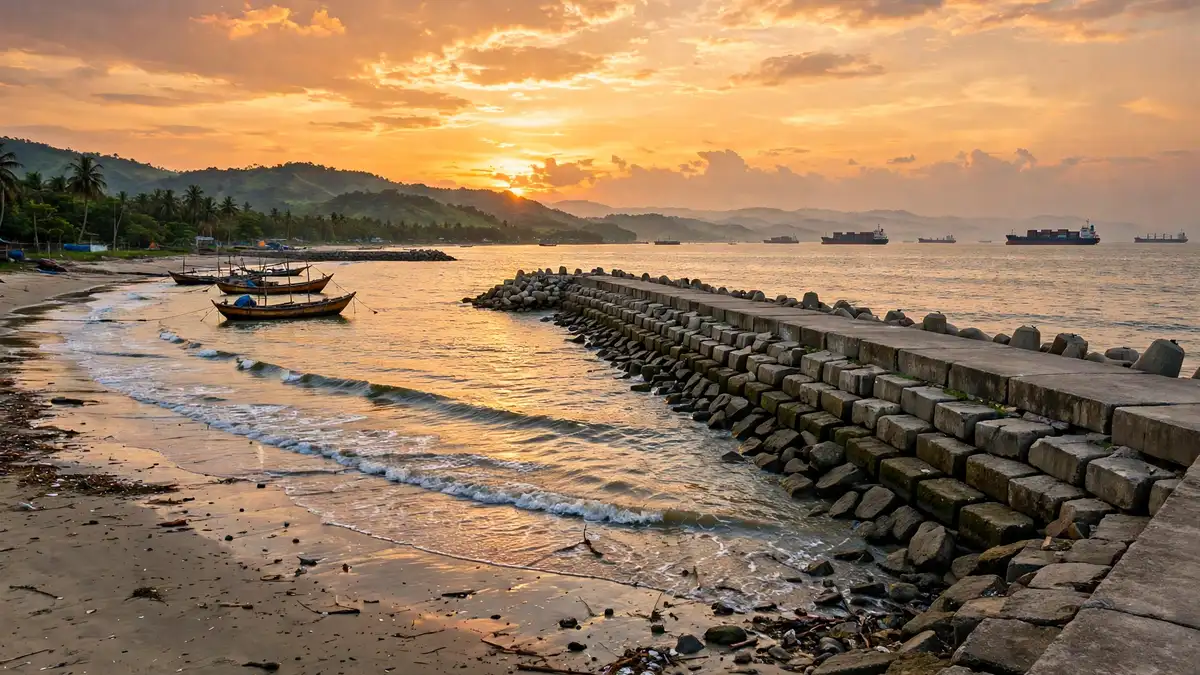
Patenga Beach is the name most people know first. The beach sits near the mouth of the Karnaphuli, close to the airport road. Locals come for sea air, snacks, and sunset. Visitors come for the same simple pleasures.
However, Patenga is not a quiet swimming beach. The water carries strong currents, and the shore stays busy. Instead, treat it as a viewing beach and a social beach. Walk the paved edge, watch the waves, and enjoy the scene.
At sunset, the view becomes truly memorable. Large ships anchor offshore and turn into dark silhouettes. Street vendors sell roasted corn, fuchka, and tea nearby. Consequently, late afternoon is usually the best time to arrive.
For example, many families arrive around an hour before sunset. Children play near the breakwater blocks. Couples take photos against the orange sky. In short, Patenga shows the city at rest after a working day.
Naval Beach and a calmer coastal pause
Naval Beach offers a slightly different mood nearby. The shore feels more open in places, and the naval setting shapes the area. Access rules and open sections can vary, so check locally before you go.
Still, the coastal road itself is part of the pleasure. Sea views open and close between trees and stalls. Small eateries serve fried snacks and seafood dishes. Therefore, many travellers pair Naval Beach with Patenga in one trip.
On the other hand, do not rush this coastline. Sit for a while with tea. Watch fishing boats move across the light. Sometimes the best things to do in Chittagong are also the simplest ones.
The river and the working port
What makes the Karnaphuli River so important?
The Karnaphuli River is the city’s lifeline and its oldest highway. It carries cargo, ferries, fishing boats, and daily commuters. Without this river, modern Chattogram would not exist.
From the banks, you can read the city’s economy clearly. Cranes load and unload cargo through the day. Launches and small vessels thread between larger ships. Above all, the river reminds you that this is a real working place.
A short boat ride gives you another perspective entirely. From the water, the Chittagong port city skyline looks layered and green. Hills rise behind cranes and rooftops. If you take a boat, choose an experienced local operator and agree the route first.
Safety matters on any busy working river. Life jackets should be available for passengers. Weather can also change plans quickly during monsoon months. Hence, a morning ride in the dry season usually feels easiest.
Watching the port without getting in its way
Many travellers wonder how close they can get to the port. The honest answer is simple. The main port is a restricted working area, not a tourist attraction. You will enjoy it best from public viewpoints, bridges, and the riverbanks.
Luckily, those distant views are dramatic enough already. At dusk, port lights reflect on the water. Ships move slowly against the fading light. As darkness falls, the whole waterfront starts to glow.
Photographers especially love this working landscape. Long lenses can capture cranes, masts, and layered hills together. Just respect restricted signs and private property at all times. In that way, curiosity and courtesy can happily coexist.
Green hills and lake air inside the city
Foy’s Lake and the hills of Khulshi
Foy’s Lake brings a softer side of the city into view. This large man-made lake sits among green hills in the Pahartali area. It was created during the railway era to supply water. Today it anchors a popular leisure complex.
Boats drift across the calm water on most days. Families visit the amusement park and the water park nearby. Others simply walk, picnic, and enjoy the shade. For families, Foy’s Lake is often the easiest half-day outing in town.
Compared with the coast, the air here feels cooler. Trees cover the slopes around the lake. Birds move through the branches above the paths. Consequently, the lake works well after a busy morning of sightseeing.
Practical planning helps at this busy attraction. Weekends and holidays can feel crowded. Weekday mornings usually feel calmer and cleaner. Either way, carry water and allow time for traffic on the return.
DC Hill, Cheragi Pahar, and Batali Hill
DC Hill is one of the city’s beloved green gathering spots. Locals come for morning walks, cultural events, and open views. During festivals and book fairs, the area feels especially lively.
Nearby, Cheragi Pahar has a different creative energy. The area is known for art, publishing, and cultural gatherings. If you enjoy local culture, wander here slowly and look closely.
Batali Hill rises as one of the city’s highest points. A climb rewards you with wide views over rooftops and river. The slopes can be steep and slippery after rain. So wear sensible shoes and take your time on the way down.
Together, these hills explain the city’s shape. Chattogram is not flat like many delta cities. Its streets climb, dip, and curve around green ridges. That terrain gives many tourist spots in Chittagong their surprise views.
Heritage, faith, and memory
The Ethnological Museum and the peoples of the hills
The Ethnological Museum in Agrabad is small but deeply rewarding. It is often described as the country’s only ethnological museum. Its galleries introduce the diverse Indigenous communities of Bangladesh. Exhibits include clothing, tools, musical instruments, and full-scale house models.
Why does this museum matter so much here?
Because Chattogram is a gateway to the southeastern hills. Many communities represented inside live across this wider region. A visit gives context before any hill trip. It also replaces vague ideas with real names, crafts, and histories.
Plan around an hour for the galleries. Read the labels slowly rather than rushing past cases. Afterward, the busy Agrabad commercial district waits right outside the door.
Zia Memorial Museum and the old Circuit House
The Zia Memorial Museum occupies the old Circuit House building. The elegant structure stands on a hillock near the city centre. It is associated with President Ziaur Rahman, who was assassinated here in 1981. Inside, personal objects and Liberation War material tell a layered story.
Even without deep background knowledge, the building itself impresses. The setting feels calm despite the traffic below. Therefore, history lovers should include it in a central walking route.
Opening hours for museums can change without much notice. Check locally on the day before you visit.
Chandanpura Mosque and sacred architecture
Chandanpura Mosque is one of the city’s most distinctive landmarks. Its layered domes, minarets, and bright detailing stand out beautifully. Many visitors recognise its colourful, almost storybook silhouette from photographs. Up close, the tile work and arches reward careful attention.
Visitors should dress modestly and behave respectfully here. This is an active place of worship, not just a photo stop. Ask before photographing people or interior spaces. Outside prayer times, a quiet look from the courtyard is usually appropriate.
Elsewhere, the Shrine of Bayazid Bostami draws many pilgrims. Its pond is famous for large black softshell turtles. The shrine sits on a hill in the Nasirabad area. Together, these sites show the deep spiritual life of the city.
The Commonwealth War Cemetery
The Commonwealth War Cemetery offers the city’s most reflective hour. Neat rows of headstones rest in a landscaped garden setting. The graves honour service personnel who died during the Second World War. Many were connected with the Burma campaign and local hospitals.
Reading a few inscriptions changes the mood completely. Names, ages, and home countries bring distant history close. Trees shade the paths between the graves. As a result, the cemetery feels peaceful rather than heavy.
Combine it naturally with a central heritage route. The museum, DC Hill, and cemetery sit within manageable reach. A single morning can cover all three comfortably. Just leave buffer time for the city’s famously slow traffic.
Sitakunda and the ship-breaking yards
Can you visit the ship-breaking yard at Sitakunda?
North of the city, the Sitakunda ship-breaking yards are famous worldwide. Huge ocean vessels are dismantled along this stretch of coast. The scale is astonishing even from a distance. A single hull can tower above everything nearby.
Honesty matters greatly on this topic. The yards are industrial workplaces with serious hazards. General tourist access inside is not normally available or advisable. Therefore, view only from public areas at a safe distance, and never trespass.
Respect also matters for the workers themselves. Their labour is difficult and often dangerous. Photograph landscapes cautiously and avoid intrusive pictures of individuals. If a local guide offers suspicious inside access, decline it politely.
Fortunately, Sitakunda offers safer reasons to visit anyway. The eco-park, forested hills, and Chandranath Hill attract many day trippers. Waterfalls in the wider area flow strongest after monsoon rain. So you can pair distant coastal views with green, public attractions.
Day trips that extend the story
Kaptai Lake and the road to Rangamati
A Kaptai Lake day trip shows a calmer, greener region. Kaptai is a vast man-made lake created by a dam on the Karnaphuli. Its blue water winds between forested hills. Boat rides from Rangamati reveal villages, islands, and quiet inlets.
The journey itself takes a few hours each way. Roads climb and wind beyond the city limits. Because of that distance, start early in the morning. Alternatively, stay overnight in Rangamati and travel without rushing.
On the lake, hire boats through recognised local operators. Agree the route, duration, and price before departure. In return, you will see a side of the region that feels worlds away.
Permits and local rules can apply in hill districts. Rules sometimes change for foreign visitors especially. Check current guidance before setting out. That check protects both your plans and your time.
Is a Cox’s Bazar day trip really worth it?
A Cox’s Bazar day trip is possible, but it is long. The town lies roughly 150 kilometres south of Chattogram. It is famous for one of the world’s longest natural sea beaches. Many travellers prefer at least one overnight stay there.
If you go for the day, leave very early. Spend your hours on the main beach and at Inani if time allows. Eat fresh seafood at a busy, well-reviewed restaurant. Then return before the road journey feels endless.
With an overnight stay, the trip improves greatly. You can watch both sunset and sunrise over the Bay of Bengal. You can also visit Himchari’s hills and waterfalls nearby. In contrast, a rushed day trip mostly becomes a road trip.
Either option pairs naturally with a city stay. First explore the port, hills, and museums in Chattogram. Then finish with wide open sand at Cox’s Bazar. That sequence gives your journey a satisfying coastal ending.
Planning your Chittagong itinerary
What is the best time to visit Chittagong?
The best time to visit Chittagong is usually from November to February. Days feel cooler, drier, and more comfortable for walking. Sea sunsets look clearer in this season too. Hotels and transport can still book up around holidays.
October and March often work well as shoulder months. Temperatures rise, yet sightseeing remains manageable with early starts. From April onward, heat and humidity build steadily. By contrast, monsoon months bring heavy rain between roughly June and September.
Monsoon travel is not impossible, but it needs flexibility. Hills look lush and waterfalls run strongly then. Roads and boat plans may change with the weather, though. So build spare time into any rainy-season plan.
How do you get to Chittagong and move around?
Shah Amanat International Airport connects Chattogram with Dhaka and regional cities. Trains from Dhaka are comfortable and popular with many travellers. Long-distance buses also run frequently between major cities.
Inside the city, CNG auto-rickshaws handle most short journeys. Ride-hailing apps operate in many central areas. For beaches and day trips, a hired car with a driver simplifies everything.
Traffic deserves respect in your daily planning. Short distances can take surprisingly long at peak hours. Group nearby sights together by area whenever possible. That simple habit saves both money and patience.
Costs here are usually lower than in many capital cities. Street food and local transport remain very affordable. Mid-range hotels and private cars cost more, as expected. Overall, honest budgeting is easy if you confirm fares before each ride.
A simple two-day route that works
On day one, start with the Ethnological Museum in Agrabad. Next, visit the War Cemetery and climb DC Hill slowly. Later, explore Cheragi Pahar and the Zia Memorial Museum area. Finally, end the day with dinner near GEC Circle.
On day two, begin with Foy’s Lake in the morning light. After lunch, drive toward the coast for Naval Beach. Then finish at Patenga Beach for sunset and street snacks. This Chittagong itinerary balances culture, nature, and the working sea.
How can different travellers shape the route?
With a third day, add a longer excursion. Choose Kaptai Lake for hills and calm water. Choose Sitakunda for green trails and distant ship views. Or choose Cox’s Bazar if you can stay overnight.
Families may prefer a gentler rhythm throughout. Swap the cemetery for more time at Foy’s Lake. Add the zoo near the lake area if children want animals. Readers planning family trips elsewhere may enjoy our guide to places to visit in Jaipur with family as well.
Couples often love the sunset coast most of all. Patenga at dusk has an easy, shared romance. For more couple-friendly ideas, browse best places to visit for couples in Mumbai after this trip.
Beach lovers will naturally compare this coast with others. Our roundup of best places to visit in the world with beaches offers wider inspiration. Similarly, the guide to best places in the Philippines to visit suits island dreamers.
Hill travellers can keep the mountain theme going elsewhere. The routes around places to visit near Dharamshala and McLeodganj feel spiritually familiar. Likewise, places to visit in Karnataka with family mixes hills, heritage, and coast.
Short on time in another historic city someday?
Then the one-day plan for Jodhpur places to visit in one day shows smart pacing. And for a truly global wishlist, explore 15 places to visit in the world before bed.
Practical tips from the ground
- Start sightseeing early, because traffic and heat both build quickly.
- Carry small cash notes, since markets and local transport rarely rely on cards.
- Dress modestly at religious sites, and always ask before photographing people.
- Agree every CNG or boat fare clearly before the journey begins.
- Avoid swimming at Patenga, because currents there can be dangerously strong.
- Check museum opening days locally, as schedules sometimes change without notice.
- Keep a rain plan in monsoon months, and protect cameras from sea spray.
Food deserves a final mention in any guide. Try mezban-style beef dishes if a local restaurant offers them. Seafood near the coast is usually fresh and flavourful. Street snacks like fuchka and chotpoti add spice to any evening walk.
Above all, talk to people when you can. Rickshaw drivers, tea sellers, and museum staff know this city deeply.
Frequently asked questions
How many days do you need in Chittagong?
Two full days cover the main city sights comfortably. A third day allows Kaptai Lake or Sitakunda without rushing. With four days, add an overnight trip toward Cox’s Bazar.
What is Chittagong most famous for?
The city is famous for its major seaport and ship-breaking industry. Its hills, beaches, and the Karnaphuli River also define it. Many people know it by its newer official name, Chattogram. Trade, seafood, and warm hospitality complete the picture.
Is Patenga Beach safe for swimming?
Swimming at Patenga is generally not recommended for visitors. Strong currents and busy boat traffic create real risks. Instead, enjoy walking, snacks, and the famous sunset views. Safer beach time is better saved for a supervised setting elsewhere.
When should you avoid visiting Chittagong?
Heavy monsoon weeks can disrupt roads, boats, and hill plans. Peak Eid travel periods also crowd transport heavily. If possible, choose the cooler dry season instead. Your sightseeing will feel easier in every way then.
What should you buy in Chittagong?
Look for local textiles, dry fish for home cooking, and hill crafts. Markets around New Market and Reazuddin Bazar reward patient browsing. Small food gifts also travel well from established shops.
In the end, the places to visit in Chattogram are only half the story. The other half is a working city that welcomes curious explorers warmly. Come for the beaches and hills. Stay for the river, the people, and the ships sailing toward tomorrow.



