
Stand on Salisbury Plain at dawn, and Britain feels impossibly old. Then the mist lifts slowly, and huge grey stones appear against empty grass. In fact, people raised those stones around five thousand years ago. So your journey through the best historical places to visit in UK begins before writing existed.
This guide walks forward through time, era by era. First comes prehistoric Britain, and then Rome arrives with roads and baths. After that, castles rise, palaces glitter, and factories reshape whole cities. Finally, codebreakers and wartime planners close the story in the 1940s. However you travel, therefore, each stop adds one clear chapter.
Many travellers rank these stops beside the 15 places to visit in the world that everyone should see once. Still, Britain packs unusual variety into a small island. For example, one weekend can hold a Roman bath and a medieval prison. As a result, planning by era beats planning by postcode alone.
Before Writing: Stonehenge and the First Britons
Long before kings, farming communities shaped the Wessex chalklands by hand. Indeed, they dug circular ditches and raised timber circles around 3000 BC. Later generations returned repeatedly, and so the landscape stayed sacred for centuries. Avebury, for instance, grew into the largest stone circle in Britain. Among ancient sites UK travellers ask about most, Avebury feels wonderfully open.
Stonehenge, Wiltshire
Stonehenge itself took shape in stages over many centuries. First, builders raised smaller bluestones, some carried from the Preseli Hills in Wales. Then enormous sarsen stones arrived, probably dragged from downs nearby. Still, nobody knows exactly why the circle mattered so much. Perhaps it tracked solstices, or perhaps it honoured distant ancestors. Either way, this Stonehenge visiting guide advice stays simple: book ahead.
Today you view the stones from a roped path nearby. Meanwhile, the visitor centre displays tools, pottery, and reconstructed Neolithic houses. Allow about two hours, because the exhibition deserves proper attention. Trains reach Salisbury easily, and then a shuttle bus completes the trip. Entry sits in the pricier band, though members of heritage bodies enter free. Insider tip: arrive for the first slot, when light falls low and crowds stay thin.
Stonehenge also pairs beautifully with a slower countryside break nearby. For example, the lanes and villages covered in our guide to the best places to visit in New Forest sit within easy driving distance. Consequently, one Salisbury base can serve both stones and forest.
Roman Britain: Baths, Roads, and a Frontier Wall
Rome invaded Britain in AD 43 under Emperor Claudius. After that, soldiers built forts, straight roads, and busy trading towns. Roman rule lasted nearly four centuries, so its remains still surface everywhere. Indeed, the finest Roman sites in Britain combine ruins with vivid storytelling.
The Roman Baths, Bath
The Romans found hot springs bubbling from the ground at Bath. Soon they built a temple to Sulis Minerva beside the waters. Then bathing halls, saunas, and plunge pools grew around the sacred spring. In fact, the complex worked as spa, shrine, and social club together. Lead curse tablets, meanwhile, record everyday grudges thrown into the water.
Today the Great Bath still steams beneath open sky. You walk Roman pavements, and then museum galleries display coins and carved heads. Allow two to three hours, because audio guides reward slow listening. Bath Spa station sits minutes away, so trains from London work perfectly. Entry is mid-to-upper range, though the ticket includes the full museum. Insider tip: visit late afternoon, when tour groups leave and steam glows golden.
Hadrian’s Wall, Northumberland and Cumbria
Emperor Hadrian ordered a wall across northern England in AD 122. The barrier ran seventy-three miles, from Wallsend to the Solway Firth. Soldiers manned forts, milecastles, and turrets along its whole length. As a result, the wall marked the empire’s north-western edge for generations. A Hadrian’s Wall walk still follows that frontier across wild moorland today.
Housesteads Roman Fort gives the wall its most dramatic surviving stretch. There you can trace barracks, a hospital, and remarkably preserved communal latrines. Then Vindolanda, just south, displays wooden writing tablets from ordinary soldiers. Allow a full day for both, because distances deceive on open hills. Buses link Hexham and Carlisle, though a car makes life easier. Insider tip: walk west from Housesteads at sunset, when the crags turn amber.
Walkers who love big landscapes often compare this trail with the best adventure places to visit in USA guides. However, the wall offers something rarer: wilderness layered directly over archaeology. Consequently, every mile mixes hiking with genuine historical discovery.
Medieval Britain: Conquest, Castles, and Cathedrals
William the Conqueror seized England in 1066 and rebuilt its power map. First, Norman lords raised castles to dominate towns and harbours. Then great cathedrals rose, and pilgrim routes enriched abbeys across the land. Meanwhile, Scotland and Wales defended their own crowns fiercely. Few famous landmarks in British history carry darker, richer stories than these.
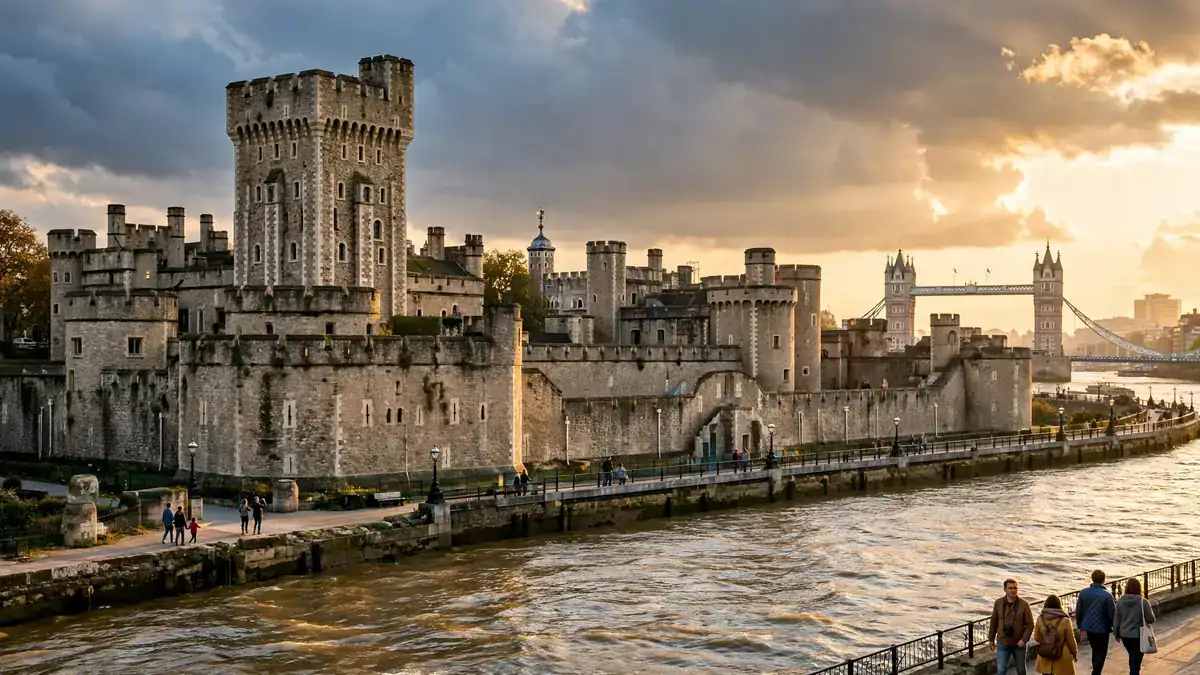
The Tower of London
Tower of London history begins with the White Tower, finished around 1078. The fortress served as palace, prison, treasury, and royal menagerie. Anne Boleyn was executed here in 1536, inside its quiet green. Later, the two young princes vanished here, and mystery still surrounds them. Indeed, guards called Beefeaters now retell those tales brilliantly.
Today the Crown Jewels glitter behind moving walkways and heavy vault doors. You can also explore medieval palace rooms and the Chapel of Saint Peter. Allow three to four hours, because queues build quickly by midday. Tower Hill station stands opposite, so the visit fits any London day. Entry is firmly premium-priced, though the scale justifies the cost. Insider tip: head straight to the jewels first, then circle back slowly.
York: A Whole City as a Museum
York began as Roman Eboracum, and then Vikings renamed it Jorvik. Later, medieval merchants built the Shambles, a lane of leaning timber shops. York Minster, meanwhile, grew into one of Europe’s largest Gothic cathedrals. Its Great East Window alone covers the size of a tennis court. As a result, few historic cities in England reward wandering quite like York.
Walk the city walls first, because they frame everything else perfectly. Then descend into the Jorvik Viking Centre for smells, sounds, and reconstructed streets. Allow a full day, though a weekend suits the museums better. Trains from London take about two hours, so day trips work well. Many sights charge separately, but the walls and Minster grounds cost nothing. Insider tip: climb the Minster tower near closing for soft evening light.
York also anchors a wider northern break very naturally. Our roundup of the best places to visit in North Yorkshire covers the moors and coast beyond. Fountains Abbey, for example, stands within easy reach for another day. Founded in 1132, its ruins remain England’s grandest monastic remains.
Caernarfon Castle, Wales
Edward I built Caernarfon in the late thirteenth century to subdue Wales. Its polygonal towers deliberately echoed the walls of Constantinople. As a result, the castle announced imperial ambition as much as defence. Among medieval castles UK fans celebrate, Caernarfon feels the most theatrical. Still, Welsh princes had ruled this coastline long before Edward arrived.
Today you can climb towers, walk the walls, and explore royal chambers. Allow two hours, because the museum of the Royal Welch Fusiliers deserves time. Bangor station plus a local bus works, though driving is simplest. Entry sits in the mid range, so families find it manageable. Insider tip: cross the river at dusk for the classic castle reflection photograph.
Tudor and Stuart Drama: Palaces and a Scottish Capital
Henry VIII split from Rome in the 1530s and seized monastic wealth. Monasteries fell, while court palaces grew richer and more theatrical. Then Elizabeth I steadied the kingdom, and theatre flourished in London. Meanwhile, Scotland’s story ran through sieges, queens, and a disputed crown. Consequently, this era left Britain’s most personality-packed buildings.
Hampton Court Palace, London
Cardinal Wolsey began Hampton Court, and then Henry VIII took it over. The Tudor kitchens could roast meat for hundreds of courtiers daily. Later, William III added elegant Baroque apartments designed by Christopher Wren. In fact, two palaces survive here inside one extraordinary complex. The famous maze, meanwhile, dates from around 1700.
Costumed guides bring the Great Hall alive with court gossip. Allow a full day, because gardens alone cover sixty acres. Trains from Waterloo reach Hampton Court station in about thirty-five minutes. Entry is premium-priced, though palace and gardens fill the hours easily. Insider tip: find the Tudor tennis court, where staff sometimes demonstrate the original game.
Edinburgh Castle and the Royal Mile
Of all historic places in Scotland, Edinburgh Castle dominates most completely. It crowns an extinct volcano above the Old Town streets. Mary Queen of Scots gave birth here to James VI in 1566. Then sieges battered the fortress repeatedly during centuries of Anglo-Scottish wars. Still, the Honours of Scotland survived, hidden and rediscovered dramatically.
Today the Stone of Destiny and Scotland’s crown jewels draw steady crowds. The Royal Mile then leads downhill towards the Palace of Holyroodhouse. Allow half a day for the castle, because views alone slow everyone down. Waverley station sits below, so arrival could hardly be simpler. Entry is mid-to-upper range, and booking ahead matters in August. Insider tip: time your visit for the One O’Clock Gun, a tradition since 1861.
Georgian and Victorian Britain: Elegance, Industry, and Empire
Georgian architects favoured symmetry, crescents, and calm classical stone. Then steam power arrived, and Victorian industry transformed towns almost overnight. Railways shrank the island, while factories and docks powered global trade. As a result, this period built both the prettiest streets and the grittiest mills. Several stops below hold UNESCO recognition, and together the UNESCO World Heritage sites UK list runs beyond thirty places.
Blenheim Palace and Georgian Bath
Blenheim Palace rose after the Duke of Marlborough’s victory in 1704. Sir Winston Churchill was born here in 1874, almost two centuries later. Its Baroque state rooms still display tapestries, portraits, and gilded ceilings. Meanwhile, back in Bath, the Royal Crescent perfected Georgian town planning. Thirty honey-coloured houses curve gracefully above a sweeping green lawn.
Blenheim needs a full day, because parkland landscaped by Capability Brown stretches widely. Trains reach Oxford or Hanborough, and then buses serve the gates. Entry is premium-priced, though annual-pass conversion often softens the blow. Bath’s crescent, by contrast, costs nothing to admire from outside. Insider tip: visit the museum at Number One Royal Crescent for servants’-eye stories.
Ironbridge and the Industrial North
The world’s first iron bridge opened over the River Severn in 1779. Ironbridge Gorge then became a cradle of furnaces, mines, and tileworks. Indeed, techniques proven here spread through factories across the industrial world. Today museums in the gorge explain casting, china, and Victorian daily life. Allow a day, because ten separate museum sites share the valley.
Edinburgh’s New Town tells the same century’s story in elegant stone. Its grid of squares answered the cramped Old Town across the valley. Consequently, one Scottish capital displays two centuries side by side. Historic travellers often pair such contrasts when planning places to visit in UK for families itineraries. Hands-on museums, in fact, keep younger visitors genuinely engaged here.
Wartime Britain: Secrets That Changed the Century
The Second World War pushed Britain’s story underground and behind passwords. Codebreakers worked in huts, while ministers governed from basement rooms. Then ordinary civilians endured bombing, rationing, and blackout nights together. As a result, the most moving heritage sites UK visitors describe are often twentieth-century ones. These two stops, especially, feel startlingly immediate.
Bletchley Park, Buckinghamshire
At Bletchley Park, mathematicians and linguists cracked Germany’s Enigma codes. Alan Turing led work on the Bombe machines that sped decryption. Their intelligence, called Ultra, probably shortened the war significantly. Yet secrecy hid everyone’s contribution for roughly three decades afterwards. In fact, veterans kept silent even from their own families.
Today restored huts display codebreaking machines, intercepts, and personal stories. Allow a full day, because exhibitions reward unhurried reading. Bletchley station stands minutes away, so trains from London Euston work easily. Entry is mid-to-upper range, and tickets often convert to annual passes. Insider tip: sit inside Hut Eight quietly, where Turing’s office survives almost untouched.
Churchill War Rooms, London
Beneath Whitehall, the Cabinet War Rooms sheltered government through the Blitz. Churchill directed the war from these cramped, map-lined basement offices. Staff slept underground, and then emerged each morning into bombed streets. The Map Room still shows pins and charts exactly as left in 1945. Consequently, the site feels paused rather than reconstructed.
The adjoining Churchill Museum traces his whole turbulent life in detail. Allow two to three hours, because the museum runs deeper than expected. Westminster station sits nearby, so pairing with the Abbey works perfectly. Entry is premium-priced, though timed booking keeps crowds manageable. Insider tip: look for the telephone room disguised, delightfully, as a private toilet. Dover Castle’s wartime tunnels, meanwhile, make a superb follow-up day trip.
Planning Your Journey Through the Eras
Most historic places to visit in England sit within easy rail reach of London. Scotland and the Wall, however, deserve bases of their own. A sensible route runs London, Bath, York, the Wall, then Edinburgh. Alternatively, slow travellers can add Wales and Caernarfon before heading home. Summer brings long evenings, as our guide to the best places to visit in Europe summer 2022 season planning also notes.
Costs vary widely, so honest budgeting matters more than false precision. Free highlights include York’s walls, Bath’s crescent, and many museum collections. Major palaces and the Tower, by contrast, sit in the premium band. Membership of heritage bodies can cut costs at heritage sites UK wide. Likewise, booking timed tickets early often unlocks the cheapest available slots.
Merchant cities reward comparison, too, when your curiosity keeps travelling. York’s guild history, for instance, echoes through the best places to visit in Bremen Germany guide’s Hanseatic streets. Still, Britain’s density of eras remains genuinely unmatched anywhere nearby. Where else, after all, can breakfast follow Romans and lunch follow Tudors?
Frequently Asked Questions
What is the oldest historical site you can visit in the UK?
Stonehenge is among the oldest, with building phases starting around 3000 BC. Avebury began slightly later, though its great circle covers far more ground. Skara Brae in Orkney, meanwhile, preserves a Neolithic village older than both. Consequently, prehistory fans should treat Wessex and Orkney as twin priorities.
How many days do you need for the best historic places in Britain?
A focused week covers London, Bath, and Stonehenge quite comfortably. Then ten to fourteen days let you add York, the Wall, and Edinburgh. Rushing further north or west, however, usually dilutes every stop. So pick fewer bases, and explore each one properly instead.
Which historical sites in the UK are free to enter?
York’s city walls, Bath’s Royal Crescent exterior, and many national museums cost nothing. Hadrian’s Wall path itself is also free, though its fort museums charge entry. Churches often welcome visitors freely, but donations keep ancient roofs repaired. As a result, a mixed itinerary balances free days against premium tickets.
When is the best time of year for a heritage trip?
Late spring brings long light, open sites, and manageable crowd levels. September works beautifully too, because schools return and weather often settles. Winter visits feel atmospheric, though rural sites may shorten their hours. Summer, by contrast, offers festivals but demands earlier booking everywhere.
Are these places suitable for children?
Yes, especially castles, Bletchley Park, and the Jorvik Viking Centre. Costumed guides and hands-on galleries, in fact, hold attention far better than labels. Shorter days help, because even keen children tire on stone floors. Consequently, one major site per day suits most families best.
Britain’s past is not locked behind glass in one museum. Instead, it stands in fields, steams over Roman water, and echoes down castle stairs. Walk it in order, therefore, and five thousand years start making sense. Then the best historical places to visit in UK stop being a list. Finally, they become one long, unforgettable story you have walked yourself.



