
Your car rarely stops working without giving you fair warning first. Instead, a tired battery usually whispers quietly before it fails completely one morning. However, many drivers miss those early whispers until the day nothing happens at all. Learning the clear signs your car battery is dying gives you precious time to act.
This guide walks you through every major warning sign in plain, simple language. Additionally, you will learn easy home tests that need no expensive workshop equipment whatsoever. You can then separate a simple battery fault from starter or alternator trouble confidently. Consequently, you can replace a failing battery calmly before it strands you somewhere awkward.
What are the earliest signs your car battery is dying?
Age alone puts any battery on borrowed time once three years pass by. Moreover, small changes in sound, light and starting behaviour usually appear together over weeks. One sluggish start on a frosty morning means very little by itself, honestly. In contrast, a repeating pattern of small problems points clearly towards steady decline ahead.
Dashboard lights may flicker briefly whenever you turn the key in the ignition. Similarly, power windows may crawl upwards far more slowly than they usually do. Electric seats, heaters and screens can also feel strangely sluggish on cold mornings. Therefore, treat several small electrical quirks appearing together as one serious combined clue.
Why does a slow crank point towards a weak battery?
A healthy engine turns over briskly, with a confident and even cranking rhythm. In contrast, the slow engine crank weak battery pattern sounds dragged, laboured and uneven throughout. Each starting attempt may sound noticeably weaker than the attempt just before it. Eventually, the starter may only click repeatedly while the engine stays completely silent.
Cold mornings often expose this particular weakness before anything else shows a problem. However, one single slow start after weeks parked proves very little on its own. Repeated slow cranking across several different days tells a very different story indeed. Thus, consistency matters far more than one bad morning ever will for diagnosis.
What do dim headlights and fading electrics reveal?
Headlights draw heavy current, so they expose a tired battery remarkably quickly indeed. For example, your lights may look yellowish and dull while the engine idles slowly. Brightness may then surge noticeably once the engine revs climb a little higher. That surge hints the alternator works while the stored charge stays stubbornly low.
Interior lights can dim noticeably when doors open or heaters start running together. Likewise, the radio may cut out briefly during a particularly difficult cold start. Warning chimes and dashboard displays sometimes flicker at exactly the same awkward moment. Indeed, several fading systems together rarely point towards simple coincidence or bad luck.
What subtle changes appear inside the cabin first?
Your nose sometimes notices brewing trouble well before your ears ever do so. A sharp, eggy smell drifting from under the bonnet signals venting battery gas. However, unusual smells inside the cabin also deserve checking just as quickly too. Burning odours can likewise point towards wiring faults or a slipping drive belt.
Clocks resetting themselves overnight hint that voltage dropped far too low recently. Similarly, trip meters and saved radio presets may vanish without any clear explanation. Keyless entry can grow lazy, unlocking doors only at very close range indeed. Indeed, small electronic memory losses often mirror low resting voltage quite faithfully indeed.
How can you separate battery, starter and alternator faults?
Three different parts share the blame whenever starting trouble appears on your driveway. Firstly, the battery stores electrical energy and delivers the powerful starting burst needed. Secondly, the starter motor uses that burst to turn the engine over physically. Thirdly, the alternator recharges the battery steadily while you drive along the road.
A simple battery fault usually worsens slowly over days or even several weeks. In contrast, a failed starter motor often strikes suddenly without any earlier warning signs. Grinding noises or one single loud click usually implicate the starter motor directly. Meanwhile, alternator trouble often appears while the engine is already running quite normally.
If lights brighten and fade repeatedly with engine speed, suspect charging trouble first. Similarly, a battery dying repeatedly after charging suggests it receives poor replenishment overall. A trusted team offering thorough auto service checks can test each part separately for you. Hence, one proper test beats swapping expensive parts on suspicion alone every time.
What does the battery warning light really mean?
That small red battery symbol confuses many drivers at the first glance badly. Surprisingly, that light usually signals a charging fault rather than stored charge itself. So, the battery warning light vs alternator problem question usually favours the alternator itself. Belts, wiring faults or the alternator itself may sit quietly behind that light.
Driving onwards simply ignores a warning that deserves prompt professional attention instead. Eventually, the engine may cut out completely once the stored charge runs dry. You should therefore arrange an inspection as soon as safely possible after it appears. By comparison, no warning light appears at all for simple gradual battery ageing.
How long do car batteries usually last?
The honest answer to how long do car batteries last is roughly 3 to 5 years. However, climate, daily usage and battery quality stretch or shrink that broad range considerably. Heat quietly shortens battery life far faster than cold weather ever does alone. Meanwhile, short journeys prevent full recharging and accelerate internal wear quite steadily over time.
Knowing when to test battery after 3 years helps you plan ahead sensibly each year. After that point, one annual health check becomes genuinely worthwhile for most drivers. Twice-yearly checks suit older batteries working in hot or particularly demanding climates. Consequently, testing early costs very little yet prevents most unwelcome surprise failures completely.
Garage forecourts in hot regions see batteries fail noticeably younger than average overall. Heat accelerates internal corrosion, even while starting still feels easy every single morning. Damage done quietly during summer often announces itself during winter months instead later. Thus, age plus local climate should guide your personal testing schedule together sensibly.
Does an AGM battery last longer in stop-start cars?
Many modern cars use absorbent glass mat batteries for their stop-start systems daily. In stop-start cars, AGM battery lifespan often beats conventional designs slightly over time. Such batteries tolerate repeated deep cycling better because their plates stay firmly supported. Still, they still age steadily, especially under heat and constant short-trip use patterns.
Replacing an AGM unit with a cheaper standard battery backfires surprisingly often nowadays. Therefore, always match the original specification carefully when replacement day finally arrives for you. Correct technology protects both reliable starting and the sensitive stop-start electronics fitted. Fitting the wrong type can disable stop-start and trigger persistent dashboard warnings too.
What simple tests can you do safely at home?
Home checks need patience, basic hand tools and one calm ten-minute window only. Firstly, park on level ground and switch absolutely everything electrical off inside first. Secondly, let the car rest quietly so the surface charge settles properly beforehand. Surface charge after driving can distort voltage readings for a full hour afterwards.
How do you check voltage with a multimeter?
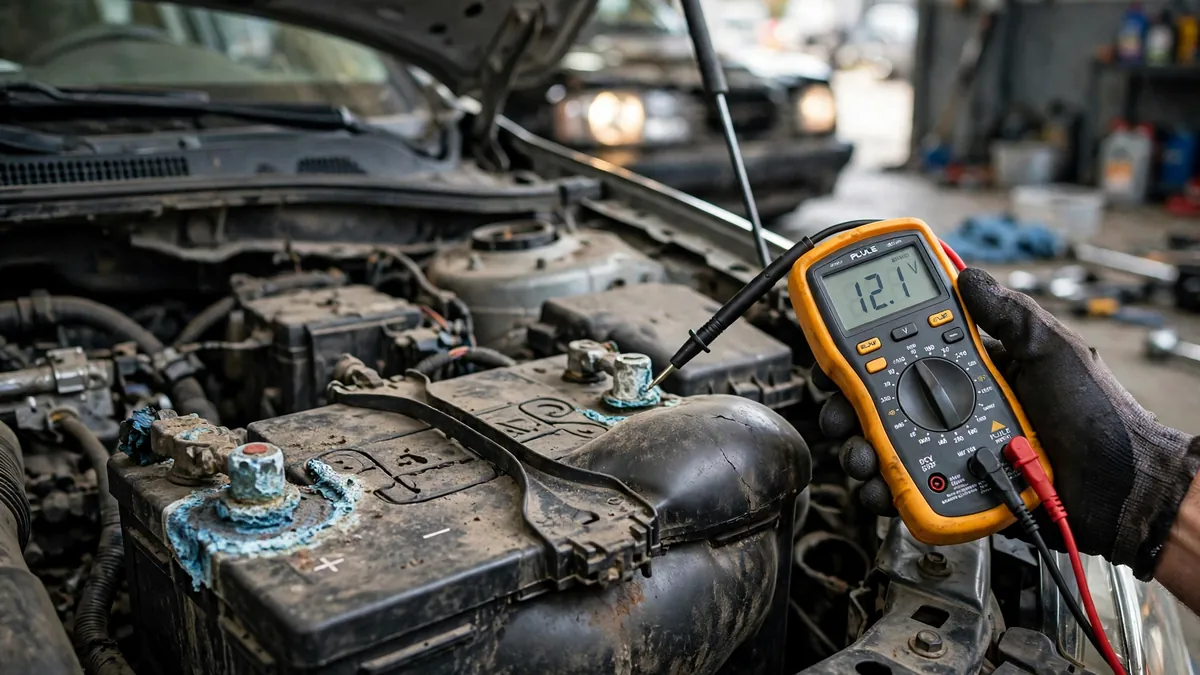
A simple car battery voltage test with a multimeter takes only two minutes. Set the dial carefully to direct current volts, choosing a range above twenty. Touch the red probe firmly against the positive terminal of the battery first. Then place the black probe securely onto the negative terminal right after that.
Healthy resting batteries read about 12.6 volts when they hold full charge properly. Readings near 12.4 volts suggest roughly three-quarters of the charge still remains available. In contrast, readings near 12.2 volts suggest only about half the charge remains. Anything below that level deserves careful charging and then thorough retesting afterwards soon.
However, voltage alone cannot prove real capacity under a heavy starting load demand. A proper load test applies genuine demand and reveals hidden internal weakness clearly. Some affordable home testers simulate that load without any specialist workshop equipment needed. Garages like those behind dedicated car repair and servicing perform load tests quickly for drivers. Thus, combine voltage, age and symptoms together before condemning the battery outright yourself.
What should you look for during a quick visual check?
Eyes and a small torch reveal plenty before any test tool appears nearby. For instance, a swollen car battery case from overheating shows bulging, distorted sides clearly. Cracks, leaks or a lifted battery top demand immediate replacement, not careful monitoring. Similarly, a strong rotten-egg smell signals internal damage and gas escaping from inside.
White crust around the posts tops the battery terminal corrosion cleaning signs list easily. Corrosion blocks current flow effectively, which mimics a dying battery quite convincingly sometimes. Cleaning the terminals carefully can restore starting if corrosion alone caused the trouble. Nevertheless, clean terminals cannot rescue plates already worn out deep inside the case.
How do you clean corroded terminals safely at home?
Cleaning needs real care because battery acid and sparks punish any carelessness harshly. Firstly, switch everything off completely and remove the negative clamp first for safety. Secondly, scrub both posts and clamps thoroughly with a dedicated terminal cleaning brush. Warm water mixed with baking soda neutralises light acid residue gently and safely.
Then refit the positive clamp first again and tighten both clamps firmly afterwards. Finally, one thin protective grease layer slows future corrosion from returning too quickly. Drivers who prefer professional help can book expert vehicle care for peak performance instead easily. Regular checks afterwards keep that clean connection working properly for many more months.
Why does a healthy-looking battery die overnight?
The parasitic drain battery dies overnight pattern frustrates many car owners quite deeply. Small hidden electrical faults keep sipping power long after you lock up nightly. For example, one boot light or glovebox light may stay on all night. Faulty modules, aftermarket alarms and stuck relays cause very similar silent losses overnight.
Ageing batteries hide such drains badly because their spare reserve already shrank considerably. In addition, cold nights deepen the overnight loss until morning starting fails completely. Testing properly for drain needs methodical fuse checks plus some genuine patience throughout. Hence, repeated overnight deaths deserve proper diagnosis rather than automatic battery replacement alone.
Modern cars keep many electronic modules awake long after locking the doors nightly. A healthy electrical system settles into sleep mode within about an hour usually. However, software glitches or water damage can easily prevent that essential sleep mode. Measuring drain accurately needs a multimeter and careful, patient steps throughout the process. Workshops advertising complete quality car care solutions trace stubborn drains methodically for frustrated owners.
Why does cold weather finish off a weak battery?
Winter exposes hidden weakness that summer politely hid from your view all along. Understanding cold weather car battery failure causes helps you prepare properly well beforehand. Cold thickens engine oil considerably, so the starter motor needs far more power. At the same time, chemical reactions inside the battery slow down quite markedly.
Output falls exactly when demand rises sharply, creating a cruel and predictable mismatch. Additionally, heaters, lights and demisters all compete fiercely for the limited charge available. A marginal battery survives autumn comfortably yet fails during the very first frost. Therefore, testing before winter beats using jump leads during winter every single time.
Garages see flat-battery calls surge dramatically during the first serious cold snap annually. Planning ahead sensibly spares you that long queue and that miserable frozen morning. Keeping the battery charged before temperatures drop gives it the best fighting chance. Short daylight trips with every accessory running drain reserves faster than most realise.
When should repeated jump starts worry you?
One jump start after leaving the lights on means simple human error only. However, a car needs frequent jump starts battery failing message could not be clearer. Each deep discharge then steals yet more life from the ageing internal plates. Jump starting also stresses the alternator heavily once the engine finally runs again.
Repeated jump starts mask the real fault while damage quietly accumulates inside unnoticed. In fact, a battery needing weekly help has already effectively failed for practical purposes. Replacement soon becomes cheaper than breakdowns, delays and missed appointments all combined together. Consequently, count your jump starts honestly and act promptly after the second one. Teams providing premier vehicle solutions and diagnostics can confirm the failing part before replacement.
How can you extend battery life on short trips?
Short hops hurt because starting drains far more than brief driving ever replaces. Learning how to extend car battery life short trips drivers make daily starts here. Firstly, take one longer drive every week to restore a full charge properly. Secondly, switch off heaters, lights and screens before starting the engine each time.
A smart charger used monthly suits cars parked unused for long stretches perfectly. Moreover, keeping terminals clean and both clamps tight preserves every precious volt available. Loose clamps waste energy needlessly and create confusing intermittent electrical faults too sometimes. Finally, park in cool shade during hot spells whenever you possibly can manage.
Regular servicing visits catch early charging problems before they quietly kill good batteries. Booking expert care for your vehicle today keeps charging systems checked and healthy throughout. Even small habits, repeated weekly, add many extra months of dependable battery life. Drivers covering mixed journey lengths usually enjoy the longest battery life overall too.
Which questions matter before you buy a replacement?
Buying hastily in a panic often brings the wrong size or rating home. Group size, terminal layout and cold cranking amps must all match your car. Moreover, stop-start cars demand exactly the correct AGM or EFB battery type fitted. Warranty length and included fitting help also deserve one quick comparison before buying.
Recycling the old unit matters greatly because lead and acid harm nature badly. Most sellers gladly accept the old battery when supplying your brand new one. In addition, keep the purchase receipt safe for any future warranty claim later. Correct fitment protects both confident starting performance and sensitive modern car electronics fully. Checking details like legal window tint rules for vehicles reminds owners that specifications matter everywhere.
What should you do next if several signs match?
Start sensibly with the completely free checks before spending anything at all today. Clean the terminals thoroughly, confirm clamp tightness and note the battery age carefully. Then test the resting voltage after the car sits quietly several hours untouched. Record your symptoms, dates and readings rather than trusting memory later on afterwards.
Several matching signs plus an age beyond four years justify planning replacement soon. In addition, professional load testing confirms the verdict firmly before you buy anything. Choose the correct size, power rating and technology specified for your car exactly. Overall, early calm action turns a potential roadside breakdown into simple routine maintenance.
Explore more practical guides on WordGlowUp.



