
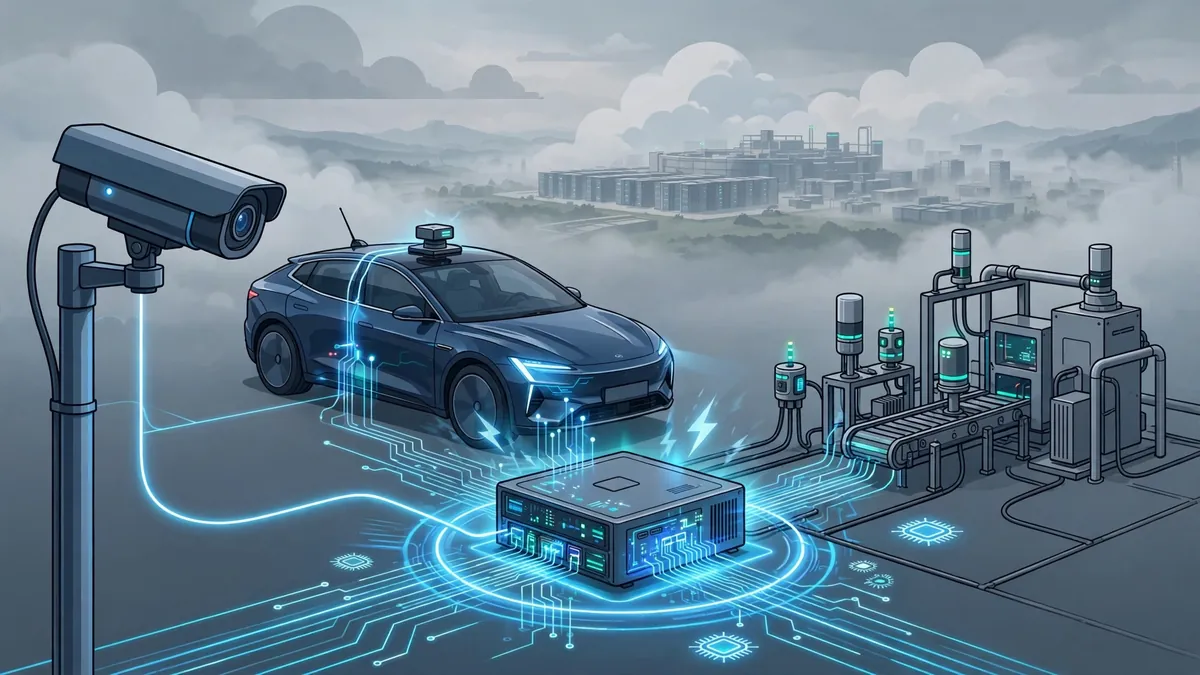
At midnight, a security camera watches an empty warehouse yard. Suddenly, a figure climbs the fence near the loading bay. Crucially, the camera does not wait for a distant data centre to react. Instead, it spots the movement itself, and it triggers the floodlights within moments. Meanwhile, the clip stays short and local. Consequently, the guard gets an alert that actually helps.
That small scene explains the whole idea behind this guide. What is edge computing? In short, it means processing data close to where devices create it. Moreover, this approach changes how fast systems respond. Furthermore, it changes how much data travels across networks. Therefore, everyday technology feels quicker, calmer, and often more private.
The Morning a Car Had to Think Fast
Consider a connected car approaching a busy junction on a rainy morning. First, its cameras scan the road ahead. Next, its sensors track nearby vehicles and pedestrians. However, the car cannot pause while data travels to a faraway server. Instead, it must decide locally and instantly. For example, it may warn the driver about a cyclist hidden by a parked van.
This illustration shows why distance matters so much. Admittedly, cloud servers offer enormous computing power. Nevertheless, every trip across a network takes time. Additionally, busy networks can slow that trip even further. Consequently, safety tasks need answers right beside the sensor. In contrast, less urgent tasks can still travel to the cloud later.
A factory tells a similar story from a different angle. For instance, vibration sensors listen to motors all day long. Usually, those motors hum in a steady pattern. Occasionally, however, the pattern shifts in a tiny way. Therefore, a nearby system can flag the change early. As a result, engineers can inspect the machine before a breakdown stops the line.
What Is Edge Computing? Edge Computing Explained Simply
Edge computing explained simply means moving computing power toward the edge of the network. Here, the edge means the place closest to the user or device. Moreover, that place might sit inside a camera, a router, or a small local server. Furthermore, the system handles important data right there. Afterwards, it may send only a summary to the cloud.
Think about a busy kitchen during a dinner rush. Clearly, the chef does not send every chopped onion to a central office for approval. Instead, the kitchen team handles each order where the cooking happens. Similarly, edge systems handle each task where the data appears. Meanwhile, the central office still plans menus and reviews results. Likewise, the cloud still stores records and runs deeper analysis.
What counts as the edge in practice?
- A smart camera that detects motion on the device itself.
- A shop till that keeps selling during a brief internet outage.
- A gateway in a factory that checks sensor readings locally.
- A small server in a clinic that sorts device alerts on site.
- A phone that recognises a face without sending every image away.
Each example keeps the urgent work nearby. Additionally, each example reduces needless travel for raw data. However, none of these examples removes the cloud completely. Rather, edge and cloud usually share the workload sensibly. Therefore, the smart question is not which one wins. Instead, the smart question asks which tasks belong in each place.
How Does Edge Computing Actually Work?
Most edge setups follow a simple and logical flow. First, a sensor or device collects raw information. Next, nearby software filters that information and looks for meaning. Then, the system acts locally when speed matters most. Finally, it forwards useful results or stored records upstream. Consequently, the wider network receives less clutter and more value.
Edge Devices and Edge Servers Do Different Jobs
Understanding edge devices and edge servers helps the picture settle. Edge devices sit at the very front line of the system. For example, cameras, wearables, and industrial sensors all collect data directly. Moreover, many modern devices can also process some data themselves. However, smaller devices often have limited power and storage. Therefore, they frequently pass heavier tasks to a nearby helper.
That helper is usually an edge server or a gateway. Typically, it sits in the same building or neighbourhood as the devices. Furthermore, it offers more processing power than a single sensor. Additionally, it can coordinate many devices at once. For instance, one gateway might manage cameras across an entire warehouse. Readers who follow data integration work will recognise this pattern in Rew Technology and its data integration approach, where joining data sources cleanly matters as much as collecting them.
Above the edge layer sits the regional or central cloud. There, larger systems store long-term records securely. Moreover, they train complex models and compare results across many sites. Meanwhile, local teams keep control over urgent decisions. In short, each layer handles the work it does best. Consequently, the whole system feels both fast and organised.
Why Latency and Bandwidth Edge Computing Problems Matter
Two plain ideas explain most edge decisions: latency and bandwidth edge computing discussions always return to both. Latency means the delay between an action and a response. Bandwidth means how much data a connection can carry at once. Together, these two limits shape every connected experience. Therefore, they deserve a clear and honest explanation.
Imagine a video call on a crowded home network. Sometimes, voices arrive late and pictures freeze briefly. Admittedly, the delay may last only a moment. Nevertheless, that moment breaks the flow of conversation. Similarly, a robot arm or a medical alert cannot tolerate awkward pauses. Hence, local processing removes much of that risky delay.
Bandwidth creates a different kind of pressure. For example, dozens of cameras can produce huge amounts of video every day. Sending every second of that video to the cloud would strain any connection. Moreover, storing all of it centrally would waste money and space. Instead, edge systems can keep normal footage local. Then, they can forward only the clips that show something unusual. As a result, the network carries meaning rather than noise.
- Lower latency helps systems react while events still matter.
- Lower bandwidth use eases pressure on busy connections.
- Local filtering reduces storage costs for raw data.
- Offline resilience keeps core tasks running during outages.
These gains explain the current interest in edge design. However, they do not make edge the answer for everything. Indeed, some jobs still need massive central computing power. Therefore, good designers weigh speed against scale every time. That balance leads naturally to the next comparison.
Edge Computing vs Cloud Computing: Which Does What Best?
The edge computing vs cloud computing debate often sounds like a contest. In reality, both approaches solve different problems well. Moreover, most modern systems combine them deliberately. For instance, a retailer might process checkout data locally and analyse monthly trends centrally. Similarly, a hospital might filter bedside alerts on site and archive records in the cloud. Consequently, the choice depends on the task, not on fashion.
| Question to ask | Edge computing fits best when | Cloud computing fits best when |
|---|---|---|
| How fast must the response be? | The system must react almost instantly, even during network delays. | A short delay is acceptable for the user or task. |
| How much raw data is involved? | Devices create heavy data, and local filtering can shrink it first. | The task needs the full dataset in one central place. |
| Must the system work offline? | Core functions must continue when the internet drops. | The service can pause safely until the connection returns. |
| How large is the analysis? | The analysis is focused, local, and time sensitive. | The analysis is huge, complex, or spread across many sites. |
| Where should sensitive data stay? | Keeping data local reduces exposure during travel. | Central controls and audits matter more for that dataset. |
This table offers a practical starting point for beginners. Additionally, it shows why hybrid designs appear so often. Meanwhile, coverage of business technology shifts, such as Maxil Technology Solutions and its business innovation work, often highlights this same hybrid thinking. Ultimately, smart teams place each workload carefully. Therefore, they gain speed locally without losing central insight.
Edge Computing Examples in Real Life You Already Know
The best way to remember this topic is through edge computing examples in real life. Admittedly, some examples hide inside ordinary routines. Nevertheless, once you notice them, you see them everywhere. Moreover, each example follows the same simple logic. Specifically, the system thinks near the action first.
The Camera, the Car, and the Factory Floor
Return briefly to that warehouse camera from the opening. First, it detects motion without waiting for a remote server. Next, it decides whether the movement looks routine or suspicious. Then, it alerts staff only when the event matters. Consequently, staff receive fewer false alarms and clearer clips. In contrast, a purely central system might send every frame away first.
Connected vehicles offer another memorable illustration. For example, a car can process camera and radar signals inside the vehicle. Additionally, roadside units can share local traffic warnings nearby. Furthermore, this local awareness supports safer and smoother journeys. Readers curious about shared transport technology can also explore how a carpool logistics app organises daily commutes, because trip coordination shows the same blend of local and central data.
Factories provide the third classic story here. Typically, sensors watch temperature, vibration, and pressure around the clock. Meanwhile, a local gateway spots patterns that suggest wear or failure. Therefore, maintenance teams can act before small faults become expensive stoppages. Moreover, the factory keeps production data close to the machines. As a result, managers gain both speed and operational privacy.
Everyday Moments Closer to Home
Your phone also demonstrates edge ideas quietly. For instance, it can unlock with face recognition on the device. Similarly, voice features may handle simple commands locally first. Additionally, photo apps can sort faces and objects without uploading everything immediately. Hence, the experience feels instant and more personal. However, backup and sharing still rely on cloud services afterwards.
Home devices follow the same pattern increasingly. For example, a smart doorbell can detect a person before sending an alert. Moreover, a home hub can run lighting routines during an internet outage. Consequently, the house still behaves sensibly when the connection fails. These small comforts rarely make headlines, yet they explain edge value beautifully. Indeed, nearby processing often works best when nobody notices it.
Fog Computing vs Edge Computing: What Is the Difference?
Students often meet the fog computing vs edge computing comparison early. Fortunately, the distinction is simpler than it first sounds. Edge computing processes data on the device itself or very close to it. Fog computing, meanwhile, adds a middle layer between devices and the cloud. Specifically, that middle layer often sits across a local network area.
Picture a large campus with hundreds of connected sensors. First, individual devices handle their most urgent checks locally. Next, fog nodes across the campus gather and coordinate wider patterns. Then, the cloud reviews long-term trends for the whole organisation. Therefore, fog acts like a helpful middle manager in the system. In contrast, edge stays right beside the original action.
Does the difference matter for beginners?
Honestly, the core lesson matters more than the label. Both approaches move processing away from a single distant centre. Moreover, both aim to cut delay and reduce network strain. However, fog usually describes a broader local architecture. Conversely, edge usually describes processing at or near the device. Keeping that simple distinction is enough for most readers.
What Is Multi Access Edge Computing MEC?
The term multi access edge computing mec sounds technical at first. Nevertheless, its basic idea is quite friendly. Basically, it places computing power inside or near mobile network sites. Therefore, phones and connected devices can reach nearby processing through the mobile network. Moreover, this setup supports applications that need quick responses away from fixed buildings.
Consider a large stadium on match day as an illustration. Thousands of fans share photos, videos, and messages at once. Meanwhile, venue systems handle entry checks and local information services. If processing sits closer within the network, responses can stay snappier. Additionally, local handling can ease pressure on distant data centres. Consequently, the crowd experience may feel smoother overall.
Importantly, MEC is not a separate magic technology. Rather, it is one organised way to deliver edge computing through telecom networks. Furthermore, it connects closely with modern mobile services. That connection leads directly to the role of 5G next. Before that, however, artificial intelligence deserves its own moment.
What Is Edge AI and Why Does It Matter?
Many readers now ask, what is edge ai in plain language? Simply put, edge AI runs artificial intelligence models on or near local devices. For example, a camera can recognise a person or a vehicle locally. Similarly, a machine sensor can learn what normal vibration sounds like. Therefore, the system can spot unusual patterns without constant cloud help.
This local intelligence brings several practical strengths. First, responses happen faster because data stays nearby. Second, privacy can improve because fewer raw images leave the device. Third, systems keep working during patchy connectivity. Moreover, teams can still improve models centrally over time. Afterwards, they can send updated models back to local devices.
Smart solutions coverage, including Ubia Technologies and its smart solutions focus, shows how connected intelligence is moving into buildings and cities. Similarly, trend roundups such as What is Trending in Technology Togtechify track how AI features keep spreading into everyday products. Consequently, edge AI now feels less like a lab idea. Instead, it feels like a quiet feature inside familiar tools.
Edge Computing Use Cases IoT Teams Talk About Most
The phrase edge computing use cases iot appears in almost every industry discussion. That is because connected devices generate constant streams of data. Moreover, many of those devices operate far from large data centres. Therefore, local processing gives IoT systems speed and resilience. Additionally, it helps teams manage thousands of devices more sensibly.
Common IoT settings show the pattern clearly:
- Farms use local gateways to sort soil and weather sensor data.
- Warehouses use nearby systems to track goods and guide robots.
- Energy sites use edge controls to monitor equipment safely.
- City systems use local processing for traffic and air sensors.
- Farms and factories both benefit when connectivity is unreliable.
Each setting shares the same underlying challenge. Specifically, devices produce more data than networks should carry blindly. Therefore, filtering at the source saves time and money. Meanwhile, central platforms still coordinate strategy across sites. Readers who enjoy following product and platform shifts can browse Latest Tech Info BeaconSoft for cutting-edge innovation coverage, because IoT announcements often surface there first.
Edge Computing in Healthcare and Retail
Two sectors make the benefits especially vivid: edge computing in healthcare and retail settings. Admittedly, both sectors handle sensitive moments and sensitive data. Nevertheless, both also need fast and reliable local responses. Therefore, edge design suits them naturally. Moreover, each sector offers a story that readers can picture easily.
Healthcare: Calm Alerts Beside the Patient
Picture a ward where bedside monitors track patients continuously. First, local systems can sort routine readings from urgent changes. Next, staff can receive clearer alerts with less noise. Consequently, nurses can focus attention where it matters most. Additionally, local processing can keep essential monitoring running during network problems. However, hospitals must still protect records with strict central governance.
Importantly, edge computing does not replace clinical judgement in any way. Rather, it supports staff by handling data quickly and locally. Furthermore, it can reduce how much raw patient data travels unnecessarily. Therefore, privacy conversations become part of the design from the start. In short, healthcare edge systems aim for speed, calm, and careful control.
Retail: Checkouts That Keep Moving
Now picture a busy shop during a weekend sale. Suddenly, the internet connection drops for several minutes. Fortunately, local systems can keep tills running and record sales on site. Afterwards, the records can sync with central systems once connectivity returns. As a result, customers keep moving and staff stay calm. Moreover, nearby processing can power shelf cameras and local stock checks.
Retailers also value faster and more personal in-store experiences. For instance, local systems can update digital signs based on store conditions. Similarly, staff tools can check nearby stock without slow central queries. Data-focused readers may also enjoy Alteryx latest version history and data workflow coverage, because retail insight still depends on clean analysis after local collection. Ultimately, edge handles the moment, while central analytics handles the pattern.
The 5G and Edge Computing Relationship Explained
The 5g and edge computing relationship confuses many beginners at first. Basically, 5G provides faster and more responsive mobile connectivity. Edge computing, meanwhile, provides nearby processing for data. Together, they can support applications that need both mobility and speed. Therefore, people often mention them in the same conversation.
However, neither technology requires the other completely. For example, edge systems can run perfectly well on wired networks or local Wi-Fi. Conversely, 5G can also connect devices straight to central cloud services. Nevertheless, combining them can help in busy mobile settings. For instance, connected vehicles, large venues, and mobile robots may all benefit. Consequently, the partnership is powerful, although it is not automatic.
Think of 5G as a quicker road for data. Then, think of edge computing as a helpful workshop beside that road. Clearly, a quicker road alone does not shorten every journey’s purpose. Similarly, a nearby workshop matters little without decent access roads. Together, however, they can make mobile systems feel notably more responsive. That simple image captures the relationship fairly.
Edge Computing Benefits and Drawbacks: An Honest Balance
A fair guide must cover edge computing benefits and drawbacks together. Too many explainers praise speed and skip the hard parts. Honestly, edge systems bring real costs and real management work. Moreover, those downsides shape whether a project succeeds. Therefore, this section weighs both sides openly.
The Benefits Readers Should Remember
- Faster responses, because data travels a much shorter distance.
- Lower bandwidth pressure, because local filtering removes clutter early.
- Better resilience, because core tasks continue during outages.
- Stronger privacy potential, because sensitive data can stay local.
- Happier users, because apps and devices feel more responsive.
These benefits explain why so many industries invest in edge design. Additionally, they improve experiences that people notice immediately. For example, a quick checkout or a timely alert builds trust fast. Consequently, edge value often shows up as calm reliability. In other words, things simply work when timing matters.
The Drawbacks Nobody Should Hide
- Higher setup costs, because teams must buy and install local hardware.
- Harder management, because many small sites need updates and monitoring.
- Uneven capability, because small devices cannot match large data centres.
- Wider security duties, because every local node needs protection.
- Skills pressure, because staff must manage both local and central systems.
These challenges do not cancel the benefits, however. Instead, they demand careful planning from the start. Moreover, they reward teams that standardise devices and updates early. Conversely, messy rollouts can create confusion across many locations. Therefore, honest planning matters as much as clever technology. That honesty matters most in the security discussion next.
Is Edge Computing Secure? A Careful Answer
People rightly ask, is edge computing secure in the real world? The honest answer is that edge can improve security and complicate it. On one hand, local processing keeps sensitive data off long network journeys. Additionally, keeping data in one building can support tighter control. Therefore, some privacy and exposure risks may fall.
On the other hand, edge spreads systems across many more locations. Each camera, gateway, and local server becomes a point to protect. Moreover, physical access in remote sites can create extra risk. Furthermore, missed updates can leave individual nodes exposed quietly. Consequently, teams need strong passwords, regular updates, and clear monitoring everywhere. In short, edge security succeeds through discipline, not through geography alone.
Good edge security follows familiar and proven habits:
- Change default passwords on every device before deployment.
- Update software regularly across all local nodes.
- Encrypt data during storage and during travel.
- Limit each device to only the access it truly needs.
- Monitor local systems centrally for unusual behaviour.
These habits sound basic, yet they prevent many common failures. Additionally, they help small teams manage large device fleets calmly. Ultimately, a well-run edge system can be very trustworthy. Conversely, a neglected edge system can become a scattered risk. Therefore, management quality decides the outcome more than location does.
The Future of Edge Computing: Where Is This Heading?
The future of edge computing points toward quieter and smarter local systems. Increasingly, everyday devices will handle more processing themselves. Moreover, software tools for managing many edge sites should keep improving. Consequently, smaller teams may run larger device networks more comfortably. Additionally, edge and cloud platforms will likely cooperate even more smoothly.
Several broad directions already look plausible and grounded. First, more consumer devices will advertise on-device intelligence proudly. Second, factories and farms will keep adopting local automation steadily. Third, healthcare and retail systems will demand faster local responses. Meanwhile, energy concerns may push designers toward efficient local processing. Finally, standards and shared tools should reduce today’s management friction gradually.
Importantly, the cloud will not disappear in this future. Rather, central platforms will keep handling storage, training, and wide analysis. Meanwhile, edge systems will keep handling urgency, locality, and resilience. Therefore, the future looks hybrid rather than one-sided. In short, data will increasingly go to the place that suits it best. That principle is the real story behind every trend.
How Should a Beginner Remember Edge Computing?
If every detail faded tomorrow, what should stay with you?
Remember the camera that thought for itself at midnight. Remember the car that could not wait for a distant answer. Additionally, remember the factory sensor that whispered before a breakdown. Together, those three stories capture the whole concept beautifully. Specifically, edge computing moves thinking closer to action. Consequently, systems respond faster, waste less bandwidth, and keep working calmly.
Ask three questions whenever you meet a new connected product. Where does it process its data first? How quickly must it respond to matter? What happens when its internet connection drops briefly? These questions reveal edge design hiding in plain sight. Moreover, they help you judge marketing claims more confidently. Finally, they turn a technical phrase into a practical lens. That is exactly what a good explanation should do.
In an era where responsiveness and efficiency dictate our technological interactions, the principles of edge computing are becoming increasingly relevant, extending their influence beyond industrial applications to everyday consumer experiences. For instance, when you think about the integration of smart devices in our homes, the advantages of processing data closer to its source become evident. This not only enhances the speed of operations but also fortifies privacy by minimizing the amount of data transmitted over the internet. As you embark on your journey to create a cohesive and efficient living space, understanding the foundational elements of a connected ecosystem is crucial. To ease into this transition, consider exploring options for smart home for beginners, where you can learn how to select the right devices and systems that align with your lifestyle and preferences.



