
Some towns show you one old street and call it heritage. Rothenburg, by contrast, gives you a whole walled world. Indeed, the best places to visit in Rothenburg ob der Tauber sit inside one compact circuit. So you can walk from gate to church to museum in minutes.
First, picture red rooftops packed inside stone walls above a green valley. Then add crooked lanes, quiet gardens, and towers at almost every turn. That picture, in fact, is daily life in the Rothenburg ob der Tauber old town. Because the centre stayed so complete, history here feels lived in, not staged.
This guide follows a simple walking route through that old town. Along the way, it gives honest verdicts on time, cost, and crowds. For example, should you come for a day, or should you stay overnight? By the end, you will know exactly how to choose.
Why does Rothenburg feel so completely medieval?
Above all, Rothenburg survived as a whole, not in fragments. Other towns kept a church here or a gate there. Rothenburg, however, kept its walls, streets, and skyline together. As a result, the town reads like one connected story.
Long ago, Rothenburg grew rich as a free imperial city. Merchants traded through its gates, and councils met in its grand town hall. Then wars and hard times slowed its growth for centuries. Ironically, that slowdown protected the old buildings from bold rebuilding. So the medieval street plan survived almost by accident.
Later, part of the town suffered damage during the Second World War. Afterwards, donations from around the world helped fund careful repairs. Consequently, the restored sections follow the original lines and materials closely. Today, most visitors cannot spot where old fabric meets new work.
For travellers building a wider heritage trip, comparisons help set expectations. The historical and cultural places to visit in Paris spread across a huge capital city. Rothenburg, instead, concentrates its heritage inside one walkable ring. Similarly, the most important cultural places to visit in Spain reward slow, region-by-region travel. Rothenburg gives that same depth in a single afternoon.
Where should your walking route begin?
Start, firstly, at one of the main gates and enter on foot. The old town is small, so no starting point is truly wrong. Still, a gate arrival gives you the best first impression. You pass under stone, then the lanes suddenly narrow and quieten. That threshold moment, certainly, frames everything that follows.
Next, let the route flow in one loose loop. Head first towards the market square and the town hall. After that, continue north to the great church and its famous altarpiece. Then drift south through the lanes towards the picture-book corner. Finally, climb onto the walls and finish in the castle garden.
Because distances are so short, this loop suits almost every pace. Slow walkers can split it across a full relaxed day. Faster visitors, meanwhile, can cover the highlights in a few hours. Either way, wear shoes with grip for the cobbles. After rain, especially, the stones can feel smooth and slippery.
What will you find on Marktplatz Rothenburg?
The Marktplatz Rothenburg is the town’s open-air living room. Here, the town hall rises in two distinct architectural styles. One part is Gothic, while the later frontage is Renaissance. Together, they show how the town kept growing and adapting. Look closely, because the details reward a slower gaze.
When the tower is open, the climb is well worth the effort. The steps are steep, and the final section feels narrow. At the top, however, the view explains the whole town at once. You see rooftops, towers, walls, and valley in one sweep.
Beside the square stands the old councillors’ tavern with its famous clock. On the hour, small figures re-enact the legendary Master Draught tale. Admittedly, the story is part legend and part civic pride. Yet crowds still gather, and the ritual feels genuinely charming.
How far can you walk on the Rothenburg town walls?
The Rothenburg town walls form a ring of roughly four kilometres. Remarkably, much of that ring still carries a covered sentry walk. So you can stroll above the streets, sheltered by a timber roof. Along the way, dozens of towers punctuate the circuit. Each tower, in turn, frames a slightly different view.
You do not need to walk the full circuit at once. In fact, shorter sections often deliver the best experience. For instance, the stretch near the Röderturm gives superb rooftop views. Another favourite section runs along the quieter western side. There, gardens and valley slopes open below the parapet.
Access stairs appear at several gates and towers around town. Therefore, you can join or leave the walkway quite flexibly. Take care, though, because some steps are steep and uneven. Hold the rail, watch your footing, and pause at landings.
Historically, these walls explain why Rothenburg mattered so much. A medieval walled town in Germany needed strong defences to protect trade. Rothenburg’s circuit guarded goods, wells, and people during troubled times. Walking it today, you grasp that practical purpose instantly. The walls were never decoration, even though they now delight photographers.
For a contrasting northern example, the best places to visit in Bremen, Germany mix port history with old streets. Bremen spreads its heritage across a larger working city. Rothenburg, on the other hand, keeps its defences complete and circular. That completeness, above all, makes the wall walk unforgettable.
Why is Plönlein Rothenburg worth more than a photo?
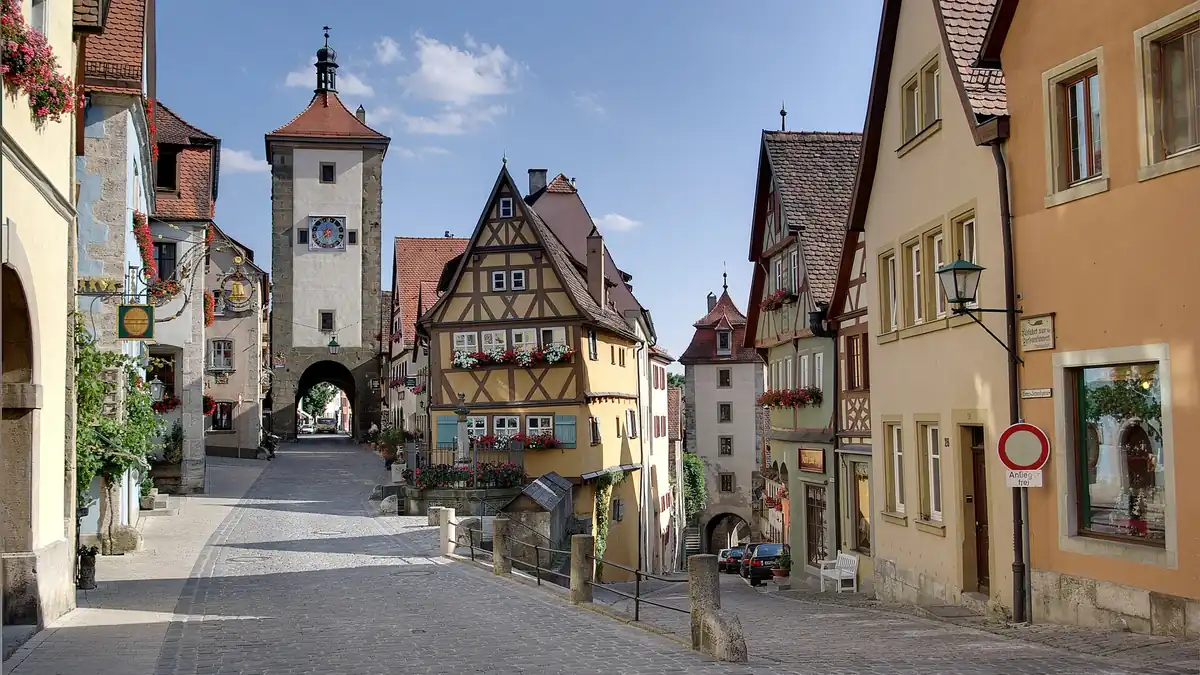
Plönlein Rothenburg is the little square everyone photographs first. A leaning yellow house stands where two lanes divide. On one side rises the Siebers Tower from the late fourteenth century. On the other side, the Kobolzell Gate points down towards the river. Together, they compose a scene of almost unfair charm.
Yes, the view is beautiful, but it also teaches you plenty. The fork shows how medieval streets followed ground and gates. The fountain recalls how neighbours once gathered for daily water. Meanwhile, the half-timbered houses in Rothenburg reveal craft, wealth, and repair. So linger here, rather than snapping one quick picture.
Timing, admittedly, changes this corner completely. Early morning brings soft light and almost empty lanes. Late afternoon, similarly, warms the stone and thins the crowds. Midday in summer, by contrast, can feel packed and hurried. If photography matters to you, plan around those busy hours.
From Plönlein, wander into the Spital quarter just beyond the tower. This district once housed the town hospital and its chapel. Its lanes feel calmer, and its buildings feel more everyday. Because fewer visitors turn this way, the atmosphere shifts noticeably.
What makes St Jakob Church Rothenburg so moving?
St Jakob Church Rothenburg dominates the northern old town skyline. Built over many decades in the Gothic style, it served pilgrims too. Rothenburg sat on routes linked to the Way of St James. Consequently, travellers have entered this church in wonder for centuries. Step inside, and that quiet wonder still lands.
The interior feels tall, calm, and full of coloured light. Stained glass in the east choir glows on sunny days. Carved altars line the space, each with its own story.
Practical note, though, because this is a working church. Services and concerts can affect sightseeing at certain times. Dress respectfully, keep voices low, and check notices at the door. A small entry contribution may apply for sightseeing visits. Generally, that modest cost feels fair for the upkeep involved.
Why do visitors linger at the Holy Blood Altarpiece?
The Holy Blood Altarpiece is the church’s greatest treasure. Master carver Tilman Riemenschneider created it around the turn of the sixteenth century. Crucially, he carved it from limewood and left it unpainted. As a result, every fold, hand, and face shows pure craftsmanship. The detail rewards the closest, slowest looking.
The altarpiece presents the Last Supper with striking emotional depth. Figures lean, gesture, and react like real people at a table. Above, the shrine links to a revered relic capsule. Whether you come for faith or for art, the effect is powerful.
Do not rush this stop into a two-minute glance. Instead, sit down and let your eyes travel slowly upward. Notice the drapery first, then the expressions, then the architecture. After a few quiet minutes, smaller details keep emerging. That slow reveal, in short, is the whole point.
Which museums reveal the darker and merrier sides of town?
Rothenburg’s two famous museums could hardly feel more different. One explores law, punishment, and social control across centuries. The other celebrates Christmas customs, decorations, and childhood wonder. Visiting both, therefore, gives you the town’s full emotional range.
Budget your time honestly for both museums. Rushing either one wastes the entry cost and the stories. Instead, pick depth over box-ticking on a short visit. One museum done properly beats two museums skimmed badly. Then use your remaining time outdoors on the walls.
What does the Medieval Crime Museum Rothenburg actually teach?
The Medieval Crime Museum Rothenburg occupies a former monastery commandery near the centre. Inside, it traces roughly a thousand years of legal history. Exhibits include shame masks, pillories, legal documents, and executioners’ tools. Some displays disturb, yet the purpose is education, not shock. Labels explain how laws, trials, and punishments slowly changed.
Older children often find the museum gripping and memorable. Younger children, however, may find certain exhibits upsetting. So judge the visit against your own family’s comfort. Allow at least an hour, and preferably a little more.
How does the German Christmas Museum change the mood?
The German Christmas Museum offers a complete change of pace. Set along Herrngasse beside a famous year-round Christmas village shop, it feels warm. Inside, displays trace how German families celebrated across different regions. You will see tree decorations, candle arches, calendars, and paper nativities. Many pieces date from the late nineteenth and early twentieth centuries.
Even in midsummer, the museum somehow makes December feel close. Afterwards, the adjoining shop tempts almost every visitor. Wooden ornaments, nutcrackers, and pyramids fill room after room. Set a spending limit beforehand, because enthusiasm escalates quickly here.
Couples, especially, tend to love this slower festive stop. If that is you, the best places to visit in Germany for couples can extend the romance. Rothenburg pairs beautifully with vineyard towns and castle stays. Together, they turn a short break into a storybook route.
Where do the Burggarten castle garden and Tauber Valley views fit in?
At the western edge, the Burggarten castle garden brings welcome calm. A castle once stood on this spur above the river. Today, lawns, old trees, and flower beds fill the space instead. From the parapet, Tauber Valley views stretch far below you. Vineyards, meadows, and the winding river complete the picture.
This garden suits a pause in the middle of sightseeing. Bring a pastry, find a bench, and watch the light move. Photographers, meanwhile, love the skyline view back towards town. At sunset, the rooftops and towers glow especially warmly.
If energy remains, follow a path down into the valley. The Double Bridge, with its two tiers of arches, rewards the descent. From below, Rothenburg looks impressively high and fortified. That view, in fact, explains the town’s defensive site perfectly. Allow extra time for the climb back up.
Before leaving the square, try a Schneeball pastry from a bakery. These crisp snowball-shaped treats come dusted or chocolate-coated. Opinions divide sharply, because they are dry and crumbly by design.
Should you join the Night Watchman tour Rothenburg after dark?
For many visitors, the Night Watchman tour Rothenburg is the highlight. A cloaked guide leads groups through lantern-lit lanes in the evening. Along the way, he blends real history with dry, well-timed humour. You hear about guards, fires, sieges, and everyday medieval fears.
The tour generally runs seasonally and usually needs no complex booking. Typically, you simply gather at the market square in the evening. Arrive early in peak season, because groups can grow large. Also, bring cash in case card payment is not offered. Exact times vary, so confirm locally on the day.
Even without the tour, an evening walk is deeply rewarding. After the day coaches leave, the lanes empty remarkably fast. Windows glow, footsteps echo, and the walls turn silhouette-dark. That hush, honestly, is when Rothenburg feels most medieval. Staying overnight unlocks it without any effort at all.
Is a Rothenburg day trip enough, or should you stay overnight?
A Rothenburg day trip can work, but it comes with trade-offs. You can see the square, the church, and the famous corner. You can even fit in one museum and a wall section. However, you will share every highlight with peak-hour crowds. And you will almost certainly miss the magical evening.
An overnight stay, by contrast, transforms the whole experience. Early mornings give you empty lanes before the coaches arrive. Evenings give you the watchman, quiet gardens, and glowing windows. Moreover, you can split the museums across two unhurried days. For heritage lovers, that slower pace is the real luxury.
Cost framing matters here, so think in general terms. Day visitors save on a hotel, yet often spend rushed money instead. Overnight guests pay for lodging, but gain hours of priceless quiet. That verdict, admittedly, is this guide’s strongest recommendation.
Trip-chaining can also shape your decision. A one-day visit to Luxembourg shows how compact capitals reward tight planning. Rothenburg is smaller still, yet its evening hours change its character. Likewise, the top ten places to visit in Budapest demand several full days. Rothenburg needs less time, but it deserves more than leftovers.
When is the best time to visit Rothenburg ob der Tauber?
Many locals quietly favour spring for the best time to visit Rothenburg ob der Tauber. Flowers return, days lengthen, and crowds stay manageable. Autumn runs a close second, with golden valley colours. Both seasons suit wall walking, photography, and garden pauses.
Summer brings the longest days and the liveliest streets. It also brings the heaviest day-trip pressure at midday. So start early, rest at lunch, and sightsee again later. Winter, meanwhile, offers a famous and atmospheric Christmas market season. Expect cold air, early darkness, and reduced hours at some sights.
Within any day, timing shapes your experience more than season. Sunrise and early evening consistently feel calmest and prettiest. Midday, conversely, concentrates tours around the square and Plönlein. Plan headline sights for the edges of the day. Then spend midday in museums, churches, or long lunches.
How do you get there and move around with ease?
Rothenburg sits on the famous Romantic Road Germany touring route. That road links Würzburg in the north with Füssen and the Alps. Drivers reach town easily from the nearby motorway exit. Parking, importantly, sits outside or at the edge of the walls. From there, everywhere inside is a short walk.
By train, expect a branch-line journey with at least one change. Connections usually route through Steinach or Ansbach from larger cities. The station, conveniently, stands just outside the eastern walls. Check your final destination name carefully, because other Rothenburgs exist.
Rail planners crossing borders may enjoy the places to visit near Zurich by train for similar inspiration. Both trips prove that small heritage towns reward rail travellers. Once inside Rothenburg, though, forget transport almost entirely. Walking is the attraction, the method, and the pleasure here.
Finally, a few small habits will smooth your visit. Carry some cash, because smaller places may prefer it. Book accommodation early for market season and summer weekends. Also, build slack into your plan for weather and crowds. Southern detours like the best places to visit in Montpellier, France can wait. Rothenburg rewards those who slow down and stay present.
Frequently Asked Questions
How long do you need in Rothenburg ob der Tauber?
Ideally, give the town one full day plus one overnight stay. That pace covers the walls, church, both museums, and the garden. A shorter Rothenburg day trip still shows the famous highlights. However, it misses the quiet morning and evening hours.
What is the single most famous sight in town?
Most visitors would name the Plönlein corner first. Its leaning house, fountain, and two towers form the classic postcard. The town walls and the great church follow closely behind. Together, those three sights define the town’s image worldwide.
Is Rothenburg ob der Tauber suitable for children?
Yes, because the town feels like a storybook come alive. Children love the towers, walls, gardens, and Christmas displays. The crime museum, though, suits older children better. Cobbles can challenge pushchairs on the steepest lanes. Plan shorter wall sections and plenty of snack stops.
Can you walk the complete town wall circuit?
Largely, yes, because long covered sections survive around the old town. The full ring covers roughly four kilometres with many towers. You can also walk shorter sections and exit at gates. Stairs are steep in places, so take your time. Comfortable, grippy footwear makes a real difference.
What should you eat during your visit?
Start, firstly, with hearty Franconian cooking in a traditional tavern. Roast meats, dumplings, and regional wines anchor most menus. Then try a Schneeball pastry, the town’s famous sweet speciality. It is crisp, dry, and made for sharing.
How much should you budget for a visit?
Generally, Rothenburg suits a range of budgets quite well. The walls, garden, and lanes themselves cost nothing to enjoy. Museums, tower climbs, and tours each charge modest separate fees. Food and lodging, predictably, form the biggest spending share.



