
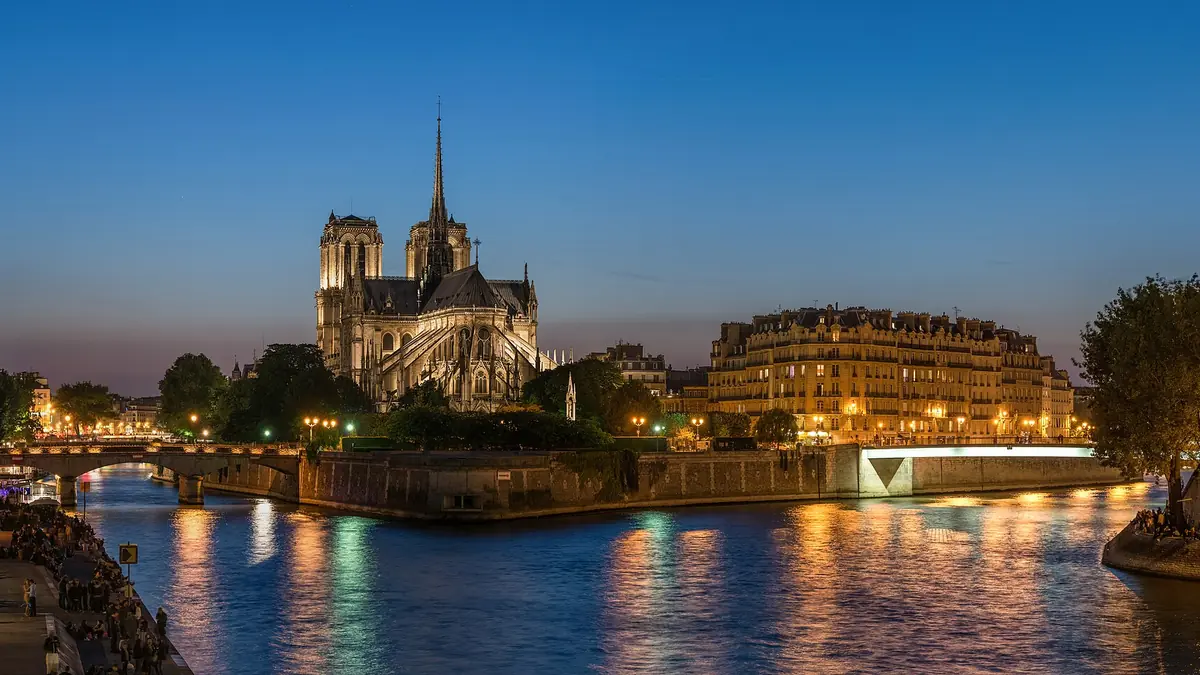
Paris rewards anyone who slows down and reads its streets. Indeed, almost every bridge and square holds a turning point in French history. This guide groups the best historical places in Paris by neighbourhood, so you can walk through time without crossing the city twice.
Most Paris historical sites sit within a compact central area. Therefore, you can see a great deal on foot in two or three days. Still, you need a clear plan, because the biggest museums can fill half a day each. This article gives you that plan, plus honest advice on what to book and what to skip. Prices and hours change often, so check official sites for current details.
How should you plan a heritage trip to Paris?
First, think in clusters rather than in a single long list. For example, Notre-Dame, Sainte-Chapelle, and the Conciergerie stand within five minutes of each other. Similarly, the Louvre, the Tuileries, and the Musée d’Orsay form one easy walking line along the river.
Next, book ahead for the busiest cultural attractions in Paris. In particular, the Louvre, Sainte-Chapelle, and the Musée d’Orsay often need timed entry in peak season. Meanwhile, churches, squares, bridges, and cemeteries usually need no booking at all. So, you can balance one booked visit each morning with free wandering each afternoon.
Timing matters just as much as booking. Early morning suits the island and the big museums, because crowds stay thinner then. Late afternoon suits Montmartre and the river bridges, because the light turns warm and golden. A simple Paris heritage walk at sunset can feel more memorable than another crowded gallery.
Île de la Cité and the Latin Quarter hold the oldest Paris of all?
Paris began on Île de la Cité, the island in the Seine. The Parisii tribe settled here before the Romans arrived. Later, medieval kings built palaces and law courts on the same small island.
Why does Notre Dame Cathedral Paris still define the city?
Builders started Notre Dame Cathedral Paris in 1163, and work continued for almost two centuries. The cathedral then witnessed coronations, royal weddings, and moments of national mourning. Napoleon crowned himself emperor here in 1804. Later, Victor Hugo set his famous novel here, and that book helped save the building.
Today, you first notice the twin towers, the rose windows, and the carved western facade. Inside, the tall nave and restored stonework show Gothic engineering at its finest. After the 2019 fire, craftspeople rebuilt the spire and cleaned the interior. Arrive early, and walk around the eastern end for the best view of the flying buttresses.
What makes Sainte-Chapelle Paris so unforgettable?
King Louis IX built Sainte-Chapelle Paris in the 1240s to house sacred relics. Above all, he wanted a chapel that felt like a jewel box made of glass. The upper chapel delivers exactly that feeling. Fifteen tall windows fill the walls, and they tell Bible stories in vivid blue and red glass.
On a sunny late morning, light pours through the glass and covers the floor in colour. Because the chapel is small, the experience feels intense and personal. Book a timed ticket ahead, since queues form quickly here. Allow about forty-five minutes inside.
What happened inside the Conciergerie Paris?
The Conciergerie Paris began as part of the medieval royal palace on the island. Later, during the French Revolution, officials turned it into a prison and tribunal. Most famously, Marie Antoinette spent her final weeks here before her execution in 1793.
Today, you walk through the vast Salle des Gens d’Armes, the largest surviving medieval hall of its kind in Europe. After that, smaller rooms explain daily prison life during the Terror. Pair it with Sainte-Chapelle next door, because the contrast teaches you more than either site alone.
Why should you climb to the Pantheon Paris Latin Quarter?
From the island, cross to the Left Bank and climb the hill to the Panthéon. Louis XV ordered the building as a church for Saint Geneviève, the patron saint of Paris. However, the Revolution later transformed it into a national mausoleum. Since then, France has buried its greatest citizens beneath its dome.
Inside the Panthéon Paris Latin Quarter, you find a soaring neoclassical nave and Foucault’s pendulum below the dome. Below ground, the crypt holds Voltaire, Rousseau, Victor Hugo, Émile Zola, and Marie Curie. Marie Curie became the first woman honoured here on her own merit. Visit on a weekday morning for quiet halls.
The surrounding Latin Quarter adds student life and old bookshops to the day. The Sorbonne has shaped French learning since the Middle Ages. Meanwhile, the Musée de Cluny displays medieval art inside Roman baths and a Gothic mansion. If you love this mix of history and daily life, our guide to the best places to visit in Île-de-France shows how Paris connects with its wider region.
Which sights line the museum corridor along the Seine?
West of the island, the Seine becomes a museum corridor. This stretch holds some of the best museums in Paris along both banks. You can walk it without transport. Of course, you should not enter every museum in one day.
How did the Louvre Museum history shape modern Paris?
The Louvre began as a fortress in the late twelfth century. Then, Francis I turned it into a royal palace and started collecting major art. Finally, the Revolution opened the Louvre as a public museum in 1793.
That Louvre Museum history explains why the building feels like a city within a city. Today, the Denon Wing holds the Mona Lisa and the Winged Victory of Samothrace. Meanwhile, the Sully Wing holds Egyptian antiquities and the oldest palace walls. Choose one or two wings only. Book ahead, enter early, and allow at least three hours.
Why do art lovers prefer the Musee d’Orsay Paris?
Across the river, the Musée d’Orsay occupies a grand former railway station from 1900. After closure, the building gained a second life as a museum in 1986. Today, it holds the finest collection of Impressionist and Post-Impressionist art in the world.
Inside the Musee d’Orsay Paris, you meet Monet, Renoir, Degas, Cézanne, and Van Gogh under one vast glass roof. The famous station clock still watches over the main hall. Because the museum is smaller than the Louvre, you can enjoy it without exhaustion. Thursday late openings often feel calmer.
What will you find at Les Invalides Napoleon tomb?
Further west, a golden dome marks Les Invalides. Louis XIV founded the complex in the 1670s as a home for wounded soldiers. Besides that role, the site holds the Musée de l’Armée, one of the richest military museums anywhere.
Under the dome at Les Invalides Napoleon tomb, the emperor rests inside layered coffins of red stone. France brought his remains home in 1840. Allow extra time for the armour halls, because they trace French warfare from knights to world wars.
Between these museums, enjoy the river itself as an exhibit. The Pont Alexandre III links Les Invalides with the Grand Palais in gilded Belle Époque style. The Tuileries Garden and Place de la Concorde recall royal leisure and revolutionary executions on the same ground.
What makes Le Marais historic district so special?
Le Marais escaped the heavy rebuilding that reshaped much of Paris in the nineteenth century. As a result, its narrow streets still follow medieval lines. Aristocratic families built elegant mansions here in the 1600s. Later, workshops and small shops gave the district new layers.
Start at Place des Vosges, the oldest planned square in Paris. Henri IV completed the square in the early 1600s, and its brick arcades still look harmonious today. Victor Hugo lived at number six, and his apartment now welcomes visitors as a museum. After the square, step into the Musée Carnavalet for the history of Paris.
Nearby, the Hôtel de Ville has housed city government since the Middle Ages. Revolutionaries burned the earlier building in 1871, and the city rebuilt it in grand Renaissance style. In short, Le Marais historic district rewards slow wandering more than checklist touring.
If southern France tempts you next, compare this district with our guide to the best places to visit in Montpellier, France. Both cities reward walkers who love old streets and lively squares.
Why does Montmartre feel like a village above Paris?
Montmartre stood outside Paris until the city absorbed it in 1860. Before that, windmills, vineyards, and cheap rents defined the hill. Artists then arrived and changed its fame forever. Picasso, Renoir, and Van Gogh all worked in its studios and cabarets.
What should you expect at Sacre Coeur Montmartre?
The white basilica of Sacré-Cœur crowns the highest natural point in Paris. Parisians voted to build it after the Franco-Prussian War and the Paris Commune of 1870 and 1871. Workers completed the church in the early twentieth century, and its travertine stone stays bright in the rain.
At Sacre Coeur Montmartre, entry to the basilica itself is usually free, while the dome climb needs a separate ticket. Go at sunrise for silence, or go near sunset for glowing city views. The steps below the basilica offer one of the best free panoramas in Paris. However, watch your belongings in crowds, because this area draws pickpockets.
Which corners of Montmartre should you not rush?
Below the basilica, Place du Tertre keeps the old artists’ square alive with portrait painters. Still, one slow loop costs nothing and shows the hill’s creative roots. After that, find the surviving vineyard, the pink Maison Rose, and the quiet Musée de Montmartre.
The museum garden once inspired Renoir, and it still feels peaceful today. Meanwhile, the steep lanes below reward anyone who avoids the funicular queue and walks. In fact, Montmartre works best as an evening visit after a museum morning. You can then watch the city lights appear while dinner crowds fill the small bistros.
History fans who enjoy village-like old towns will also love our guide to places to visit in Rothenburg ob der Tauber for cultural and historical sights. That German town preserves its walls just as Montmartre preserves its lanes.
What gives Saint-Germain and the Left Bank their cultural weight?
Saint-Germain-des-Prés grew around one of the oldest abbeys in Paris. Its church tower dates in part to around the year 1000. After the Second World War, Sartre and Simone de Beauvoir debated in its famous cafés.
Today, you can still visit Les Deux Magots and Café de Flore for that literary atmosphere. Prices run high, so treat them as a one-coffee history stop. Nearby, the Luxembourg Gardens offer green relief between sights.
Bookshops, galleries, and student cafés keep the quarter lively without feeling staged. Besides cafés, look for the Delacroix museum in the painter’s former studio and garden. That small museum often stays calm while the big museums overflow. Overall, Saint-Germain suits your second or third day, when you want depth without queues.
For a broader comparison, see how Spain protects its own layered past in our guide to the most important places to visit in Spain with cultural and historical significance. The parallels between Paris and Madrid surprise many travellers.
Why do travellers love Pere Lachaise Cemetery and the old passages?
Not every great Paris sight is a palace or a church. Indeed, some of the most moving places ask for quiet rather than tickets. Historic cemeteries and covered passages show you a private, everyday Paris that big monuments cannot.
Who rests inside Pere Lachaise Cemetery?
Officials opened Père Lachaise in 1804 on a hill in eastern Paris. Officials then moved famous remains here, and demand changed overnight. Today, Pere Lachaise Cemetery holds the graves of Chopin, Oscar Wilde, Édith Piaf, Molière, and Jim Morrison.
Tree-lined lanes and sculpted tombs make the cemetery feel like an open-air museum. Pick up a map at the entrance. Then, choose five or six graves instead of chasing twenty. Weekday mornings bring birdsong and few visitors.
What are the covered passages and old bridges of Paris?
Covered passages gave Parisians dry, gas-lit shopping in the early 1800s. Galerie Vivienne still shines with mosaics, wine shops, and a famous old bookshop. Meanwhile, Passage des Panoramas claims the title of the oldest surviving passage in the city. These arcades suit a rainy afternoon perfectly.
Bridges tell stories too. The Pont Neuf, despite its name, is the oldest surviving bridge in Paris, and Henri IV completed it in the early 1600s. From its platforms, you get superb views of the island. Together, passages and bridges cost nothing, yet they deepen any historic neighbourhoods in Paris itinerary.
British heritage offers a useful contrast here. So, browse our roundup of the best historical places to visit in the UK if you plan a London and Paris trip together.
How can you order these sights into a smart route?
A good route follows geography and energy, not fame alone. Therefore, give each day one major museum and one outdoor district. That balance prevents museum fatigue and keeps history fresh. Below, you will find a simple two-day core and a calmer three-day version.
What does a focused two-day route look like?
Day one, the island and the Left Bank: Start at Notre-Dame in the early morning. Then, visit Sainte-Chapelle on a sunny late morning slot. After lunch, tour the Conciergerie and cross to the Panthéon and Latin Quarter. Finish with an evening walk through Saint-Germain and coffee near the abbey church.
Day two, the river corridor and Montmartre: Enter the Louvre at opening time and focus on two wings. Next, walk through the Tuileries to the Musée d’Orsay in the afternoon. Later, cross to Les Invalides if energy remains. Finally, head up to Montmartre for sunset at Sacré-Cœur and dinner on the hill.
What should you add on a third day?
Day three belongs to Le Marais and the quieter sights. Start at Place des Vosges and the Musée Carnavalet. Then, wander to the Hôtel de Ville and cross back to the covered passages near the Palais Royal. After a long lunch, spend the afternoon in Père Lachaise with a map and no rush.
This order works because each day moves in one direction. You avoid backtracking, and you end each day in a district that shines in the evening. If you have a fourth day, consider Versailles as a day trip from the city. Our wider Europe planning guide to the best places to visit in Europe helps you place Paris inside a longer trip.
Which sights should you skip or pick when time runs short?
Short trips force honest choices. Above all, protect the island trio and one great museum. Those stops give you medieval Paris, revolutionary Paris, and world-class art in a tight frame. Everything else can flex around them.
- Never skip: Notre-Dame exterior and interior, Sainte-Chapelle on a bright day, and either the Louvre or the Musée d’Orsay.
- Pick by interest: Choose the Panthéon for ideas and national memory, or choose Les Invalides for military history and Napoleon.
- Pick by mood: Choose Père Lachaise for quiet reflection, or choose Montmartre for views, art stories, and evening energy.
- Easy to trim: A second big museum on the same day, paid tower climbs in poor weather, and famous cafés beyond one coffee.
Children often love the passages, the river walk, and the Montmartre funicular most. Meanwhile, deep history fans should add the Conciergerie and Carnavalet before any extra viewpoint. In short, match the list to the traveller, not to a ranking table. If Italy comes next on your route, our guide on what places you should visit in Italy pairs well with this Paris plan.
Frequently asked questions
How many days do you need for historical Paris?
Two full days cover the island, one major museum, the Panthéon, and Montmartre at a steady pace. However, three days feel far better, because you gain Le Marais and Père Lachaise without rushing. History lovers with four days can add Versailles or a second museum day.
Do you need to book tickets ahead for Paris museums?
Yes, book ahead for the Louvre, Sainte-Chapelle, and the Musée d’Orsay in busy months. Timed entry protects your schedule and cuts queue time. Churches, squares, bridges, gardens, and cemeteries usually need no booking. Always confirm current rules and prices on official sites before you go.
What is the best time of day for Sainte-Chapelle?
Late morning on a sunny day shows the stained glass at its brightest. Sunlight then pours through the tall windows and fills the chapel with colour. Cloudy days still impress, but the glass glows less. Early slots also help you avoid the largest tour groups.
Is the Paris Museum Pass worth buying?
The pass can save money if you enter several paid museums and monuments on consecutive days. Still, it suits packed itineraries better than relaxed ones. Compare the pass price with your shortlist before buying. Remember that some famous sights sit outside the pass, so read the current inclusion list carefully.
Can you visit Notre-Dame and Sainte-Chapelle on the same morning?
Yes, the two sites stand about five minutes apart on Île de la Cité. Start with Notre-Dame early, then use a late morning slot for Sainte-Chapelle. After that, add the Conciergerie next door if you want revolutionary history too. This trio forms the strongest single morning in historic Paris.
Which Paris cemetery is best for a first visit?
Père Lachaise is the best first choice, because it combines famous graves, sculpture, and peaceful lanes. Montparnasse Cemetery offers a calmer alternative with Sartre, Beauvoir, and Baudelaire. Both are free to enter. Bring a map in either case, since the paths can confuse first-time visitors.
Paris does not reveal itself in one monument. Instead, it builds meaning street by street, dome by dome, and grave by quiet grave. Walk the island first, follow the river second, and save the hill for golden hour. Then, the city stops feeling like a checklist and starts feeling like a story you have lived yourself.



